



- Room 1807, Unit 9, Building 2, Shangxing Commercial Street, Shangde Road, Shangxing Community, Xinqiao Subdistrict, Bao'an District, Shenzhen City, China
CONTACT US

WhatsApp


Contact Us
Our team is on stand by, waiting toassist you.

Videos
A large collection of educational videos and tutorials.

About Us
Learn about our company, leadership, and mission totransform manufacturing.

Privacy Policy
Applies to all personal information collected through and/or processed in connection.
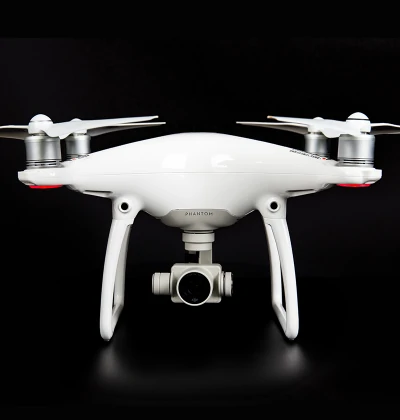

Aerospace & UAV
WJ Prototypes is your 3D manufacturing partner from prototype to large scale production.

Consumer Electronics
New Product Introduction Solutions for Consumer Electronics.

Robotics & Automation
Need some assistance bringing your robotic device or parts from the sketch-board to reality?

Medical Devices
The medical industry needs high quality, dependable and safe parts and products.

Automotive
New Product Introduction Solutions for Automotive

Industrial Machinery
The main purpose of industrial prototyping is to take the product from drawings into the real world.
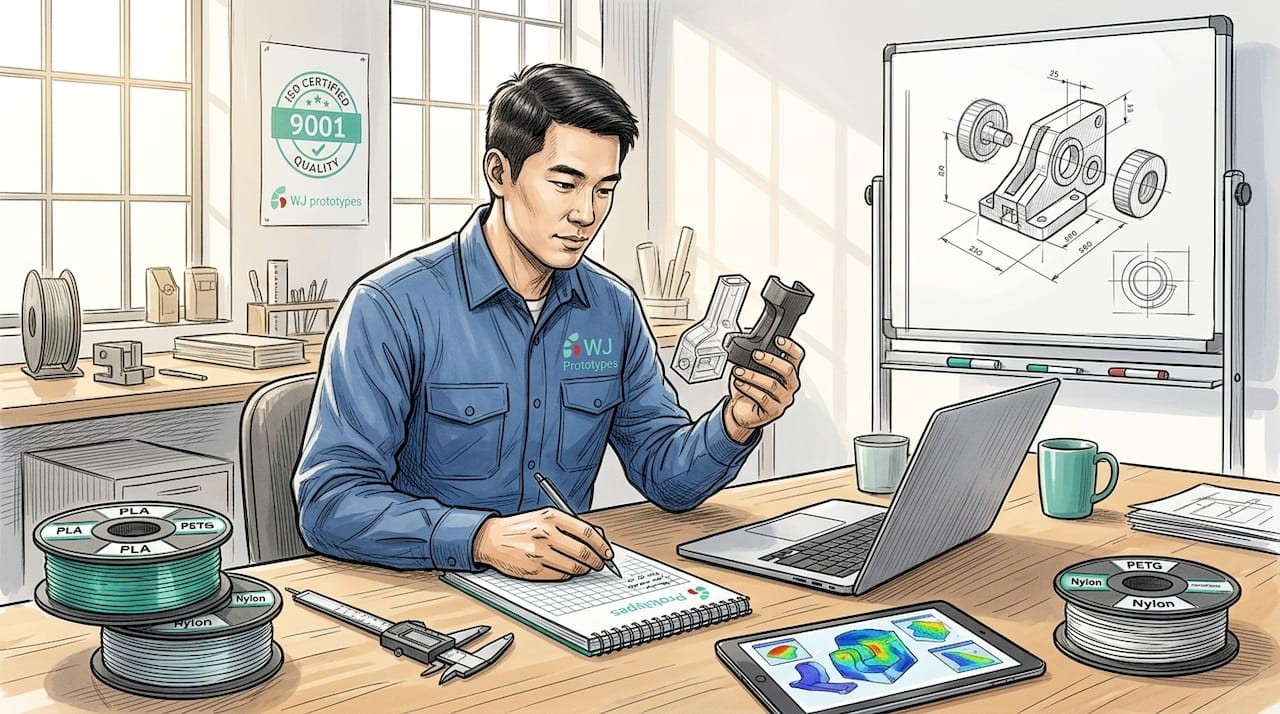

TL;DR:
- Choosing the right prototyping material is essential to prevent validation delays, budget waste, and functional failures. The top materials for 2026 include flexible, high-strength, and environmentally resistant options like PEBA, Nylon, and carbon fiber composites, selected based on specific functional requirements. Integrating AI-driven workflows alongside material selection enhances rapid iteration and reduces physical prototype dependency, streamlining product development.
Picking the wrong prototyping material doesn’t just slow you down. It derails validation cycles, wastes budget, and sends engineers back to square one when a functional prototype fails to behave like the final product. The top prototyping materials 2026 has to offer span a wider range than ever before, from familiar standbys like PLA and ABS to engineering-grade composites and emerging flexible filaments that outperform what was available just two years ago. This guide cuts through the noise and gives you a practical framework for choosing the right material the first time.
1. How to evaluate the top prototyping materials 2026 offers
8. Carbon fiber composites: when strength-to-weight matters most
| Point | Details |
|---|---|
| Match material to intent | Choose based on functional requirements first, not ease of printing or material cost alone. |
| PEBA beats TPU for flex | For high-cycle or cold-environment flexible parts, PEBA delivers superior performance over TPU. |
| Dry Nylon and PETG before printing | Moisture absorption causes print failures; drying is non-negotiable for these materials. |
| Carbon fiber composites replace metal | For stiffness-critical prototypes, carbon fiber composites offer the best strength-to-weight ratio available. |
| AI tools compress validation time | Pairing the right material with AI-assisted workflows accelerates prototype iteration significantly. |
Before picking a material off a shelf or a dropdown menu, you need a clear evaluation framework. The top prototyping materials 2026 has available vary dramatically in mechanical behavior, process compatibility, and cost. Choosing without a framework means choosing by gut feel, and gut feel gets expensive fast.
Start with functional requirements. Ask whether your prototype needs to bear loads, flex repeatedly, resist heat, or simply look good for a stakeholder presentation. These are very different demands, and no single material satisfies all of them equally.
Consider these core criteria when comparing options:
Mechanical performance: tensile strength, flexural modulus, impact resistance
Thermal resistance: heat deflection temperature for parts near motors or enclosures
Environmental exposure: UV stability, moisture resistance, chemical contact
Process compatibility: whether the material suits your available process (FDM, SLS, CNC, casting)
Print or processing requirements: some materials need drying, specific extruder types, or controlled enclosures
Cost and lead time: engineering-grade materials cost more and often require specialized equipment
Sustainability: recyclability, bio-based content, and waste generation during processing
Material selection for prototyping in aerospace and automotive contexts adds another layer: regulatory compliance and traceability. Know your end-use environment before you finalize anything.
Pro Tip: Create a one-page material brief for each prototype phase. List the top three functional requirements and let those drive your shortlist before comparing cost or availability.
PLA remains the most approachable material in the prototyping toolkit. It prints cleanly, holds fine detail, and requires no heated enclosure. For concept models, presentation pieces, and early-stage form studies, it delivers exactly what you need.
PLA is ideal for aesthetic models due to its ease of use and broad compatibility with consumer and professional FDM printers alike. Where it falls short is functional testing. PLA is brittle under impact, softens around 60°C, and degrades with UV exposure over time. Use it where appearance matters more than performance.
PETG fills the gap between PLA’s ease of use and ABS’s mechanical performance. It offers better impact resistance than PLA, handles moderate heat up to around 80°C, and bonds well between layers, which matters for parts under load.
One critical processing note: Nylon and PETG must be dried before printing to avoid moisture-induced failures. Wet PETG produces bubbling, stringing, and weak layer adhesion. A filament dryer or a low-temperature oven run for four to six hours before printing is standard practice, not optional maintenance.
PETG suits functional enclosures, brackets, and jigs where moderate toughness and decent surface finish are both requirements.
ABS has been a prototyping staple for decades. It machines and sands well, handles temperatures up to roughly 100°C, and is chemically resistant enough for many industrial environments. The tradeoff is warping during printing and the need for an enclosed, heated build chamber.

ASA is the UV and weather-resistant alternative to ABS, purpose-built for outdoor applications. If your prototype will spend any time exposed to sunlight or outdoor conditions, ASA is the better choice. It maintains color stability and structural integrity where ABS would fade and become brittle within months. Think automotive exterior components, outdoor sensor housings, and agricultural equipment prototypes.
TPU (thermoplastic polyurethane) is the go-to flexible filament for most prototyping teams. It handles flex, compression, and impact well, making it ideal for gaskets, grips, soft-touch covers, and wearables.
Shore hardness ratings range from about 85A to 95A across common TPU grades, giving you control over rigidity. Softer grades require slower print speeds and careful retraction settings to avoid under-extrusion or jams. For most flexible prototype applications where temperatures stay above freezing and cycle counts are moderate, TPU delivers reliable results at reasonable cost.
Pro Tip: When printing flexible filaments, reduce retraction distance significantly compared to rigid materials. Excessive retraction causes clogs in the hot end. Start at 1mm retraction and adjust from there.
PEBA (polyether block amide) is gaining prominence as the premium choice for applications that push beyond TPU’s limits. PEBA outperforms TPU in elastic rebound, fatigue resistance, and cold flexibility, remaining functional down to -40°C and sustaining performance across millions of flex cycles.
That performance comes with real processing demands. PEBA requires a direct-drive extruder due to its oozing behavior. Bowden setups cannot reliably control retraction for this material, leading to stringing and inconsistent extrusion. If your printer setup uses a Bowden tube, PEBA is not a practical option without hardware changes.
Where PEBA justifies its complexity: sports equipment, medical device prototypes, drone components, and any flexible part tested at low temperatures or under repeated fatigue loading.
Nylon (PA6, PA12) is the material you reach for when a prototype needs to survive real mechanical stress. It absorbs impact without fracturing, resists abrasion, and handles a broad chemical exposure range. PA12 in particular is widely used in SLS printing, producing parts with near-isotropic properties and good surface quality.
The processing challenge is moisture. Nylon is hygroscopic to a degree that makes drying mandatory. Undried Nylon produces weak, porous prints with visible surface defects. Store it sealed with desiccant and dry it thoroughly before every print run.
For functional mechanical prototypes, moving parts, gears, and structural brackets, Nylon consistently outperforms PETG and ABS in real-world durability testing.
Carbon fiber reinforced filaments represent the top of the performance ladder for FDM prototyping. Carbon fiber composites offer the highest stiffness and strength-to-weight ratio available through additive manufacturing, making them capable of replacing metal in select applications.
Short-fiber reinforced versions (carbon fiber in a PA or PLA matrix) are printable on modified desktop printers with hardened steel nozzles. Continuous fiber systems require dedicated machines but produce parts closer to traditional composite layups in strength.
For aerospace, automotive, and robotics prototypes where weight budgets are tight and rigidity is non-negotiable, carbon fiber composites are the top 2026 design materials to evaluate seriously. PEEK and carbon fiber composites are now considered standard options for load-bearing aerospace components.
Use this table to orient your shortlist based on the performance attributes most critical to your project.
| Material | Strength | Heat resistance | Flexibility | UV resistance | Ease of printing | Relative cost |
|---|---|---|---|---|---|---|
| PLA | Low | Low | None | Poor | Very easy | Low |
| PETG | Medium | Medium | Low | Moderate | Easy | Low |
| ABS | Medium | High | Low | Poor | Moderate | Low |
| ASA | Medium | High | Low | Excellent | Moderate | Medium |
| TPU | Low to medium | Medium | High | Moderate | Moderate | Medium |
| PEBA | Medium | Medium | Very high | Good | Difficult | High |
| Nylon (PA12) | High | High | Medium | Moderate | Moderate | Medium |
| Carbon fiber composite | Very high | High | None | Good | Difficult | High |
This prototyping material comparison covers the most common FDM and SLS options. For CNC machined or cast prototypes, aluminum, steel, and urethane compounds extend the range significantly.
When evaluating environmental resistance, consider the full spectrum. UV exposure matters for exterior parts. Chemical resistance matters for fluid-handling components. Temperature cycling matters for automotive under-hood applications. No single material wins across all three, which is why multi-material prototype assemblies are common in complex product development programs.
Different prototype goals demand different material logic. Here is how to think through the most common scenarios:
Visual concept model: Use PLA or resin (SLA). Prioritize surface finish and detail fidelity over mechanical properties.
Functional mechanical prototype: Use Nylon, PETG, or ABS. Prioritize toughness, dimensional stability, and temperature resistance.
Flexible or wearable component: Use TPU for standard applications. Upgrade to PEBA when the design involves cold environments, high cycle counts, or exceptional rebound requirements.
Outdoor or UV-exposed part: ASA is the direct choice. ABS is not suitable without surface coating.
Structural or load-bearing aerospace or automotive part: Carbon fiber composite or PEEK. Weight and stiffness requirements justify the higher processing complexity and cost.
Rapid visual iteration at low cost: PLA or PETG with AI-assisted design tools. AI prototyping tools allow non-developers to ship usable prototypes in one to three hours.
The future of prototyping materials increasingly involves pairing material selection with digital workflows. AI prototyping tools represent the highest ROI when they are used alongside materials matched to the prototype’s validation goal. Reaching 70% of production readiness with AI tools and then fine-tuning manually for compliance and performance is now a documented best practice in fast-moving product teams.
Explore the full breakdown of prototyping trends to see how material innovation connects to broader process changes happening across the industry.
Pro Tip: Build a two-prototype strategy: one in PLA for stakeholder sign-off on form, one in your target functional material for engineering validation. This avoids over-engineering the visual model and under-testing the functional one.
I’ve watched the prototyping materials conversation shift significantly over the past several years, and what strikes me most is how often teams pick materials based on what they already know rather than what the prototype actually needs. PLA is fine. It’s also completely wrong for two-thirds of the prototypes I see it used for.
The materials getting the least attention for the value they deliver are PEBA and PA12. PEBA especially. Most engineers I talk to have never printed with it. They default to TPU because it’s familiar. But for anything involving repeated flex, cold exposure, or fatigue loading, PEBA is not just better. It’s categorically different in how it behaves.
The other shift I find genuinely significant is the integration of AI tools into the material selection workflow itself. It’s not science fiction anymore. 43.8% of designers now spend more than half their time using AI for coding and prototyping tasks. That changes how you think about sustainable prototyping options too. Faster iteration with digital tools means fewer physical prototypes, less material waste, and tighter feedback loops before you commit to expensive production-grade materials.
Material choice still has to be grounded in design intent. Trends don’t validate prototypes. Function does.
— Yu
When your prototype requires materials and processes beyond desktop FDM, Wjprototypes delivers the full manufacturing stack. From CNC machining materials in aluminum, steel, and engineering plastics to die casting and vacuum casting services, Wjprototypes gives your team access to production-grade processes at prototype speed.
Whether you are validating a structural aluminum bracket, creating urethane cast flexible parts for a medical device, or producing low-volume runs of carbon fiber composite components, Wjprototypes handles the material and process complexity so your engineering team stays focused on design. ISO certification, experienced engineers, and global delivery mean you get precision parts fast without sacrificing quality. Request an instant quote at wjprototypes.com and bring your next prototype to life with the right material from the start.
Nylon (PA12), PETG, and carbon fiber composites are the strongest choices for functional prototypes requiring toughness, heat resistance, and mechanical durability.
Use PEBA when the prototype needs to perform at temperatures below freezing, withstand millions of flex cycles, or deliver high elastic rebound. PEBA outperforms TPU in all three categories.
Both materials absorb moisture from the air, and printing wet filament causes bubbling, weak layer adhesion, and surface defects. Drying eliminates these failures.
ASA is the correct choice for outdoor prototypes. It offers UV stability and weather resistance that ABS cannot match without additional surface treatment.
AI-assisted prototyping tools accelerate iteration cycles, reducing the number of physical prototypes needed. Pairing digital validation with the right physical material cuts both time and material waste across the development process.
SERVICES
RESOURCES