



- Room 1807, Unit 9, Building 2, Shangxing Commercial Street, Shangde Road, Shangxing Community, Xinqiao Subdistrict, Bao'an District, Shenzhen City, China
CONTACT US

WhatsApp


Contact Us
Our team is on stand by, waiting toassist you.

Videos
A large collection of educational videos and tutorials.

About Us
Learn about our company, leadership, and mission totransform manufacturing.

Privacy Policy
Applies to all personal information collected through and/or processed in connection.
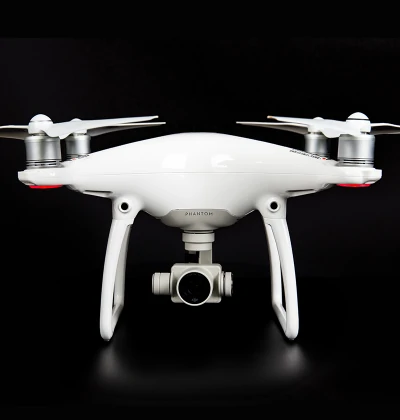

Aerospace & UAV
WJ Prototypes is your 3D manufacturing partner from prototype to large scale production.

Consumer Electronics
New Product Introduction Solutions for Consumer Electronics.

Robotics & Automation
Need some assistance bringing your robotic device or parts from the sketch-board to reality?

Medical Devices
The medical industry needs high quality, dependable and safe parts and products.

Automotive
New Product Introduction Solutions for Automotive

Industrial Machinery
The main purpose of industrial prototyping is to take the product from drawings into the real world.

TL;DR:
- Die casting is a high-pressure metal manufacturing process that produces precise and complex parts rapidly with excellent surface quality. It is most effective for high-volume production using aluminum, zinc, or magnesium alloys, offering design flexibility and minimal secondary operations. Its main limitations include high tooling costs and restrictions on part size and geometry, requiring careful planning from initial design to manufacturing.
Die casting is one of the most misunderstood processes in metal manufacturing. Ask ten engineers to define it and you’ll get ten different answers, most of them blurring die casting with sand casting, investment casting, or even injection molding. What is die casting, precisely? It’s a metal fabrication process where molten metal is forced under high pressure into precision-machined steel mold halves called dies. The result is fast, repeatable, dimensionally accurate metal parts at a scale and surface quality that most other processes simply cannot match. This guide covers the full picture: process mechanics, materials, benefits, applications, and limitations.
| Point | Details |
|---|---|
| High-pressure metal injection | Die casting forces molten metal into steel dies under pressure, producing precise and complex parts rapidly. |
| Material flexibility | Aluminum, zinc, and magnesium are the dominant alloys, each suited to different weight, strength, and thermal requirements. |
| Production efficiency | Die casting delivers high repeatability and minimal batch variation, making it ideal for mass production environments. |
| Design freedom | The process supports thin walls, complex geometries, and integrated features that reduce downstream assembly work. |
| Smart tooling investment | High upfront die costs are offset by low per-unit costs at volume, making die casting most economical above moderate quantities. |
The process is more systematic than most people realize. Each cycle follows a fixed sequence, and understanding that sequence helps you make better decisions about part design, material selection, and production planning.
The machine type matters here. Hot chamber machines keep the injection system submerged in molten metal, which suits low-melting-point alloys like zinc and magnesium. Cold chamber machines, where metal is ladled separately into the injection sleeve, handle aluminum and copper alloys that would corrode a hot chamber system. Medium die casting machines with clamping forces between 4,000 kN and 10,000 kN serve the widest range of industrial applications, balancing size flexibility with precision.
Pro Tip: Design your part with the machine selection in mind from the start. If your alloy requires a cold chamber process, wall thickness minimums and fill patterns change. Catching this in the CAD phase saves significant rework later.
Choosing the right alloy is not just a materials science question. It’s a manufacturing strategy decision that affects tooling life, cycle time, secondary operations, and end-use performance.
The four dominant material families in die casting are:
Recyclability is a genuine advantage across all these materials. Aluminum, for instance, can be recycled with roughly 95% less energy than primary production, which matters to sustainability teams and supply chain planners alike. If you want a detailed breakdown by alloy, Wjprototypes publishes a thorough overview of die casting materials with specifications and selection guidance.
Die casting earns its place in production environments through a combination of speed, precision, and material efficiency that most alternatives struggle to match simultaneously.

Die casting produces parts with high dimensional accuracy and excellent surface finish directly from the mold. Many parts require no post-processing beyond trimming flash. That’s a meaningful difference from sand casting, which typically requires machining to meet tight tolerances.

High repeatability with minimal quality variation between batches is one of die casting’s defining characteristics. Once a die is proven and process parameters are locked in, you can run hundreds of thousands of parts with consistent results. CNC machining can match the accuracy but not the throughput at comparable cost per part.
Die casting allows integration of complex geometries and thin walls in a single shot. Features like bosses, ribs, holes, and threaded inserts can be cast in rather than machined separately. This reduces assembly steps and lowers the total part count in a product.
Here’s how die casting compares against two common alternatives:
| Criteria | Die casting | CNC machining | Investment casting |
|---|---|---|---|
| Dimensional accuracy | High | Very high | High |
| Surface finish | Good to excellent | Excellent | Good |
| Production volume | High volume | Low to medium | Low to medium |
| Tooling cost | High upfront | Low to medium | Medium |
| Part complexity | High | Medium to high | Very high |
| Material waste | Low | High (subtractive) | Low |
| Lead time (production) | Fast at volume | Faster for small runs | Slow |
Pro Tip: If you’re comparing die casting vs. injection molding for a given application, remember that die casting uses metal alloys under much higher pressures, producing parts with far greater structural strength. Injection molding is polymer-based and excels at different applications. They are not direct substitutes.
Die casting also reduces post-processing work compared to other metal fabrication methods. Fewer secondary operations translate directly to lower cost per part and faster throughput, both of which matter at production scale.
The breadth of die casting applications reflects how well the process scales across different requirements. It’s not a niche method. It’s a backbone manufacturing technology in multiple major industries.
Casting simulation software is reshaping how engineers approach all of these applications. By predicting fill patterns, porosity risks, and thermal behavior before cutting steel, simulation tools reduce trial-and-error dramatically. This capability is particularly valuable for automotive partners pursuing the injection molding for automotive parts cross-application development work that Wjprototypes supports.
The overall metal casting market is projected to reach USD 233.88 billion by 2033, with die casting claiming a growing share as automation and alloy development continue to expand what the process can achieve.
Die casting is not the right answer for every part. Knowing its limits is just as important as knowing its strengths.
Common constraints include:
Early collaboration between product designers and process engineers eliminates most of these issues before tooling is cut. CAD surface modeling for complex shapes is one area where getting the geometry right upstream pays dividends downstream in die quality and cycle consistency.
Pro Tip: Request a draft angle analysis and wall thickness review from your manufacturing partner before finalizing die casting geometry. Changes after tooling is cut are expensive. Changes in CAD cost nothing.
I’ve reviewed hundreds of part designs across automotive, electronics, and industrial applications over the years. The engineers who get the most from die casting are the ones who stop treating it as a last step and start treating it as a design tool.
What I’ve found is that die casting changes how you think about part consolidation. When you know you can cast in ribs, bosses, and alignment features, you stop designing assemblies and start designing single components. That shift reduces tolerance stack-up, eliminates fasteners, and cuts assembly labor in a way that machining or sheet metal simply cannot replicate.
The rise of automation and simulation software has made this even more accessible. What used to require extensive physical trials now gets resolved in a simulation environment before any steel is touched. That changes the economics of prototyping entirely.
Sustainability is the conversation I expect to dominate die casting strategy over the next decade. Die cast aluminum and zinc are both highly recyclable, and manufacturers who build recycled-content sourcing into their supply chains now will have a genuine cost and compliance advantage as regulations tighten. I’ve seen this topic go from a sustainability report footnote to a procurement specification in less than five years.
My advice: bring your die casting partner in at the concept stage. The geometry freedom the process offers is only fully realized when the process informs the design, not the other way around.
— Yu
When you’re ready to move from design to production, working with a manufacturing partner who understands both the material science and the process constraints makes a measurable difference. Wjprototypes offers a full range of die casting services for prototypes and production runs, with material options covering aluminum, zinc, and magnesium alloys. The team supports design review, simulation-informed tooling, and quality inspection at every stage.
If you’re still evaluating material choices, the die casting materials catalog at Wjprototypes gives you detailed specs, properties, and application guidance to help narrow your selection. For parts that require secondary operations or hybrid production approaches, complementary services including CNC machining materials and vacuum casting are available under the same roof. Wjprototypes is ISO certified, with experienced engineers and global delivery capacity built for B2B manufacturing teams.
Die casting is a metal manufacturing process where molten metal is injected under high pressure into a precision steel mold to produce complex, accurate parts at high volume. The process is fast, repeatable, and widely used across automotive, aerospace, and electronics industries.
Aluminum, zinc, and magnesium are the most common die casting materials, with copper alloys used for specialized applications. Aluminum is the most popular due to its strength-to-weight ratio, corrosion resistance, and thermal conductivity.
Die casting uses molten metal alloys injected under very high pressure, producing structurally strong metal parts. Injection molding uses molten polymers at lower pressures and is designed for plastic components. The two processes target fundamentally different material types and structural requirements.
Die casting delivers high dimensional accuracy, excellent surface finish, fast cycle times, and strong part-to-part repeatability. It also supports complex geometries and thin walls in a single operation, reducing the need for secondary machining or assembly.
Die casting becomes cost-effective at moderate to high production volumes because the upfront tooling investment is significant. For low-volume or prototype needs, alternatives like CNC machining or vacuum casting typically offer better economics until volumes justify the tooling spend.
SERVICES
RESOURCES