



- Room 1807, Unit 9, Building 2, Shangxing Commercial Street, Shangde Road, Shangxing Community, Xinqiao Subdistrict, Bao'an District, Shenzhen City, China
CONTACT US

WhatsApp


Contact Us
Our team is on stand by, waiting toassist you.

Videos
A large collection of educational videos and tutorials.

About Us
Learn about our company, leadership, and mission totransform manufacturing.

Privacy Policy
Applies to all personal information collected through and/or processed in connection.
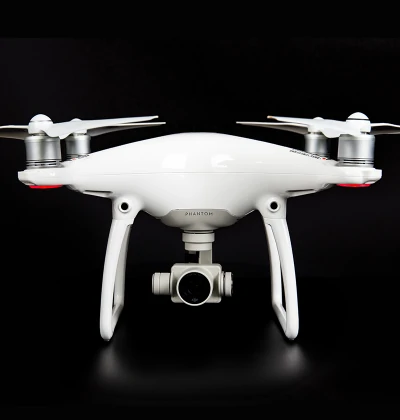

Aerospace & UAV
WJ Prototypes is your 3D manufacturing partner from prototype to large scale production.

Consumer Electronics
New Product Introduction Solutions for Consumer Electronics.

Robotics & Automation
Need some assistance bringing your robotic device or parts from the sketch-board to reality?

Medical Devices
The medical industry needs high quality, dependable and safe parts and products.

Automotive
New Product Introduction Solutions for Automotive

Industrial Machinery
The main purpose of industrial prototyping is to take the product from drawings into the real world.
TL;DR:
Proper understanding of main cost drivers reduces prototyping expenses, including materials, manufacturing, and labor.
Early collaboration between design, manufacturing, and procurement teams prevents costly last-minute changes.
Using standardized parts, strategic batching, and rapid prototyping tech improves cost efficiency without sacrificing quality.
Prototyping budgets have a way of ballooning quietly until a launch date is suddenly at risk. A single round of design revisions, an unexpected material substitution, or a missed vendor lead time can push costs well past projections and stall your product roadmap. The good news is that most cost overruns in prototyping are predictable and preventable. This guide walks product development managers and R&D leads through a structured approach to identifying where money leaks, preparing smarter project setups, executing targeted cost-reduction tactics, and verifying real savings. You don't need to sacrifice quality or speed to keep prototyping costs under control.
| Point | Details |
|---|---|
| Pinpoint major cost drivers | Understanding where expenses originate helps you target the right areas for savings. |
| Prepare with cost-saving steps | Advance planning and choosing efficient processes prevent waste and expensive errors. |
| Apply step-by-step strategies | Structured actions like standardization and smart material selection drive real cost reductions. |
| Measure results and adjust | Tracking outcomes and avoiding common mistakes ensures continued optimization of prototyping budgets. |
| Collaborate early for hidden savings | Cross-team input during early development can lower costs beyond traditional methods. |
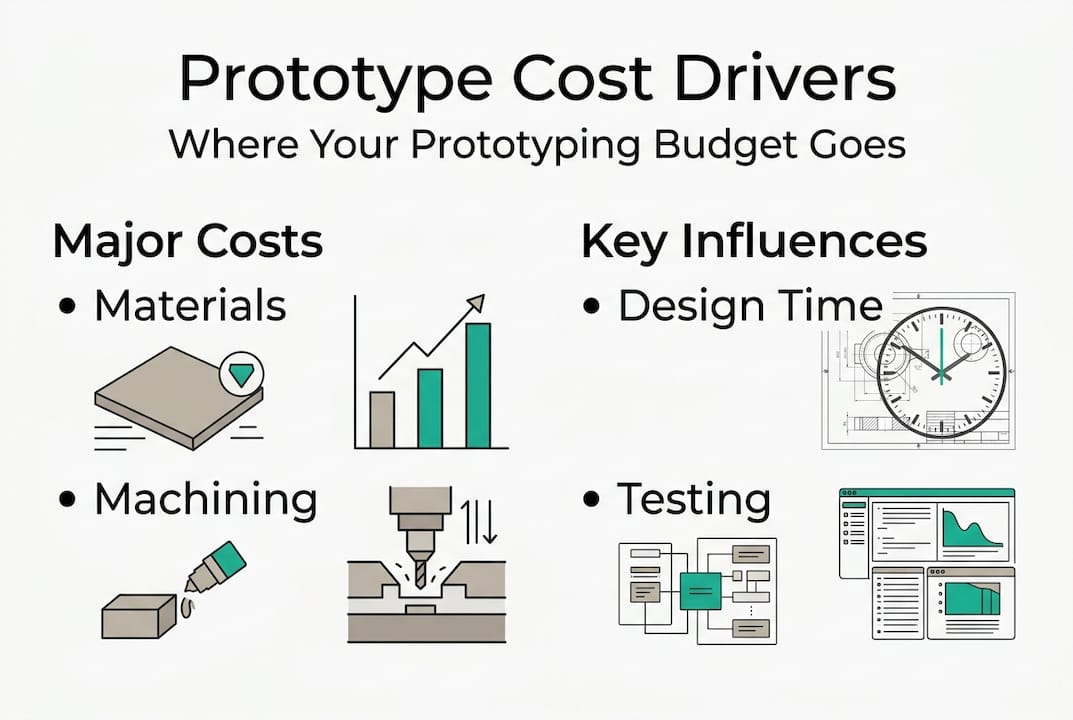
Understanding where your money goes is the first step toward meaningful savings. Most prototyping budgets break down into three primary categories: materials, manufacturing processes, and labor. Each one interacts with the others in ways that can either compound costs or create savings opportunities.
Here's a typical cost breakdown for a small-batch precision prototype run:
| Cost category | Typical share of total budget |
|---|---|
| Materials | 35–45% |
| Manufacturing and machining | 30–40% |
| Labor and engineering time | 15–25% |
| Finishing and post-processing | 5–10% |
Material selection plays a major role in prototype expenses, and the wrong choice early in the process can ripple through every subsequent stage. Switching from a high-grade aluminum alloy to an engineering-grade polymer, for instance, can cut raw material costs by 40% without compromising the functional testing goals of an early-stage prototype.
Beyond materials, part complexity is one of the most underestimated cost drivers. Tight tolerances, complex geometries, and surface finish requirements all add machining time and increase scrap rates. Finish requirements alone can double the post-processing budget on a single component. When you're planning a run of 10 to 50 units, those costs multiply fast.
Key factors that drive prototype costs up:
Understanding prototype cost reduction starts with mapping these drivers against your specific project. Not every driver applies equally to every program.
Pro Tip: Design your prototype components with modularity in mind. Reusable subassemblies across multiple prototype iterations reduce both material spend and engineering rework time significantly.
Once you've mapped out the biggest cost drivers, it's time to prepare your project with cost-saving techniques baked in from day one. Preparation is where most teams leave money on the table, because they treat cost control as a reactive measure rather than a design input.
Start with a structured checklist before any fabrication begins:
One of the highest-leverage decisions you'll make is choosing between traditional manufacturing and rapid prototyping steps. Here's how they compare on the dimensions that matter most to R&D leads:
| Factor | Traditional prototyping | Rapid prototyping |
|---|---|---|
| Lead time | 4–8 weeks | 3–10 days |
| Tooling cost | High (often $5,000+) | Low to none |
| Per-unit cost (low volume) | High | Competitive |
| Design change flexibility | Limited | High |
| Material range | Broad | Growing rapidly |
Choosing rapid prototyping technologies streamlines and lowers expenses, especially for teams running iterative development cycles where design changes are expected between rounds.
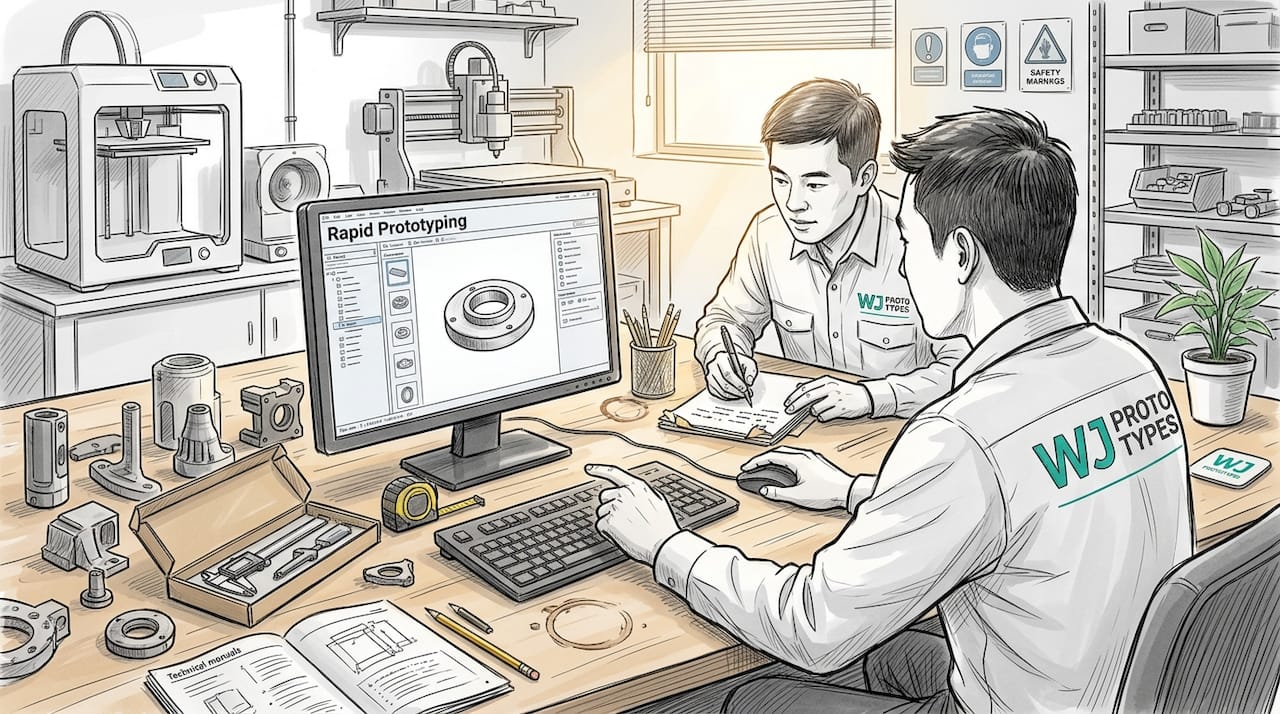
Automation also plays a growing role in cost-efficient preparation. Cost-saving automation in quoting, design file preparation, and vendor communication reduces the administrative overhead that quietly inflates project budgets. Platforms that offer instant quoting eliminate back-and-forth delays that can add days to your timeline.
Outsourcing to specialized manufacturers, particularly for cost-effective prototyping of precision components, gives you access to dedicated equipment and process expertise without carrying fixed overhead costs.
Pro Tip: Schedule a design review with manufacturing engineers before finalizing your CAD files. Catching a feature that requires a specialized fixture or a non-standard tool at the design stage costs almost nothing. Catching it after the first failed batch costs significantly more.
With your preparations in place, let's move on to actionable strategies you can apply immediately. These aren't theoretical frameworks. They're the specific moves that consistently lower costs across aerospace, automotive, medical, and industrial prototyping programs.
Pro Tip: Run a DFM check on every component before submission. Most experienced manufacturers will flag issues for free during quoting. Use that feedback. It's essentially free engineering review.
Watch out for hidden costs in quick-turn rounds. Rush fees, expedited material sourcing, and last-minute design changes in quick-turn production can add 20–35% to your per-unit cost. Build iteration buffers into your schedule so you're not paying premium rates for avoidable urgency. Reviewing key material choices before committing to a quick-turn order can prevent expensive substitutions.
After executing your cost-optimization plan, close the loop by measuring results and learning from common errors. Cost reduction that isn't tracked isn't real. You need concrete metrics to confirm savings and identify where further gains are possible.
Track these metrics after each prototype run:
Tracking prototype cost metrics and avoiding common errors prevents budget overruns that compound across multiple development stages.
Here's a quick reference for the most common mistakes and how to prevent them:
| Common mistake | Prevention action |
|---|---|
| Overengineering features | Apply minimum viable spec at each prototype stage |
| Ignoring vendor feedback | Build vendor review into your DFM checklist |
| Skipping design reviews | Make design review a mandatory gate before fabrication |
| Ordering too few units | Model cost curves across batch sizes before ordering |
| Using premium materials for all stages | Match material grade to prototype stage requirements |
Additional mistakes that consistently inflate budgets:
Review manufacturing streamlining tips to find additional process improvements that complement your cost-tracking efforts.
Pro Tip: Bring together engineers, procurement, and manufacturing partners for a brief post-run review after each prototype stage. Multidisciplinary debriefs surface savings opportunities that no single team member would catch alone.
Most cost-reduction conversations in prototyping focus on materials, process selection, and outsourcing. Those levers matter. But there's a savings driver that almost every manager underestimates: the cost of siloed decision-making.
When design engineers, procurement teams, and manufacturing partners operate in sequence rather than in parallel, each handoff introduces assumptions that the next team has to correct. Those corrections cost time and money. We've seen project teams who embedded manufacturing engineers and vendor input into the earliest design reviews reduce manufacturing costs by 20% compared to teams that followed a traditional sequential workflow.
The insight isn't just about communication. It's about timing. Feedback from a machinist on day three of a project costs almost nothing to act on. The same feedback on day thirty, after toolpaths are programmed and materials are ordered, can cost thousands.
Embed collaboration into your process by inviting your manufacturing partner to review DFM considerations before design freeze. Schedule a short vendor call during concept development, not after. Make cross-functional input a process requirement, not an optional courtesy. The teams that do this consistently outperform those that don't, regardless of which technologies or materials they choose.
For teams ready to take the next step, specialized solutions can put these strategies into action faster than building capabilities in-house. At WJ Prototypes, we work directly with product development managers and R&D leads across aerospace, automotive, medical, and industrial sectors to deliver cost-optimized prototyping from concept to production-ready parts.
Our CNC machining services cover a broad range of geometries and tolerances, supported by an extensive selection of CNC machining materials chosen to match your functional and budget requirements. Whether you need SLA, SLS, DMLS, vacuum casting, or injection molding, our prototyping services are built for speed, precision, and cost efficiency at every production stage. Request an instant quote and see how quickly we can support your next development cycle.
Explore competitive Rapid Prototyping Solutions with expert support from WJ Prototypes.
Whether you're comparing suppliers or looking to optimize costs, our team can help you evaluate the best option for your project.
👉 Request A Quote now or email us at info@wjprototypes.com to get started.
Material selection is key to prototype cost, alongside manufacturing process choice and part complexity, which together account for the majority of expenses in small batch production.
Offshore outsourcing provides significant cost savings, with some programs cutting prototyping expenses by up to 60% through lower labor rates and access to specialized manufacturing equipment.
Overengineering parts, ignoring vendor recommendations, and skipping design reviews increase the risk of costly mistakes that compound across multiple prototype iterations.
Rapid prototyping techniques minimize costs for precision manufacturing by eliminating tooling expenses and enabling faster design iteration cycles compared to traditional methods.
Cost-Effective Prototyping in China | Guide for UK Manufacturers & Engineers
How to Prototype Parts | Step-by-Step Guide for Professionals
7 Essential Rapid Prototyping Best Practices for Teams
Why Prototyping in China Drives Down Costs for Manufacturers
How to Reduce Operational Costs with Smart Outsourcing
Explore competitive Rapid Prototyping Solutions with expert support from WJ Prototypes.
Whether you're comparing suppliers or looking to optimize costs, our team can help you evaluate the best option for your project.
👉 Request A Quote now or email us at info@wjprototypes.com to get started.
SERVICES
RESOURCES