



- Room 1807, Unit 9, Building 2, Shangxing Commercial Street, Shangde Road, Shangxing Community, Xinqiao Subdistrict, Bao'an District, Shenzhen City, China
CONTACT US

WhatsApp


Contact Us
Our team is on stand by, waiting toassist you.

Videos
A large collection of educational videos and tutorials.

About Us
Learn about our company, leadership, and mission totransform manufacturing.

Privacy Policy
Applies to all personal information collected through and/or processed in connection.
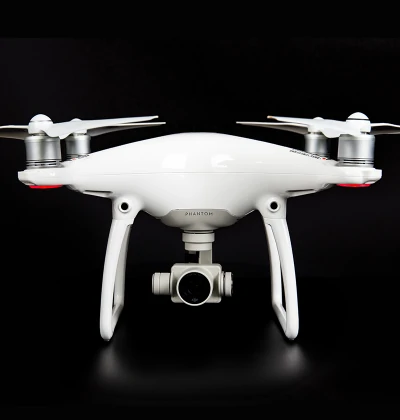

Aerospace & UAV
WJ Prototypes is your 3D manufacturing partner from prototype to large scale production.

Consumer Electronics
New Product Introduction Solutions for Consumer Electronics.

Robotics & Automation
Need some assistance bringing your robotic device or parts from the sketch-board to reality?

Medical Devices
The medical industry needs high quality, dependable and safe parts and products.

Automotive
New Product Introduction Solutions for Automotive

Industrial Machinery
The main purpose of industrial prototyping is to take the product from drawings into the real world.
TL;DR:
Vacuum casting offers a reliable method to produce field-ready oil and gas components with high precision.
Proper tooling, material selection, and strict process control are essential to prevent defects and ensure quality.
Thorough verification and documentation of casting results are critical for safety, performance, and regulatory compliance.
Failed prototypes in oil and gas development don't just waste money. They delay projects, compromise safety, and can set a program back by months. Vacuum casting, specifically vacuum investment casting, gives engineering teams a reliable path from CAD file to field-ready component with far fewer surprises. The vacuum casting process steps move from design through wax patterning, ceramic shell formation, dewaxing, vacuum melting, and controlled cooling, each stage building on the last to produce tight-tolerance parts. This guide covers the tools you need, how to execute each step, what can go wrong, and how to verify your results.
| Point | Details |
|---|---|
| Preparation is key | Selecting the right tools and materials sets the stage for successful oil and gas component manufacturing. |
| Follow precise steps | A careful, stage-by-stage approach minimizes errors and maximizes quality in vacuum casting. |
| Quality control matters | Thorough inspection and testing ensure prototypes perform reliably in demanding oil and gas environments. |
| Avoid common mistakes | Recognize frequent issues early and implement proven fixes to keep your production on track. |
Getting the right equipment in place before you start is the difference between a clean run and a costly restart. For oil and gas applications, where parts often face extreme pressure, heat, and corrosive media, there is no room to improvise on tooling or material selection.
Core equipment checklist:
Materials for oil and gas components:
Choosing the right material is not optional. Nickel-based superalloys, stainless steels, and cobalt-chrome alloys are common choices for downhole tools, valve bodies, and pump components. You can review vacuum casting materials and compare them with die casting materials to understand where each process fits your design requirements.
| Material type | Typical application | Key property |
|---|---|---|
| Nickel superalloy | Turbine and downhole parts | High-temp strength |
| 316L stainless steel | Valve bodies, fittings | Corrosion resistance |
| Cobalt-chrome alloy | Pump wear components | Hardness and wear resistance |
| Investment wax | Pattern creation | Clean burnout, low ash |
| Colloidal silica slurry | Shell formation | Dimensional stability |
Safety and quality-control accessories include thermocouple arrays for furnace monitoring, vacuum gauges, shell thickness calipers, and personal protective equipment rated for molten metal environments.
Pro Tip: Before committing to a material, cross-reference your alloy selection against the relevant API or NACE standards for the service environment. A material that passes a bench test may still fail in a sour gas application if sulfide stress cracking resistance was not evaluated.
With tools in hand, it's time to move methodically through each step of the vacuum casting process. Skipping or rushing any stage introduces compounding errors that are expensive to trace back.
For complex oil and gas components, review prototyping to production workflows and the vacuum casting prototyping guide to plan your batch strategy from the start.
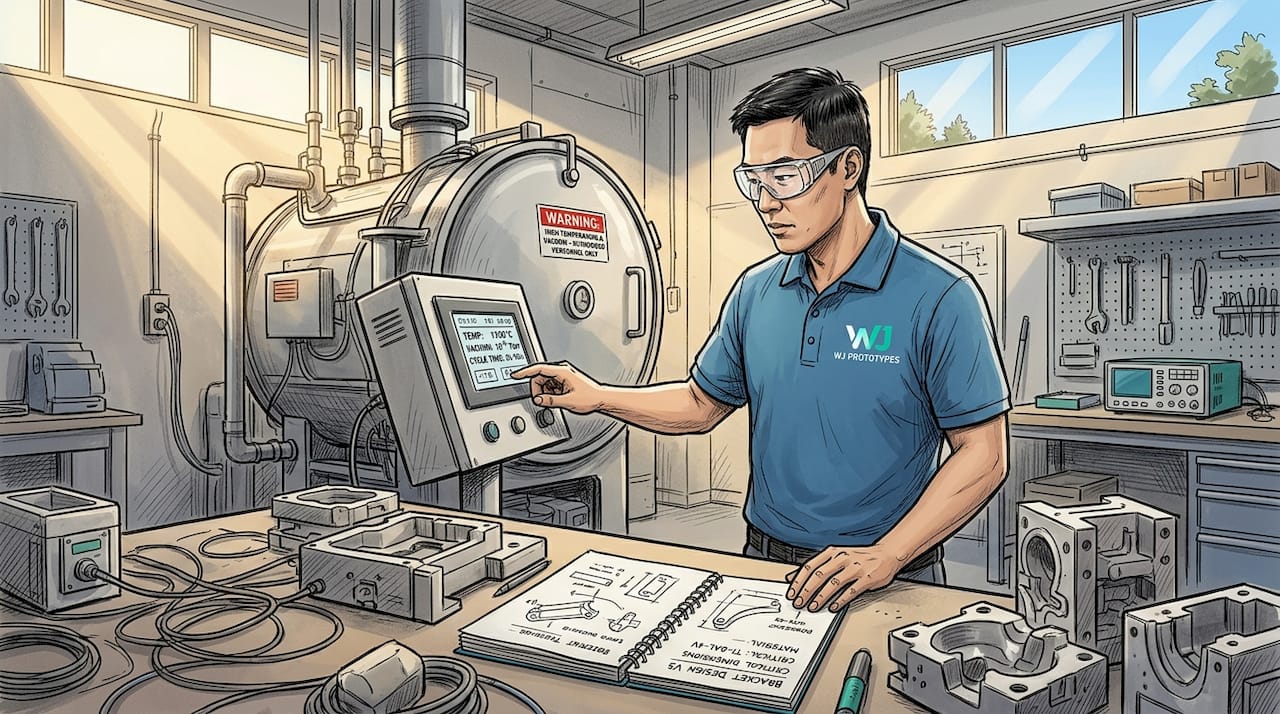
| Feature | Single-chamber furnace | Dual-chamber furnace |
|---|---|---|
| Vacuum quality | Standard | Superior |
| Oxidation risk | Moderate | Minimal |
| Throughput | Lower | Higher |
| Best for | Simple alloys | Reactive superalloys |
Pro Tip: Document every step with batch numbers, time stamps, and operator sign-offs. In oil and gas, traceability is not just good practice. It is often a contractual requirement.
After understanding the process flow, you should be prepared for common pitfalls and know how to correct them. Most defects in vacuum casting are traceable to one of three root causes: shell failure, process parameter drift, or material contamination.
Common defects and their causes:
Understanding the full scope of vacuum casting benefits helps you recognize when a defect is process-related versus design-related. Similarly, reviewing vacuum casting advantages gives context for when to escalate a recurring issue to a process engineer rather than a tooling change.
Shell integrity is non-negotiable for high-pressure oil and gas parts. A shell failure during pouring is not just a scrapped casting. It is a safety event. Never pour into a shell that shows visible cracks, delamination, or incomplete cure.
Pro Tip: Install real-time monitoring on your furnace and vacuum system. Logging pressure, temperature, and pour weight continuously lets you correlate process data with defect patterns across batches, cutting your root-cause analysis time significantly.
Once troubleshooting is complete, focus on verifying and documenting quality for oil and gas industry assurance. A casting that looks good on the surface may still fail a pressure test or fall outside dimensional tolerance.
Quality verification checklist:
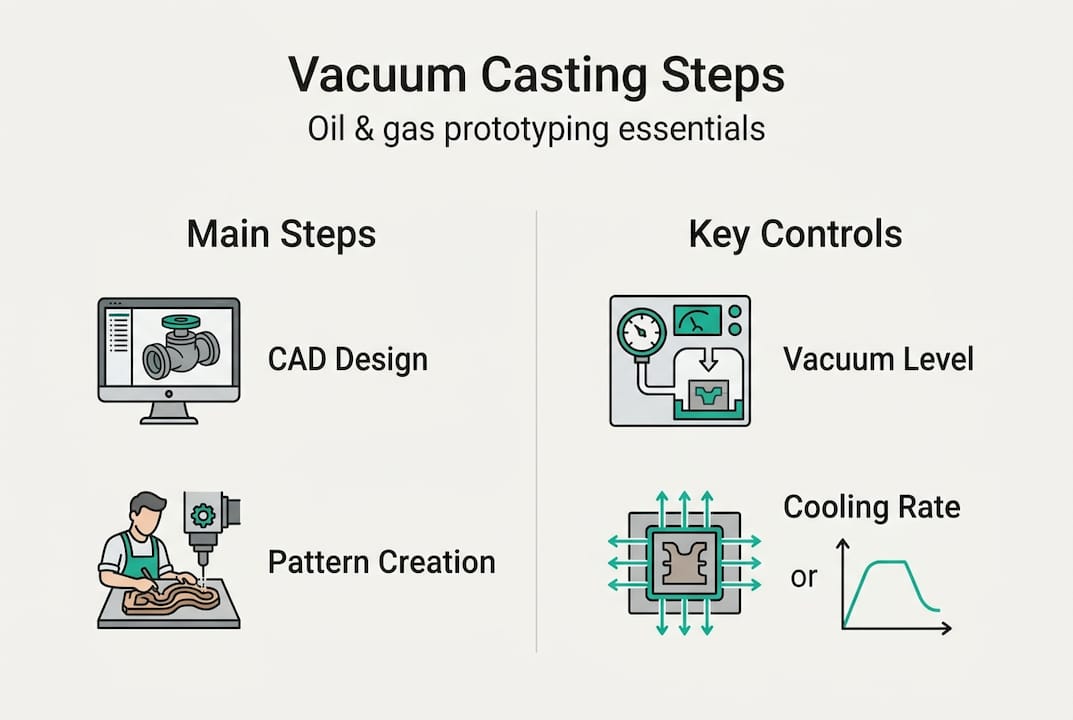
Controlled cooling is not just a finishing step. Controlled cooling ensures part integrity by managing residual stress and microstructure, both of which directly affect fatigue life in cyclic service environments like downhole tools or reciprocating pump components.
For recurring production runs, connect your QC data to your vacuum casting services workflow and track batch trends over time. Vacuum casting batch services that support statistical process control give you the data to catch drift before it becomes a rejection event.
Pro Tip: Record all QC results in a structured log tied to batch and heat numbers. When a field failure occurs months later, that data is the fastest path to identifying whether the root cause was casting, design, or service conditions.
Most teams treat vacuum casting as a production method. We think that framing is too narrow. The real value is that it compresses the gap between a design concept and a part you can put under actual field conditions. In oil and gas, that gap is where projects stall and budgets erode.
When you master prototyping with vacuum casting, you are not just making parts faster. You are creating a feedback loop that lets your engineers test assumptions early, when changes are cheap, rather than late, when they are catastrophic. Teams that treat each prototype as a data point rather than a deliverable consistently outperform those chasing a perfect first-article result.
The uncomfortable truth is that most prototyping failures in oil and gas are not material failures or process failures. They are documentation and discipline failures. The process works when you follow it completely.
To implement these best practices or scale your casting operations, professional support can make all the difference. WJ Prototypes offers vacuum casting services from China built specifically for engineering teams that need precise, field-ready components on tight schedules. Whether you are running a single prototype or moving into small batch vacuum casting for pilot production, our engineers can guide your material selection, process parameters, and quality plan from the start. Explore the full vacuum casting materials list to match your oil and gas specifications to the right alloy or polymer system before your first pour.
Explore competitive Vacuum Casting Services with expert support from WJ Prototypes.
Whether you're comparing suppliers or looking to optimize costs, our team can help you evaluate the best option for your project.
👉 Request A Quote now or email us at info@wjprototypes.com to get started.
High-temperature alloys such as nickel superalloys and cobalt-chrome, along with specialty corrosion-resistant steels, are preferred for oil and gas components because they maintain mechanical properties under high pressure and chemically aggressive service conditions.
The full process sequence includes CAD design, wax pattern creation, ceramic shell formation, dewaxing, vacuum melting in an induction furnace, vacuum pouring, and controlled cooling, each step building directly on the last.
Quality is verified through dimensional checks with CMM equipment, visual and NDT inspection, and hydrostatic pressure testing, with all batch results documented and tracked for trend analysis.
Porosity, shell misalignment, and incomplete fill are the most frequent issues; prevention relies on rigorous shell preparation, vacuum system integrity, and real-time process monitoring throughout the melt and pour stages.
Guide To Vacuum Casting - Master Prototyping for Precision Parts
Vacuum Casting Materials | List Of Material For Vacuum Casting
7 Key Vacuum Casting Process Steps for Fast Prototyping
Why Choose Vacuum Casting: Everything You Need to Know
Filament 3D printing: Guide for prototyping success
Explore competitive Vacuum Casting Services with expert support from WJ Prototypes.
Whether you're comparing suppliers or looking to optimize costs, our team can help you evaluate the best option for your project.
👉 Request A Quote now or email us at info@wjprototypes.com to get started.
SERVICES
RESOURCES