



- Room 1807, Unit 9, Building 2, Shangxing Commercial Street, Shangde Road, Shangxing Community, Xinqiao Subdistrict, Bao'an District, Shenzhen City, China
CONTACT US

WhatsApp


Contact Us
Our team is on stand by, waiting toassist you.

Videos
A large collection of educational videos and tutorials.

About Us
Learn about our company, leadership, and mission totransform manufacturing.

Privacy Policy
Applies to all personal information collected through and/or processed in connection.
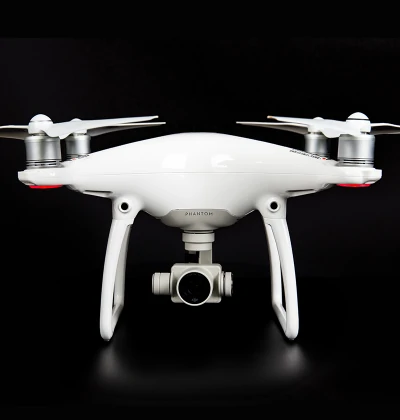

Aerospace & UAV
WJ Prototypes is your 3D manufacturing partner from prototype to large scale production.

Consumer Electronics
New Product Introduction Solutions for Consumer Electronics.

Robotics & Automation
Need some assistance bringing your robotic device or parts from the sketch-board to reality?

Medical Devices
The medical industry needs high quality, dependable and safe parts and products.

Automotive
New Product Introduction Solutions for Automotive

Industrial Machinery
The main purpose of industrial prototyping is to take the product from drawings into the real world.
Precision drives innovation, yet even the smallest defect in a master model can ripple through the entire vacuum casting process—industry studies show that surface flaws lead to up to 60 percent of prototype failures in British and international aerospace projects. As engineering managers strive to solve low-volume production challenges, mastering each stage from model preparation to final inspection becomes critical. This article unpacks practical techniques trusted by British and global automotive leaders for delivering reliable, cost-effective vacuum cast prototypes.
| Takeaway | Explanation |
|---|---|
| 1. Master Model Preparation is Crucial | The quality of the master model directly affects the final prototype’s quality and precision. Ensure extensive surface treatment for best results. |
| 2. Silicone Mould Creation Demands Precision | Meticulously mix silicone and manage vacuum degassing to eliminate air bubbles, ensuring high-quality moulds that accurately capture details. |
| 3. Controlled Curing is Essential | Proper temperature and timing during curing stabilise silicone moulds. Monitor conditions closely to enhance performance and dimensional accuracy of prototypes. |
| 4. Deaeration Enhances Prototype Fidelity | Employ vacuum chamber technology to remove air bubbles from resins, improving structural integrity and surface finish in final parts. |
| 5. Systematic Demoulding and Inspection Improve Quality | Use a careful approach to demoulding and conduct thorough inspections to identify defects early, ensuring consistent quality in prototypes. |
Master model preparation forms the critical foundation for successful vacuum casting, determining the ultimate quality and precision of your final prototype. The master model serves as the primary reference point from which subsequent silicone moulds will be created, making its surface quality and preparation absolutely paramount.
In vacuum casting, your master model must be meticulously crafted to ensure exceptional detail reproduction. Typically derived from high-quality 3D printed parts, these models require careful surface treatment to achieve optimal results. Any imperfections or surface irregularities will transfer directly into the final cast parts, potentially compromising the entire manufacturing process.
The preparation process involves several key considerations. First, the master model must be completely clean and free from dust, debris, or manufacturing residues. Smooth surfaces are essential, which often requires additional post-processing techniques such as light sanding or chemical smoothing to eliminate microscopic surface variations. Engineers must also consider material compatibility, ensuring the master model will not react negatively with the silicone moulding compounds.
Precision is paramount when preparing your master model. Dimensional accuracy, surface finish, and structural integrity all play crucial roles in determining the success of your vacuum casting project. Professional manufacturers invest significant time in model preparation, understanding that this initial stage significantly influences downstream production quality.
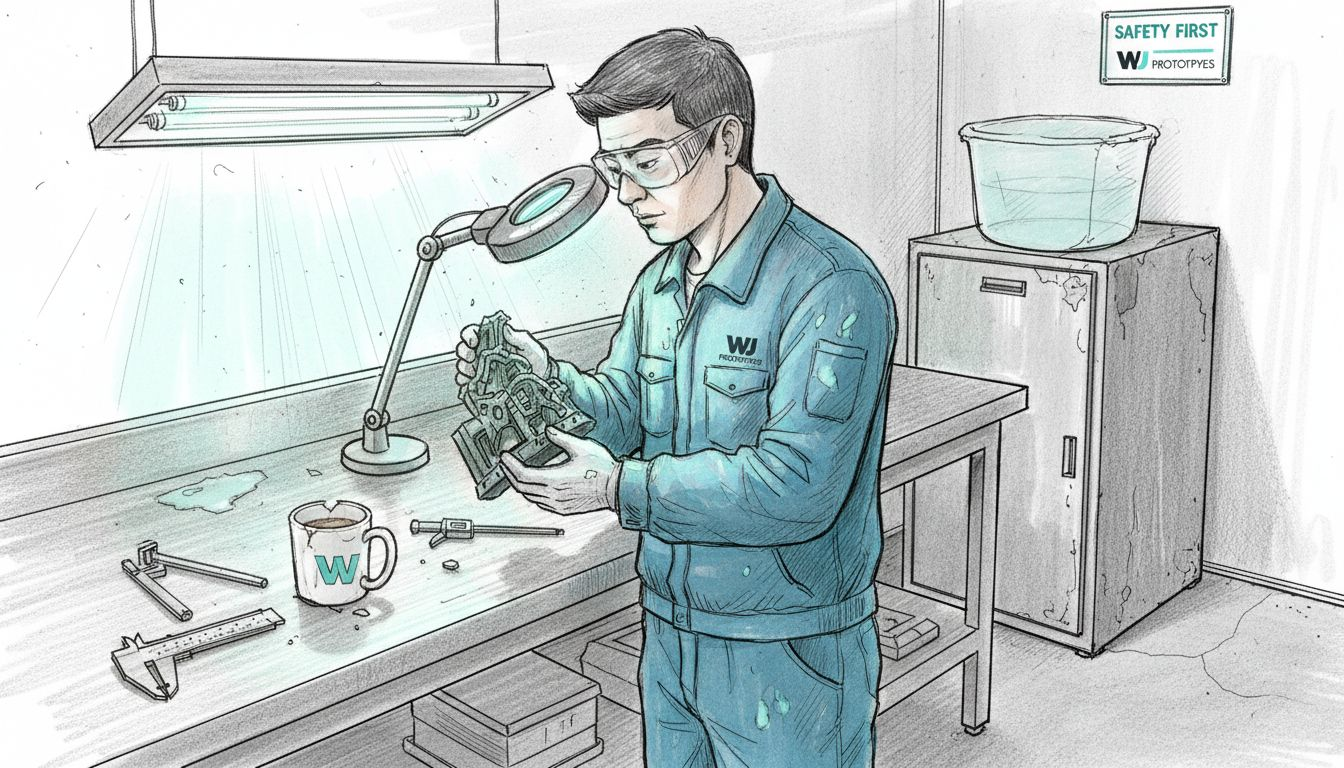
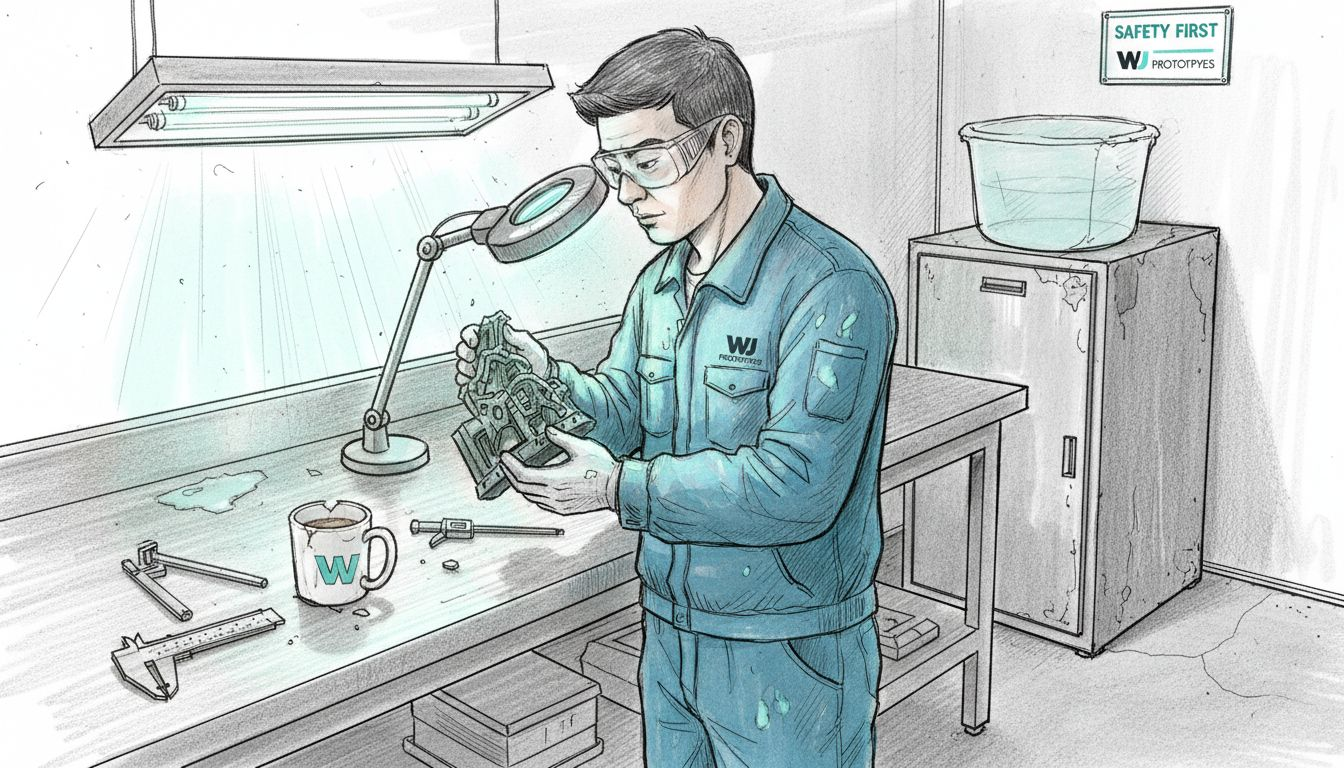
Top tip: Always inspect your master model under high-magnification lighting to identify and address even the smallest surface imperfections before mould creation.
Silicone mould creation represents a sophisticated process that transforms a master model into a precise negative impression capable of generating multiple prototype replicas. Vacuum casting techniques demand extraordinary attention to detail during this critical stage of manufacturing.
The process begins with meticulously mixing silicone rubber components to achieve optimal consistency and viscosity. Professional engineers understand that thorough mixing prevents potential air bubbles and ensures uniform material properties. During preparation, the liquid silicone is carefully poured around the master model, capturing every minute surface detail with remarkable accuracy.
Vacuum degassing plays a crucial role in eliminating entrapped air bubbles that could compromise mould quality. By subjecting the silicone mixture to controlled vacuum conditions, manufacturers remove microscopic air pockets that might otherwise create imperfections in subsequent cast parts. This technique guarantees a smooth interior surface that precisely replicates the master model’s original geometry.
Mould design requires strategic planning of parting lines and venting channels. These elements are essential for facilitating smooth resin flow and enabling easy demolding of cast parts. Experienced engineers carefully plan these technical details to ensure reproducible and high-quality prototypes with consistent dimensional accuracy.
Professional tip: Always maintain consistent silicone mixing temperatures and use precision measurement tools to ensure repeatable mould creation quality.
Curing represents a pivotal phase in vacuum casting where silicone moulds transform from liquid compounds into stable, robust manufacturing tools. Precision temperature control determines the ultimate quality and performance of the entire casting process.
The curing process involves carefully controlled heating that stabilises the silicone matrix, creating a durable and dimensionally accurate moulding environment. Engineers must meticulously regulate both temperature and duration to ensure optimal molecular bonding within the silicone material. Typical curing temperatures range between 40 and 80 degrees Celsius, with specific durations depending on silicone compound characteristics and mould complexity.
Post-curing inspection serves as a critical quality assurance step. Manufacturers systematically examine the mould for potential imperfections, checking surface smoothness, dimensional accuracy, and mechanical integrity. This rigorous verification process prevents potential defects that could compromise subsequent prototype production.
Understanding the nuanced relationship between temperature, time, and material properties allows engineers to develop highly reproducible moulding techniques. The curing stage is not merely a waiting period but an active manufacturing process that directly influences prototype quality, dimensional stability, and overall production efficiency.
Professional tip: Invest in calibrated temperature monitoring equipment and maintain detailed curing logs to ensure consistent mould quality across multiple production runs.
Casting resin mixing represents a precision art that transforms liquid polymers into exact prototype replicas. Understanding vacuum casting materials requires meticulous attention to chemical composition and processing parameters.
The resin mixing process demands extraordinary technical expertise. Engineers must carefully calculate resin viscosity, pot life, and curing characteristics to ensure optimal performance. Precise measurement of resin and hardener components becomes critical to achieving consistent mechanical properties and dimensional accuracy across multiple prototype iterations.
Vacuum chamber pouring introduces a sophisticated technique for eliminating potential defects. By introducing the mixed resin inside a controlled vacuum environment, manufacturers can systematically remove trapped air bubbles that might compromise part quality. This process ensures superior surface finish and structural integrity by allowing the liquid resin to flow seamlessly into the most intricate mould details.
Successful resin mixing requires understanding the complex interactions between material properties, environmental conditions, and processing techniques. Temperature, humidity, and mixing ratios all play crucial roles in determining the final prototype’s mechanical performance and visual appearance.
Professional tip: Invest in calibrated digital scales and maintain consistent mixing temperatures to achieve reproducible casting results across different production runs.
Vacuum chamber technology represents a critical breakthrough in precision prototype manufacturing. Advanced casting techniques leverage low pressure environments to transform resin processing and eliminate microscopic imperfections.
The deaeration process involves creating a controlled low pressure environment that systematically collapses and removes trapped air bubbles from liquid resins and silicone moulds. Engineers employ sophisticated vacuum chambers to ensure exceptional part quality by preventing gas inclusions that could compromise structural integrity and surface finish.
By subjecting casting materials to carefully regulated vacuum conditions, manufacturers can dramatically improve prototype fidelity. The vacuum environment compresses and eliminates air pockets that would otherwise create voids microscopic defects in the final part. This technique allows resin to flow more uniformly throughout intricate mould geometries, capturing the most delicate surface details with remarkable precision.
Understanding the nuanced relationship between pressure levels, material viscosity, and deaeration duration enables engineers to develop consistently high quality prototypes. Vacuum chamber parameters must be meticulously calibrated to match specific resin formulations and mould complexity.
Professional tip: Invest in precision vacuum chamber equipment with digital pressure monitoring to achieve repeatable and consistent deaeration results across different prototype production runs.
Demoulding represents a critical phase where precision and care determine the prototype’s ultimate quality. Vacuum casting techniques demand meticulous attention during part removal to preserve intricate geometric details.
Successful demoulding requires a systematic approach that minimises stress on the newly cast part. Engineers must carefully separate the silicone mould from the prototype, ensuring no surface distortion or structural compromise occurs during extraction. This process demands understanding of material properties, mould design, and gentle manipulation techniques.
Part inspection follows demoulding as a crucial quality assurance step. Trained professionals systematically examine each prototype for potential defects such as air bubbles, surface irregularities, dimensional accuracy, and overall structural integrity. Microscopic evaluation allows immediate feedback for process parameter adjustments, ensuring consistent production quality.
Detailed visual and dimensional inspections involve checking surface texture, measuring critical tolerances, and assessing geometric fidelity. Advanced optical measurement tools and precision instruments help engineers validate prototype performance against original design specifications.
Professional tip: Develop a standardised inspection checklist with specific measurement criteria and use consistent lighting conditions to ensure reliable and repeatable prototype evaluation.
Post-processing transforms raw vacuum cast prototypes into precision engineered components ready for validation and advanced testing. Vacuum casting technologies enable sophisticated surface enhancement techniques that elevate prototype performance.
The post-processing stage involves multiple sophisticated treatments designed to refine prototype characteristics. Cleaning processes meticulously remove residual mould release agents and surface contaminants that could compromise part integrity. Advanced techniques such as chemical cleaning, ultrasonic washing, and solvent treatments ensure pristine surface conditions essential for accurate performance evaluation.
Surface finishing represents a critical refinement process where engineers can modify prototype characteristics. Techniques like light sanding, polishing, and chemical smoothing enable precise control over surface texture and dimensional accuracy. Specialised coating applications can enhance mechanical properties, improve wear resistance, or prepare parts for specific functional testing environments.
Furthermore, thermal treatments such as annealing can modify material properties, relieving internal stresses and improving overall structural stability. These nuanced post-processing interventions allow engineers to fine tune prototype performance beyond initial casting parameters.
Professional tip: Develop a standardised post-processing workflow that documents each treatment stage to ensure consistent and reproducible prototype quality across different production runs.
Below is a comprehensive table summarising the key processes and considerations involved in vacuum casting techniques as discussed in the article.
| Steps | Description | Key Considerations |
|---|---|---|
| Master Model Preparation | Creation of a high-quality reference model by ensuring surface smoothness and dimensional accuracy. | Inspect under magnification and ensure material compatibility with silicone compounds. |
| Silicone Mould Creation | Precision pouring and degassing of silicone to form a mould with exact geometry of the master model. | Ensure thorough mixing and vacuum degassing for bubble-free moulds. |
| Curing and Mould Setting | Stabilisation of the silicone mould under controlled heat conditions to achieve proper durability. | Monitor curing temperatures and durations for optimal results. |
| Resin Mixing and Pouring | Combining resin and hardener accurately to produce the desired mechanical properties. | Use calibrated tools and maintain suitable environment conditions. |
| Deaeration Process | Utilisation of vacuum technology to remove air bubbles and ensure perfect material flow. | Precisely calibrate vacuum chamber settings to the materials used. |
| Demoulding and Inspection | Carefully extracting the cast part from the mould followed by rigorous dimensional and visual checks. | Employ gentle techniques during demoulding and standardised inspection methods. |
| Post-Processing Steps | Final enhancements involving cleaning, finishing, and potentially coating or annealing. | Standardise workflows for consistency and document treatment stages. |
Mastering the 7 key vacuum casting process steps outlined in the article can be challenging. From perfecting master model preparation and precise silicone mould creation to meticulous curing and deaeration, every phase demands expert knowledge and precision. Common pain points such as avoiding air bubbles, ensuring dimensional accuracy, and achieving flawless surface finishes can slow your prototyping progress or risk costly defects.
WJ Prototypes understands these challenges and offers comprehensive vacuum casting solutions designed to streamline every step of your prototype development. With our advanced manufacturing technologies, including vacuum casting combined with precision temperature control, vacuum chamber deaeration, and careful post-processing, we deliver fast, high-quality prototypes ready for demanding industries. Benefit from our experienced engineers and ISO certified processes for rapid turnaround and reliable results.
Ready to transform your vacuum casting projects with professional expertise that minimises errors and maximises quality? Discover how our end-to-end services can support your needs at WJ Prototypes. Enhance your prototyping workflow today by exploring vacuum casting technologies and related vacuum casting techniques so you can fast track your products from concept to market with confidence.
The vacuum casting process involves master model preparation, silicone mould creation, curing, resin mixing and pouring, deaeration, demoulding, and post-processing. To effectively manage your project, ensure you follow each step meticulously to achieve high-quality prototypes.
Ensure your master model is clean, smooth, and free of imperfections by using techniques such as light sanding or chemical smoothing. Inspect it under high-magnification lighting to identify any surface issues before mould creation.
Vacuum degassing is crucial as it removes air bubbles from the silicone mixture, which can compromise mould quality. Implement a vacuum degassing step after mixing your silicone to enhance the precision and surface quality of your mould.
Maintain consistent temperature control and monitor curing duration to ensure optimal results. Consider using calibrated temperature monitoring equipment and keeping detailed logs to standardise quality across multiple production runs.
Focus on cleaning surface contaminants, applying finishing techniques like sanding or polishing, and potentially using thermal treatments to enhance prototype characteristics. Establish a standardised post-processing workflow to ensure repeatable and high-quality results across different prototypes.
Conduct a systematic visual and dimensional inspection, checking for defects and measuring critical tolerances. Use advanced optical measurement tools to validate each prototype against the original design specifications.
SERVICES
RESOURCES