



- Room 1807, Unit 9, Building 2, Shangxing Commercial Street, Shangde Road, Shangxing Community, Xinqiao Subdistrict, Bao'an District, Shenzhen City, China
CONTACT US

WhatsApp


Contact Us
Our team is on stand by, waiting toassist you.

Videos
A large collection of educational videos and tutorials.

About Us
Learn about our company, leadership, and mission totransform manufacturing.

Privacy Policy
Applies to all personal information collected through and/or processed in connection.
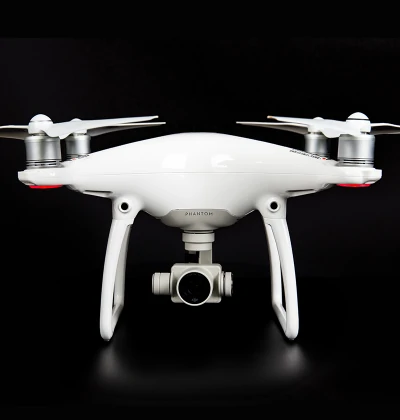

Aerospace & UAV
WJ Prototypes is your 3D manufacturing partner from prototype to large scale production.

Consumer Electronics
New Product Introduction Solutions for Consumer Electronics.

Robotics & Automation
Need some assistance bringing your robotic device or parts from the sketch-board to reality?

Medical Devices
The medical industry needs high quality, dependable and safe parts and products.

Automotive
New Product Introduction Solutions for Automotive

Industrial Machinery
The main purpose of industrial prototyping is to take the product from drawings into the real world.

TL;DR:
- A manufacturing process is a structured sequence that transforms raw materials into finished goods, emphasizing planning, validation, and quality standards. Proper process design, selection, and validation, especially during pre-production and PVT, are critical to prevent costly ramp-up failures and ensure product quality. Treating process engineering as an ongoing discipline from concept to production significantly increases launch success rates.
A manufacturing process is the structured sequence of activities that transforms raw materials into finished goods, integrating technical workflows with operational performance and quality standards. This manufacturing process guide exists because the gap between a validated design and a scalable production line is where most product launches fail. Whether you are working with CNC machining, injection molding, or additive manufacturing, the decisions you make about process structure, method selection, and validation checkpoints determine whether your product ships on time and within cost. This guide covers every critical phase, from pre-production planning through Production Validation Testing, with practical frameworks you can apply immediately.
Manufacturing processes have three core operational phases: Pre-Production, Production, and Post-Production. These phases are the foundation for transforming raw materials into finished goods, and each one contains distinct activities that directly affect quality and throughput.
| Stage | Key Activities | Primary Outcome |
|---|---|---|
| Pre-Production | Ideation, design, material sourcing, process planning | Validated design and production-ready specifications |
| Production | Machining, forming, assembly, in-process quality control | Finished components meeting dimensional and functional specs |
| Post-Production | Final inspection, surface finishing, packaging, distribution | Shipped product meeting customer and regulatory requirements |
Pre-production is where the most leverage exists. Decisions made during design and material sourcing lock in roughly 70% of total production cost before a single part is machined. Engineers who treat pre-production as a formality rather than a strategic phase consistently face expensive engineering change orders downstream.
The production stage splits into two fundamental transformation methods. Process manufacturing breaks down raw materials into outputs, such as converting wood pulp into paper, while assembly manufacturing combines discrete components into a final product, such as building a smartphone from PCBs, housings, and displays. Choosing the wrong transformation method wastes resources and inflates unit cost from day one.
Post-production is consistently underestimated. Final inspection using coordinate measuring machines (CMMs) or optical comparators, combined with traceability documentation, is what separates a product that passes customer acceptance testing from one that generates costly returns.
Pro Tip: Map your process flow diagram during pre-production and mark every decision point where a defect could be introduced. Fixing a defect at the design stage costs roughly 1/10th of fixing it after tooling is committed.

Manufacturing process choice depends on volume and variety: continuous processes suit high-volume, low-variety production, while job shop processes suit low-volume, high-variety work. Getting this selection wrong is one of the most expensive mistakes a product team can make.
The five primary process types map to different production environments:
| Process Type | Volume | Variety | Unit Cost | Flexibility |
|---|---|---|---|---|
| Continuous | Very High | Very Low | Very Low | Very Low |
| Batch | Medium | Medium | Medium | Medium |
| Job Shop | Low | Very High | High | Very High |
| Discrete | High | Low to Medium | Low | Low |
Takt time is the critical metric that connects process selection to customer demand. Takt time equals available production time divided by customer demand rate. If your process cannot hit the required takt time at your target volume, you have selected the wrong process or need to redesign the line before committing capital. For teams exploring low-volume production options, job shop and batch processes typically offer the best balance of flexibility and cost at early production stages.
Pro Tip: Before selecting a process type, plot your expected monthly volume against your product variant count on a simple matrix. If you have more than 20 active variants at volumes below 500 units per month, a job shop or batch process will almost always outperform a discrete line.
Production planning decisions operate across three time horizons: long-term (3 to 5 years), medium-term (around 2 years), and short-term (within 1 year). Each horizon requires different inputs and produces different outputs, and conflating them is a common source of operational chaos.

Long-term planning covers site selection, capital equipment investment, and product roadmap alignment. Medium-term planning addresses facility layout, labor capacity, and supplier qualification. Short-term planning handles tactical scheduling, material management, and daily production targets. A team that only plans short-term will constantly firefight. A team that only plans long-term will miss weekly shipment targets.
Production planning balances competing goals including quality, cost, inventory levels, and scheduling constraints. These goals are often in direct tension. Reducing inventory buffers lowers carrying cost but increases exposure to supply disruptions. Increasing batch sizes lowers setup cost per unit but ties up working capital and reduces responsiveness.
Two systems govern how planning translates into execution. Manufacturing Process Management (MPM) is the pre-production strategic design phase, defining how a product will be built efficiently. Manufacturing Execution Systems (MES) monitor quality and equipment performance on the shop floor in real time. MPM and MES are complementary: MPM sets the plan, MES tracks adherence to it. Teams that implement MES without a solid MPM foundation end up with excellent data about a poorly designed process.
Facility layout directly affects throughput. A cellular layout groups equipment by product family and reduces material travel distance. A functional layout groups equipment by type and suits high-variety job shops. Choosing the wrong layout for your production mix adds non-value-added movement that compounds across every shift.
Pro Tip: Run a value stream map on your current or planned process before finalizing your facility layout. Identify the three largest sources of waiting and transport waste. These are your highest-return layout improvement targets.
Process validation is the phase where most hardware teams underinvest, and it is the phase most responsible for costly production ramp failures. A structured validation sequence moves through three stages: Process Design, Prototyping and Development, and Production Validation Testing.
The Bill of Process (BOP) documents the step-by-step assembly plan required for scaling manufacturing operations. Unlike the Bill of Materials, which lists what you build with, the BOP defines how you build it, including manufacturing sequences, jigs and fixtures, tooling specifications, and operator work instructions. A BOP detailed enough to replicate manufacturing steps precisely is the difference between a process that scales and one that degrades as volume increases. For teams focused on precision part fabrication, the BOP is the document that makes repeatability possible across shifts and operators.
Prototyping stages (EVT and DVT) are critical for de-risking manufacturing ramps by gathering operator feedback and testing assembly cycles before full production tooling is committed. Engineering Validation Testing (EVT) confirms that the design functions as intended. Design Validation Testing (DVT) confirms that the design can be manufactured consistently using production-representative processes and materials.
The most valuable output of DVT is not the test data. It is the operator feedback on assembly difficulty, cycle time variance, and error-prone steps. This feedback directly refines work instructions and reduces scale-up failures. Teams that skip DVT to save time almost always spend more time and money correcting process failures after launch. For a deeper look at validation strategies that reduce product risk, the principles apply directly to both EVT and DVT planning.
The Production Validation Test (PVT) is the final checkpoint before mass production, proving that the line can deliver consistent output at the target takt time. PVT uses final production tooling, final software builds, and trained production operators. It is not a prototype run. It is a dress rehearsal for the full production line.
PVT collects Statistical Process Control (SPC) data to qualify the line for high-volume production. Key metrics include Cpk values for critical dimensions, first-pass yield rates, and cycle time against takt time targets. A Cpk below 1.33 on a critical dimension is a hard stop. Shipping past a failed PVT to meet a sales commitment is the single most common cause of quality escapes and customer returns in hardware product launches.
Common pitfalls during ramp-up include:
Successful projects rely on thorough PVT to confirm process robustness before ramping production. Schedule pressure is real, but a failed ramp costs more in rework, returns, and customer confidence than a delayed launch.
A manufacturing process succeeds when pre-production planning, method selection, and PVT validation are treated as equally critical disciplines, not sequential checkboxes.
| Point | Details |
|---|---|
| Three-phase structure | Pre-production, production, and post-production each require distinct activities and quality gates. |
| Process type selection | Match your process type to volume and variety using takt time as the primary selection metric. |
| Planning time horizons | Align long-term, medium-term, and short-term planning to avoid operational gaps between strategy and execution. |
| Bill of Process (BOP) | Document manufacturing sequences, tooling, and work instructions in detail before committing to production tooling. |
| PVT as final gate | Never skip or compress PVT. SPC data from PVT is the only objective proof your line is ready to scale. |
After working across dozens of hardware product launches, the pattern is consistent: teams invest heavily in product design and almost nothing in process design. The Bill of Materials gets reviewed in every design meeting. The Bill of Process gets written the week before production starts, if it gets written at all.
The uncomfortable truth is that manufacturing process engineering is not a launch activity. It is a parallel discipline that should start the moment a product concept is approved. By the time you are running EVT builds, your process design should already be at a draft BOP stage. By DVT, your work instructions should be operator-tested. By PVT, your SPC plan should be in place and your operators should be trained.
I have seen teams with genuinely excellent product designs fail their first production ramp because they treated prototyping as a design activity rather than a process de-risking activity. The EVT and DVT builds are not just for testing whether the product works. They are for testing whether your process works. That mindset shift changes what you measure, what feedback you collect, and what you fix before you commit capital to production tooling.
The teams that launch successfully treat manufacturing process engineering as an ongoing discipline, not a checklist. They revisit the BOP after every operator feedback session. They update work instructions based on cycle time data, not assumptions. They treat a PVT failure as useful information, not a crisis.
If you take one thing from this article, make it this: the process is the product. A great design built on a poorly validated process will underperform every time.
— Yu
Wjprototypes provides manufacturing and rapid prototyping services that cover every phase of the process described in this guide. From early EVT builds using CNC machining services to low-volume production runs in die casting and vacuum casting, Wjprototypes supports product teams at each validation stage. The material selection available through Wjprototypes CNC machining materials covers metals, engineering plastics, and composites suited for prototype and production-representative parts. As an ISO-certified manufacturer with experienced engineers and global delivery capacity, Wjprototypes is positioned to support your process from first prototype through production ramp. Request an instant quote directly on the Wjprototypes website to get your project moving.
A manufacturing process is the structured sequence of activities that transforms raw materials into finished products through pre-production planning, production execution, and post-production quality control. It integrates technical workflows with operational performance standards to deliver consistent, scalable output.
The five main types are continuous, batch, job shop, discrete, and process manufacturing. Selection depends on production volume, product variety, and required takt time.
The Bill of Process (BOP) documents the step-by-step manufacturing sequences, tooling, fixtures, and work instructions needed to build a product consistently. It is distinct from the Bill of Materials and is the primary tool for replicating a process at scale.
PVT is the final validation checkpoint before mass production, using final tooling, trained operators, and SPC data collection to confirm the line can meet target takt time and quality requirements consistently.
Process planning should begin in parallel with product design, not after it. By the time EVT builds start, a draft BOP should already exist to guide assembly testing and operator feedback collection.
SERVICES
RESOURCES