



- Room 1807, Unit 9, Building 2, Shangxing Commercial Street, Shangde Road, Shangxing Community, Xinqiao Subdistrict, Bao'an District, Shenzhen City, China
CONTACT US

WhatsApp


Contact Us
Our team is on stand by, waiting toassist you.

Videos
A large collection of educational videos and tutorials.

About Us
Learn about our company, leadership, and mission totransform manufacturing.

Privacy Policy
Applies to all personal information collected through and/or processed in connection.
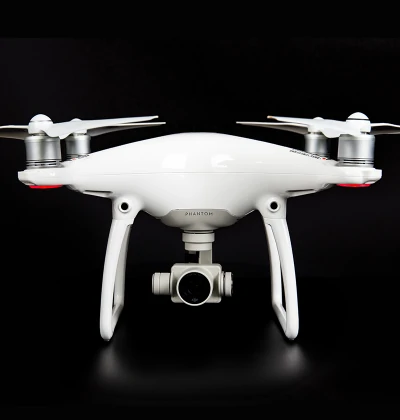

Aerospace & UAV
WJ Prototypes is your 3D manufacturing partner from prototype to large scale production.

Consumer Electronics
New Product Introduction Solutions for Consumer Electronics.

Robotics & Automation
Need some assistance bringing your robotic device or parts from the sketch-board to reality?

Medical Devices
The medical industry needs high quality, dependable and safe parts and products.

Automotive
New Product Introduction Solutions for Automotive

Industrial Machinery
The main purpose of industrial prototyping is to take the product from drawings into the real world.


TL;DR:
- Digital manufacturing is a connected, data-driven operating philosophy that integrates design, production, quality, and supply chain data into a single system. It employs IoT sensors, MES, digital twins, and analytics to optimize low-volume and prototype production processes and reduce manual, paper-based workflows. Challenges include ensuring data quality, system integration, and security, which are critical for reliable and compliant manufacturing operations.
Digital manufacturing is not simply a software upgrade bolted onto an existing factory floor. Engineering teams in aerospace, automotive, and medical device development often make that mistake, and it costs them. The real promise is a fully connected, data-driven operating model where design intent, production execution, quality feedback, and supply chain data all flow through a single, coherent system. For teams running prototypes or low-volume production runs, that integration is not a luxury. It is the difference between catching a tolerance error in simulation and discovering it after a costly batch of medical housings or structural brackets has already been machined.
| Point | Details |
|---|---|
| Definition clarified | Digital manufacturing is about connected, data-driven production for better prototypes and products. |
| Key technologies | IoT, MES, digital twins, and analytics must work together for successful results. |
| Digital thread value | Integrating engineering and shop-floor data creates efficiency, traceability, and quality gains. |
| Common pitfalls | Data quality and integration problems are top risks—address them early. |
| Real-world wins | Prototyping and low-volume runs benefit most from agile, digital-first manufacturing solutions. |
Digital manufacturing is connected software, data, and automation working together to plan, run, and continuously improve how products are made. That is a deliberately broad definition, and it needs to be. Unlike CNC machining or SLA printing, which are specific processes, digital manufacturing is an operating philosophy that wraps around those processes.
Traditional manufacturing relies on paper travelers, manual inspection logs, and tribal knowledge held by experienced machinists. Additive manufacturing adds geometric freedom and faster iteration. Digital manufacturing adds connectivity. It ties your CAD model, your machine parameters, your quality records, and your production schedule into one traceable data environment. You can read more about where these approaches overlap and differ in our breakdown of traditional vs additive manufacturing.
The key technologies that make this possible include:
As the research makes clear, digital manufacturing combines IoT sensors, MES-like execution systems, simulation and digital twins, and analytics to reduce dependence on paper and manual processes. No single tool delivers digital manufacturing. It is the integration of these elements that creates value.
| Capability | Traditional approach | Digital manufacturing approach |
|---|---|---|
| Process planning | Manual, document-based | Model-driven, linked to CAD |
| Quality records | Paper logs, manual entry | Automated sensor capture |
| Change management | Email chains, revision sheets | Version-controlled digital thread |
| Production feedback | End-of-run reports | Real-time dashboards |
| Traceability | Limited, labor intensive | Full lifecycle data trail |
For engineering teams focused on prototyping and low-volume runs, this matters enormously. When you are producing ten aerospace brackets or twenty medical device housings, you cannot afford rework loops that a high-volume plant might absorb across thousands of units. Digital manufacturing compresses those feedback loops from days to hours.
Now that we have defined digital manufacturing, let us look at how its core concept, the digital thread, transforms the way teams manage data across a product’s lifecycle.
A digital thread ties engineering definitions to shop-floor execution and performance feedback. Think of it as the single strand of data that runs from the original design file through ERP-managed procurement, MES-scheduled machining, quality inspection records, and ultimately back to the engineering team as performance data. Break that thread at any point and you introduce risk: incorrect revision on the shop floor, untraceable change history, or a compliance audit that cannot reconstruct what happened on a specific production date.
The practical benefits of a digital thread for engineering teams include:
Building a digital thread for your team does not require a full factory overhaul. You can start smaller and build incrementally:
This stepwise approach aligns well with prototyping trends heading into 2026, where teams increasingly demand faster design iteration backed by real manufacturing data rather than estimates.
Pro Tip: Map your current data handoffs on a whiteboard before buying any software. Most teams discover three or four manual translation steps (copying a tolerance from a PDF into a spreadsheet, for example) that a digital thread can eliminate immediately and cheaply.
What are the essential technologies that actually enable a true digital manufacturing environment? Let us go deeper than the usual list.
IoT sensors and edge computing are the sensory system of digital manufacturing. They capture what is physically happening on machines and workpieces in real time. For a medical device machining operation, this might mean capturing spindle load data to detect tool wear before it causes a dimensional deviation on an implant component.

Manufacturing execution systems act as the operational brain. They translate a scheduled work order into specific machine instructions, track operator steps, and log completion times. Without MES integration, even a sophisticated digital twin has no real-time production data to work with.
Digital twins deserve particular attention. A digital twin of a production process (not just a part) lets your team simulate the effect of a material change or a revised toolpath before running a single part. For automotive teams validating a new bracket design, this can reduce physical prototype iterations from four rounds to two.
Analytics platforms process the volume of data that IoT and MES systems generate and surface actionable signals. Predictive maintenance is the most discussed application, but for low-volume producers, the bigger value is yield optimization: understanding which parameter combinations consistently produce parts within tolerance and encoding those as process standards.
As established, digital manufacturing combines these technologies to reduce reliance on manual and paper processes. The critical word is combines. Each system has limited standalone value. The intelligence emerges at the integration points.
Together, they create a self-improving production loop. Teams investing in precision engineering in prototyping will recognize this: the tighter your data integration, the tighter your dimensional control.
Pro Tip: When evaluating vendors, ask specifically how each system shares data with the others. Open APIs and standard data formats (like ISO STEP for geometry) are strong indicators of integration readiness. Proprietary data lock-in is the single fastest way to break your digital thread.
Knowing the technology landscape, engineering teams must also navigate the most common pitfalls of digital deployment. The technology itself is mature. The failure modes are almost always organizational or architectural.
Data quality is the foundation, and it is fragile. Digital twins and predictive analytics depend on data quality, synchronization, and integration; without clean, timely data, models become misleading or are “starved of good data.” A digital twin calibrated on bad sensor readings will confidently give you wrong answers. In regulated sectors, that is not just a production problem. It is a compliance problem.
System silos kill the thread. The most common failure pattern in mid-size manufacturing deployments is integrating two of the four core systems (usually MES and ERP) and leaving CAD/PLM and quality management on separate islands. Engineering teams then recreate the manual translation steps that the digital thread was supposed to eliminate.
Security is non-negotiable in regulated sectors. When teams move toward edge computing and real-time analytics, OT network security, compliance, device hardening, and deployment timelines become serious adoption barriers. Operational technology (OT) networks running CNC machines or medical-grade equipment were often designed for reliability and isolation, not connectivity. Bridging them to IT systems requires deliberate OT security strategies rather than generic IT security policies.
“The real risk in digital manufacturing is not that the technology will fail. It is that teams will feed it poor data, underestimate integration complexity, and then blame the software when the digital twin gives misleading outputs.”
Practical safeguards to establish early:
Teams working through an industrial prototyping process for the first time will find that these safeguards prevent most of the expensive mid-project corrections that derail digital adoption timelines.
Armed with knowledge of challenges and solutions, let us see how digital manufacturing impacts real engineering and prototyping work across the sectors that matter most.
Digital manufacturing is built to plan, run, and improve production continuously. For prototyping and low-volume production, that continuous improvement cycle operates on a compressed timeline. Instead of learning lessons across a thousand-unit production run, you capture them across ten parts and apply them immediately.
Aerospace teams benefit most from traceability and simulation. When a structural component requires AS9100 documentation for every operation performed, a digital thread reduces the documentation burden dramatically while improving audit readiness. Digital twins of machining operations let engineers validate that a revised titanium bracket will meet fatigue specifications before committing to DMLS (direct metal laser sintering) build time.
Automotive teams gain speed in design validation cycles. A digital manufacturing environment connected to industrial technology advancements allows simulation of thermal and mechanical performance for prototype parts before the first physical iteration is ordered. Teams working on EV battery housings or lightweight structural components can iterate design geometry in simulation, then produce a targeted physical prototype with much higher first-pass confidence.
Medical device teams see the clearest ROI in compliance and quality. FDA submissions for Class II and Class III devices require robust design history files. A digital thread that automatically assembles traceability records from prototype machining through final inspection dramatically reduces the manual effort of DHF compilation and the risk of missing records during an audit.
| Scenario | Before digital manufacturing | After digital manufacturing |
|---|---|---|
| Prototype lead time | 4 to 6 weeks | 1 to 3 weeks |
| Design revision cycles | 3 to 5 physical iterations | 1 to 2 targeted iterations |
| Quality escape rate | 8 to 12% per prototype batch | Under 3% |
| Traceability effort | 20+ manual hours per audit | Automated report generation |
| Change notification time | 2 to 5 days (email/document) | Same-day, system-triggered |

Teams can start applying this to current projects by reviewing our industrial prototyping guide and exploring industrial prototyping applications across sectors to identify where digital data integration would have the highest immediate impact.
Most guides on digital manufacturing focus on technology. The real constraint is almost never the software.
Successful deployment in regulated, safety-critical settings hinges on integration across engineering and shop-floor systems, not just on software adoption. We have seen well-funded teams install best-in-class MES platforms and still fail to realize expected benefits because the operational technology team was brought in three months too late, or because the quality engineering group continued using a separate validation database that nobody had authority to consolidate.
The most common and most avoidable mistake is treating digital manufacturing as an IT project. IT manages the infrastructure. But the people who understand what data matters, how machines actually behave, and where the real quality risks live are the OT engineers, process technicians, and quality leads on the shop floor. Sidelining them during selection and configuration virtually guarantees a system that collects data nobody trusts.
Governance matters just as much as integration. A digital thread without clear ownership degrades. When a sensor goes out of calibration and nobody’s role explicitly covers corrective action, that bad data propagates through every downstream system until someone catches an anomaly in a finished part. That is not a technology failure. That is a governance gap.
Our practical advice, drawn from supporting engineering teams through industrial prototyping in China and globally: define your data governance model before your software architecture. Know who owns each data stream, who resolves conflicts, and how often systems are validated against physical reality. Then build the technology to serve that model, not the other way around.
If this guide has clarified what digital manufacturing actually means for your engineering team, the practical next step is assessing where your current prototyping and production workflows have the most to gain. WJ Prototypes works directly with aerospace, automotive, and medical device teams to support fast, traceable, high-quality prototype and low-volume production runs using technologies including CNC machining, DMLS, SLS, MJF, and injection molding. Our team can help you choose the right process and material combination for your specific design requirements. Explore our full range of CNC machining materials and injection molding materials to find the best match for your application, and connect with our engineers for a fast, accurate quote on your next prototype or production run.
No, digital manufacturing benefits engineering teams of all sizes, particularly those running custom prototypes or traceable low-volume production where data integration and feedback loops directly improve quality and iteration speed.
Digital manufacturing focuses specifically on integrating data and automation to improve production planning and execution, while Industry 4.0 is a broader vision for smart, connected industry that also encompasses supply chain networks, business models, and service innovation.
Digital twins are virtual models of parts, processes, or production lines used within a digital manufacturing environment to simulate, monitor, and optimize workflows before and during physical production. Digital manufacturing combines digital twins with IoT sensors, MES systems, and analytics to close the loop between design and production.
The main risk is poor data quality or fragmented system integration, because digital twins depend on data quality and synchronization. When data is inaccurate or siloed, models produce misleading outputs that can cause quality escapes or compliance failures.
SERVICES
RESOURCES