



- Room 1807, Unit 9, Building 2, Shangxing Commercial Street, Shangde Road, Shangxing Community, Xinqiao Subdistrict, Bao'an District, Shenzhen City, China
CONTACT US

WhatsApp


Contact Us
Our team is on stand by, waiting toassist you.

Videos
A large collection of educational videos and tutorials.

About Us
Learn about our company, leadership, and mission totransform manufacturing.

Privacy Policy
Applies to all personal information collected through and/or processed in connection.
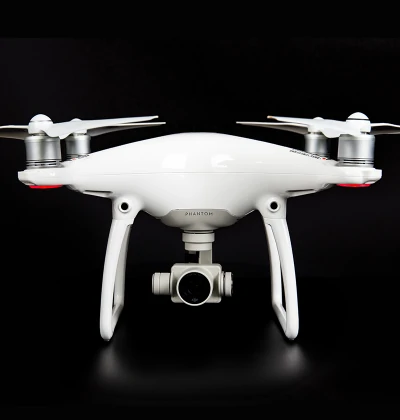

Aerospace & UAV
WJ Prototypes is your 3D manufacturing partner from prototype to large scale production.

Consumer Electronics
New Product Introduction Solutions for Consumer Electronics.

Robotics & Automation
Need some assistance bringing your robotic device or parts from the sketch-board to reality?

Medical Devices
The medical industry needs high quality, dependable and safe parts and products.

Automotive
New Product Introduction Solutions for Automotive

Industrial Machinery
The main purpose of industrial prototyping is to take the product from drawings into the real world.

TL;DR:
- Overlooking a key step in low-volume manufacturing can cause delays, increased rework, and missed launch windows for SMEs. Proper preparation, process validation, and early procurement engagement are essential for cost-effective, reliable production runs. Emphasizing rapid learning and iterative adjustments rather than perfect initial documentation accelerates success in aerospace, automotive, and medical sectors.
Missing one overlooked step in a low-volume production run can cost you weeks of delay, thousands in rework, and the kind of launch-window miss that competitors exploit. For product development managers and procurement officers at SMEs in aerospace, automotive, and medical sectors, the stakes are particularly sharp: your batches are small, your margins are tight, and regulatory expectations leave almost no room for avoidable error. This guide walks you through repeatable, efficient steps for reliable small-batch manufacturing, from defining requirements and running pilots to verifying cost benchmarks and scaling confidently.
| Point | Details |
|---|---|
| Batch size flexibility | Low-volume production suits 50–20,000 units per year, ideal for iterative product launches. |
| Early procurement | Involving procurement early mitigates setup and sourcing risks, saving time and cost. |
| Pilot runs boost reliability | Controlled pilot runs let you refine processes and catch defects before major spending. |
| Cost efficiency grows with scale | Unit costs decrease significantly as you move from very small to larger low-volume batches. |
Low-volume production is not simply “making fewer parts.” It is a structured manufacturing phase with its own logic, constraints, and opportunities. Most practitioners define it as anywhere from 50 to roughly 20,000 units per year, though the practical ceiling varies by industry and part complexity. For a medical device SME, 500 units per year might already feel like high-volume. For an automotive supplier running secondary components, 10,000 units might still be considered a short run.
The transition from prototyping into a controlled low-volume manufacturing phase is where many teams stumble. Prototyping tolerates messiness. Low-volume production demands repeatability. That shift in mindset is the single most important thing to get right before you cut the first production part.
Three sectors drive the majority of low-volume manufacturing demand:
Key business drivers across all three sectors follow a familiar pattern:
| Driver | What it means for your team |
|---|---|
| Design validation | Prove the design works with real materials and tolerances |
| Market flexibility | React to demand signals without overcommitting capital |
| Risk reduction | Identify and fix issues before full-scale launch |
| Regulatory compliance | Satisfy traceability and quality documentation requirements |
| Speed to market | Get usable product to customers while refining the design |
A solid prototyping step-by-step guide will overlap with low-volume preparation, but the objectives diverge once you move from “does this work?” to “can we make this consistently?”
Understanding your additive manufacturing workflow is equally useful here. Additive processes like SLS or MJF can bridge the gap between one-off prototypes and injection-molded production parts, especially when batch sizes are too small to justify hard tooling.
Pro Tip: Before declaring your prototype phase complete, document every process lesson learned. Material substitutions, tolerance adjustments, and surface finish decisions made during prototyping will all resurface during your first production pilot. Capture them now so your production team is not solving old problems at production rates.
With fundamentals in place, let’s prepare the groundwork for seamless execution. This is the stage where most cost problems originate. Teams that skip structured preparation often find themselves paying for changeover time, expedited tooling, or emergency re-sourcing, all of which compress margins on already small batches.

Start with four non-negotiable requirement categories:
One of the most consequential early decisions is tooling strategy. The table below captures the core tradeoffs:
| Tooling type | Typical batch range | Lead time | Unit cost | Best for |
|---|---|---|---|---|
| Soft (aluminum, silicone) | 50–5,000 units | Days to weeks | Higher per unit | Validation, bridge production |
| Hard (steel) | 10,000+ units | 6–14 weeks | Lower per unit | Full-scale launch |
| CNC machined fixtures | Any batch | Days | Variable | Short runs, complex geometry |
When choosing a prototyping method for precision projects, the same logic applies to production tooling: match the tool to the batch, not to the ideal end state.
This is where many SMEs leave money on the table. Procurement is often brought in after the process is selected, meaning that vendor negotiations happen under time pressure. Sourcing strategies for high-mix, low-volume manufacturers show clearly that procurement planning for low-volume production is shaped by complexity, setup costs, and lead-time reliability, not just unit price. Embedding procurement earlier prevents sourcing traps during new product introduction.
Practical actions for procurement alignment:
Knowing how to reduce prototype costs strategically also informs your production cost modeling, since many of the same levers (batch consolidation, material standardization, DFM review) apply once you enter the low-volume phase.
Pro Tip: Request a formal cost breakdown from every supplier, not just a total quote. Understanding whether cost sits in material, setup, or labor tells you exactly where DFM changes will generate savings.
Having planned your approach, it’s time to execute with precision, in these actionable steps. The pilot run is where theory meets reality, and the discipline you apply here determines whether your first full batch ships on time.
Define your pilot batch size. For most SMEs, a pilot of 50 to 500 units using actual production tooling and materials is the right scale. This is large enough to surface process variation but small enough to limit financial exposure.
Set your measurement baseline. Before the pilot starts, document your target cycle time, acceptable defect rate, planned material consumption per unit, and expected tool wear rate. Without a baseline, you cannot know if the pilot is succeeding.
Run the pilot under real conditions. Avoid the temptation to run pilots in favorable conditions. Use shift workers, real ambient temperatures, and actual raw material lots. Shortcuts here create false confidence.
Monitor key metrics in real time. The pre-production checklist approach used by experienced manufacturers centers on tracking cycle time, tool wear, material consumption, and defect rates during the actual pilot, not after. Set up your data capture before the first unit runs.
Pause and analyze after each sub-batch. Do not wait until the full pilot is complete to review results. Analyze after every 50 to 100 units and ask: what changed, why, and what needs adjustment?
Adjust process parameters before scaling. Every change made after scaling is exponentially more expensive. Adjust feed rates, curing times, injection pressures, or CNC toolpaths at pilot scale.
Validate with a controlled confirmation run. After adjustments, run a second smaller batch under the corrected parameters. This run should hit your benchmarks before you authorize full production.
Release to full production with documented settings. Every parameter, from spindle speed to cure temperature, should be locked in writing before full production starts.
“Document every process parameter change for traceability. In regulated industries, an undocumented change is effectively a quality event waiting to happen.”
For teams using casting processes, a detailed review of vacuum casting production steps shows how the same pilot-validate-confirm sequence applies to polymer parts at low volumes. Similarly, teams moving toward plastic enclosures or housings should understand the injection molding workflow before committing to tooling.
Using an industrial measurement checklist during your pilot run can help ensure that dimensional verification is systematic rather than ad hoc.
Pro Tip: Use even a simple spreadsheet to track every improvement identified during the pilot. Teams that capture lessons digitally cut their second-run issue rate by a significant margin compared to those relying on verbal handoffs.
Once production is underway, understanding verification and cost drivers ensures you deliver profits, not headaches. This is the stage where the math has to work, and where post-run discipline separates high-performing SMEs from those that repeat the same costly mistakes.
Understanding your real cost structure is more valuable than any unit price comparison. The main cost drivers for small-batch manufacturing are:
The numbers here are not theoretical. Benchmark data for low-volume CNC machining shows that unit cost drops sharply as batch size increases, with a 58% reduction in unit cost when moving from just 10 units to 100 units. That is the amortization effect of setup and programming costs spreading across more parts.
| Batch size | Relative unit cost | Key driver |
|---|---|---|
| 10 units | 100% (index) | Setup dominates |
| 50 units | ~65% | Partial amortization |
| 100 units | ~42% | Strong amortization effect |
| 500 units | ~25% | Material and cycle time dominate |
This curve has a direct implication for procurement strategy: consolidating orders into fewer, slightly larger batches often saves more than negotiating harder on unit price.
Before you authorize a second production run or scale to higher volumes, verify these items without exception:
Teams considering the range of low-volume manufacturing options available in today’s supply chain should use this checklist as a vendor evaluation tool as well. A supplier who cannot provide this data after a pilot run is a supplier who cannot support your scaling decisions.

Here is the uncomfortable truth that most manufacturing guides avoid: perfect process documentation rarely survives first contact with real production in an SME environment. Teams at small and medium enterprises deal with personnel turnover, multi-process equipment, and compressed development timelines that make theoretical process perfection impractical.
The teams we have seen succeed at low-volume production are not the ones with the most complete SOPs on day one. They are the ones with the tightest feedback loops. They run a pilot, pull the data the same day, hold a 30-minute debrief, and implement corrections before the next shift. They treat the pilot run not as a box to check but as a learning instrument.
“In SME environments, responding quickly outvalues being ‘right’ the first time. A fast, corrected second run beats a slow, perfect first attempt that arrives after the launch window closes.”
This matters especially in aerospace and medical, where teams sometimes over-invest in upfront process validation and under-invest in iterative monitoring. Over-investment in documentation before the first real run is a form of risk avoidance that creates a different kind of risk: market delay.
The better model is to establish the minimum viable process controls needed to satisfy your quality system, run the pilot, learn from what actually happened, and improve from there. Industrial prototyping principles apply here too: the value is in the iteration, not the initial specification.
Speed to learning is your real competitive advantage at low volumes. Protect it.
Ready to apply these steps with expert support? WJ Prototypes works with SMEs in aerospace, automotive, and medical sectors to execute exactly the kind of structured, cost-efficient low-volume runs this guide describes. Whether you need to select the right process for your next batch, identify the best CNC machining materials for your application, or access fast-turnaround CNC machining services with full traceability, the team brings ISO-certified manufacturing discipline to every order. For teams in aerospace and UAV development, WJ Prototypes offers application-specific guidance on tooling strategy, material selection, and regulatory documentation to keep your program on schedule.
Low-volume production spans roughly 50 to 20,000 units per year, giving SMEs the flexibility to validate designs and respond to market signals before committing to full-scale tooling.
A pilot run uses actual production tools and materials to surface cycle time issues, defect patterns, and tool wear before scaling, giving you real data to make corrections at the lowest possible cost.
Setup and programming costs dominate at small quantities, which is why unit costs drop 58% when moving from 10 to 100 units as those fixed costs spread across more parts.
Early procurement involvement prevents costly surprises by addressing complexity, vendor reliability, and lead-time risk before production commitments are made, not after.
SERVICES
RESOURCES