



- Room 1807, Unit 9, Building 2, Shangxing Commercial Street, Shangde Road, Shangxing Community, Xinqiao Subdistrict, Bao'an District, Shenzhen City, China
CONTACT US

WhatsApp


Contact Us
Our team is on stand by, waiting toassist you.

Videos
A large collection of educational videos and tutorials.

About Us
Learn about our company, leadership, and mission totransform manufacturing.

Privacy Policy
Applies to all personal information collected through and/or processed in connection.
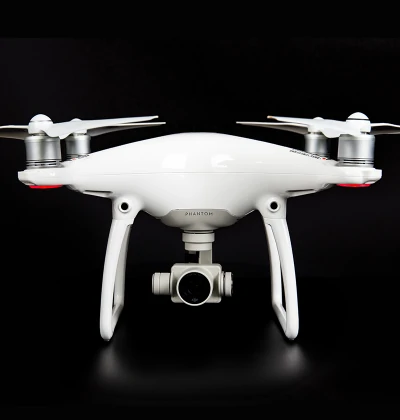

Aerospace & UAV
WJ Prototypes is your 3D manufacturing partner from prototype to large scale production.

Consumer Electronics
New Product Introduction Solutions for Consumer Electronics.

Robotics & Automation
Need some assistance bringing your robotic device or parts from the sketch-board to reality?

Medical Devices
The medical industry needs high quality, dependable and safe parts and products.

Automotive
New Product Introduction Solutions for Automotive

Industrial Machinery
The main purpose of industrial prototyping is to take the product from drawings into the real world.


TL;DR:
- Poorly conducted prototype testing is costly because it often overlooks edge cases and organizational alignment, leading to failures in production.
- Teams must establish clear objectives and lock prototype fidelity early, ensuring test questions and expectations are well-defined and agreed upon before testing begins.
- Focusing on risk-driven testing of high-impact features and selecting the appropriate prototype types enhances efficiency, reduces costly surprises, and aligns with industry-specific regulatory requirements.
Prototype testing done poorly is expensive. When teams skip edge-case scenarios, lock in the wrong fidelity level, or start testing before everyone agrees on what they are measuring, the result is a prototype that passes validation but fails in production. For engineers and product managers in aerospace, automotive, and medical sectors, that gap between lab results and real-world performance can mean recalls, regulatory delays, or serious safety incidents. This article delivers actionable, field-tested strategies to structure prototype testing so that every cycle produces answers you can actually trust and act on.
| Point | Details |
|---|---|
| Set clear test objectives | Defining goals and prototype fidelity ensures meaningful results and team alignment. |
| Test edge cases rigorously | Design for boundary-value and failure-mode scenarios to avoid hidden product flaws. |
| Match prototype type to goals | Use static prototypes for visual feedback and interactive ones for functional testing. |
| Prioritize by risk and impact | Focus prototype tests on critical, high-risk features, especially those driven by regulations. |
| Apply expert insights | Leverage pro tips and cross-functional alignment for real-world prototype testing success. |
Before a single test participant interacts with your prototype, your team needs agreement on two things: what specific questions the test must answer, and what fidelity level the prototype represents. These two decisions shape every downstream choice, from participant recruitment to data interpretation.
Start by writing testable questions, not goals. “Validate usability” is a goal. “Can a first-time operator complete the calibration sequence in under four minutes without external help?” is a testable question. Testable questions force you to define success criteria upfront, which makes it much harder for teams to move the goalposts after testing reveals uncomfortable data.
Fidelity covers two dimensions: visual fidelity (how finished it looks) and functional fidelity (how it actually behaves). A high-visual, low-functional prototype is appropriate for stakeholder buy-in presentations. A low-visual, high-functional prototype is better for testing navigation flows and error recovery. Mixing these up wastes time and money. An aerospace team presenting a fully polished composite shell mockup to test assembly ergonomics will get feedback on surface finish, not reach envelope, which is the wrong answer to the wrong question.
Cross-functional alignment is part of prototype testing mechanics; lock fidelity and align the team around objectives before users or participants see anything. This is not a soft recommendation. Without it, engineers optimize for one outcome while product managers measure another, and regulatory teams are left reconciling two different data sets during submission.
Key steps for locking objectives and fidelity early:
“The most common cause of prototype test failure is not technical. It is organizational. Teams begin testing with different mental models of what the prototype represents, and the test data becomes impossible to interpret consistently.”
Pro Tip: Create a one-page test charter that states the objective, fidelity level, success criteria, and out-of-scope items. Circulate it before any test session. This single document eliminates most post-test disputes about what the results mean.
Use your prototype process checklist to verify every pre-test alignment step is complete. Teams that skip this preparation phase often spend more time arguing about results than acting on them.
Most prototype tests cover the happy path, meaning the scenario where everything works as intended, the user follows the expected sequence, and no unusual inputs occur. Happy path testing is necessary but dangerously insufficient. Real products encounter unexpected inputs, operator errors, environmental extremes, and hardware edge conditions from day one in the field.

Edge cases should be explicitly designed into test plans, including boundary value and failure-mode thinking. This means going beyond “does it work” to ask “when does it break, and how does it break?” The distinction matters enormously in regulated industries. A medical infusion pump that performs perfectly under nominal conditions but mishandles a battery fault silently is not a safe device. It is a liability.
Boundary value testing focuses on the limits of acceptable inputs. If a sensor is rated for temperatures between minus 20 and plus 85 degrees Celsius, your test plan should include minus 20, minus 21, plus 85, and plus 86. Those boundary values reveal whether the system handles edge conditions gracefully or fails catastrophically. Testing only at room temperature tells you nothing about field performance.
Failure-mode testing asks: what happens when something goes wrong? Power interruptions, malformed data packets, dropped connections, mechanical interference, and operator misuse all qualify. Each of these should appear as discrete test cases in your plan, not as afterthoughts.
Effective edge-case and failure-mode test design includes:
“Failure modes that appear during prototype testing are gifts. They are vastly cheaper to fix at the prototype stage than after tooling is committed or regulatory submissions are filed.”
For guidance on building prototypes that can physically withstand these test regimes, explore our prototyping parts guide for material and process selection advice. Matching material properties to your edge-case test conditions is as important as the test design itself.
Pro Tip: Build a failure mode matrix before writing test cases. List every component or subsystem, identify its likely failure modes, and assign each a severity and probability score. Test cases should then map directly to high-severity, high-probability cells in that matrix first.
Review established prototype validation strategies to ensure your edge-case tests align with the validation protocols your regulatory pathway requires.
Not every test objective requires the same prototype form. One of the most consistent sources of wasted test cycles is using the wrong prototype type for the question being asked. Static mockups and interactive prototypes each have a specific role, and confusing them produces misleading results.
Static prototypes are necessary for visual and stakeholder alignment but insufficient for behavior, navigation, and error-state testing. Interactive prototypes suit those questions. This is a foundational principle that many teams violate when schedule pressure leads them to test behavioral questions with static assets, or when they over-invest in interactive fidelity for a test that only needs visual feedback.
| Prototype type | Best for | Not suited for | Typical cost |
|---|---|---|---|
| Static mockup | Stakeholder reviews, visual alignment, form factor validation | Usability flows, error-state testing, navigation | Lower |
| Low-fidelity interactive | Workflow and navigation testing, early usability | Visual feedback, material evaluation | Low to moderate |
| High-fidelity interactive | Detailed usability, error recovery, user task completion | Early concept exploration | Moderate to high |
| Functional physical | Mechanical performance, assembly ergonomics, environmental testing | Software UX flows | Moderate to high |
| Combined (hybrid) | Integrated system validation, regulatory submissions | Early-stage concept exploration | High |
For product managers, the practical decision framework is simple. Ask: “What is the specific question this test must answer?” If the answer involves aesthetics, proportions, or visual language, use a static or appearance-grade prototype. If the answer involves how someone navigates a workflow, recovers from an error, or completes a multi-step task, use an interactive prototype. If it involves load bearing, thermal cycling, or mechanical fit, use a functional physical prototype built to the right material specification.
Additional considerations when selecting prototype type:
Explore our rapid prototyping best practices for guidance on matching additive manufacturing technologies to specific prototype fidelity requirements. Our prototype quality guide covers dimensional accuracy and surface finish standards relevant to each testing phase.
In complex product development, you cannot test everything with equal depth in every cycle. Resource constraints are real. The answer is not to test less rigorously. It is to test smarter by concentrating your highest-quality testing effort on the highest-risk features first.
FDA pre-submission meeting guidance warns against overloading the meeting agenda; the same principle applies to prototype test plans. Prioritize prototype test topics by risk and impact, particularly when regulatory submissions are in scope. Attempting to validate every feature in a single test cycle creates shallow coverage across all features rather than rigorous coverage where it matters most.
A practical prioritization framework for regulated industries:
| Risk category | Severity | Probability | Priority action |
|---|---|---|---|
| Primary safety function | 5 | 3 to 5 | Test first, most rigorous protocol |
| Regulatory submission item | 4 | 2 to 4 | Early and repeated validation |
| User-critical workflow | 3 | 3 | Moderate depth, multiple cycles |
| Secondary feature | 2 | 2 | Test after high-priority items |
| Cosmetic/non-functional | 1 | Any | Final cycle or not at all |
This approach is standard practice in medical device development but applies equally to automotive safety systems and aerospace components. In automotive, features tied to functional safety standards require documented, risk-based validation evidence. In aerospace, any structural or control-related component demands test prioritization that mirrors failure criticality classifications.
Pro Tip: Do not let a tight schedule compress testing evenly across all features. If time is short, protect your highest-priority test slots completely and reduce coverage on lower-priority items. Shallow testing of high-risk features is worse than no testing because it creates false confidence.
For industry-specific guidance, review our resources on medical device prototyping and automotive prototyping tips to understand how risk-based prioritization applies within each regulatory context.
Here is something that rarely appears in standard testing guides: most prototype test failures are not caused by bad test design. They are caused by teams testing inside their comfort zone. Engineers design tests that confirm what they already believe works. Product managers prioritize tests that produce data supporting the roadmap. Regulatory affairs specialists focus on what the agency explicitly requires. Each perspective is valid, but the combination creates systematic blind spots exactly where critical failures hide.
The counterintuitive move is to actively invite tests that you expect to fail. Not as a formality, but as a genuine engineering exercise. When a team at an automotive supplier we work with built a bracket prototype for a sensor mount, they designed eight tests around expected load scenarios and passed all eight. A technician then asked what would happen if the bracket was installed backward, a documented assembly error in similar components. The prototype failed immediately. That question was not in the original test plan because everyone assumed it would not happen. It cost one extra prototype cycle to fix. Catching it in production would have cost significantly more.
Transparency about prototype limitations is equally powerful and equally underused. Every prototype represents a simplification of the final product. The risk is that teams forget this during testing and interpret prototype test data as production evidence. Documenting what the prototype does not represent, and explicitly flagging those gaps in test reports, protects the team from overconfident decisions downstream.
The tradeoff between speed and fidelity is also more nuanced than most articles acknowledge. Moving faster with lower-fidelity prototypes is often the right call early in development, but the savings evaporate if those prototypes generate ambiguous data that requires additional validation cycles to resolve. We have seen teams run three low-fidelity cycles when one higher-fidelity cycle would have produced cleaner answers at lower total cost and time. The calculation depends on the specific test question, and that is exactly why investing in precision prototyping insights matters when choosing your build approach.
The teams that consistently get prototype testing right are not the ones with the biggest test budgets. They are the ones that ask harder questions, document their assumptions honestly, and resist the organizational pressure to validate rather than genuinely test.
Effective prototype testing starts with the right physical part. When your test plan calls for functional prototypes built to tight dimensional tolerances, specific material properties, or production-representative surface finishes, the manufacturing process used to build the prototype matters as much as the test design itself. Our team at WJ Prototypes works with engineers and product managers across aerospace, automotive, and medical industries to produce prototypes that can actually withstand the testing regimes described in this article. From CNC machined aluminum assemblies to vacuum casting prototypes for flexible or overmolded components, we deliver parts built to your test requirements, not just your design file. Request an instant quote and connect with our engineers to define the right build approach for your next prototype test cycle.
Edge cases reveal system vulnerabilities and prevent failures that standard scenarios miss entirely. As explicitly designed test plans confirm, boundary-value and failure-mode thinking must be built into every test protocol from the start.
Choose static prototypes for visual alignment and stakeholder reviews, and interactive prototypes for behavioral, navigation, and error-state testing. Stakeholder alignment uses static formats, while interactive forms suit usability and error recovery questions.
Focus prototype tests on high-risk and high-impact features first, especially those tied to safety functions or regulatory submissions. FDA guidance supports prioritizing test topics by risk and impact rather than trying to validate every feature equally in each cycle.
Set specific, measurable test objectives and lock prototype fidelity upfront before any participants or stakeholders interact with the prototype. Lock fidelity and align teams around shared objectives to eliminate conflicting interpretations of test results.
Yes. Medical devices, automotive safety systems, and aerospace components each require regulatory-driven prioritization and rigorous failure-mode analysis tied to specific standards and submission requirements. FDA guidance supports risk-based prototype test prioritization, and similar frameworks apply across automotive functional safety and aerospace airworthiness standards.
SERVICES
RESOURCES