



- Room 1807, Unit 9, Building 2, Shangxing Commercial Street, Shangde Road, Shangxing Community, Xinqiao Subdistrict, Bao'an District, Shenzhen City, China
CONTACT US

WhatsApp


Contact Us
Our team is on stand by, waiting toassist you.

Videos
A large collection of educational videos and tutorials.

About Us
Learn about our company, leadership, and mission totransform manufacturing.

Privacy Policy
Applies to all personal information collected through and/or processed in connection.
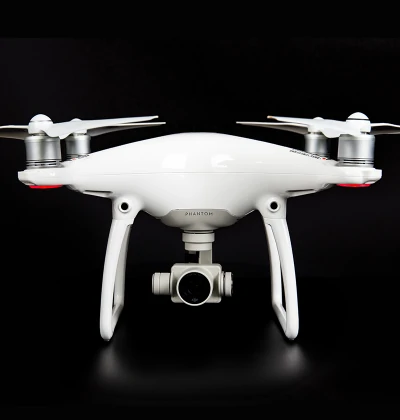

Aerospace & UAV
WJ Prototypes is your 3D manufacturing partner from prototype to large scale production.

Consumer Electronics
New Product Introduction Solutions for Consumer Electronics.

Robotics & Automation
Need some assistance bringing your robotic device or parts from the sketch-board to reality?

Medical Devices
The medical industry needs high quality, dependable and safe parts and products.

Automotive
New Product Introduction Solutions for Automotive

Industrial Machinery
The main purpose of industrial prototyping is to take the product from drawings into the real world.


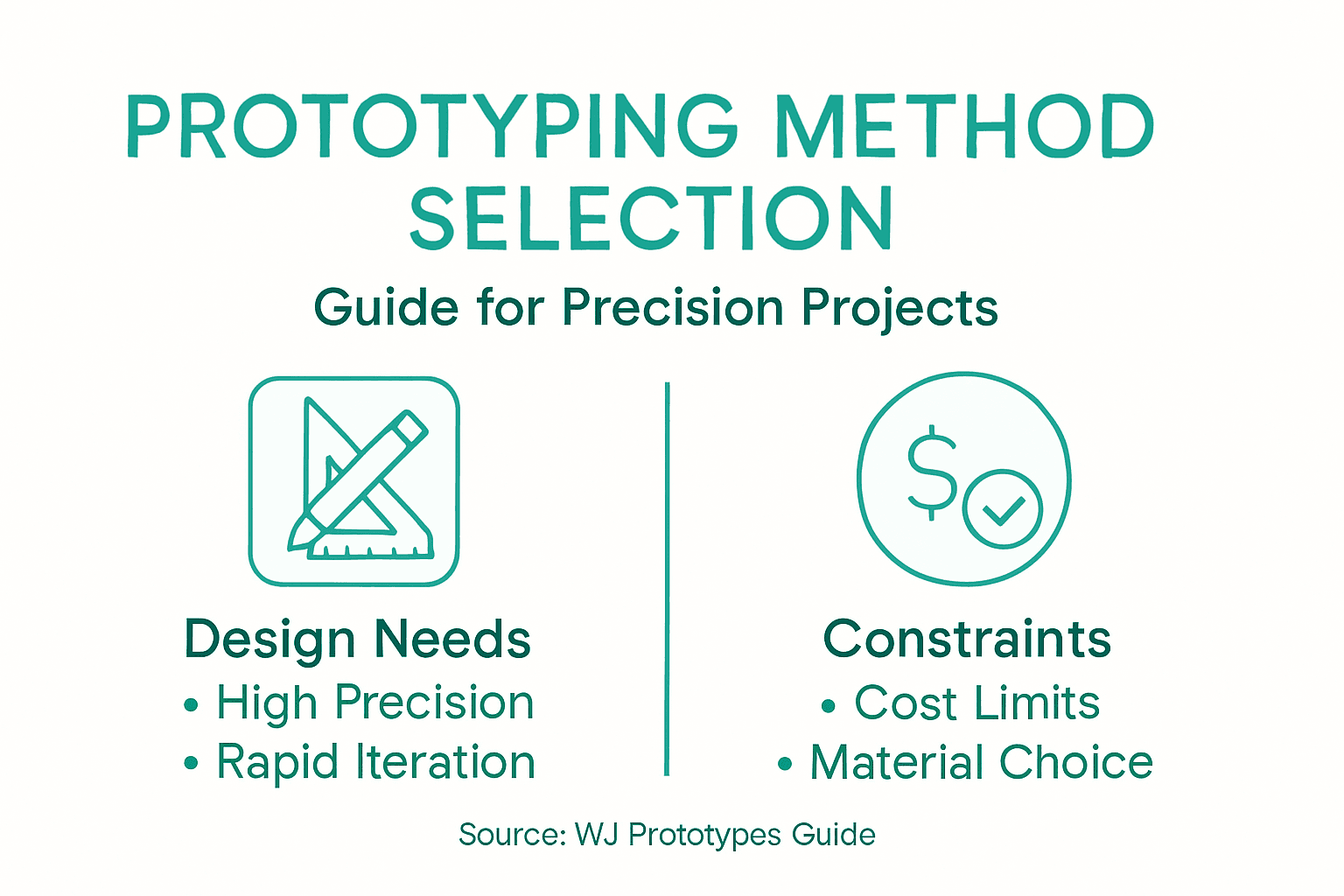
Selecting the wrong prototyping method can drain project budgets and derail tight timelines, especially when designing advanced aerospace or automotive components. Engineers across North America know that balancing performance, cost, and speed is not optional—it is essential. This guide breaks down how a focused approach to defining design intent and functional needs saves money, accelerates iteration, and ensures that every prototype validates real-world requirements without guesswork.
| Key Point | Explanation |
|---|---|
| 1. Define Design Intent Clearly | Establish how the component performs to avoid costly mistakes later in the prototyping process. |
| 2. Assess Material and Process Compatibility | Match chosen materials and manufacturing methods to your design’s functional requirements to streamline development. |
| 3. Perform Cost Analysis Beyond Unit Price | Total costs, including setup and labor, are crucial for effective budgeting; cheapest options may not always be best. |
| 4. Tailor Prototyping to Project Goals | Select prototyping methods based on specific objectives, ensuring relevance for design validation and testing needs. |
| 5. Verify Scalability of Prototyping Methods | Ensure chosen methods can transition smoothly to larger production runs to avoid inefficiencies in later stages. |
Before selecting a prototyping method, you need to clearly understand what your design must accomplish and how it will perform. This assessment shapes every decision downstream, from material selection to manufacturing technology. Get this right, and you’ll avoid expensive false starts. Get it wrong, and you’ll be rebuilding prototypes midway through development.
Start by defining your design intent. What problem does this component solve? In aerospace applications, a bracket might need to withstand specific vibration frequencies and thermal cycling. In automotive, a sensor housing must handle moisture ingress and temperature extremes. Write down these constraints explicitly. Don’t assume everyone on your team interprets “robust” the same way.
Next, map out functional requirements with measurable criteria:
Your prototyping method must validate the functional requirements you’ve identified. Choose a method incapable of testing critical performance criteria, and you’re not really prototyping—you’re guessing.
The research around defining purpose and scope in prototyping emphasizes that prototypes need explicit exploration strategies. This means knowing exactly what you’re testing before you build. Are you validating structural behavior, testing manufacturability, or checking assembly logic? These require different approaches.
Document your interaction and integration needs too. How does this component fit into the larger assembly? Will it need fixtures for testing? Must it interface with specific mounting surfaces? For aerospace engine components, this might involve integration with cooling systems or stress distribution paths. For automotive electronics, it might mean fitting into a specific enclosure or connecting to legacy wiring.
One practical step: create a requirements matrix that ranks priorities. Not all specifications carry equal weight. A dimension that’s cosmetic can tolerate looser tolerances than one affecting assembly fit. Weight-critical aerospace components demand different prototyping scrutiny than non-structural parts.
Pro tip: Involve your manufacturing partner early in this phase—experienced engineers can flag impractical requirements before you commit to a prototyping method, saving weeks and thousands in rework.
Now that you understand what your design must do, you need to match those requirements against what materials and manufacturing processes can actually deliver. This step filters out the methods that won’t work for your project, saving you from pursuing dead ends.

Start by listing your material constraints. Does your component need to withstand extreme temperature swings, like an aerospace engine part cycling between 300°F on the ground and minus 80°F at altitude? Must it resist chemicals or conduct electricity? Weight matters tremendously in aerospace and automotive. A 50-pound prototype won’t prove anything if your final design needs to weigh 2 pounds.
Next, consider manufacturing process limitations. Different methods excel at different things:
Hybrid approaches combining multiple processes can overcome individual limitations. Hybrid manufacturing combining additive and subtractive methods addresses surface quality issues and geometric fidelity challenges that pure additive processes face. This becomes critical when your aerospace bracket needs both the complex internal cooling passages additive manufacturing provides and the precision surface finishes that subtractive machining delivers.
Match your material and process selection to your functional requirements first. Cost and speed are secondary considerations that follow from making the right manufacturing choice.
Create a quick decision table. Column one lists your must-haves from Step 1. Then add columns for each manufacturing method you’re considering. Does this method handle your material? Can it achieve your tolerances? Will it deliver the surface finish you need? Which methods fail any requirement? Those are off the table immediately.
Don’t overlook scalability either. A prototyping method that works beautifully for a single unit might become prohibitively expensive for ten units or impossible to repeat consistently. In automotive development, you need confidence that your prototype manufacturing approach can transition toward production scaling, even if you’re only making a handful initially.
Pro tip: When evaluating manufacturing processes, request trial samples from potential partners using your exact materials and specifications—a 2-inch test piece costs far less than committing to full production on the wrong process.
Here is a summary table outlining how common prototyping methods align with key requirements:
| Prototyping Method | Best For | Main Limitations | Typical Use Cases |
|---|---|---|---|
| Additive Manufacturing | Complex shapes, low volumes | Surface finish, limited materials | Rapid aerospace, automotive |
| CNC Machining | Precision, tight tolerances | Costly for complex designs | Functional parts, tooling |
| Sheet Metal Fabrication | Enclosures, simple geometries | Not for organic 3D shapes | Brackets, housing components |
| Casting | Integrated features, batch runs | Porosity risk, higher lead times | Engine parts, structural items |
You’ve narrowed down what’s technically possible. Now comes the financial reality check. Different prototyping methods cost vastly different amounts, and the cheapest option isn’t always the right choice for precision work.
Start by building a cost comparison matrix. List each viable manufacturing method from Step 2, then calculate the total cost for your specific volume. Don’t just look at per-unit pricing. Setup costs, tooling fees, and labor add up differently depending on the method.
Here’s what to include in your cost analysis:
Research shows that rapid prototyping delivers lowest costs for complex, low-volume work compared to traditional machining or investment casting. This advantage grows exponentially as your design complexity increases or your production volume stays small. A bracket with ten internal cooling passages might cost three times as much via CNC machining as through additive manufacturing.
The cheapest per-unit cost often comes with expensive tooling that only makes sense at high volumes. For prototype runs under 100 units, focus on total project cost, not unit price.
Beyond raw manufacturing cost, consider what physical prototypes deliver in design validation and communication effectiveness. A $2,000 physical prototype that catches a design flaw saves you $50,000 in tooling mistakes later. Virtual simulations and renderings have value, but aerospace and automotive teams ultimately need something they can hold, measure, and test.
Get quotes from at least two providers using identical specifications. Provide your CAD files, required materials, dimensional tolerances, and surface finishes. Reputable partners will break down costs transparently, showing material, labor, and overhead separately.
Don’t forget hidden timeline costs. A method that delivers in two weeks versus four weeks matters when your program timeline is compressed. Fast prototyping sometimes justifies premium pricing when it prevents downstream schedule delays.
Pro tip: Request itemized quotes that show material cost, labor, tooling, and finishing separately—this reveals which cost drivers dominate your project and where you might negotiate or optimize your design.
This table compares cost factors to consider when reviewing prototyping provider quotes:
| Cost Factor | Why It Matters | Hidden Impact Example |
|---|---|---|
| Material Costs | Influences total outlay | Exotic alloys raise prototype cost |
| Tooling/Setup | High for traditional methods | Mold creation adds weeks, costs |
| Labor | Drives final unit price | Post-processing raises expenses |
| Lead Time | Affects project timeline | Delays can impact launches |
You’ve identified feasible methods and compared costs. Before committing resources, you need to confirm that your chosen prototyping approach actually serves your project’s specific objectives. The wrong method at the wrong time wastes money and momentum.
Start by asking yourself what you’re really trying to achieve. Are you validating that a design concept is structurally sound? Testing manufacturing feasibility? Communicating the design to stakeholders? Collecting user feedback on ergonomics? Each goal demands a different prototyping approach.
Different project phases need different methods:
Tailoring prototyping methods to specific outcomes like validation and functional testing directly improves project success and resource efficiency. An aerospace team validating airflow around a nacelle needs computational fluid dynamics plus wind tunnel testing plus physical prototypes. An automotive interior team checking comfort ergonomics might only need a 3D printed model. Don’t over-engineer the prototyping approach when a simpler method answers your specific question.
Purposeful prototyping means selecting a method that directly addresses your project’s current uncertainty. Don’t build something just because you can.
Map your project timeline against your prototyping method’s capabilities. If you need results in three weeks but your chosen method requires eight weeks for tooling and production, you’ve created a mismatch. Rapid manufacturing methods excel here, but they might sacrifice the material fidelity you need for thermal validation testing.
Consider what stakeholders need to see. Engineering teams can work from CAD simulations. Manufacturing teams need something tangible to assess producibility. Executive leadership often needs a physical prototype to greenlight budget. Identify who needs proof of what, then choose methods that deliver that proof cost-effectively.
Verify that your method produces outputs suitable for the next development phase. If your aerospace bracket prototype uses additive manufacturing but your production method will be investment casting, will the prototype reveal casting-related defects like porosity? Probably not. You might need a hybrid approach or a different method entirely.
Pro tip: Create a simple decision document mapping your three biggest project unknowns against each candidate prototyping method—this forces clarity about whether you’re solving the right problems with the right approach.
Choosing the right prototyping method is critical to meeting your design intent, functional requirements, and manufacturing constraints without costly delays or reworks. If you are struggling with selecting a solution that balances material properties, dimensional accuracy, tight tolerances, and budget, you are not alone. Key challenges such as matching material capabilities to your aerospace or automotive requirements and ensuring compatibility with your project goals demand expert guidance and access to versatile technologies.
At WJ Prototypes, we specialize in delivering tailored rapid prototyping and low-volume manufacturing solutions that address these pain points head-on. Whether you need additive manufacturing options like SLA, SLS, MJF, or DMLS for complex geometries or precise traditional methods including CNC machining and sheet metal fabrication, our ISO certified engineers understand how to align your requirements with the right process. Benefit from our global delivery, fast turnaround times, and competitive pricing so you can validate your design and move confidently toward production.
Don’t let uncertainty about prototyping methods slow your project. Explore our comprehensive services to find the exact manufacturing approach that fits your functional validations and cost targets. Visit WJ Prototypes now for your instant quote and expert consultation. The right choice today can save you thousands in development and keep your precision project on schedule.
Begin by defining your design intent and listing the specific problems your component needs to solve. Next, map out measurable functional requirements, including load capacity, environmental tolerances, and expected lifecycle, to guide your prototyping choice.
Consider the environmental conditions your prototype will face, such as temperature extremes or chemical exposure. Identify necessary material properties, like weight and strength, and create a list of constraints to ensure suitable material selection for your project.
List each prototyping method and include costs for materials, tooling, labor, and potential delays. This approach helps you see the total expense involved, allowing you to identify which method provides the best value for your specific volume and project requirements.
Different phases require tailored methods: use low-fidelity prototypes for early concepts, high-fidelity functional prototypes for design validation, and production-like parts for field testing. Mapping your project timeline against suitable prototyping methods ensures you address specific uncertainties effectively.
Ask yourself what you need to achieve with the prototype, whether it’s design validation, user feedback, or manufacturing feasibility. Ensure that your selected method directly addresses these goals to avoid wasting resources on the wrong approach.
SERVICES
RESOURCES