



- Room 1807, Unit 9, Building 2, Shangxing Commercial Street, Shangde Road, Shangxing Community, Xinqiao Subdistrict, Bao'an District, Shenzhen City, China
CONTACT US

WhatsApp


Contact Us
Our team is on stand by, waiting toassist you.

Videos
A large collection of educational videos and tutorials.

About Us
Learn about our company, leadership, and mission totransform manufacturing.

Privacy Policy
Applies to all personal information collected through and/or processed in connection.


Aerospace & UAV
WJ Prototypes is your 3D manufacturing partner from prototype to large scale production.

Consumer Electronics
New Product Introduction Solutions for Consumer Electronics.

Robotics & Automation
Need some assistance bringing your robotic device or parts from the sketch-board to reality?

Medical Devices
The medical industry needs high quality, dependable and safe parts and products.

Automotive
New Product Introduction Solutions for Automotive

Industrial Machinery
The main purpose of industrial prototyping is to take the product from drawings into the real world.

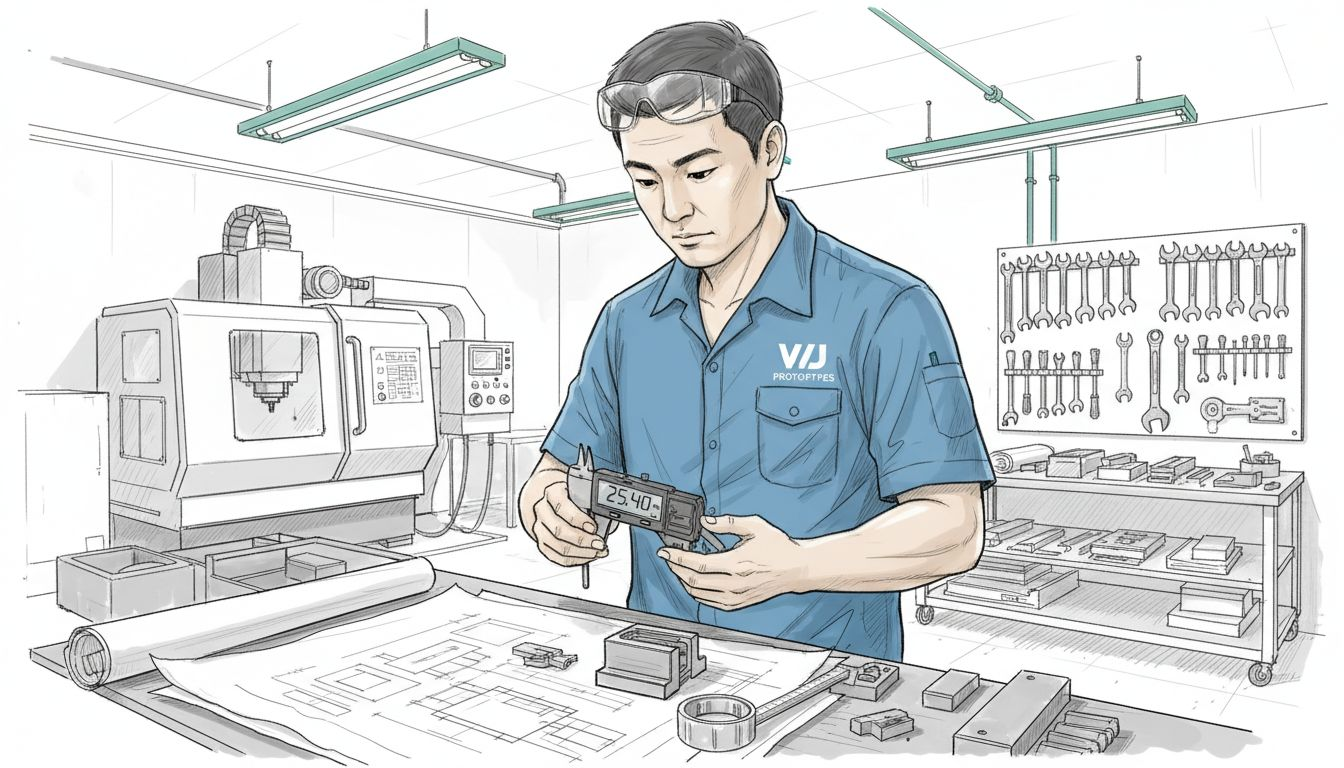
Bringing a metal prototype from concept to reality often feels overwhelming, especially when precision and reliability are non-negotiable. The smallest misstep in material selection, design file preparation, or manufacturing approach can lead to wasted time, blown budgets, or parts that simply do not perform as expected. You need a clear plan to avoid costly revisions and keep your project timelines on track.
This guide gives you practical, actionable steps to transform your prototype process and avoid the most common engineering pitfalls. By applying critical material properties, advanced machining techniques, and proven fabrication methods, you can achieve tighter tolerances and longer-lasting results without surprises. Each tip is built on real-world expertise from aerospace and automotive projects, so you can confidently deliver parts that work as designed.
Discover the strategies that move your prototype from 'barely functional' to 'production-ready' and take the guesswork out of your next engineering challenge.
| Takeaway | Explanation |
|---|---|
| 1. Choose metals based on application needs | Evaluate tensile strength, corrosion resistance, and weight-to-strength ratio for optimal performance in specific environments. |
| 2. Optimize CAD files for efficiency | Simplify files by removing unnecessary data to speed up quoting and reduce errors during fabrication. |
| 3. Implement continuous quality checks | Conduct inspections at multiple stages to prevent defects and ensure compliance with specifications during production. |
| 4. Utilize rapid prototyping for speed | Leverage modern techniques like CNC machining and 3D printing to significantly reduce development timelines. |
| 5. Select appropriate finishes for durability | Choose surface treatments that protect parts against environmental stressors and meet operational requirements. |
Selecting the right metal is the foundation of prototype accuracy. Your material choice determines whether your part performs flawlessly or fails under stress. This decision impacts cost, lead time, and your ability to hit tight tolerances.
When you're designing aerospace or automotive prototypes, material properties directly influence your success. Tensile strength, corrosion resistance, and thermal conductivity aren't just specifications—they're what keep your design functional in the real world. A lightweight aluminum alloy might seem perfect for weight-sensitive applications, but if your operating environment includes salt spray, you'll face oxidation problems that derail your timeline.
You need to evaluate several critical factors when choosing your metal:
Consider your application's specific demands. An aircraft landing gear component needs different properties than an automotive transmission housing. Selecting materials based on your application requirements ensures you're not over-engineering (and overspending) or under-specifying (and risking failure).
Machinability matters more than many engineers realize. Complex designs with tight tolerances demand metals that machine cleanly without tool wear. Aluminum and brass machine beautifully. Tool steel demands expertise and specialized equipment. Your choice affects both your fabrication partner's costs and your final part quality.
Balancing performance requirements, cost constraints, and fabrication capability determines whether your prototype launches on schedule or gets redesigned mid-production.
Let's also address cost reality. Stainless steel offers excellent corrosion resistance but costs more than mild steel and takes longer to machine. Carbon steel gives you strength at lower cost but requires surface protection. Your prototype budget and production volume should influence this decision. A low-volume aerospace prototype might justify premium materials, while automotive prototype runs might optimize for more cost-effective options that still meet specifications.
Pro tip:Create a material comparison matrix listing tensile strength, corrosion rating, machinability rating, and cost per pound for your top three candidates—this forces disciplined decision-making and helps your fabrication partner recommend the fastest, most cost-effective approach.
Your design file is the blueprint your fabrication partner uses to quote, plan, and execute your prototype. A bloated or poorly structured file creates delays, increases costs, and introduces errors. Clean, optimized files move through production faster and more accurately.
Large, complex CAD files slow down everything. When your geometry is unnecessarily detailed or contains redundant data, fabricators spend time cleaning up your work instead of fabricating your part. This delays quoting, increases the risk of misinterpretation, and can add days to your lead time. Simplified geometry that maintains accuracy is what separates efficient prototypes from problematic ones.
Your design file directly impacts production speed and accuracy. Consider these factors:
When you optimize design files, you're not just saving storage space. You're enabling faster quoting, accurate cost estimation, and streamlined fabrication workflows that reduce scrap and labor costs.
Start by removing unnecessary features and hidden geometry. Your CAD model might include construction lines, reference planes, or design iterations that served you during the development process but add nothing to the final part. Strip these out. Simplify your geometry while maintaining the precision your application demands.
Specify tolerances where they matter. Tight tolerances everywhere increase fabrication time and cost. Identify which dimensions truly drive function versus which have more flexibility. Your fabrication partner can then focus precision efforts where you actually need them.
Clean design files communicate respect for your fabricator's time and directly translate to faster turnarounds and lower costs.
Document your material specifications, surface finishes, and any special requirements directly in your CAD file or accompanying documentation. When this information is clear and unambiguous, fabricators proceed with confidence instead of sending clarification requests that halt production.
Pro tip:Export your finalized design as a PDF alongside your native CAD file for quoting and preliminary review—this prevents software compatibility issues and lets your fabrication partner immediately understand your design intent without opening heavy CAD applications.
CNC machining is where your design precision actually happens. The difference between a prototype that functions perfectly and one that fails often comes down to how well your fabricator controls the machining process. Advanced CNC techniques enable you to hold tolerances that seemed impossible just years ago.
Modern CNC machines do far more than follow toolpaths. They use advanced servo control, real-time error compensation, and intelligent toolpath generation to achieve unprecedented accuracy. When your aerospace fuel line connector needs to hold 0.0005 inch tolerances, or your automotive transmission component requires consistent surface finish across complex geometry, advanced CNC capabilities make this possible consistently.
The real power comes from what happens behind the scenes. Recent advancements include high-order interpolation, adaptive smoothing, and servo control strategies that enhance both accuracy and surface quality. Machine learning and artificial intelligence now enable adaptive path planning that adjusts in real time as the tool wears or conditions change, maintaining your tolerance window throughout the production run.
Understanding these capabilities helps you spec your prototypes correctly:
You benefit from these advances by being specific about your tolerance requirements. Don't blanket your entire part with 0.0005 inch tolerances. Identify which features are functionally critical, and specify tight tolerances only there. Your fabricator can then apply advanced techniques strategically, managing costs while delivering the accuracy your design demands.
Complex automotive and aerospace components often require finishing operations that remove only 0.0001 to 0.0002 inches. Advanced CNC machines with precision spindles and calibrated cutting tools make this repeatable. Without these capabilities, achieving true tight tolerances becomes guesswork.
Advanced CNC techniques transform tight tolerances from manufacturing challenges into reliable, repeatable capabilities.
When you're selecting a fabrication partner for your prototype, ask about their machine capabilities, calibration practices, and experience with your tolerance requirements. Precision CNC machining capabilities vary significantly between shops, and choosing a partner with advanced equipment and expertise directly impacts your success.
Pro tip:Request a capability study or first-piece inspection before committing to production quantities—this validates that your chosen fabricator can consistently hold your specified tolerances and prevents expensive rework cycles later.
Waiting until the end of production to inspect your prototype is like checking your fuel gauge after you've run out of gas. Quality checks must happen continuously throughout fabrication, catching problems early when they're cheap to fix instead of late when they require scrapping your entire part.
Multi-stage quality control prevents defects from compounding. When you catch a dimensional error during intermediate inspection, your fabricator can adjust tooling or processes before investing hours in subsequent operations. This approach saves time, reduces waste, and ensures your final prototype meets specifications.
Implement these inspection stages throughout your production cycle:
Quality control in metal fabrication works best when inspections happen at multiple production stages, preventing defects and ensuring compliance with industry standards. This multi-checkpoint approach is standard in aerospace and automotive manufacturing for good reason—it works.
Your fabricator should document each checkpoint with measurements, photos, or test results. This traceability protects you if issues arise and provides proof of quality to regulatory bodies if your application requires certification. Request this documentation as part of your contract.
Continuous quality checks cost less than fixing problems discovered after delivery.
Different materials and processes require different inspection methods. CNC-machined aluminum needs dimensional verification and surface finish checks. Welded assemblies need dye penetrant or ultrasonic testing to detect cracks invisible to the eye. Your fabrication partner should match inspection methods to your specific processes and materials.
Communicate your quality requirements upfront. If your aerospace component requires 100 percent dimensional verification, your fabricator needs to know this when quoting. If your automotive part requires tensile testing of welds, budget time and cost for this testing. Clear expectations prevent surprises at delivery.
Pro tip:Request in-process photos or first-piece inspection reports before your fabricator commits to full production—this gives you confidence that your design is being executed correctly and saves time by catching design or specification issues early.
Speed matters in prototype development. When you can fabricate and test a physical part in days instead of weeks, you compress months of development into manageable cycles. Rapid prototyping methods eliminate traditional tooling delays and let you validate designs quickly through iterative testing.
Traditional manufacturing requires building expensive molds and fixtures before producing your first part. Rapid prototyping bypasses this step entirely. Your CAD model goes directly to CNC machines, laser cutters, or other advanced equipment that produce functional metal parts immediately. This approach transforms your development timeline.
You gain competitive advantage through speed. While competitors are still waiting for tooling, you can test multiple design iterations and move to production. Rapid prototyping accelerates product development by enabling faster fabrication directly from CAD models, reducing reliance on traditional tooling. This means quicker time-to-market and earlier design validation.
Multiple fabrication methods support rapid metal prototyping:
Each technology excels in different scenarios. A simple bracket might fabricate fastest via laser cutting. A complex aerospace fitting with internal cooling passages needs 3D metal printing. Your fabrication partner should recommend the optimal method based on your part geometry, material, and tolerance requirements.
Cost savings multiply with rapid prototyping. You invest less per iteration because there are no expensive tooling costs. This frees your budget for multiple design cycles instead of betting everything on a single design. If your first prototype reveals an improvement opportunity, you can afford to test a revised version.
Speed plus affordability means you can test bold design ideas without financial risk.
Iterative testing reveals problems early when they're cheap to fix. Your first prototype might show that a boss wall needs reinforcement or that a thin section needs extra material. When changes cost hundreds instead of thousands, you make them confidently. This cycle of design, test, and refine is how great prototypes become great products.
Pro tip:Submit your design with clear iteration expectations—tell your fabricator upfront that you plan two or three rounds of refinement, and negotiate volume pricing for multiple prototype runs to lock in faster turnaround times.
Your metal prototype's bare surface is only the beginning. The finish you choose determines whether your part survives years of service or corrodes within months. Surface finishes protect against environmental attack, enhance aesthetics, and unlock performance capabilities your base material alone cannot deliver.
A perfectly machined aluminum part looks impressive fresh from the machine. But expose it to salt spray, humidity, or industrial chemicals, and oxidation begins immediately. The right finish acts as armor, protecting your base metal while extending functionality and lifespan dramatically. This is especially critical for aerospace and automotive applications where failure is not an option.
Choose finishes based on your operating environment and performance requirements:
Surface finishing protects against corrosion, wear, and environmental damage while improving product lifespan and safety. Your choice impacts not just durability, but also regulatory compliance if your application requires certification.
Environment determines finish selection. An automotive underbody component enduring salt and moisture needs galvanizing or zinc-rich coating. An aerospace fuel system component requires passivation to prevent contamination and ensure corrosion resistance. A consumer electronics enclosure might prioritize appearance with powder coating that resists scratches and wear.
Thickness matters as much as type. A thin anodize layer provides color and some protection but lacks the durability of a thicker layer for harsh environments. Your fabrication partner should specify coating thickness in microns and test thickness on samples to verify specification compliance.
The right finish transforms a prototype into a production-ready component that performs reliably for years.
Don't leave finish decisions to the last minute. Surface preparation, coating type, and thickness all affect cost and lead time. When you specify finishes upfront in your design documentation, your fabricator can plan finishing operations efficiently and quote accurately.
Test your finish choice if the application is critical. Request test samples in your specified finish before committing to full production. This confirms the finish performs as expected and looks acceptable before completing your entire prototype run.
Pro tip:Request finish samples on actual prototype scrap pieces or simple test coupons before committing production parts—this validates appearance, adhesion, and durability while your design is still flexible.
This table summarizes key strategies, considerations, and benefits detailed in the article regarding optimizing metal fabrication projects for precision and efficiency.
Accurate prototyping requires mastering complex challenges like selecting the right metals, optimizing design files, and leveraging advanced CNC techniques as highlighted in the article "6 Metal Fabrication Tips for Accurate Prototyping Success." You understand that controlling tight tolerances, ensuring continuous quality checks, and choosing proper finishes are critical to launching reliable aerospace, automotive, or industrial components. At WJ Prototypes, we share your demands for precision and speed by offering a comprehensive suite of manufacturing methods tailored to turn your design requirements into reality reliably and affordably.
Leverage our advanced CNC machining capabilities alongside rapid prototyping technologies such as additive manufacturing and sheet metal fabrication. Our experienced engineers help you optimize your material choices and design files to reduce lead times and costs. With ISO certification and global delivery, WJ Prototypes is positioned to be your trusted partner in overcoming the exact challenges the article outlines. Discover how our expertise in precision engineering can accelerate your prototyping success by contacting WJ Prototypes. For more details on how our services address your needs, explore our CNC Machining and Rapid Prototyping Solutions.
Ready to transform your metal prototypes into production-ready parts with flawless accuracy and speed Take the first step today by requesting an instant quote and partnering with WJ Prototypes for unmatched quality and expertise.
Selecting materials with the right properties is essential for accuracy in metal prototyping. Focus on factors like tensile strength, corrosion resistance, and thermal conductivity to ensure your prototype performs reliably. Evaluate these properties based on your specific application needs to avoid costly failures.
Optimizing your design files involves simplifying complex geometries and removing unnecessary data. Ensure that your CAD files are clean and include clear tolerance specifications and material callouts. This can significantly reduce production time and enhance accuracy, potentially shortening lead times by several days.
Utilizing advanced CNC techniques like multi-axis machining and real-time error compensation can help you achieve tight tolerances consistently. Specify your critical dimensions clearly in your design documentation to enable your fabricator to use these techniques most effectively. This may help you maintain tolerances within ±0.0005 inches.
Implement multi-stage quality checks throughout the fabrication process to catch defects early. Conduct inspections at key points, such as material verification and first-piece inspection, to ensure compliance with specifications. This proactive approach can save time and reduce waste by allowing for adjustments before full production begins.
Rapid prototyping methods like CNC machining and 3D printing can significantly speed up your production timeline. By eliminating the need for traditional tooling, you can move from design to physical parts in as little as 24 to 48 hours. Communicate your iteration expectations clearly to maximize the benefits of rapid prototyping.
Choose surface finishes based on the operating environment and performance requirements of your prototype. Options like anodizing or powder coating provide essential protections against corrosion and wear. Specify the desired finish types and thicknesses in your documentation to ensure your prototype meets durability standards.
7 Essential Rapid Prototyping Tips for Engineers | China Sourcing Guide
Sheet Metal Fabrication Guide for Precision Prototyping
Sheet Metal Fabrication Workflow for Prototyping in China
How to Choose Prototyping Services for Precision Results
SERVICES
RESOURCES