



- Room 1807, Unit 9, Building 2, Shangxing Commercial Street, Shangde Road, Shangxing Community, Xinqiao Subdistrict, Bao'an District, Shenzhen City, China
CONTACT US

WhatsApp


Contact Us
Our team is on stand by, waiting toassist you.

Videos
A large collection of educational videos and tutorials.

About Us
Learn about our company, leadership, and mission totransform manufacturing.

Privacy Policy
Applies to all personal information collected through and/or processed in connection.


Aerospace & UAV
WJ Prototypes is your 3D manufacturing partner from prototype to large scale production.

Consumer Electronics
New Product Introduction Solutions for Consumer Electronics.

Robotics & Automation
Need some assistance bringing your robotic device or parts from the sketch-board to reality?

Medical Devices
The medical industry needs high quality, dependable and safe parts and products.

Automotive
New Product Introduction Solutions for Automotive

Industrial Machinery
The main purpose of industrial prototyping is to take the product from drawings into the real world.


Deadlines are tight and expectations are higher than ever when your team needs to validate designs quickly without compromising quality. Delaying iterations by weeks can stall entire programs in the aerospace or automotive industry. Global prototyping services have made it possible to submit a CAD file and receive functional assemblies within days. Embracing this distributed manufacturing expertise gives your engineers the speed and flexibility required for confident decision-making in every development phase.
| Point | Details |
|---|---|
| Global Prototyping Services Accelerate R&D | These services compress development timelines by 40-60%, allowing rapid iteration of designs and quicker validation of test data. |
| Flexibility in Prototyping Methods | Utilizing various prototyping methods like SLA, SLS, and CNC can streamline the design process, enabling teams to quickly shift between techniques based on specific needs. |
| Cost-Effective Design Validation | Global services allow for validating designs without heavy upfront tooling costs, minimizing financial risk while ensuring design credibility. |
| Enhanced Collaboration Across Time Zones | A distributed network of services allows for parallel work, ensuring designs can progress while teams are offline, resulting in faster turnaround of prototypes. |
Global prototyping services have transformed how aerospace and automotive engineers validate designs before committing to expensive tooling. These services combine advanced manufacturing technology with distributed expertise across continents, enabling rapid iteration at minimal cost.
A prototype is an early sample, model, or release that tests a concept or process before full-scale production. Today’s definition extends beyond simple mockups—it includes functional assemblies, stress-tested components, and manufacturing-ready designs that simulate real-world performance.
Modern global prototyping covers multiple dimensions:
Your team can submit a CAD file and receive functional prototypes within days, not months. This speed matters enormously when your certification timeline depends on validated test data.
Global services differ fundamentally from in-house prototyping. A distributed network provides access to specialized equipment you wouldn’t justify owning. Advanced facilities in precision-manufacturing hubs operate at higher utilization rates, reducing per-unit costs significantly.
Time zone advantages compound this benefit. While your design team sleeps, manufacturing teams across Asia process your files and iterate designs. You wake to completed parts ready for testing.
Global prototyping transforms R&D from weeks-long cycles into days-long cycles, compressing your overall development timeline by 40-60%.
Prototyping as a process evaluates feasibility, refines requirements, and reduces risks before full-scale production. Traditional in-house approaches locked you into single manufacturing methods and long setup times. Global services provide method flexibility—you choose SLA for concept validation, then shift to CNC for functional testing, then move to injection molding for production trials, all with one trusted partner.
This flexibility eliminates the expensive handoff between prototype shops and production facilities. The same quality standards, material traceability, and documentation apply across all phases.
Consider your aerospace bracket redesign. Global prototyping lets you validate three competing designs simultaneously across different materials. You test titanium, aluminum, and composites in parallel rather than sequentially, discovering the optimal path weeks earlier.
For automotive suspension components, you iterate fastener locations, wall thicknesses, and mounting interfaces based on actual test feedback—not assumptions. Each iteration costs hundreds, not thousands, because global services amortize equipment and expertise across hundreds of clients.
Pro tip: Start your prototyping project by clearly defining which design unknowns drive your schedule risk, then prioritize validating those specific aspects first rather than creating complete prototypes.
Your R&D timeline depends on selecting the right prototyping method. Aerospace and automotive teams need to match technology choices to specific validation objectives, not default to whatever worked last time.
Prototyping methods vary significantly in fidelity, cost, and iteration speed. Techniques fall into categories that either improve outcomes or lower cost and time barriers. Your choice shapes everything downstream: testing duration, material validation, and regulatory readiness.
Additive methods build parts layer by layer, offering unmatched geometric freedom. These dominate early-stage prototyping across aerospace and automotive because they eliminate tooling delays.
Additive excels at exploring design space rapidly. You validate bracket geometries, ducting paths, and mounting interfaces without waiting for tooling. The cost per iteration stays low even across dozens of design cycles.
Here’s how popular prototyping methods compare for aerospace and automotive projects:
| Method | Typical Use Case | Turnaround Time | Cost per Iteration |
|---|---|---|---|
| SLA (Stereolithography) | Fine-detail mockups, aesthetic evaluation | 2-4 days | Low |
| SLS (Selective Laser Sintering) | Functional testing, moderate loads | 3-6 days | Moderate |
| DMLS (Direct Metal Laser Sintering) | Structural, metal parts, stress validation | 5-10 days | High |
| CNC Machining | Precision fit, final validation | 3-7 days | Moderate to High |
| Vacuum Casting | Low-volume production, assembly testing | 6-12 days | Moderate |
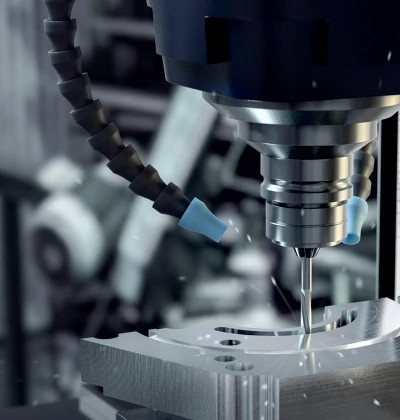
CNC machining produces production-grade parts immediately. Tolerances match your final specification. Machinists work from CAD in hours, making CNC ideal for functional validation of precision components.
Sheet metal prototyping captures real manufacturing constraints. How fasteners seat, how panels align, how geometry affects assembly labor—metal prototypes reveal this. Welding and riveting processes validate your assembly sequence.
Vacuum casting bridges low-volume and production reality. You cast ten housings from a single mold, testing fit-up with actual assemblies. Material properties approximate production resin or elastomer performance.
Lower-fidelity variants support conceptual exploration while high-fidelity prototypes simulate final products closely. Understand what you need to validate before committing resources.
Early concept phases demand rapid iteration—speed beats perfection. Mid-stage testing requires production-representative materials and processes. Late phases need manufacturing-validated assemblies that prove your design works in your actual production environment.
Select prototyping methods based on what questions you need answered, not what sounds cutting-edge.
Winning R&D programs rarely use a single method. Combine rapid prototyping guide approaches strategically: SLS for structural validation, CNC for precision interfaces, sheet metal for assembly verification.
Global services enable this seamlessly. One trusted partner handles your SLA mockups, transitions to DMLS metal parts, then produces vacuum-cast functional assemblies. Consistent quality and traceability flow throughout your entire development cycle.
Pro tip: Map your critical unknowns first, then assign prototyping methods to answer those specific questions rather than creating comprehensive prototypes that validate everything equally.
Aerospace and automotive teams face relentless pressure: compress development timelines while managing regulatory requirements and controlling costs. Global prototyping services directly address all three challenges simultaneously.
Additive manufacturing and rapid prototyping technologies have revolutionized these sectors by enabling fast, cost-effective production of complex parts. Your competitive advantage depends on translating speed into market position before competitors reach certification.
Aerospace programs measure development in years. Automotive moves faster but still operates in quarters. Global prototyping compresses both cycles dramatically.
Traditional approaches lock you into sequential validation: concept mockup, then functional prototype, then manufacturing pilot. Global services collapse these phases. You run parallel validation tracks simultaneously across multiple design variants, discovering the optimal solution weeks earlier.
Consider a wing fairing redesign for weight reduction. Rather than building one prototype, validating it, then iterating, you commission three competing geometries simultaneously. Test data arrives within days, revealing the best path forward. That acceleration multiplies across dozens of subsystems across your development program.
Tooling represents your largest fixed cost. A production mold for aerospace housings costs $50,000 to $150,000. Committing to tooling before validating your design creates catastrophic risk.
Global prototyping eliminates this trap:
You invest thousands in prototypes, not hundreds of thousands in premature tooling. That capital stays available for production ramp-up when your design is proven.
Aerospace certification and automotive homologation require documented evidence. Material selection in prototyping directly impacts your compliance pathway.
Global services provide traceability that regulators demand. Every prototype carries full material certifications, test reports, and manufacturing records. Quality systems match your production standards from day one. When your certification auditor requests “show me your validation evidence,” you have comprehensive data across hundreds of prototypes.
This eliminates the painful retrofit scenario: building prototypes under one quality system, then struggling to document compliance under different standards.
Physical prototypes reveal what simulations miss. How fasteners actually seat. How tolerances stack in real assemblies. How thermal gradients affect component fit. How vibration behaves in complex geometries.
Global services enable aggressive iteration based on this real-world feedback. Your aerodynamic analysis suggests a configuration. Your prototype proves it works or reveals adjustments needed. Your next iteration incorporates lessons learned. After five cycles, your design is bulletproof before production tooling.
Global prototyping transforms risk from “will this work in production?” to “which optimization path works best?”
Geographic diversity in your prototyping supply chain protects against disruptions. When semiconductor shortages or raw material constraints hit, your global partner network maintains momentum. Different facilities access different material streams, ensuring your critical path components stay on schedule regardless of regional supply constraints.

Pro tip: Establish relationships with your global prototyping partner early in concept phase, not late in development, so they understand your full program requirements and can anticipate supply challenges.
Global prototyping delivers speed and cost advantages, but introduces complexity that inexperienced teams overlook. Understanding these challenges upfront prevents expensive surprises mid-program.
Manufacturing teams distributed across time zones, languages, and regulatory environments create coordination challenges. Challenges in rapid prototyping include aligning user requirements, managing limited resources, and handling technical constraints. Your aerospace bracket design must simultaneously satisfy your engineering specs, your manufacturing partner’s process capabilities, and your certification body’s documentation requirements.
Time zone differences become your biggest operational constraint. Your design team in Detroit works 9-5. Your manufacturing partner in China works their own schedule. Critical decisions can’t wait for morning emails.
Effective mitigation requires:
Your manufacturing partner needs authority to solve problems independently. Escalating every issue to your desk creates delays measured in days, not hours.
Your aerospace design assumes specific material properties. Your prototype uses the same material family but different processing. Does the prototype actually represent production behavior?
Effective risk mitigation requires stakeholder engagement, iterative testing, and adaptable frameworks. Request material certifications and test data alongside every prototype delivery. Compare properties between prototype materials and production specifications. Identify gaps before they become certification failures.
Your certification auditor will request documentation. They want proof that your prototype process actually validates production readiness.
Capture throughout prototyping:
This isn’t bureaucracy—it’s your legal defense when performance questions arise in the field.
Cost-effective prototyping tempts teams toward unlimited iteration. Each design cycle costs hundreds, so why not try dozens of variations?
Without discipline, iteration becomes chaotic. You lose track of which design performs best. Your test data applies to multiple variants but you can’t remember which is which. Your schedule slips because you’re still validating configuration three when you should be finalizing configuration one.
Control iterations ruthlessly: define what each prototype must answer, then stop when you have that answer.
Global prototyping moves faster than traditional approaches, but not infinitely fast. Shipping delays, material shortages, and technical obstacles still consume time.
Build schedule buffers for the unexpected. If your critical path needs a prototype in 4 weeks, commit to ordering it with 6-week expectation. That buffer absorbs delays without cascading to your overall program.
Budget similarly. Material costs fluctuate. Engineering support hours accumulate. A 10% contingency on prototype costs prevents budget surprises that stall approvals.
Pro tip: Establish clear go/no-go decision points before each prototype delivery so you know exactly what success looks like and when to pivot to a different design direction.
Below is a summary of risk mitigation strategies for global prototyping:
| Challenge | Risk Mitigation Tactic | Key Benefit |
|---|---|---|
| Time zone differences | Asynchronous documentation | Reduces project delays |
| Material misalignment | Material certificates with every shipment | Ensures production fidelity |
| Iteration overload | Predefined approval criteria | Controls schedule and cost |
| Documentation shortfalls | Capture process data throughout | Simplifies certification |
| Partner dependency | Maintain secondary suppliers | Increases supply chain resilience |
Not all global prototyping partners deliver equivalent value. Your partner choice directly impacts schedule reliability, quality consistency, and your ability to meet certification deadlines. The wrong choice costs months and budget overruns.
Your prototyping partner becomes an extension of your engineering team. They need manufacturing capability, yes, but also the judgment to flag design risks, the discipline to document everything, and the flexibility to adapt when your requirements change mid-program.
Start by matching capabilities to your specific needs. You don’t need a partner offering every technology—you need the right subset for your program.
Evaluate these dimensions:
Request references from current aerospace and automotive clients. Ask about their experience with similar component complexity, materials, and schedule constraints.
Successful global prototyping partnerships require clear agreements balancing contributions and rights in outcomes. Your relationship needs documented clarity on intellectual property, design confidentiality, and change management authority.
Key agreement elements:
Don’t skip this. Ambiguous agreements create disputes exactly when you need speed.
Your partner must communicate asynchronously across time zones without delay. Test this before committing major programs.
Send a sample design file and request a quote and preliminary assessment. How quickly do they respond? Do they identify design risks? Do they ask clarifying questions or assume they understand?
Speed matters, but thoughtful questions matter more. A partner who asks about your tolerance stack-up strategy before manufacturing prevents costly rework later.
How to choose prototyping services for precision results extends beyond the immediate prototype. Consider whether your partner can scale with you from prototyping into low-volume production, supporting your next development phase.
Partners who understand your business trajectory can prioritize your future work appropriately. They invest in relationships, not just transactions.
Choose partners based on demonstrated problem-solving, not just lowest price or fastest delivery.
Don’t bet your critical path on a single manufacturing location. Global sourcing provides resilience. If your primary partner experiences delays or capacity constraints, your backup partner maintains momentum.
Maintain active relationships with 2-3 capable partners. You don’t need to use them all simultaneously, but when disruption hits, you have fallback capacity immediately available.
Pro tip: Conduct a full dress rehearsal with your chosen partner on a non-critical component before engaging them on mission-critical development work.
The challenges outlined in the article show how critical it is to compress design cycles while ensuring precision and regulatory compliance for aerospace and automotive innovations. You know that balancing rapid iteration, cost control, and material traceability can feel overwhelming, especially when coordinating across time zones and complex manufacturing methods like DMLS, CNC machining, and vacuum casting. These factors directly impact your ability to hit certification deadlines and optimize designs before major tooling investments.
At WJ Prototypes, we understand these pain points deeply. Our comprehensive global prototyping services combine advanced additive and subtractive manufacturing technologies with strict quality assurance policies to deliver fast, cost-effective functional prototypes tailored for highly regulated industries. Whether you need multi-method integration or complete material traceability for aerospace validation, our experienced engineers act as your strategic partners from concept to low-volume production.
Take control of your development timeline now by exploring how WJ Prototypes can transform your R&D with precision, speed, and reliability. Visit our homepage to request an instant quote or connect with our experts to discuss custom solutions built for your toughest global prototyping challenges.
Global prototyping services combine advanced manufacturing technologies with distributed expertise to provide rapid and cost-effective prototyping solutions across multiple dimensions, including additive and subtractive manufacturing methods.
Global prototyping services offer flexibility by allowing teams to use various manufacturing methods and iterate faster, leveraging specialized equipment and expertise without the long setup times typical of in-house approaches.
These services compress development timelines, optimize cost control, ensure regulatory compliance and documentation, and facilitate design optimization through rapid iteration, significantly enhancing overall productivity.
Teams should assess partners based on equipment capabilities, quality certifications, material traceability, communication responsiveness, and long-term relationship value to ensure alignment with their specific prototyping needs.
SERVICES
RESOURCES