



- Room 1807, Unit 9, Building 2, Shangxing Commercial Street, Shangde Road, Shangxing Community, Xinqiao Subdistrict, Bao'an District, Shenzhen City, China
CONTACT US

WhatsApp


Contact Us
Our team is on stand by, waiting toassist you.

Videos
A large collection of educational videos and tutorials.

About Us
Learn about our company, leadership, and mission totransform manufacturing.

Privacy Policy
Applies to all personal information collected through and/or processed in connection.
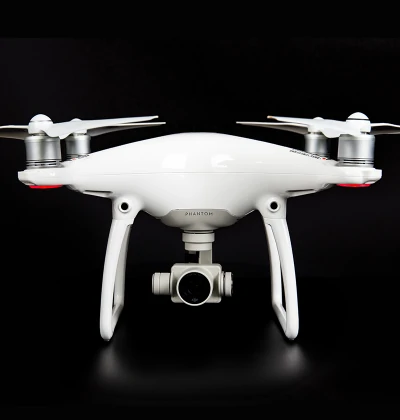

Aerospace & UAV
WJ Prototypes is your 3D manufacturing partner from prototype to large scale production.

Consumer Electronics
New Product Introduction Solutions for Consumer Electronics.

Robotics & Automation
Need some assistance bringing your robotic device or parts from the sketch-board to reality?

Medical Devices
The medical industry needs high quality, dependable and safe parts and products.

Automotive
New Product Introduction Solutions for Automotive

Industrial Machinery
The main purpose of industrial prototyping is to take the product from drawings into the real world.


Product engineers and R&D managers in sectors like aerospace and automotive often face intense pressure to deliver validated prototypes quickly, yet internal resources rarely offer all the required expertise or advanced manufacturing capabilities. Outsourced prototyping solutions open the door to a wider range of specialised techniques and materials while easing budget and timeline constraints. With outsourcing prototyping offering both speed and flexible access to expert resources, this approach supports agile product development and sharper competitive edges.
| Point | Details |
|---|---|
| Outsourcing Enhances Efficiency | Outsourced prototyping enables engineering teams to leverage specialised expertise, reducing time and costs associated with in-house production. |
| Diverse Prototyping Technologies | Various prototyping methods such as 3D printing and CNC machining provide flexibility and cater to specific project needs. |
| Strategic Vendor Selection | Successful partnerships require thorough vendor evaluation based on technical competence, operational reliability, and communication effectiveness. |
| Cost Advantages | Outsourcing can significantly lower operational costs by transforming fixed costs into variable expenditures, allowing more efficient resource allocation. |
Outsourced prototyping solutions represent a strategic approach for engineering teams to accelerate product development through external manufacturing partnerships. These solutions enable organisations to leverage specialised expertise and advanced manufacturing capabilities beyond their internal resources. Prototyping practices encompass critical design evaluation methods that support experimentation, communication, and iterative product refinement.
The core objective of outsourced prototyping involves engaging external vendors who possess sophisticated manufacturing technologies and domain-specific knowledge. This approach allows engineering teams to access diverse manufacturing processes like 3D printing, CNC machining, injection moulding, and precision fabrication techniques that might be prohibitively expensive or complex to maintain in-house. Outsourcing prototyping involves defining precise project requirements including prototype categories such as functional models, visual representations, and proof-of-concept demonstrations.
Key considerations for successful outsourced prototyping include establishing clear communication channels, defining comprehensive project specifications, selecting vendors with relevant technical expertise, and maintaining rigorous quality control standards. Engineering teams must carefully evaluate potential manufacturing partners based on their technological capabilities, material expertise, compliance certifications, and track record of delivering precise, reliable prototypes across different industries.
Pro tip: Always request detailed prototype samples and validate vendor capabilities through initial small-scale test projects before committing to large-scale production runs.
Modern prototyping encompasses a diverse array of advanced manufacturing technologies that enable engineering teams to transform conceptual designs into tangible, functional models. Prototyping methods span physical and digital approaches, integrating techniques like 3D printing, CNC machining, injection moulding, and advanced digital simulation tools. These methodologies provide engineers with unprecedented flexibility in exploring design iterations, material selections, and functional performance evaluations.
Additive manufacturing technologies have particularly revolutionised prototyping capabilities across multiple industries. Computer-Aided Design integrated with Additive Manufacturing enables precision engineering teams to create complex geometries, reduce material waste, and accelerate development cycles. Key prototyping technologies include:
These technologies offer distinct advantages depending on project requirements, material specifications, and production volumes. Engineering teams must carefully select prototyping methods that align with specific design constraints, budget limitations, and performance expectations.
Pro tip: Conduct preliminary feasibility studies and request material samples before committing to a specific prototyping methodology to ensure optimal technical and economic outcomes.
Here is a comparison of common prototyping technologies and their typical best use cases:
| Technology | Ideal Use Case | Typical Materials |
|---|---|---|
| 3D Printing | Complex, customised geometries | Plastics, resins, metals |
| CNC Machining | High-precision engineering | Metals, plastics |
| Injection Moulding | High-volume part production | Thermoplastics, elastomers |
| Vacuum Casting | Small batch, detailed replicas | Polyurethane, silicones |
| Sheet Metal Fabrication | Sturdy, functional prototypes | Aluminium, steel, alloys |
Outsourcing prototyping offers engineering teams strategic advantages that transform traditional product development approaches. By leveraging external manufacturing partnerships, organisations can dramatically accelerate innovation cycles, reduce capital expenditure, and access specialised technological capabilities that would be prohibitively expensive to develop internally. This approach enables engineering teams to focus on core design and innovation strategies while external partners manage complex manufacturing processes.

The primary benefits of outsourcing prototyping encompass multiple critical dimensions of product development. Cost efficiency emerges as a paramount advantage, with external vendors providing sophisticated manufacturing capabilities without substantial upfront infrastructure investments. Engineering teams can effectively convert fixed costs into variable expenditures, allowing more flexible budget allocation and reduced financial risk. Additionally, outsourcing provides immediate access to cutting-edge technologies, specialised expertise, and advanced manufacturing techniques that might require years of internal development.
Key advantages of prototyping outsourcing include:
Successful outsourcing requires careful vendor selection, clear communication protocols, and robust quality management strategies. Engineering teams must establish comprehensive project specifications, maintain rigorous performance standards, and develop collaborative relationships that support seamless technological knowledge transfer.
Pro tip: Develop comprehensive vendor evaluation criteria including technological capabilities, quality certifications, communication efficiency, and previous project portfolios before initiating prototyping partnerships.
Additive manufacturing technologies are extensively applied in aerospace and automotive industries, revolutionising product development through advanced prototyping techniques. These sectors demand precision engineering, lightweight component design, and rapid innovation cycles that traditional manufacturing methods cannot efficiently deliver. Prototyping enables engineers to validate complex designs, test functional requirements, and accelerate technological advancements with unprecedented speed and accuracy.
In aerospace applications, prototyping plays a critical role in developing sophisticated components for aircraft and spacecraft. Engineers utilise advanced manufacturing techniques to create intricate parts with reduced weight, enhanced structural integrity, and improved aerodynamic properties. Computer-Aided Design integration supports automotive manufacturers in producing high-precision components that optimise vehicle performance, reduce material consumption, and accelerate development timelines.
Typical prototyping applications across these industries include:
Aerospace Prototyping Examples:
Automotive Prototyping Examples:
These industries leverage prototyping technologies to push technological boundaries, reduce development costs, and maintain competitive advantages through continuous innovation and precise engineering solutions.
Pro tip: Implement comprehensive simulation and testing protocols alongside physical prototyping to validate design performance across multiple performance parameters.
Outsourcing prototyping demonstrates substantial cost advantages across multiple dimensions of product development. Engineering teams can achieve remarkable operational efficiencies by leveraging external manufacturing partnerships that reduce overall expenses while maintaining high-quality standards. The strategic approach enables organisations to transform fixed infrastructure costs into flexible, scalable expenditures, dramatically improving financial performance and resource allocation.
Cost comparisons between in-house and outsourced prototyping reveal significant economic benefits. External vendors typically offer 30% to 50% reduction in labour and operational expenses, enabling companies to redirect investments towards core innovation activities. Speed becomes another critical advantage, with specialised manufacturing partners delivering prototypes faster through optimised processes, advanced technologies, and dedicated engineering expertise.
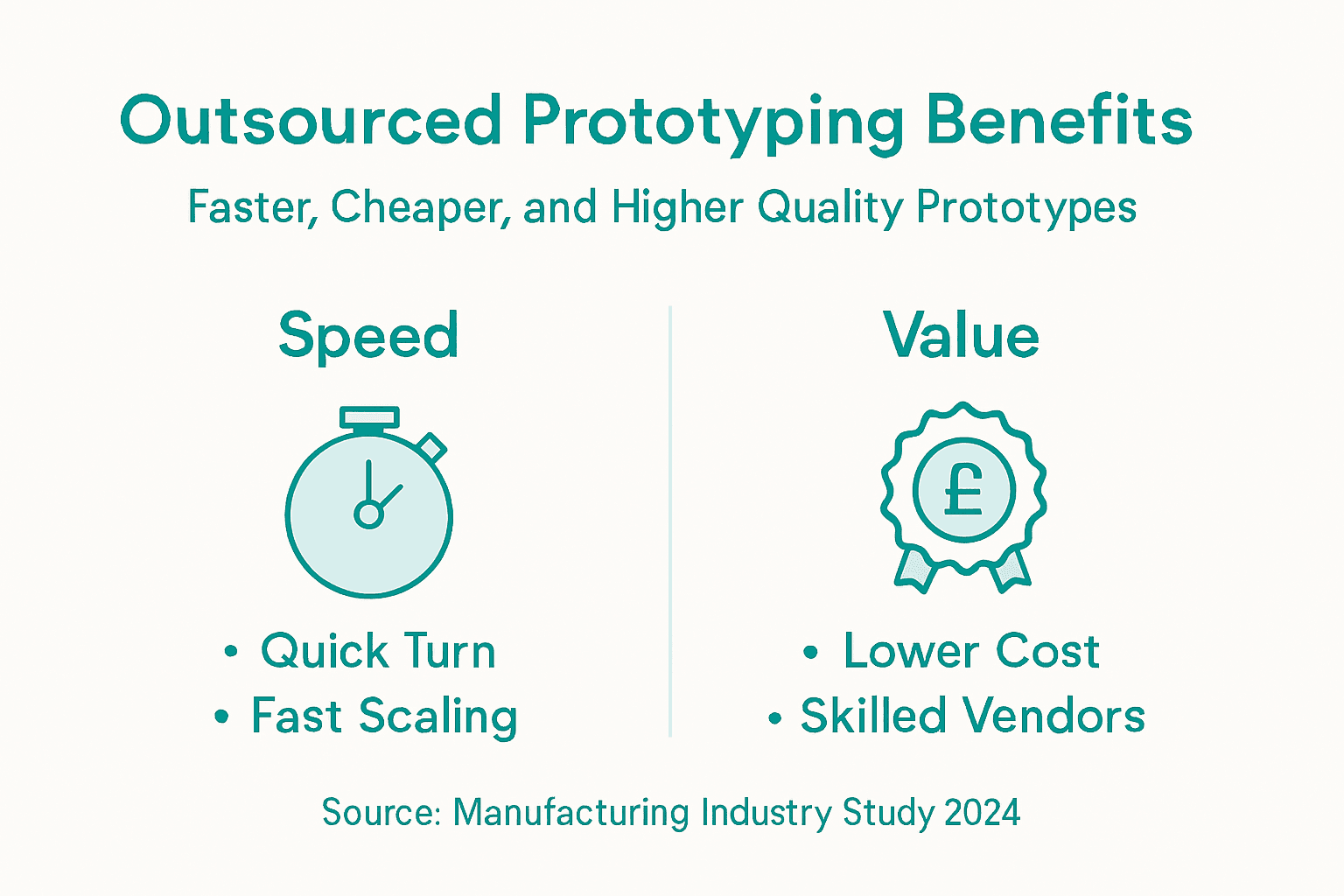
Key comparative metrics include:
Cost Dimensions:
Speed Considerations:
Quality Assessment Factors:
Successful outsourcing demands meticulous vendor selection, clear communication frameworks, and robust quality management strategies to ensure optimal outcomes across cost, speed, and performance metrics.
Pro tip: Develop a comprehensive vendor evaluation matrix that objectively scores potential partners across technical capabilities, quality certifications, communication efficiency, and previous project portfolios.
The following table summarises the impact of outsourcing versus in-house prototyping across core development factors:
| Factor | Outsourced Prototyping | In-house Prototyping |
|---|---|---|
| Upfront Cost | Minimal, pay-per-project | High, equipment and staff investment |
| Adoption Speed | Rapid, access to latest technologies | Slower, dependent on internal capabilities |
| Flexibility | Easily scalable to project size | Limited by internal resources |
| Quality Control | Relies on vendor certifications and standards | Full internal oversight |
| Innovation | External expertise expands possibilities | Internal knowledge may limit approaches |
Selecting an effective prototyping partner requires comprehensive due diligence that extends beyond simple technical capabilities. Engineering teams must develop a strategic approach to vendor evaluation, considering multiple complex factors that influence successful long-term manufacturing partnerships. The selection process demands a holistic assessment of technological expertise, quality management systems, communication effectiveness, and cultural compatibility.
Critical evaluation criteria for potential prototyping partners encompass technical proficiency, financial stability, and operational reliability. Comprehensive partner assessment involves understanding business objectives and aligning them with vendor capabilities. Organisations must conduct thorough background investigations, validate technical competencies, and establish clear performance expectations through rigorous qualification processes.
Key selection criteria include:
Technical Competence Assessment:
Operational Reliability Factors:
Communication and Collaboration Metrics:
Successful outsourcing partnerships require continuous evaluation, open communication, and adaptive collaboration strategies that evolve with changing technological landscapes and project requirements.
Pro tip: Develop a structured vendor scorecard with weighted evaluation criteria to objectively compare potential prototyping partners across technical, operational, and collaborative dimensions.
The challenge of rapidly developing high-quality prototypes while managing costs and access to advanced manufacturing technologies is a pressing concern for engineering teams today. This article highlights key pain points such as achieving faster time-to-market, leveraging specialised fabrication methods like CNC machining and additive manufacturing, and maintaining strict quality control across complex design iterations. At WJ Prototypes, we understand the critical need for technological flexibility and expert collaboration to transform your concepts into precise functional models without the burden of heavy upfront investments.
Unlock the benefits of comprehensive outsourced prototyping solutions that include SLA, SLS, MJF, DMLS, vacuum casting, injection moulding, and die casting. Our ISO certified manufacturing facility in China offers fast, cost-effective services with global delivery capacity, perfectly suited for industries such as aerospace, automotive, and robotics. Discover how WJ Prototypes’ advanced manufacturing capabilities can help you reduce development cycles and control quality through seamless communication and skilled craftsmanship.
Ready to accelerate innovation and reduce prototyping costs today Explore our detailed service offerings and instant quoting system designed for rapid product deployment. Visit our website to take the next step towards partnering with a reliable global prototyping expert committed to your project success.
Outsourced prototyping solutions involve collaborating with external manufacturing partners to accelerate product development by leveraging specialised expertise and advanced technologies that may not be available internally.
Common prototyping methods include 3D printing, CNC machining, injection moulding, vacuum casting, and sheet metal fabrication. Each method is suitable for different applications based on design requirements and manufacturing processes.
Outsourcing prototyping provides several benefits, including cost efficiency, faster time-to-market, access to advanced technologies, and the ability to focus on core design and innovation challenges without the burden of complex manufacturing processes.
To select the right outsourcing partner, engineering teams should evaluate potential vendors based on their technical competencies, operational reliability, communication effectiveness, and cultural compatibility. Comprehensive due diligence and clear performance expectations are critical for successful partnerships.
SERVICES
RESOURCES