



- Room 1807, Unit 9, Building 2, Shangxing Commercial Street, Shangde Road, Shangxing Community, Xinqiao Subdistrict, Bao'an District, Shenzhen City, China
CONTACT US

WhatsApp


Contact Us
Our team is on stand by, waiting toassist you.

Videos
A large collection of educational videos and tutorials.

About Us
Learn about our company, leadership, and mission totransform manufacturing.

Privacy Policy
Applies to all personal information collected through and/or processed in connection.
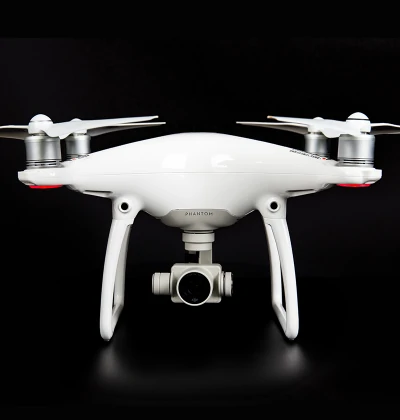

Aerospace & UAV
WJ Prototypes is your 3D manufacturing partner from prototype to large scale production.

Consumer Electronics
New Product Introduction Solutions for Consumer Electronics.

Robotics & Automation
Need some assistance bringing your robotic device or parts from the sketch-board to reality?

Medical Devices
The medical industry needs high quality, dependable and safe parts and products.

Automotive
New Product Introduction Solutions for Automotive

Industrial Machinery
The main purpose of industrial prototyping is to take the product from drawings into the real world.
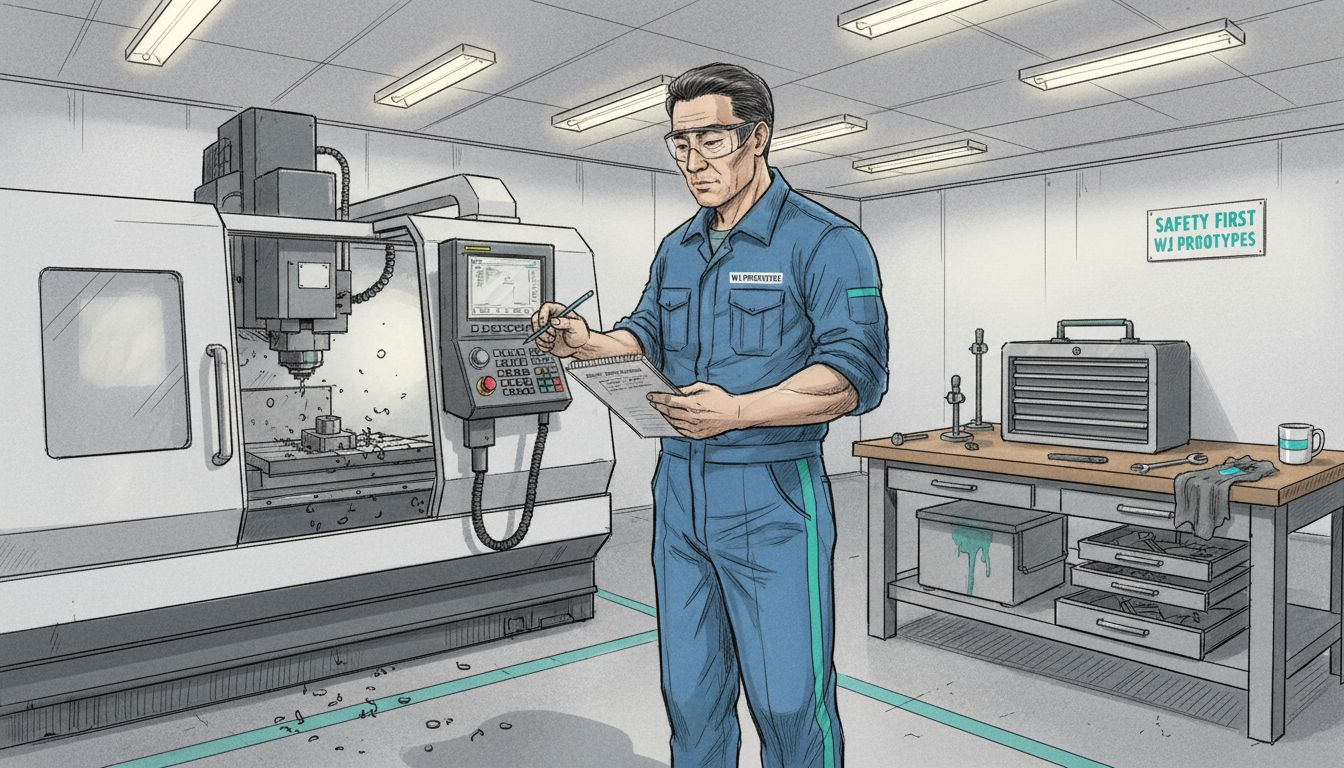

Precision machining often faces misconceptions, even though over 90 percent of aerospace failures result from overlooked tolerances or inconsistent processes. For british mechanical engineers tackling rapid prototyping and low-volume production, understanding these fundamentals can be crucial. This guide brings clarity to the key principles, debunking common myths while highlighting the real factors that impact quality, efficiency, and cost for critical projects in both the aerospace and automotive sectors.
| Point | Details |
|---|---|
| Precision Machining Requires Expertise | Success relies on operator skills, process design, and environmental controls, not just expensive equipment. |
| Understanding Material Properties is Crucial | Proper selection of cutting tools and management of thermal dynamics are key to achieving tight tolerances. |
| Risks Must Be Managed | Insufficient training and poor machine maintenance can lead to costly production errors; preventative measures are essential. |
| Industry-Specific Applications Demand Precision | Aerospace and automotive sectors require parts that meet stringent specifications for safety and performance. |
Precision machining represents a sophisticated manufacturing process where advanced techniques transform raw materials into highly accurate mechanical components with exceptionally tight dimensional tolerances. Unlike traditional machining methods, precision machining demands meticulous control over multiple variables including tool geometry, material properties, cutting parameters, and environmental conditions.
Contrary to popular misconceptions, precision machining is not solely about having expensive equipment. Precision manufacturing fundamentals demonstrate that successful outcomes rely equally on operator expertise, process design, and environmental controls. Professional machinists understand that achieving superior results requires a holistic approach integrating advanced technology, human skill, and systematic process management.
The fundamental principles of precision machining encompass several critical elements. These include understanding material behaviour, selecting appropriate cutting tools, managing thermal dynamics, controlling vibration, and implementing rigorous quality control mechanisms. Techniques such as computer numerical control (CNC), advanced metrology, and real-time monitoring enable manufacturers to achieve microscopic accuracy levels previously unimaginable. Modern precision machining can produce components with tolerances as tight as ±0.01mm, supporting industries ranging from aerospace and medical technology to microelectronics and robotics.
Pro tip: Always validate your machine’s calibration and environmental conditions before beginning critical precision machining operations to ensure consistent, high-quality output.
Precision machining encompasses a diverse range of advanced manufacturing technologies designed to create intricate mechanical components with exceptional accuracy. Machining methods categorically span multiple technological approaches, each offering unique capabilities for transforming raw materials into precision-engineered parts.
The primary categories of precision machining technologies include single-point cutting techniques like turning and boring, multi-point cutting methods such as drilling and milling, and advanced abrasive machining processes like grinding and honing. Additionally, non-conventional techniques such as Electrical Discharge Machining (EDM) and laser machining provide solutions for complex geometries and challenging material configurations. These technologies leverage sophisticated computer numerical control (CNC) systems, enabling manufacturers to achieve microscopic tolerances and intricate design specifications.
Modern precision machining technologies are particularly distinguished by their ability to support ultra-precise manufacturing across critical industries. Advanced techniques like micro and nano machining enable the production of components with tolerances as tight as micrometres, supporting high-performance sectors including aerospace, medical devices, semiconductor manufacturing, and advanced robotics. Each machining method offers distinct advantages, with CNC milling providing exceptional versatility, grinding delivering superior surface finish, and specialised techniques like EDM handling electrically conductive materials with remarkable precision.
Here’s a useful comparison of major precision machining technologies and their industry applications:
| Technology Type | Typical Use Case | Supported Materials | Industry Example |
|---|---|---|---|
| CNC Milling | Complex shaping, prototyping | Aluminium, steel, plastics | Robotics, aerospace |
| Grinding | Surface finish, accuracy | Hardened steels, ceramics | Automotive, medical devices |
| Electrical Discharge Machining (EDM) | Intricate geometries, fine details | Titanium alloys, conductive metals | Aerospace, electronics |
| Laser Machining | Micro-feature creation, quick cuts | Metals, composites, polymers | Microelectronics, automotive |
Pro tip: Select precision machining technologies based on your specific material properties, required tolerances, and geometric complexity to optimise manufacturing outcomes.
Achieving exceptional dimensional accuracy requires a complex interplay of advanced technologies, sophisticated equipment, and expert human intervention. Precision machining fundamentally relies on meticulous planning and control to create components with extraordinary geometric precision and consistency.

The process of achieving tight tolerances involves multiple critical strategies. Computer Numerical Control (CNC) machinery plays a pivotal role, providing unprecedented levels of automated precision through computer-guided cutting tools that can manipulate materials with microscopic accuracy. Sophisticated measurement technologies like coordinate measuring machines (CMMs) and laser interferometry enable manufacturers to verify dimensional specifications with remarkable resolution, ensuring that each manufactured component meets exacting requirements.

Precision machining professionals employ several key techniques to maintain extreme dimensional accuracy. These include using high-quality cutting tools with minimal wear, implementing advanced cooling and vibration dampening systems, maintaining strict environmental controls to minimise thermal expansion, and developing comprehensive quality assurance protocols. Temperature-controlled machining environments, precision-ground machine beds, and advanced calibration techniques all contribute to reducing variability and maintaining consistently tight tolerances across production runs.
Pro tip: Regularly calibrate precision machining equipment and maintain detailed measurement logs to track potential drift in dimensional accuracy over time.
Aerospace and automotive industries represent the pinnacle of precision engineering, where microscopically accurate components can mean the difference between success and catastrophic failure. Precision machining delivers critical components with exceptional reliability for these high-stakes technological domains.
In aerospace applications, precision machining enables the creation of sophisticated components that withstand extreme environmental conditions. Advanced techniques produce intricate parts like turbine blades, engine components, and structural elements with tolerances measured in micrometres. These components must resist immense thermal stress, mechanical load, and potentially extreme pressure differentials while maintaining structural integrity and performance consistency. Similarly, automotive manufacturing relies on precision machining to produce critical engine parts, transmission systems, and safety-critical components that demand absolute dimensional accuracy and reproducibility.
The complexity of precision machining in these industries extends beyond mere dimensional accuracy. Automotive and aerospace engineers require components that not only meet exact specifications but also demonstrate exceptional material properties, surface finish, and long-term durability. Advanced machining techniques allow manufacturers to work with challenging materials like titanium alloys, high-strength aerospace-grade aluminium, and specialised composite materials, transforming them into precisely engineered components that push the boundaries of technological performance.
Pro tip: Collaborate closely with precision machining engineers during the design phase to optimise component manufacturability and reduce potential performance limitations.
Precision machining involves complex economic considerations that extend far beyond simple manufacturing expenses. Common misconceptions can significantly impact project budgets and outcomes, making strategic decision-making crucial for cost-effective production.
One of the most prevalent mistakes is over-specifying tolerances, which dramatically increases manufacturing complexity and expenses. Unnecessarily tight tolerances require more sophisticated machinery, longer machining times, and greater operator skill, ultimately driving production costs exponentially higher. Manufacturers must carefully balance functional requirements with economic feasibility, recognising that not every component demands microscopic precision. Careful engineering analysis can help determine the most appropriate tolerance levels that meet performance specifications without incurring unnecessary expenditure.
Risks in precision machining extend beyond financial considerations and encompass technical challenges that can compromise entire production runs. Critical errors include insufficient operator training, inadequate environmental controls, and poor machine maintenance. These factors can introduce variability in component quality, potentially leading to catastrophic failures in high-stakes industries like aerospace and automotive manufacturing. Comprehensive quality management systems, regular equipment calibration, and continuous staff training are essential strategies for mitigating these substantial operational risks and ensuring consistent, reliable manufacturing outcomes.
Below is a summary of common precision machining risks and practical prevention strategies:
| Risk Factor | Consequence | Prevention Strategy |
|---|---|---|
| Operator Error | Dimensional inaccuracy | Rigorous training programmes |
| Over-specifying Tolerances | High cost, longer lead times | Engineering optimisation analysis |
| Poor Maintenance | Machine drift, failures | Scheduled calibration, inspections |
| Inadequate Environment | Quality inconsistency | Climate control, vibration dampening |
Pro tip: Conduct a thorough cost-benefit analysis for each precision machining project, considering tolerance requirements, material complexity, and potential performance implications before finalising specifications.
Precision machining demands more than just advanced equipment it requires expert craftsmanship, thorough process control, and a deep understanding of tight tolerances as highlighted in the article. If your project faces challenges such as over-specifying tolerances, managing complex materials, or maintaining consistent dimensional accuracy WJ Prototypes offers the perfect solution. Our CNC machining and advanced additive manufacturing technologies combine to deliver high-quality prototypes and small to medium production runs with micrometre-level precision.
Take advantage of our experience serving demanding sectors like aerospace, automotive, and medical devices to overcome common pitfalls such as operator error and environmental variability. Visit WJ Prototypes now for a fast, cost-effective, and reliable pathway from design to market. Don’t let tolerance issues slow you down request an instant quote or speak with our engineers today to ensure your next project achieves the accuracy it truly deserves.
Precision machining is a sophisticated manufacturing process that transforms raw materials into highly accurate mechanical components with exceptionally tight dimensional tolerances, utilising advanced technologies and techniques.
Accuracy is crucial in precision machining as it ensures that components meet exact specifications, which is vital in high-stakes industries like aerospace and automotive where even slight deviations can lead to catastrophic failures.
The key factors affecting precision machining include tool geometry, material properties, cutting parameters, environmental conditions, and operator expertise, all of which contribute to the quality and precision of the final product.
Manufacturers can achieve tight tolerances through meticulous planning and control, utilizing advanced machinery such as CNC systems, and implementing rigorous quality control measures, including regular calibration and environmental management.
SERVICES
RESOURCES