



- Room 1807, Unit 9, Building 2, Shangxing Commercial Street, Shangde Road, Shangxing Community, Xinqiao Subdistrict, Bao'an District, Shenzhen City, China
CONTACT US

WhatsApp


Contact Us
Our team is on stand by, waiting toassist you.

Videos
A large collection of educational videos and tutorials.

About Us
Learn about our company, leadership, and mission totransform manufacturing.

Privacy Policy
Applies to all personal information collected through and/or processed in connection.
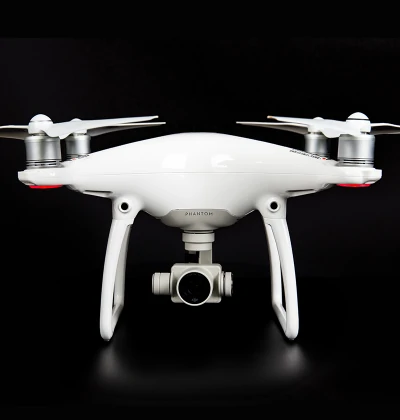

Aerospace & UAV
WJ Prototypes is your 3D manufacturing partner from prototype to large scale production.

Consumer Electronics
New Product Introduction Solutions for Consumer Electronics.

Robotics & Automation
Need some assistance bringing your robotic device or parts from the sketch-board to reality?

Medical Devices
The medical industry needs high quality, dependable and safe parts and products.

Automotive
New Product Introduction Solutions for Automotive

Industrial Machinery
The main purpose of industrial prototyping is to take the product from drawings into the real world.


A six-month delay can cost millions for aerospace and automotive teams, turning rapid product development from a luxury into a necessity. With regulatory hurdles and high tooling costs, traditional methods often slow progress and inflate budgets. Modern rapid product development blends agile processes with integrated prototyping, empowering your team to validate concepts quickly and minimize expensive mistakes. By focusing on iterative methodology shortening development cycles, you gain speed and confidence without sacrificing compliance or quality.
| Point | Details |
|---|---|
| Embrace Rapid Development | Modern product development is essential for aerospace and automotive sectors to avoid costly delays and maintain market competitiveness. |
| Iterative Methodology | Focus on concurrent engineering and early validation to streamline processes and enhance product quality. |
| Cross-Functional Collaboration | Foster real-time communication among teams to ensure alignment and accelerate decision-making. |
| Strategic Cost Management | Make informed decisions early in the development process to optimize lifecycle costs and avoid expensive changes later on. |
Rapid product development is no longer a competitive advantage—it’s table stakes. Aerospace and automotive teams operate in a market where a six-month delay can cost millions in tooling investments and missed market windows.
Modern rapid product development combines agile methodology with physical and digital prototyping to shrink development cycles while maintaining quality. This isn’t waterfall anymore, and it’s not pure chaos either.
Rapid product development is an iterative methodology shortening development cycles while improving quality and cost efficiency. Think of it as structured experimentation at speed, not reckless rushing.
Your team explores multiple design variants early, validates assumptions quickly, and eliminates weak concepts before expensive tooling commitments. The goal: find optimal solutions faster than traditional sequential processes.
Key characteristics of today’s approach:
Aerospace and automotive projects involve regulatory compliance, material certification, and precision tolerances that traditional rapid prototyping skips. Modern approaches acknowledge this reality.
You can’t just prototype a gearbox bracket and hope it works. Your team needs to validate structural integrity, thermal performance, and manufacturing feasibility simultaneously. Rapid product development frameworks now integrate this rigor into speed.
An augmented stage-gate process combines traditional gating with agile iteration and design thinking. Each gate requires validated evidence before advancing—no hand-waving, no guesses.
Five years ago, rapid development meant faster CAD and quicker manual machining. Today it means something more sophisticated:
Speed without validation isn’t product development—it’s gambling with R&D budgets.
Your teams can now test a structural concept in simulation while manufacturing a test part, then compare results within days instead of weeks. This parallel approach defines modern rapid development.
The economics shift dramatically. Earlier decisions cost thousands in design changes. Later decisions cost hundreds of thousands in tooling modifications. Rapid development frontloads validation so decisions happen when changes remain affordable.
Pro tip: Partner with manufacturing providers who understand your industry’s compliance requirements from day one—aerospace and automotive teams who prototype without considering DFM and regulatory pathways waste the speed gains.
Fast-track product creation follows a structured yet flexible progression. Your aerospace or automotive team needs gates and checkpoints—but not the multi-year bottleneck of traditional stage-gate processes.
The modern approach accelerates without sacrificing rigor. Each stage builds on validated learning from the previous one, eliminating wasted effort on doomed concepts early.
Your first move is proving the problem exists and your solution addresses it. This isn’t guessing; it’s structured investigation.
Conduct market research, competitive analysis, and customer interviews. Validate that aerospace operators or automotive manufacturers actually need what you’re proposing. Document assumptions that will make or break the project.
Key activities:
This stage typically takes 2-4 weeks. Investment is minimal—mostly engineering time and market research costs.
Once market fit is validated, move into digital prototyping and validation. This is where CAD, finite element analysis, and computational fluid dynamics earn their keep.
Your engineers model performance, simulate thermal stress, validate structural integrity, and identify manufacturing risks before cutting any physical prototypes. Test multiple design variants simultaneously.
This parallel exploration finds optimal solutions faster than sequential testing. A gearbox bracket design gets validated in simulation, then alternative geometry options run simultaneously.
Design assumptions proven wrong in simulation cost nothing. Design assumptions proven wrong in metal cost hundreds of thousands.
Now build functional prototypes using rapid manufacturing methods. Advanced additive manufacturing produces test parts in days, not weeks.

This isn’t aesthetic mockups—these are functional prototypes that prove performance predictions. Test materials, validate assembly sequences, measure thermal behavior, verify dimensional tolerance stacks.
Compare physical test results against simulation predictions. When they diverge, you learn why. Feed those lessons back into design iteration.
Typical cycle: design iteration, manufacturing, testing, analysis, refinement. Three to four cycles happen in what used to take one.
With design and performance validated, transition from rapid prototyping to production-feasible manufacturing. This stage confirms that your design works at volume and within cost targets.
Develop tooling strategies, establish supplier relationships, validate production processes. Build 10-50 units using production-equivalent methods, not just rapid prototyping technology.
Identify design changes needed for manufacturability. Validate supply chains for materials and subcomponents.
Aerospace and automotive require certification. Don’t leave this to the end. Run compliance testing parallel to design stages.
Ensure documentation aligns with certification requirements throughout development. Validate material certifications, process control plans, and traceability systems.
This stage prevents the nightmare scenario where your design works perfectly but certification takes 18 additional months.
You’ve validated concept, design, manufacturing, and compliance. Launch with confidence, not blind hope.
Execute production ramp-up, establish supply chains, deploy quality systems, and begin customer deployment.
Here’s a summary of the stages in modern fast-track product creation and their primary objectives:
| Stage | Purpose | Typical Duration | Key Outcome |
|---|---|---|---|
| Concept and Market Validation | Confirm market need and feasibility | 2-4 weeks | Validated problem/solution fit |
| Design and Simulation | Model, simulate, and optimize designs | 2-4 weeks | Optimal, validated design variants |
| Physical Prototyping and Testing | Build and test functional prototypes | 2-3 weeks | Proof of performance and manufacturability |
| Manufacturing Scale-Up | Validate production processes and costs | 3-6 weeks | Production-ready design and supplier setup |
| Regulatory and Compliance Validation | Ensure certification and documentation | Ongoing | Compliance achieved, risk minimized |
| Market Launch | Deploy product with confidence | 2-4 weeks | Verified launch, ready supply chain |
Pro tip: Establish go/no-go gates after stages two and three—if simulation validation or prototype testing fails, kill the concept before expensive tooling investment, and pivot to the next design variant.
Choosing between additive and traditional manufacturing isn’t about picking the winner. Smart aerospace and automotive teams use both, deployed strategically at different stages.
Additive and traditional methods solve different problems. Understanding when each excels determines whether you accelerate development or burn budget on the wrong technology.
Additive manufacturing builds parts layer-by-layer from digital models. Stereolithography (SLA), Selective Laser Sintering (SLS), and Fused Deposition Modeling (FDM) produce complex geometries that traditional machining struggles with.
Additive manufacturing advantages include design freedom, material efficiency, and rapid iteration. You can manufacture intricate internal channels, organic forms, and lightweight lattice structures without tooling costs.
For aerospace engine components or automotive thermal management parts, additive processes reduce waste and enable designs impossible with traditional methods.
Additive strengths:
Compare how additive and traditional manufacturing methods impact aerospace and automotive product development:
| Category | Additive Manufacturing | Traditional Manufacturing |
|---|---|---|
| Design Flexibility | Intricate, complex geometries | Limited to simpler shapes |
| Speed to Prototype | Days, very rapid | Weeks, slower iteration |
| Material Properties | Limited material selection | Certified, proven alloys |
| Cost at Low Volume | Tooling-free, cost-effective | High due to setup and tooling |
| Volume Economics | Costs remain steady | Per-part cost drops with scale |
| Certification Confidence | Emerging, less proven | Trusted for compliance |
| Use Case | Concept and validation stages | Scale-up and final validation |
Traditional subtractive methods remove material through machining, casting, or stamping. CNC machining, investment casting, and sheet metal fabrication excel at producing functional, production-representative parts.
Traditional manufacturing achieves surface finishes, dimensional tolerances, and material properties that aerospace and automotive certification demands. Regulatory bodies trust processes with decades of documented performance history.
For stage-four manufacturing scale-up, traditional methods prove manufacturing feasibility at production volumes and costs.
Traditional strengths:
Additive and traditional manufacturing address different project needs. Ignore the “one is better” narrative—it misses the point.
Stages one through three use additive aggressively. Design iteration, validation prototyping, and performance testing happen fastest with layer-by-layer building. Burn through 10 design variants in the time traditional methods produce two.
Stages four and five transition to traditional methods. Confirm production feasibility, validate material properties, and demonstrate manufacturability using production-equivalent processes.
Additive wins on speed and design flexibility. Traditional wins on material properties and production validation. Use both.
A gearbox housing design iterates through five versions via SLS nylon in two weeks. Once validated, build stage-four prototypes via CNC aluminum to prove production cost and performance match simulations.
Your timeline compresses to months instead of years. Your confidence increases because you’ve validated design in additive and manufacturing feasibility in traditional.
Pro tip: Start additive at concept stage for rapid iteration, then validate your best designs using traditional manufacturing methods at stage four—this dual approach minimizes timeline without sacrificing regulatory confidence.
Rapid product development succeeds or fails based on organizational factors, not just technology choices. The best prototyping tools mean nothing if your team lacks clarity, communication breaks down, or management doesn’t commit.
Understanding what drives success—and what tanks projects—separates teams that ship on schedule from those that hemorrhage months and budget.
Cross-functional teamwork, strong management support, and effective communication define projects that accelerate. Aerospace and automotive development demands coordination across engineering, manufacturing, quality, and regulatory domains simultaneously.
Assemble teams with decision-making authority. Engineers shouldn’t wait weeks for management approval on design changes. Empower your team to iterate rapidly within defined guardrails.
Success factors that matter:
Projects collapse when teams skip validation, pursue unclear objectives, or fail to involve manufacturing early. These aren’t surprises—they’re well-documented failure modes.
Unclear vision and market misalignment waste months on products no one wants. Validate market need before investing in prototyping. Too many aerospace and automotive teams build technically perfect solutions to problems customers don’t have.
Inadequate testing and validation creates false confidence. You think your design works because simulation looked good, then manufacturing reveals tolerance stacks that don’t close or thermal behavior that diverges from predictions.
Poor communication between functions creates rework. Manufacturing wasn’t consulted during design, so the chosen geometry costs 40% more to produce than alternatives. Design changes cascade because stakeholders learned about decisions through email instead of real-time collaboration.
Overcomplicated MVPs drain resources. Your first prototype doesn’t need full integration or production-level finishes. It needs to answer one critical question: does this concept work?
Common failures:
Global product development success rates hover below 60%. Most failures trace to organizational factors, not technical limitations. Your team has better tools than previous generations—use them to accelerate validation, not to build elaborate solutions to vague problems.
Validate assumptions before prototyping costs explode. Involve manufacturing from day one. Communicate constantly across functions.
Pro tip: Schedule weekly cross-functional standups where design, manufacturing, and quality discuss constraints in real-time—misalignments surface when changes cost hours, not hundreds of thousands.
Rapid product development reduces costs, but only if you make strategic decisions early. Most lifecycle expenses lock in during the concept phase, before prototyping even begins.
Understand where money actually flows in development. Ignorance here turns rapid development into rapid spending.
Approximately 60% of lifecycle costs commit during concept design. Not during manufacturing ramp-up. Not during tooling. During design decisions made when you’re still exploring concepts.
This reality changes everything. Your focus shifts from optimizing manufacturing cost to optimizing early design choices. Prototype faster not to save on prototyping—to save on the cost consequences of late design changes.
A design geometry chosen in week four that proves unmachinesable in week 12 forces either redesign (months lost) or acceptance of 40% production cost premium. That premium compounds across 100,000 units.
Cost commitment timeline:
Validated learning cycles and lean startup methodology reduce unnecessary spending. Each prototype iteration should answer a specific cost-related question: Is this geometry manufacturable at target cost? Does this material selection meet performance without premium pricing? Can we integrate subcomponents or must we fabricate?
Value Engineering asks: Which design features actually create customer value? Which features are nice-to-have? Strip unnecessary complexity before prototyping scales cost.
Additive prototyping accelerates validation at minimal cost. A design that takes four weeks to iterate via CNC and casting takes four days via SLS. The speed advantage compounds when you’re running five design variants simultaneously.
Cost management decisions:
Choosing cheap prototyping because “we’re just validating concepts” backfires regularly. A plastic SLS prototype might validate geometry, but it won’t reveal that your chosen aluminum alloy costs 3x more than alternatives or that your tolerance stack is unachievable at production volume.
Prototype in production-equivalent materials and processes. Spend slightly more upfront to avoid catastrophic cost surprises later.
Design decisions made today determine manufacturing costs for a decade. Validate cost assumptions during prototyping, not after production launch.
Rapid additive prototyping accelerates iteration. Traditional prototyping validates production feasibility. Use both strategically—additive for rapid concept exploration, traditional for cost and manufacturability validation.
Don’t outsource cost thinking to the manufacturing partner. Your team owns cost optimization from concept forward.
Pro tip: Build your first prototype in production-equivalent material and process, even if it costs 30% more than plastic—discovering cost killers during prototyping costs thousands; discovering them post-launch costs millions.
Navigating the challenges of rapid product development requires more than just speed. The article highlights key pain points like balancing fast iteration with rigorous validation, integrating additive and traditional manufacturing, and managing compliance in aerospace and automotive sectors. If you are looking to transform design cycles into efficient, validated workflows that save costs and avoid costly late-stage changes your project demands both technical expertise and agile manufacturing partnerships.
At WJ Prototypes we specialize in delivering exactly that. Our comprehensive suite of services, including advanced additive manufacturing like SLA and SLS combined with traditional CNC machining and injection molding, empowers teams to iterate quickly while ensuring production feasibility and regulatory compliance. With ISO certification, experienced engineers, and global delivery capabilities, we understand the urgency to move from concept to market without compromising quality or increasing risk.
Get ahead in your rapid product development process by leveraging our proven technologies and streamlined communication. Discover the difference a trusted manufacturing partner makes at every stage from design validation to small batch production. Visit WJ Prototypes to start your project with confidence and accelerate your innovation today.
Rapid product development is an iterative methodology aimed at shortening development cycles while improving quality and cost efficiency, allowing teams to explore design variants quickly and validate assumptions early in the process.
Modern rapid product development combines agile methodology with digital and physical prototyping, allowing for concurrent engineering, early prototyping, integrated collaboration, and validated learning, unlike the slower sequential processes of traditional methods.
The key stages include: 1) Concept and Market Validation, 2) Design and Simulation, 3) Physical Prototyping and Testing, 4) Manufacturing Scale-Up, 5) Regulatory and Compliance Validation, and 6) Market Launch.

Cross-functional teamwork is crucial because it ensures that all relevant departments, such as engineering, manufacturing, and quality, collaborate in parallel, enhancing communication and decision-making, which accelerates the overall development process.
SERVICES
RESOURCES