



- Room 1807, Unit 9, Building 2, Shangxing Commercial Street, Shangde Road, Shangxing Community, Xinqiao Subdistrict, Bao'an District, Shenzhen City, China
CONTACT US

WhatsApp


Contact Us
Our team is on stand by, waiting toassist you.

Videos
A large collection of educational videos and tutorials.

About Us
Learn about our company, leadership, and mission totransform manufacturing.

Privacy Policy
Applies to all personal information collected through and/or processed in connection.
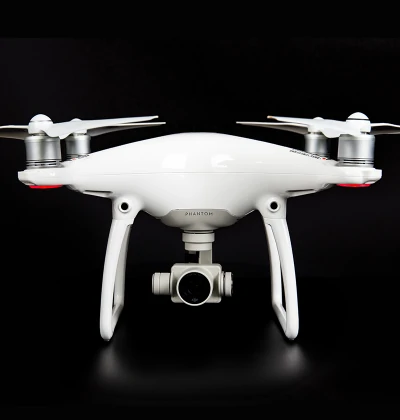

Aerospace & UAV
WJ Prototypes is your 3D manufacturing partner from prototype to large scale production.

Consumer Electronics
New Product Introduction Solutions for Consumer Electronics.

Robotics & Automation
Need some assistance bringing your robotic device or parts from the sketch-board to reality?

Medical Devices
The medical industry needs high quality, dependable and safe parts and products.

Automotive
New Product Introduction Solutions for Automotive

Industrial Machinery
The main purpose of industrial prototyping is to take the product from drawings into the real world.


TL;DR:
- Failing prototype inspections just before reviews cause delays, additional costs, and regulatory setbacks in regulated industries. Adhering to industry-specific standards like AS9102, FDA 21 CFR 820, and APQP ensures comprehensive quality assurance from design through production. Proper documentation, regular process reassessment, and collaborative risk management are essential to prevent costly failures and facilitate program success.
A prototype that fails inspection the week before a customer review doesn’t just cost money. It delays programs, triggers supplier audits, and can freeze regulatory submissions for months. In regulated industries like aerospace, automotive, and medical devices, quality assurance (QA) during prototype development isn’t a final checkpoint. It’s a structured discipline built into every design decision, drawing release, and process change. This guide walks you through the specific frameworks, documents, and practical steps that keep prototype programs on track across all three sectors.
| Point | Details |
|---|---|
| Know your QA standards | Each industry uses different frameworks like AS9102, APQP, or FDA’s design controls for prototype quality. |
| Define requirements early | Clarify expectations, documentation, and accountability between all parties before prototyping starts. |
| Differentiate verification and validation | Verification confirms prototypes meet requirements; validation ensures real-world performance and safety. |
| Document everything | Traceability matrices, control plans, and FAIR/FAI evidence are essential for compliance and troubleshooting. |
| Adapt to context | Standards are the baseline—successful teams customize controls and maintain open communication for true QA. |
Having established why rigorous QA is critical, let’s start with what you’ll need to prepare before you prototype.
The word “prototype” means something different depending on your industry, and that difference carries real compliance weight. In aerospace, a first article is a production-representative part evaluated against a finalized drawing. In automotive, a prototype can span from a concept model through D-sample builds before production launch. In medical devices, any physical build used to evaluate design intent may fall under FDA design control requirements, depending on the device class and how documentation is maintained.
Before a single part ships to manufacturing, you need to define which category applies and what evidence you’ll be required to produce.
Key documents and standards by industry:
| Industry | Primary Standard | Core QA Artifacts |
|---|---|---|
| Aerospace | AS9102 (FAI/FAIR) | FAIR Forms 1–3, drawing characteristic log, material certs |
| Automotive | APQP, AIAG FMEA, PPAP | Control Plan, DFMEA/PFMEA, measurement system analysis |
| Medical | 21 CFR 820 / QMSR | Design History File, risk management file, V&V plan |
For aerospace prototyping, a common quality mechanism is the First Article Inspection (FAI) using AS9102’s FAIR structure (Forms 1 through 3) with 100% accountability to drawing and specification characteristics. This structure demands objective evidence for every callout on the drawing before the part is accepted.

For medical device prototyping, FDA design controls are risk-based and codified through 21 CFR 820 and the newer Quality Management System Regulation (QMSR) updates. Risk management is integrated throughout design and development, not just during final testing.
What you must clarify before prototyping begins:
Pro Tip: Build a compliance checklist before your first purchase order. Map each design requirement to a verification method, an owner, and a due date. This eliminates the end-of-program scramble to assemble evidence that was never collected.
Buyers who skip this step often arrive at prototype delivery with parts that look correct but lack the documented evidence to prove it. That gap alone can reject an otherwise functional build.
Once prerequisites are confirmed, let’s examine how quality is verified through the aerospace FAI workflow.
First Article Inspection is the aerospace industry’s primary tool for confirming that a new or changed production process can consistently produce parts that meet all design requirements. AS9102 defines three forms that together capture the full evidence package.
Form 1 covers the design documentation, confirming the correct drawing revision, notes, and specifications are referenced. Form 2 covers the material and process certifications, tracing raw stock, heat treatment, and special processes back to approved sources. Form 3 contains the characteristic accountability log, a line-by-line record of every dimension, tolerance, surface finish, and note called out on the drawing, along with the measured value and the result.
The 100% accountability requirement is not optional. Every single callout must appear on Form 3 with objective evidence. Buyers will reject an FAI package that has missing characteristics or entries that simply say “per drawing” without actual measurements.
FAI triggering events under AS9102:
Many aerospace prototype QA programs underestimate how often a drawing revision alone requires a full or partial FAI re-run. A single note change or tolerance tightening on even one feature can trigger re-inspection of affected characteristics.
| FAI trigger | Scope of re-inspection |
|---|---|
| New part number | Full FAI (all three forms) |
| Drawing revision (minor) | Affected characteristics only |
| Drawing revision (major) | Full FAI typically required |
| Process or material change | Forms 2 and 3 minimum |
| Location change | Full FAI in most customer clauses |
Aviation supply-chain buyers often expand what counts as “design characteristics.” Lockheed Martin’s quality clause, for example, requires objective evidence that embedded and related characteristics are accounted for in the FAI evidence package. This means embedded heat treat requirements, surface treatment specifications, and process qualifications are not excluded just because they don’t appear as a balloon on the drawing.
“Missing a single characteristic in the FAIR package is not a minor administrative error. It invalidates the entire objective evidence structure and forces a re-submission.”
Common mistakes in aerospace FAI:
Choosing a reliable partner with direct FAI experience is not just a convenience. In aerospace, it’s a program risk control.
Pro Tip: Ask your manufacturing supplier to provide a draft Form 3 characteristic list before machining begins. This confirms that every drawing callout is captured before the part is made, not after.
With aerospace standards covered, let’s look at how automotive industries ensure prototype quality while scaling toward mass production.
Advanced Product Quality Planning (APQP) is the automotive industry’s structured methodology for managing quality from concept through production launch. It connects design intent directly to process controls and production readiness evidence. When applied to prototype programs, APQP gives teams a consistent path from engineering requirements to validated parts.
APQP phases as applied to prototype programs:
Automotive prototyping teams that skip directly from design to production trial often discover process-driven variation that should have been caught in phase 3. The result is expensive tooling changes and delayed PPAP submissions.
For automotive prototypes progressing toward production, APQP is the structured framework that links FMEA, measurement system analysis, capability/SPC (statistical process control), and PPAP approval. Each element feeds the next. A weak DFMEA produces a weak Control Plan, which then misses the process variation that causes field failures.
Control Plan structure for prototype phase:
| Column | What it captures |
|---|---|
| Characteristic | Dimension, material, process parameter |
| Specification | Required value and tolerance |
| Measurement method | Gauge, instrument, or test method |
| Sample size and frequency | How many and how often |
| Reaction plan | What to do when out of spec |
The reaction plan column is where most prototype Control Plans fall short. Teams define what to measure but leave the reaction field blank or write “contact engineering.” That is not a reaction plan. A proper reaction plan specifies who decides, what containment action is taken within what timeframe, and when escalation is required.
Production readiness in automotive also means confirming that manufacturing in the right environment delivers consistent results. Even well-designed parts fail capability requirements when produced on equipment not capable of holding the required tolerances across a production run.
Pro Tip: Run your PFMEA with the process engineer who will actually build the part. Design engineers alone tend to underestimate process-driven failure modes. The conversation between both disciplines almost always surfaces risk that was invisible on paper.
A commonly overlooked statistic: studies on automotive supplier PPAP rejections consistently show that incomplete or inaccurate Control Plans are among the top three rejection reasons, alongside dimensional nonconformances and missing material certifications.
Automotive processes have their parallel in medical devices, but FDA-regulated prototyping brings additional compliance complexity.
The question product teams ask most often is: when exactly do FDA design controls apply to our prototype? The answer depends on whether the prototype is being used to evaluate a design concept (generally exempt) or to evaluate a specific design that may proceed to production. Once you are testing whether your design meets its intended use, design controls apply, regardless of how early in development you are.

FDA design controls are risk-based and codified through 21 CFR 820 and the QMSR updates, integrating risk management throughout design and development. This means your prototype testing generates regulated records, not informal bench notes.
What triggers full design control requirements:
The difference between verification and validation is critical and widely misunderstood. Medical device guidance is explicit: verification confirms that the design output meets the design input requirements, while validation confirms that the device meets user needs and intended uses under actual or simulated conditions.
Verification asks: did we build it right? Validation asks: did we build the right thing?
Best practices for prototype QA in medical devices:
“Regulators expect that prototype test evidence is traceable from user need to design input to test result. Gaps in that chain become findings during audits and submissions.”
Medical device QA teams that treat early builds as “just prototypes” often face a painful rework cycle when they discover that informal bench testing cannot be used as regulatory evidence. Rebuilding the documentation chain after the fact is far more expensive than building it correctly the first time.
Pro Tip: Create a simple traceability matrix as a spreadsheet: one row per user need, columns for design input, design output, verification method, and result. Update it with every prototype iteration. By the time you submit, it’s already done.
Every QA standard discussed in this guide is a floor, not a ceiling. The standards tell you the minimum required evidence. They don’t tell you how to catch the failure mode that your FMEA didn’t anticipate because it emerged from a design handoff no one fully documented.
The most expensive prototype failures we see in practice share a common pattern: teams treated the QA framework as complete once the paperwork was filled out. They submitted Form 3 with all characteristics accounted for and still delivered a part that failed in service, because the actual manufacturing process drifted in a way that nominal measurements didn’t reveal.
Documentation is not a substitute for engineering judgment. A control plan without a capable process is a catalog of good intentions. An FMEA reviewed only by the design team misses half the real failure modes. And a medical DHF assembled from scattered bench notes at the end of development is not a quality record. It’s a reconstruction project.
The uncomfortable truth is that QA frameworks become genuinely effective only when they’re treated as living tools, not submission artifacts. That means revisiting your prototyping process at each iteration, questioning whether the controls you set up in phase 1 still reflect the actual risk in phase 3, and escalating ambiguity rather than absorbing it silently.
The most dangerous moment in prototype development is the design-to-manufacturing handoff. That’s where requirements get lost, tolerances get “interpreted,” and risk assumptions from the engineering team fail to transfer to the production team. Build explicit handoff checklists. Make risk assumptions visible. Treat every assumption not backed by test evidence as an open action item, not a closed decision.
Customize your controls for each program. A simple consumer product prototype and a flight-critical aerospace component both need QA, but they don’t need the same QA. Applying a full PPAP structure to a concept model wastes resources. Applying informal controls to a first article aerospace part creates program risk. Match the rigor to the stakes.
With new strategies for prototype QA in hand, you may want a partner who already knows these standards inside and out. WJ Prototypes works with product managers and procurement teams across aerospace, automotive, and medical industries to deliver prototypes and low-volume production runs built to documented quality standards. Whether you need FAIR-ready machined parts, APQP-supported builds, or prototypes manufactured under ISO-certified quality systems, our engineering team understands what your stakeholders will inspect. Explore our full range of CNC machining materials for regulated applications, or review our automotive prototyping solutions to see how we support your production readiness milestones from first article through launch.
Verification checks whether the design output meets its defined input requirements during the build and test process. Validation confirms that the final prototype fulfills actual user needs and intended uses under representative conditions, as medical device guidance makes explicit.
Full FAI is typically required for new part introductions, drawing or process changes, material or manufacturing location shifts, and production restarts after a long lapse. The AS9102 triggering conditions define the specific scenarios in detail.
Buyers can define additional design characteristics and require objective evidence covering embedded features such as process qualifications or material compliance. Aviation supply-chain customers like those following Lockheed Martin’s quality clauses routinely extend these requirements beyond the base AS9102 structure.
Do not treat a Control Plan as a simple inspection checklist. Effective automotive Control Plans must explicitly define reaction plans, evaluation methods, and monitoring frequency so nonconformances are handled consistently and don’t recur across production iterations.
SERVICES
RESOURCES