



- Room 1807, Unit 9, Building 2, Shangxing Commercial Street, Shangde Road, Shangxing Community, Xinqiao Subdistrict, Bao'an District, Shenzhen City, China
CONTACT US

WhatsApp


Contact Us
Our team is on stand by, waiting toassist you.

Videos
A large collection of educational videos and tutorials.

About Us
Learn about our company, leadership, and mission totransform manufacturing.

Privacy Policy
Applies to all personal information collected through and/or processed in connection.
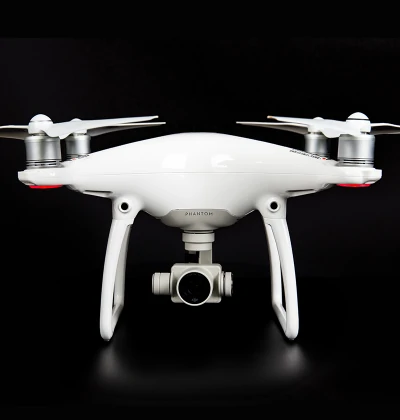

Aerospace & UAV
WJ Prototypes is your 3D manufacturing partner from prototype to large scale production.

Consumer Electronics
New Product Introduction Solutions for Consumer Electronics.

Robotics & Automation
Need some assistance bringing your robotic device or parts from the sketch-board to reality?

Medical Devices
The medical industry needs high quality, dependable and safe parts and products.

Automotive
New Product Introduction Solutions for Automotive

Industrial Machinery
The main purpose of industrial prototyping is to take the product from drawings into the real world.

TL;DR:
- Certifications like AS9100, IATF 16949, ISO 13485, and ISO 9001 ensure process quality and regulatory compliance.
- Technical expertise includes material knowledge, process versatility, and strong design for manufacturability feedback.
- Transparent communication and rigorous quality assurance practices are essential for reliable rapid prototyping partnerships.
Choosing the wrong rapid prototyping partner in aerospace, automotive, or medical development doesn’t just slow you down. It can compromise safety, derail regulatory approval, and burn through budget on rework. The stakes are real. Yet most supplier evaluation frameworks treat all prototyping shops as roughly equivalent, leaving product teams to discover critical gaps only after a missed deadline or a failed inspection. This article breaks down the four criteria that actually separate reliable partners from the rest: certifications, technical capability, communication transparency, and quality assurance. Use this framework before you commit to a supplier, not after.
| Point | Details |
|---|---|
| Demand relevant certifications | Only consider partners who have up-to-date, industry-specific certifications for your sector. |
| Assess technological expertise | The range of materials, processes, and tolerance controls directly impacts the quality of prototypes. |
| Insist on transparent communication | Clear updates and defined cost structures prevent surprises throughout your project. |
| Verify robust quality assurance | Ask for detailed QA protocols and sample reports to ensure high-precision results. |
| Prioritize collaborative relationships | Reliable partners act as problem-solvers, not just vendors, supporting your team beyond specifications. |
When your prototype feeds into a safety-critical assembly, a supplier’s quality management system isn’t a formality. It’s the foundation of every process decision they make. Certifications signal that a partner has been independently audited against recognized standards, and that their systems are built to catch problems before they reach you.
Here’s what to look for based on your sector:
Certifications like ISO 9001, IATF 16949, ISO 13485, and AS9100 aren’t just badges. They ensure your supplier’s processes are auditable, repeatable, and aligned with the regulatory expectations your customers and regulators will impose on you.
Why does this matter beyond compliance? Because certified suppliers carry structured documentation habits into every job. That means traceability records, material certificates, and process logs are already part of their workflow. When your procurement or regulatory team needs evidence, it’s ready.
For teams choosing prototyping services for the first time or switching suppliers, scope matters as much as the certificate itself. A shop certified for general machining may not hold AS9100 for additive manufacturing. Always confirm the certificate scope covers the specific processes you need.
“A certificate on the wall is only as good as the last audit. Ask when it was last renewed and whether the scope matches your project.”
Pro Tip: Request a current copy of each relevant certificate and cross-check the issue date and scope. Certificates older than 12 months without a renewal date are a red flag. Your rapid prototyping guide research should always include this step.
With compliance in place, the next consideration is technical capability. Does your partner have the tools and materials you require? A broad process menu means nothing if the team lacks hands-on experience with the specific materials and geometries your project demands.
Strong partners offer a genuine range of material families:
On the process side, look for partners who can combine methods when needed. CNC machining for tight-tolerance metal parts, SLA or SLS for complex polymer geometries, vacuum casting for small production runs, and DMLS for metal additive work. The ability to match precision manufacturing benefits to your specific design intent is what separates a capable shop from a one-trick vendor.
Here’s how to evaluate technical depth in practice:
One area teams consistently over-specify is tolerances. Avoid over-specifying tolerances on non-critical features in prototypes to control costs. Only tighten tolerances for mating interfaces, since adding requirements like ±0.005mm on non-functional surfaces adds significant expense with no real test benefit.

Pro Tip: Share your CAD file and ask the supplier to flag any features that will drive cost without improving function. A technically confident partner will give you honest DFM feedback, not just quote what you sent.
Reviewing prototyping best practices before your supplier conversations will help you ask sharper questions and recognize strong answers when you hear them.
Technical expertise is meaningless if expectations aren’t clear. Here’s how to ensure you’re always in the loop.
The most common source of frustration in prototyping partnerships isn’t quality. It’s surprises. Unexpected costs, vague timelines, and slow responses compound pressure on teams that are already working against tight development schedules. Transparent communication, cost breakdown, and quality assurance processes like CMM inspection and in-process checks are what separate dependable partners from frustrating ones.
Here’s what genuine transparency looks like in practice:
| Factor | Red flag | Green flag |
|---|---|---|
| Quoting speed | Days to respond, vague numbers | Same-day quote with full breakdown |
| Cost structure | Lump-sum with no detail | Line-item material, labor, setup, finish |
| Communication | Single generic email contact | Named engineer assigned to your project |
| Timeline | “We’ll do our best” | Committed date with change conditions |
| Upcharges | Surprise fees at invoice | All extras flagged before production starts |
For teams evaluating how to choose rapid prototyping partners, the quoting process itself is your first data point. A supplier who can’t give you a clear, itemized quote upfront is showing you how they’ll behave when problems arise during production.
“The quality of the first conversation tells you more about a supplier than any brochure.”
Reviewing fast turnaround best practices will also help you understand what realistic timelines look like, so you can spot optimistic promises that are unlikely to hold.
Clear costs and communication set expectations. Now, here’s how top partners prove they can deliver on quality.
For aerospace, automotive, and medical teams, quality assurance isn’t a post-production checkbox. It’s a continuous process woven into every stage of manufacturing. The right partner should be able to walk you through their inspection workflow before you place an order.
Key questions to ask any supplier:
CMM inspection and in-process checks are the backbone of precision QA. CMM gives you objective, traceable dimensional data. In-process checks catch deviations before they compound across a batch.
| QA feature | Basic QA | Industry-leading QA |
|---|---|---|
| Dimensional inspection | Manual spot checks | Full CMM with report |
| First-article report | On request only | Standard on every new part |
| In-process inspection | End-of-run only | Staged checks during production |
| Traceability | Batch-level | Part-level with material certs |
| Non-conformance handling | Informal | Documented corrective action process |
For prototyping tips for engineers working in regulated industries, documentation is often as important as the part itself. Your regulatory submission may require evidence of how the prototype was built and inspected.
Pro Tip: Before approving any supplier for a critical project, ask for a sample quality report from a previous job. A confident, capable partner will share one without hesitation. If they’re reluctant, that tells you something important.
Here’s the uncomfortable truth most RFPs miss: two suppliers can hold identical certifications, offer the same processes, and quote similar prices, yet perform very differently when your project hits a snag.
What actually separates great partners is how they behave under pressure. We’ve seen suppliers catch design risks during DFM review that would have caused assembly failures downstream. We’ve had partners proactively suggest material substitutions that cut cost by 20% without compromising function. None of that shows up on a certificate.
Teams that focus only on the checklist often discover too late that their supplier treats every job as a transaction. When a dimension is borderline, a transactional supplier ships and hopes. A real partner flags it, explains the risk, and waits for your decision.
The rapid prototyping best practices that matter most in high-stakes projects are built on trust, not just compliance. Relationship factors like proactive communication, honest DFM feedback, and a willingness to say “this design has a problem” are harder to evaluate than certifications, but they’re worth the effort. Run a small pilot project before committing to a large program. Watch how they communicate, not just what they deliver.
If you’re ready to apply these criteria, WJ Prototypes is equipped to meet them. We hold ISO certifications and work across aerospace, automotive, and medical sectors with a full suite of processes including CNC machining services, additive manufacturing, vacuum casting, and injection molding. Our team reviews every project for DFM risks before production starts, and we provide full dimensional reports and material traceability as standard. Explore our CNC machining materials library or learn about our aerospace prototyping services to see how we support precision engineering from design to delivery. Request a quote today and get a clear, itemized response within hours.
Look for AS9100 for aerospace, IATF 16949 for automotive, ISO 13485 for medical, and ISO 9001 for overall quality management. Always verify the certificate scope matches the specific processes your project requires.
Request current certifications, sample quality documentation, and references from clients in your sector. Transparent communication and quality assurance processes are also strong indicators of how a supplier will perform under pressure.
CMM inspection, in-process checks, and first-article validation reports are the most critical for complex prototypes. Part-level traceability and documented non-conformance handling are also essential for regulated industries.
Reliable partners can deliver simple prototypes within a few days and complex assemblies in 1 to 2 weeks, depending on material, process, and part complexity. Always confirm lead times are committed, not estimated.
SERVICES
RESOURCES