



- Room 1807, Unit 9, Building 2, Shangxing Commercial Street, Shangde Road, Shangxing Community, Xinqiao Subdistrict, Bao'an District, Shenzhen City, China
CONTACT US

WhatsApp


Contact Us
Our team is on stand by, waiting toassist you.

Videos
A large collection of educational videos and tutorials.

About Us
Learn about our company, leadership, and mission totransform manufacturing.

Privacy Policy
Applies to all personal information collected through and/or processed in connection.
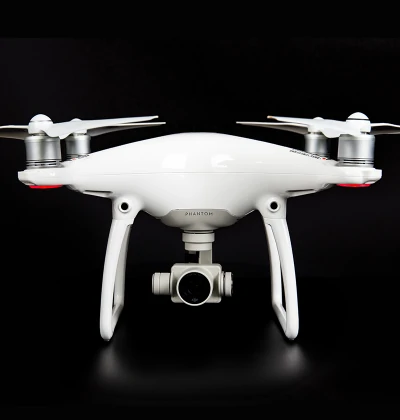

Aerospace & UAV
WJ Prototypes is your 3D manufacturing partner from prototype to large scale production.

Consumer Electronics
New Product Introduction Solutions for Consumer Electronics.

Robotics & Automation
Need some assistance bringing your robotic device or parts from the sketch-board to reality?

Medical Devices
The medical industry needs high quality, dependable and safe parts and products.

Automotive
New Product Introduction Solutions for Automotive

Industrial Machinery
The main purpose of industrial prototyping is to take the product from drawings into the real world.

TL;DR:
- Direct Metal Laser Sintering produces dense metal parts directly from digital files using a high-powered laser. It enables complex geometries, internal lattices, and part consolidation that improve performance and reduce weight, especially for aerospace and automotive applications. However, DMLS is costly for simple parts and requires planning for support removal and post-processing to maximize value.
Direct Metal Laser Sintering (DMLS) is a metal additive manufacturing process that fuses metal powder layer by layer using a high-powered laser, producing fully dense, functional metal parts directly from a digital file. The DMLS advantages for engineers are concrete: geometric freedom that CNC machining cannot match, significant weight reduction through topology optimization, and part consolidation that cuts assembly complexity. Developed commercially by EOS in the early 1990s, DMLS now serves aerospace, automotive, medical, and industrial sectors under the broader ASTM-recognized category of Powder Bed Fusion (PBF). Understanding where DMLS outperforms traditional manufacturing, and where it does not, is the difference between a well-chosen process and an expensive mistake.
DMLS produces internal features that no subtractive process can reach. Curved internal channels, hollow lattice cores, and organic load-bearing structures are all printable in a single build. This is the defining advantage of direct metal laser sintering over CNC machining or casting.
The most commercially proven example is conformal cooling in injection molds. Conformal cooling channels reduce injection mold cycle times by 20–40% by eliminating the hot spots that straight-drilled channels cannot address. That cycle time reduction translates directly to higher throughput and lower per-part cost in production tooling.
DMLS also enables internal lattice structures, which replace solid material with a repeating geometric framework. Body-centered cubic (BCC) lattices are a common choice for aerospace brackets because they maintain compressive strength while removing mass from the interior. Engineers using topology optimization can produce near-net-shape parts with complex internal geometry that would require five or more separate machined components to replicate.
The main design challenge is support structures. Overhanging features below roughly 45 degrees require supports, which add material, build time, and post-processing labor. Residual stresses from rapid heating and cooling also require careful build orientation and support strategies to prevent warping or cracking.
Pro Tip: Design support contact points on non-critical surfaces. Removing supports from a functional bore or sealing face adds finishing time and risks dimensional error.
Lightweighting is the most quantifiable benefit of DMLS for mechanical engineers working in aerospace and automotive. Topology optimization software, such as Altair OptiStruct or Autodesk Fusion 360’s generative design tools, removes material from low-stress regions while preserving load paths. The result is a part that looks organic but performs to specification.

Published research demonstrates the scale of these gains. DMLS-produced satellite panels achieved an 11.4% mass reduction, while helicopter landing gear parts reached a 64.6% weight reduction through lattice-based topology optimization. Both results maintained the structural requirements of their applications.
| Application | Weight Reduction | Method |
|---|---|---|
| Satellite structural panels | 11.4% | Lattice-based topology optimization |
| Helicopter landing gear parts | 64.6% | Topology optimization via DMLS |
| Injection mold tooling | Cycle time: 20–40% faster | Conformal cooling channels |
The aerospace impact is direct. Every kilogram removed from a satellite or aircraft reduces launch cost or fuel burn over the vehicle’s service life. Automotive engineers apply the same logic to suspension components and brackets, where unsprung mass reduction improves handling response.
Pro Tip: Run topology optimization before finalizing your DMLS build file, not after. Retrofitting a topology-optimized geometry onto a conventionally designed part rarely captures the full weight savings.
Part consolidation is the process of redesigning a multi-component assembly into a single printed part. DMLS makes this possible because it is not constrained by tool access or mold pull direction. A hydraulic manifold that previously required eight machined blocks and twelve fittings can become one printed component with internal flow passages.
Part consolidation with DMLS saves assembly cost and reduces potential failure points. Every joint, fastener, and weld in an assembly is a potential failure location. Eliminating them improves reliability, particularly in high-vibration or high-pressure environments like aerospace brackets or oil and gas downhole tools.
The supply chain benefit is equally significant. A consolidated part has one part number, one supplier, one inspection record, and one lead time. Engineers managing complex assemblies in regulated industries, such as medical devices or aerospace, reduce their documentation burden substantially when component count drops.
DMLS produces functional metal prototypes directly from a CAD file without tooling. That means a design change takes hours to implement, not weeks. For mechanical engineers validating a new bracket, heat exchanger, or structural node, this speed changes how early in the development cycle physical testing can begin.
DMLS rapid prototyping delivers high quality and accuracy ideal for functional testing. The parts are fully dense metal, not polymer approximations, so they can be tested under real operating loads, temperatures, and pressures. This is critical for aerospace and medical applications where polymer prototypes cannot replicate the failure modes of the final metal part.
The DMLS workflow also supports rapid design iterations without the tool rework inherent in casting or machining. A cast part requires a new pattern or die modification for each geometry change. A DMLS part requires only an updated STL file. That flexibility compresses the product development cycle significantly.
DMLS is not a universal replacement for CNC machining or casting. It is the right choice for specific situations, and understanding those boundaries prevents costly misapplication.
DMLS costs 5–50 times more than CNC for simple geometries. That cost gap closes or reverses when the geometry is too complex for machining, when part consolidation eliminates multiple machined components, or when low volumes make tooling investment uneconomical. The primary advantage of DMLS is geometric freedom, not cost reduction on simple parts.
| Factor | DMLS | CNC Machining | Casting |
|---|---|---|---|
| Geometric complexity | Unrestricted internal features | Limited by tool access | Limited by mold pull direction |
| Unit cost (simple parts) | High | Low | Low to medium |
| Unit cost (complex parts) | Competitive | High or impossible | Moderate |
| Lead time (no tooling) | Days | Days to weeks | Weeks to months |
| Material density | Near 100% with correct parameters | 100% | Variable, porosity risk |
| Design change cost | Low (file update only) | Low to medium | High (new tooling) |
DMLS microstructures differ from wrought materials, and post-build treatments like Hot Isostatic Pressing (HIP) improve performance for critical applications. Engineers specifying DMLS parts for aerospace or medical use should plan for HIP and heat treatment in the process flow, not as an afterthought. DMLS versus EBM comparisons also show that DMLS offers finer resolution and a broader material selection than Electron Beam Melting, making it the preferred choice for detailed, high-precision components.
Post-processing is where many engineers underestimate total cost. Support removal, surface finishing, HIP, and heat treatment can add 30–60% to the build cost on complex aerospace parts. Design choices that minimize support volume and surface area directly reduce post-processing expense.
DMLS delivers its greatest value when geometric complexity, lightweighting, or part consolidation makes traditional manufacturing impractical or uneconomical.
| Point | Details |
|---|---|
| Geometric freedom is the core advantage | Use DMLS for internal channels, lattices, and shapes that CNC machining cannot produce. |
| Lightweighting gains are measurable | Topology optimization achieves documented reductions from 11.4% to 64.6% depending on application. |
| Part consolidation reduces failure risk | Merging assemblies into single DMLS parts eliminates joints, fasteners, and supply chain complexity. |
| DMLS is not always the cheapest option | For simple geometries, CNC machining costs 5–50 times less; choose DMLS when geometry justifies it. |
| Post-processing must be planned upfront | HIP, heat treatment, and support removal are significant cost drivers that design choices can reduce. |
Engineers often come to DMLS with the wrong question. They ask, “Can DMLS make this part?” The answer is almost always yes. The better question is, “Does this part actually need DMLS?”
The projects where I have seen DMLS deliver real engineering value share one characteristic: the geometry was genuinely impossible or prohibitively expensive by any other method. A hydraulic manifold with internal flow passages, a satellite bracket with a BCC lattice core, a conformal-cooled mold insert. These are the cases where DMLS earns its cost premium.
Where I have seen engineers waste budget is on parts that could have been machined in two setups. A solid bracket with a few holes does not need DMLS. The build cost, support removal, and post-processing will exceed the machined equivalent by a wide margin, with no performance gain.
Build orientation is the most underappreciated variable in the entire process. I have watched engineers spend weeks on topology optimization and then orient the part poorly, creating support structures on critical surfaces and adding days of finishing work. Orient first, optimize second. The build direction determines where supports land, how residual stress accumulates, and what the surface finish looks like on functional faces.
The other lesson I keep returning to is this: DMLS in aerospace applications has proven that the technology is mature enough for flight-critical components when the process is controlled correctly. HIP, proper heat treatment, and material property validation are not optional for those applications. They are the difference between a prototype and a qualified part.
— Yu
Wjprototypes supports engineers from prototype to production with DMLS, CNC machining, and a full suite of metal fabrication services. If your project requires complex metal geometry, lightweighted structures, or consolidated assemblies, Wjprototypes’ engineering team can advise on process selection, build orientation, and post-processing requirements. For projects where DMLS parts need finishing or where complementary machined components are required, Wjprototypes offers CNC machining materials covering a broad range of metals and alloys suited to precision engineering. Engineers can also access DMLS 3D printing services with fast turnaround and instant quoting directly through the Wjprototypes platform.
DMLS (Direct Metal Laser Sintering) fuses metal powder using a laser to produce fully dense metal parts. SLS uses the same layer-by-layer process but works with polymer powders, making DMLS the correct choice for functional metal components.
DMLS becomes cost-competitive when part geometry is too complex for machining, when part consolidation eliminates multiple components, or when low production volumes make tooling investment uneconomical.
DMLS works with a broad range of engineering metals including titanium alloys, aluminum alloys, stainless steel, Inconel, and cobalt-chrome. Material selection depends on the mechanical, thermal, and chemical requirements of the application.
DMLS parts can match or approach wrought material properties when post-build treatments like HIP and heat treatment are applied. Without these treatments, microstructural differences from rapid solidification can reduce fatigue performance in critical applications.
Lead times for DMLS prototypes typically range from a few days to two weeks depending on part complexity, build volume, and post-processing requirements. No tooling is needed, so design changes can be incorporated and rebuilt within the same timeframe.
SERVICES
RESOURCES