



- Room 1807, Unit 9, Building 2, Shangxing Commercial Street, Shangde Road, Shangxing Community, Xinqiao Subdistrict, Bao'an District, Shenzhen City, China
CONTACT US

WhatsApp


Contact Us
Our team is on stand by, waiting toassist you.

Videos
A large collection of educational videos and tutorials.

About Us
Learn about our company, leadership, and mission totransform manufacturing.

Privacy Policy
Applies to all personal information collected through and/or processed in connection.

Aerospace & UAV
WJ Prototypes is your 3D manufacturing partner from prototype to large scale production.

Consumer Electronics
New Product Introduction Solutions for Consumer Electronics.

Robotics & Automation
Need some assistance bringing your robotic device or parts from the sketch-board to reality?

Medical Devices
The medical industry needs high quality, dependable and safe parts and products.

Automotive
New Product Introduction Solutions for Automotive

Industrial Machinery
The main purpose of industrial prototyping is to take the product from drawings into the real world.
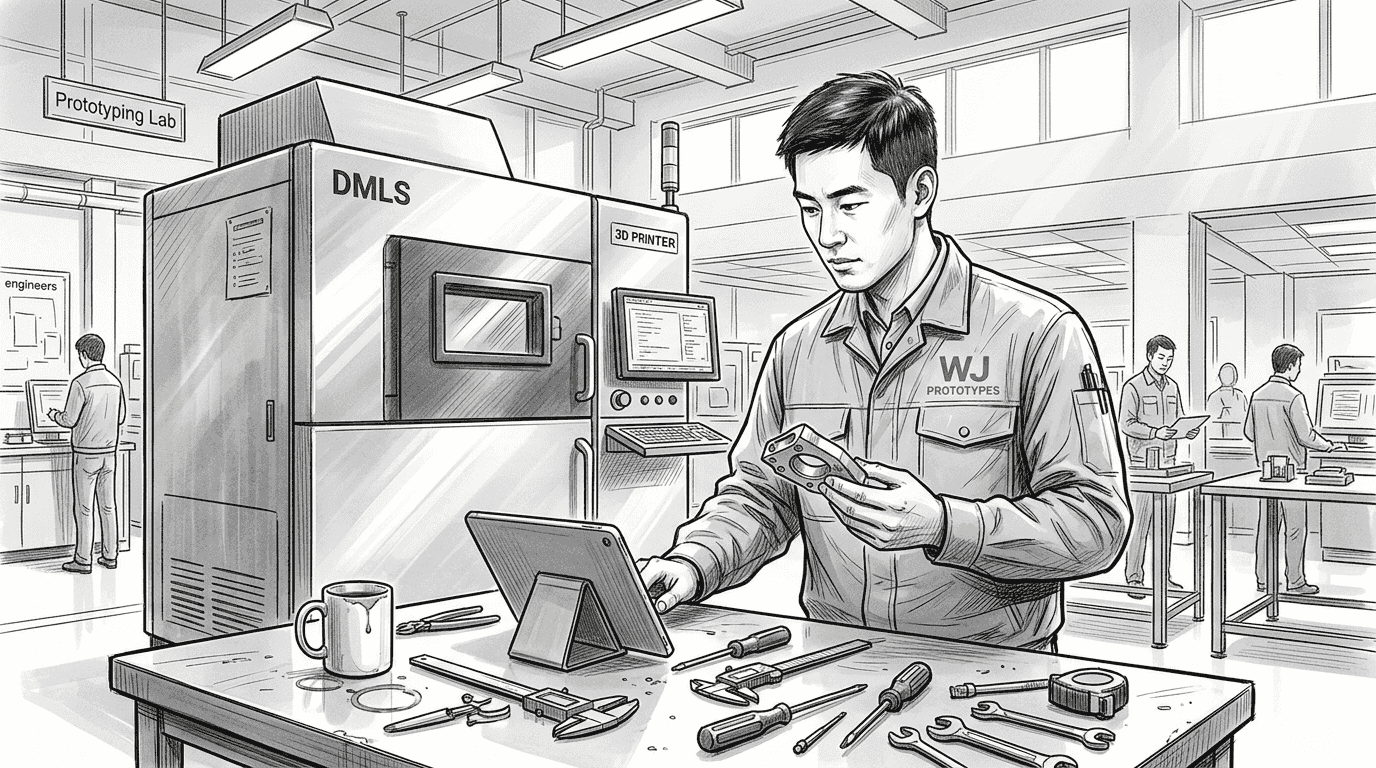
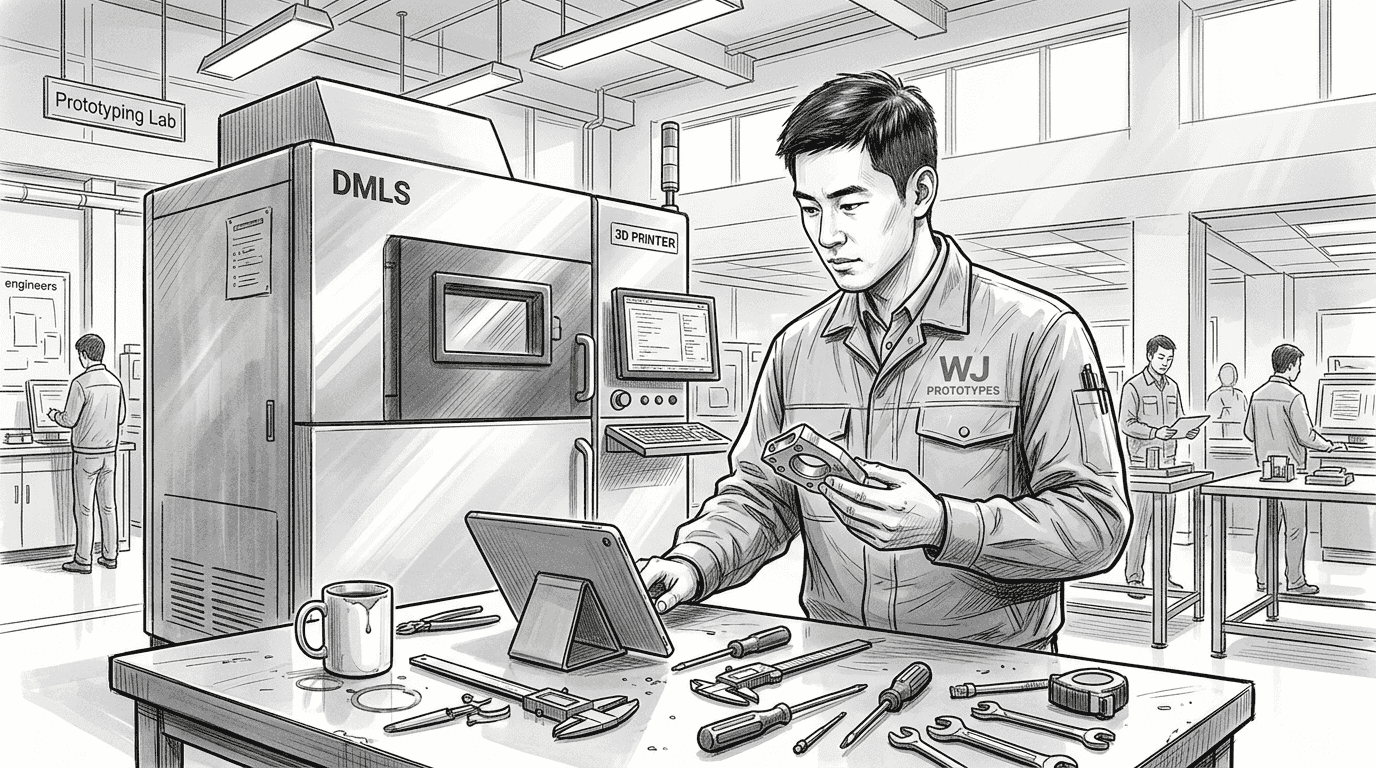
Traditional metal prototyping methods often limit design freedom and slow iteration cycles, but direct metal laser sintering is changing that narrative for engineers in aerospace, automotive, and medical sectors. DMLS technology enables the production of complex metal parts with superior strength-to-weight ratios while dramatically reducing lead times and tooling costs. This article explores what DMLS is, how it outperforms conventional approaches, and why it’s becoming essential for rapid prototyping and low-volume manufacturing. You’ll discover specific performance advantages, compliance considerations, and practical guidance for selecting the right DMLS partner to accelerate your product development.
| Point | Details |
|---|---|
| Weight and strength gains | DMLS achieves up to 40% weight reduction while maintaining or improving mechanical strength compared to traditional methods. |
| Industry compliance | Parts meet demanding standards like ISO/TS 16949 for automotive and aerospace applications. |
| Design flexibility | Complex geometries impossible with CNC machining become feasible, enabling innovative prototypes. |
| Rapid iteration | Layer-by-layer fabrication eliminates tooling, cutting prototype lead times from weeks to days. |
Direct metal laser sintering represents a paradigm shift in how engineers approach metal prototyping. DMLS uses a laser to fuse metal powder layer by layer to create strong, complex parts with mechanical properties often exceeding those of cast or machined components. Unlike traditional subtractive manufacturing, this additive process builds parts directly from CAD files without requiring expensive molds or extensive tooling.
The process works by spreading a thin layer of metal powder across a build platform, then selectively melting specific areas with a high-powered laser according to the digital design. After each layer solidifies, the platform lowers and a new powder layer is applied. This cycle repeats until the complete part emerges from the powder bed. The result is a fully dense metal component with near-net shape accuracy.
Material compatibility spans aerospace-grade alloys including aluminum variants like AlSi10Mg, titanium Ti6Al4V, stainless steel 316L, and high-temperature superalloys such as Inconel 625 and 718. Each material brings specific advantages: aluminum offers excellent strength-to-weight ratios for automotive brackets, titanium provides biocompatibility for medical implants, and Inconel withstands extreme temperatures in aerospace applications.
The technology excels at producing geometries that traditional methods cannot achieve. Internal cooling channels, organic lattice structures, and conformal features become standard design options rather than manufacturing constraints. These capabilities unlock weight optimization strategies and functional integration that were previously impossible or prohibitively expensive.
Speed advantages in rapid prototyping stem from eliminating tooling development. Traditional casting or forging requires weeks to design and fabricate molds, while DMLS metal prototyping moves from approved design to physical part in days. This acceleration enables faster design validation cycles and more iterations before committing to production tooling.
Cost benefits become apparent in several areas:
For engineers developing custom brackets, housings, or functional prototypes, DMLS removes traditional barriers between concept and validation. The technology transforms prototyping from a constraint-heavy process into a flexible exploration of optimal designs.
Quantifiable performance improvements distinguish DMLS from conventional manufacturing in demanding applications. Real-world testing demonstrates that 3D printed aluminum brackets outperformed cast versions by 15% in stiffness during vibration testing per SAE J1211 standards. This stiffness gain directly translates to improved durability and reduced failure risk in automotive suspension and chassis applications.
Weight reduction achievements reach impressive levels while maintaining structural integrity. Engineers have documented 40% weight reduction in automotive parts by leveraging DMLS design freedom to create optimized lattice structures and remove unnecessary material. In aerospace applications where every gram matters, these savings compound across hundreds of components to significantly impact fuel efficiency and payload capacity.

Material strength performance exceeds traditional manufacturing benchmarks. SLM-printed Inconel brackets achieved 1,200 MPa yield strength, surpassing industry requirements for high-temperature aerospace components. This strength enables designers to specify smaller cross-sections and lighter structures without compromising safety margins.
The following table compares key performance metrics between DMLS and traditional manufacturing:
| Property | DMLS Parts | Cast Parts | Machined Parts |
|---|---|---|---|
| Yield Strength (Inconel) | 1,200 MPa | 950 MPa | 1,100 MPa |
| Weight Reduction Potential | 30-40% | Baseline | 10-15% |
| Stiffness (Aluminum) | +15% vs cast | Baseline | +5% vs cast |
| Design Complexity | Unlimited | Limited | Moderate |
Durability improvements stem from the microstructure created during laser sintering. The rapid heating and cooling cycles produce fine-grained structures with minimal porosity when process parameters are optimized. Parts exhibit isotropic properties, meaning strength remains consistent regardless of load direction, unlike some traditionally manufactured components with directional weaknesses.
These performance benefits translate directly to longer component lifecycles in automotive prototyping applications. Suspension brackets withstand higher vibration loads, engine components tolerate greater thermal cycling, and structural elements maintain integrity under repeated stress. For aerospace, the combination of weight savings and strength improvements enables new aircraft designs with better fuel economy and extended range.
Pro Tip: When optimizing designs for weight reduction, use topology optimization software to identify load paths and remove non-critical material, then validate the lightweighted design with finite element analysis before printing to ensure compliance with industry standards while maximizing weight savings.
Adopting DMLS technology in regulated industries requires navigating complex certification landscapes and quality frameworks. Key challenges include ensuring compliance with automotive standards like ISO/TS 16949 and managing supply chain variability when integrating additive manufacturing into established production systems. These hurdles demand systematic approaches to process validation and documentation.
ISO/TS 16949 certification, now evolved into IATF 16949 in 2026, establishes quality management requirements for automotive production and relevant service parts. DMLS manufacturers must demonstrate consistent process control, traceability of powder lots, and statistical validation of mechanical properties across production runs. This certification becomes non-negotiable for suppliers serving tier-one automotive manufacturers.
Supply chain management complexity increases with DMLS adoption. Traditional manufacturing relies on established supplier networks with predictable lead times and quality metrics. Additive manufacturing introduces variables including powder quality variation between batches, machine-to-machine performance differences, and the need for specialized post-processing. Engineers must develop robust incoming material inspection protocols and maintain detailed process documentation.
Scaling from prototype to low-volume production without quality degradation requires careful planning:
Quality assurance frameworks tailored for DMLS differ from traditional manufacturing approaches. Instead of inspecting tooling once and assuming consistent output, additive manufacturing demands per-build verification. CT scanning reveals internal porosity, coordinate measuring machines verify dimensional accuracy, and tensile testing confirms mechanical properties. These inspection steps add cost but ensure reliability in safety-critical applications.
Aerospace applications face even stricter requirements. Parts destined for aircraft must comply with AS9100 quality standards and often require material certifications traceable to specific powder lots. The Federal Aviation Administration and European Union Aviation Safety Agency maintain evolving guidance on additive manufacturing, requiring manufacturers to stay current with regulatory changes.
Medical device prototyping introduces biocompatibility and sterilization considerations. Materials must meet ISO 10993 standards for biological evaluation, and manufacturing processes must prevent contamination that could compromise patient safety. The FDA’s guidance on additive manufacturing for medical devices continues to evolve, emphasizing the need for robust process validation.
“Compliance with industry standards is not optional for market acceptance. Engineers must treat certification as a core design requirement from the earliest prototype stages, not an afterthought before production.”
Managing these challenges successfully requires selecting DMLS partners with proven certification experience and investing in process development during the prototype phase. The upfront effort pays dividends when transitioning to production, as validated processes scale more reliably than those developed without rigorous quality frameworks.
Understanding metal 3D printing challenges in China and other manufacturing hubs helps engineers anticipate regional differences in certification approaches and quality standards.
Choosing a qualified DMLS service provider determines project success as much as design quality. For B2B buyers, selecting the right partner involves evaluating material certifications and simulation capabilities alongside production capacity and industry experience. A systematic evaluation process prevents costly delays and quality issues.
Key criteria for partner assessment include:
The following comparison helps differentiate service provider capabilities:
| Capability | Basic Provider | Advanced Provider | Premium Provider |
|---|---|---|---|
| Material Options | 2-3 alloys | 5-8 alloys | 10+ alloys including exotics |
| Certifications | ISO 9001 | ISO 9001 + industry specific | Full aerospace/medical certs |
| Design Support | File acceptance only | Basic DFM feedback | Full topology optimization |
| Post-Processing | Outsourced | In-house machining | Complete finishing suite |
| Lead Time | 3-4 weeks | 2-3 weeks | 1-2 weeks expedited available |
Simulation capabilities separate competent providers from exceptional ones. Advanced partners offer finite element analysis to validate designs before printing, topology optimization to reduce weight while maintaining strength, and thermal simulation to predict distortion and residual stress. These services prevent expensive prototype failures and accelerate development cycles.
Practical applications demonstrate DMLS value across industries. In electric vehicle development, custom metal brackets secure battery enclosures while minimizing weight to extend range. The ability to integrate mounting features, cable routing channels, and thermal management elements into single components reduces assembly complexity and potential failure points.
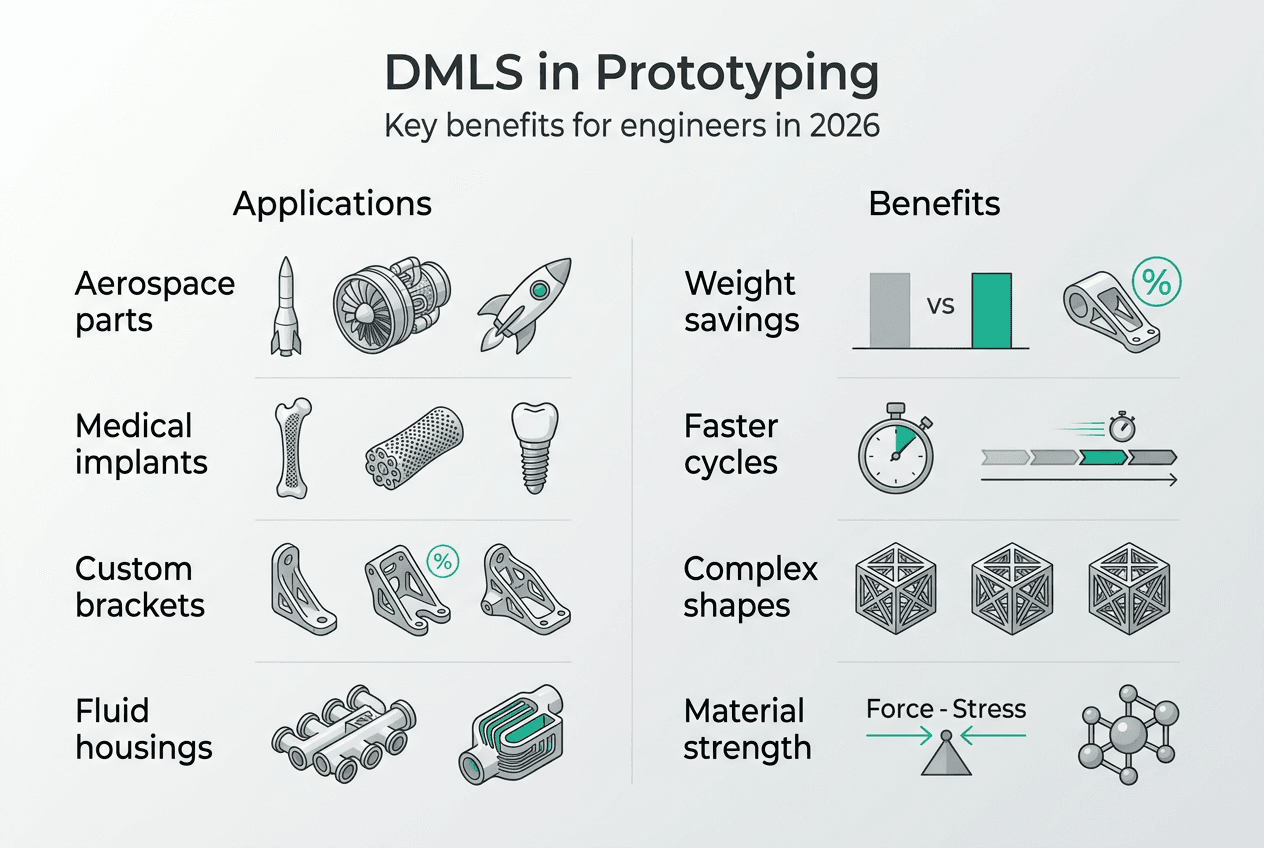
Medical device prototyping leverages DMLS for patient-specific implants and surgical instruments. Titanium spinal cages with porous structures promote bone ingrowth, while surgical guides customized to individual anatomy improve procedure accuracy. The biocompatibility and strength of DMLS titanium make it ideal for these demanding applications.
Aerospace applications include turbine components, structural brackets, and fluid system housings. Inconel fuel nozzles withstand extreme temperatures while incorporating internal cooling passages impossible to machine. Aluminum avionics housings integrate electromagnetic shielding and mounting features in topology-optimized structures that save weight without compromising protection.
Pro Tip: Before committing to a DMLS partner, request a test part in your target material to verify their process capability. Specify critical dimensions and mechanical property requirements, then independently verify the delivered part meets specifications. This small investment reveals process maturity and prevents surprises during actual project execution.
Collaboration success depends on clear communication of requirements. Provide complete CAD models with tolerance callouts, specify required material properties and certifications, define acceptable surface finishes, and establish inspection criteria upfront. Experienced DMLS 3D printing services will review designs for manufacturability and suggest optimizations before printing begins.
Understanding material selection for China prototyping helps engineers navigate regional material availability and certification differences when working with international DMLS providers.
WJ Prototypes combines DMLS expertise with comprehensive manufacturing capabilities to support your entire product development cycle. Our CNC machining services complement additive manufacturing for hybrid approaches that optimize cost and performance, while die casting capabilities provide production scalability once designs are validated. Engineers benefit from integrated services that transition seamlessly from rapid prototyping to low-volume manufacturing without changing suppliers.
Our ISO-certified facility in China offers material expertise spanning aluminum alloys, stainless steels, and high-performance superalloys. Explore our CNC machining materials to compare options for your specific application requirements. Request a quote today to discuss how DMLS and complementary processes can accelerate your development timeline while meeting stringent quality standards.
Aluminum alloys like AlSi10Mg and Inconel 625/718 are commonly used due to their excellent strength-to-weight ratios and widespread industry certification. Titanium Ti6Al4V serves medical and aerospace applications requiring biocompatibility or extreme strength. Material selection depends on final part requirements including operating temperature, corrosion resistance, and mechanical properties needed for your specific application.
DMLS excels at complex geometries, internal features, and rapid iteration without tooling costs, making it ideal for exploratory prototyping and parts with organic shapes. CNC machining offers superior surface finish, tighter tolerances on simple geometries, and cost advantages for larger production quantities. CNC machining versus 3D printing cost analysis shows each method has optimal use cases depending on part complexity, volume, and timeline requirements.
Aerospace, automotive, and medical device sectors gain the most value due to demanding performance requirements and the need for custom, lightweight components. These industries justify DMLS costs through weight savings, accelerated development cycles, and the ability to produce geometries impossible with traditional methods. Automotive prototyping applications particularly benefit from rapid iteration capabilities during vehicle development programs.
Lead times range from 5 to 15 business days depending on part size, complexity, and post-processing requirements. Simple brackets may complete in one week, while complex assemblies requiring extensive machining and heat treatment extend to three weeks. This timeline significantly outpaces traditional casting or forging, which require 6 to 12 weeks for tooling development before first parts arrive.
SERVICES
RESOURCES