



- Room 1807, Unit 9, Building 2, Shangxing Commercial Street, Shangde Road, Shangxing Community, Xinqiao Subdistrict, Bao'an District, Shenzhen City, China
CONTACT US

WhatsApp


Contact Us
Our team is on stand by, waiting toassist you.

Videos
A large collection of educational videos and tutorials.

About Us
Learn about our company, leadership, and mission totransform manufacturing.

Privacy Policy
Applies to all personal information collected through and/or processed in connection.
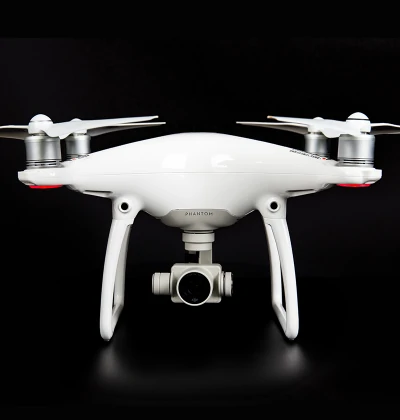

Aerospace & UAV
WJ Prototypes is your 3D manufacturing partner from prototype to large scale production.

Consumer Electronics
New Product Introduction Solutions for Consumer Electronics.

Robotics & Automation
Need some assistance bringing your robotic device or parts from the sketch-board to reality?

Medical Devices
The medical industry needs high quality, dependable and safe parts and products.

Automotive
New Product Introduction Solutions for Automotive

Industrial Machinery
The main purpose of industrial prototyping is to take the product from drawings into the real world.
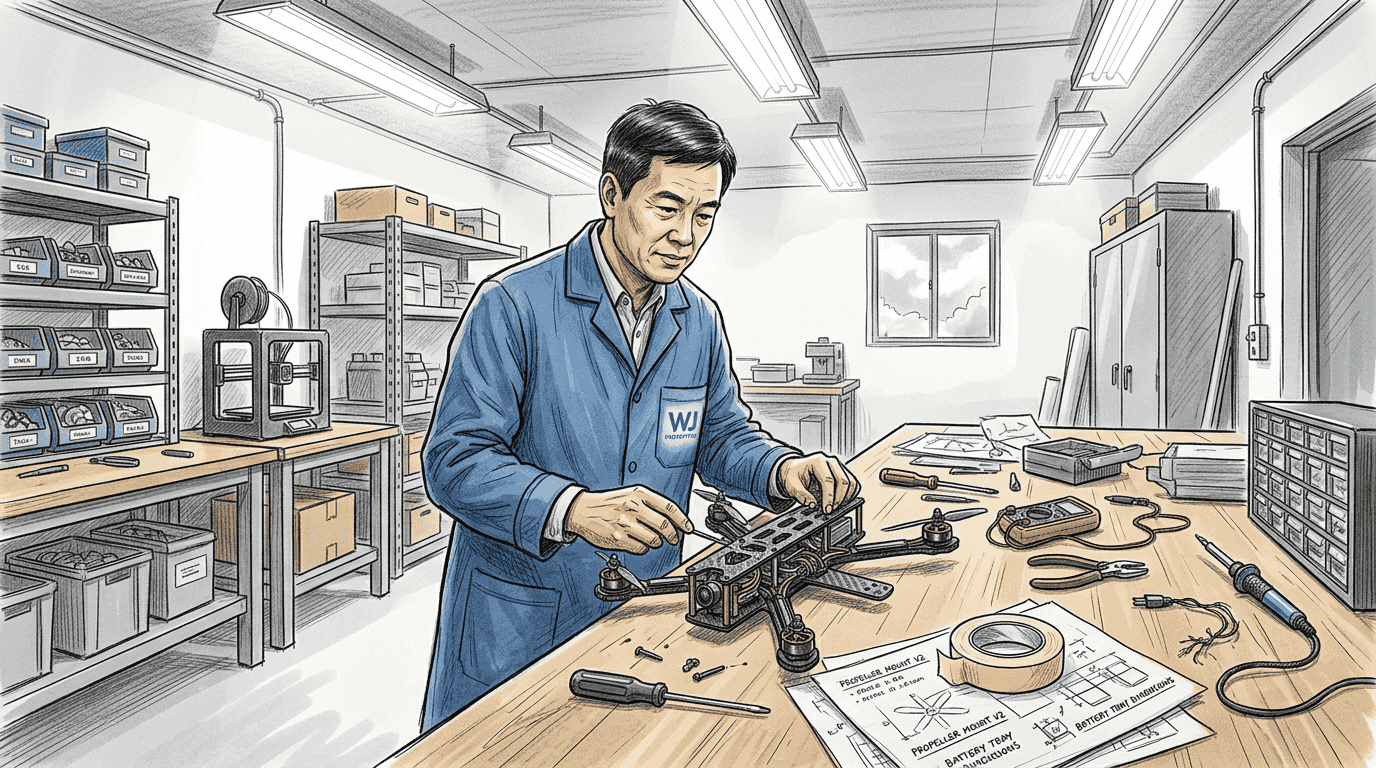

Many R&D teams hesitate to invest in early prototyping, fearing it adds time and expense. Yet addressing design flaws early through prototyping can save up to 50% of project costs. Prototypes are not optional extras but strategic tools that accelerate innovation, validate concepts, and ensure regulatory compliance across aerospace, automotive, medical, and robotics sectors. This guide explores how prototypes transform R&D workflows, reduce risks, and deliver products that meet real-world demands faster and more cost effectively than traditional approaches.
| Point | Details |
|---|---|
| Cost reduction | Prototypes identify design flaws early, cutting project costs by up to 50%. |
| User satisfaction | Iterative prototyping improves user satisfaction by 30% through continuous feedback. |
| Regulatory speed | Prototypes accelerate regulatory approvals by demonstrating safety and compliance early. |
| Rapid iteration | Technologies like 3D printing shorten design cycles from weeks to days. |
| Industry validation | Sector-specific prototyping validates designs under real-world operating conditions. |
Prototypes serve as critical checkpoints in product development, revealing design weaknesses before they become expensive manufacturing disasters. Prototypes significantly reduce development costs by identifying issues early in the product lifecycle, saving up to 50% of the total project cost. This early detection transforms R&D from a gamble into a systematic process of learning and refinement.
Risk management improves dramatically when teams build and test physical models. Engineers can validate assumptions about material behavior, structural integrity, and user interaction without committing to tooling or production. Each prototype iteration provides data that guides design decisions, replacing guesswork with evidence. This iterative learning cycle accelerates innovation by making failure cheap and informative rather than catastrophic.
Financial benefits extend beyond cost avoidance. Prototypes enable teams to secure stakeholder buy-in with tangible demonstrations rather than abstract concepts. Investors, regulatory bodies, and end users respond more positively to working models than to CAD renderings or verbal descriptions. This credibility advantage shortens funding cycles and approval timelines, compressing the path from concept to market.
Pro Tip: Embrace failure in early prototype iterations as a strategic advantage. Each failed design reveals constraints and opportunities that spreadsheets and simulations cannot predict, accelerating your path to optimal solutions.
Multiple prototype cycles create compound learning effects. The first prototype might validate basic functionality. The second refines ergonomics or material selection. The third optimizes for manufacturing efficiency. This staged approach ensures that final designs reflect comprehensive understanding rather than initial hunches. Teams that skip prototyping often discover critical flaws during production, when changes cost 10 to 100 times more than during development.
“The goal of prototyping is not to create a perfect product on the first try, but to learn quickly what works and what doesn’t, then iterate toward excellence.”
Prototyping also serves as a communication tool across disciplines. Mechanical engineers, software developers, industrial designers, and manufacturing specialists can collaborate more effectively around a physical artifact than around technical drawings. This shared reference point reduces misunderstandings and aligns team efforts toward common objectives. Understanding why prototyping reduces costs helps R&D leaders justify investment in early-stage development activities that deliver measurable returns.
Each industry applies prototyping to solve unique technical and regulatory challenges. Aerospace companies use prototypes to validate aerodynamic performance and structural integrity under extreme conditions. Wind tunnel testing of scale models reveals airflow characteristics that computational fluid dynamics might miss. Full-scale structural prototypes undergo stress testing that simulates flight loads, vibration, and thermal cycling. These physical validations are essential because aerospace failures carry catastrophic consequences.
Automotive R&D relies heavily on crash test prototypes to validate safety systems before production. Engineers build multiple vehicles at different development stages to test crumple zones, airbag deployment, and occupant protection. Aerodynamic prototypes undergo wind tunnel testing to optimize fuel efficiency and high-speed stability. Material validation prototypes test new composites or lightweight alloys under real-world driving conditions, ensuring durability and performance. Prototyping automotive industry applications demonstrate how physical testing complements digital simulation.

Medical device development faces stringent regulatory requirements that make prototyping essential. Medical device manufacturers that incorporate early prototyping have higher success rates in regulatory approvals from bodies like FDA and EMA. Prototypes demonstrate device safety, efficacy, and usability in clinical settings before expensive trials begin. Biocompatibility testing requires physical samples that simulate final production materials and manufacturing processes. Iterative prototyping helps designers optimize for both clinical effectiveness and manufacturing feasibility, reducing the risk of costly redesigns after regulatory submission. The prototyping medical devices importance extends beyond compliance to patient safety and therapeutic outcomes.
Robotics development benefits from prototyping mechanical designs, control systems, and human-robot interaction simultaneously. Robotics benefits from prototyping mechanical designs, control systems, and human-robot interaction, enabling engineers to test integrated systems under realistic operating conditions. A warehouse robot prototype might reveal that theoretical path planning algorithms fail when sensors encounter unexpected reflections. A surgical robot prototype might show that ergonomic assumptions about surgeon hand positions need revision. These insights emerge only through physical testing with real users in authentic environments.
| Industry | Primary Prototype Focus | Key Testing Goals |
|---|---|---|
| Aerospace | Aerodynamics, structural integrity | Flight performance, safety under extreme stress |
| Automotive | Crash safety, materials, aerodynamics | Occupant protection, efficiency, durability |
| Medical | Biocompatibility, usability, efficacy | Regulatory compliance, patient safety, clinical outcomes |
| Robotics | Mechanical integration, control systems | Real-world operation, human interaction, reliability |
Pro Tip: Tailor prototype fidelity to your development phase. Early concepts need low-fidelity models for quick learning. Later stages require high-fidelity prototypes that match production specifications for regulatory and performance validation.
Industry-specific prototyping strategies reflect different risk profiles and regulatory landscapes. Aerospace prototypes often cost millions but prevent billion-dollar program failures. Medical prototypes might cost thousands but accelerate approvals worth hundreds of millions in market opportunity. Understanding these sector dynamics helps R&D teams allocate prototyping budgets strategically. Prototyping in aerospace exemplifies how high-stakes industries invest heavily in validation to manage existential risks.
Rapid prototyping technologies have transformed development timelines across industries. 3D printing reduces prototyping lead times from weeks to days, enabling multiple design iterations quickly. What once required machining setups, tooling fabrication, and weeks of lead time now happens overnight with additive manufacturing. This speed advantage compounds over multiple iterations, compressing development cycles from years to months.

Usability testing with prototypes refines user experience before production commitments. Iterative prototyping increases user satisfaction by 30% by incorporating feedback at each design stage. Medical device developers test prototypes with clinicians to optimize surgical workflows. Robotics teams observe operators interacting with control interfaces to identify confusion points. Automotive engineers gather driver feedback on dashboard layouts and control ergonomics. Each iteration moves designs closer to intuitive, effective solutions.
| Approach | Typical Timeline | Iteration Cycles | Cost per Iteration |
|---|---|---|---|
| Traditional Prototyping | 6-12 weeks | 2-3 cycles | $10,000-$50,000 |
| Rapid Prototyping | 3-7 days | 5-10 cycles | $500-$5,000 |
The economic advantage of rapid iteration extends beyond direct costs. More iterations mean more learning opportunities, higher confidence in final designs, and fewer post-launch corrections. Teams can explore alternative approaches without fear of wasting resources, fostering creative problem solving. This experimental freedom drives breakthrough innovations that conservative, limited-iteration approaches would never discover.
Implementing successful iterative prototyping requires structured workflows:
Pro Tip: Use user feedback after each prototype iteration to guide targeted improvements rather than comprehensive redesigns. Focus changes on the highest-impact issues to maximize learning efficiency and maintain development velocity.
Rapid prototyping also enables parallel exploration of design alternatives. Teams can test multiple concepts simultaneously, comparing performance and user response before converging on a final approach. This parallel iteration strategy reduces the risk of committing to suboptimal designs early in development. Digital fabrication technologies make this approach economically viable even for small teams with limited budgets.
The iterative prototyping product design methodology aligns naturally with agile development practices. Short iteration cycles, continuous feedback, and incremental improvement mirror software development best practices. This convergence enables better integration between hardware and software development in products like medical devices and robotics systems. Understanding benefits of rapid prototyping manufacturing helps teams justify investment in technologies that accelerate learning. Global manufacturing capabilities like rapid prototyping china streamlines manufacturing provide cost-effective access to advanced fabrication technologies.
Effective prototyping requires strategic planning that aligns prototype objectives with project phases. Early-stage prototyping should focus on functionality and risk reduction; later stages focus on refinement and regulatory compliance. Concept prototypes validate basic feasibility and user interest. Engineering prototypes test technical performance and manufacturing viability. Validation prototypes demonstrate regulatory compliance and production readiness. Each phase serves distinct purposes that guide prototype design and testing protocols.
Common prototyping pitfalls undermine R&D effectiveness and waste resources:
A structured framework maximizes prototyping value:
Iterative problem solving requires patience and discipline. Diving into the first good idea is not a good idea because complex problems require iterative exploration. Teams that commit prematurely to initial concepts miss opportunities to discover superior solutions. Prototyping should be viewed as systematic exploration, not rushed validation of predetermined answers.
“Prototyping is about learning what you don’t know, not confirming what you think you know. The best prototypes challenge assumptions and reveal unexpected opportunities.”
Pro Tip: Embrace prototype failure as insight, not setback. Each failed design teaches you something valuable about constraints, user needs, or technical limits that brings you closer to optimal solutions.
Balancing speed and thoroughness requires judgment. Moving too slowly wastes competitive advantage and market opportunity. Moving too quickly risks missing critical issues that emerge only through careful testing. Successful R&D teams calibrate their pace based on risk tolerance, competitive pressure, and regulatory requirements. High-risk applications like medical devices or aerospace systems justify more thorough prototyping than consumer products with lower safety stakes.
The cost effective prototyping approach balances investment with learning value, ensuring resources focus on highest-impact validation activities. Understanding the role of prototyping product development helps teams integrate physical validation into broader development processes. Regulatory planning should begin during early prototyping, not after designs are finalized. Early engagement with regulatory bodies can identify requirements that influence fundamental design decisions, preventing costly late-stage changes.
To bring these prototyping advantages to your 2026 R&D projects, consider WJ Prototypes’ specialized services tailored to aerospace, automotive, medical, and robotics development needs. Our advanced CNC machining China services deliver precision components with tight tolerances for functional testing. We offer comprehensive CNC machining materials including aerospace-grade alloys, medical-grade polymers, and engineering plastics that match your final production specifications. Our injection molding for automotive parts capabilities support both prototype validation and low-volume production runs, enabling seamless transition from development to manufacturing. With ISO certification, experienced engineers, and global delivery capacity, WJ Prototypes accelerates your innovation cycles while reducing prototyping costs and timelines.
Prototyping validates design concepts early in development, reducing technical and financial risks before committing to production tooling. It enables iterative learning that guides design decisions with evidence rather than assumptions. Prototypes also ensure products meet user needs and regulatory requirements, increasing the likelihood of successful market launch.
Rapid prototyping uses technologies like 3D printing and CNC machining to create models in days rather than weeks, enabling more iteration cycles within the same timeframe. Traditional prototyping often requires custom tooling and manual fabrication that increases costs and limits the number of design variations teams can explore. This speed advantage allows rapid prototyping to compress development timelines significantly.
Aerospace, automotive, medical, and robotics sectors derive substantial advantages from prototyping due to their complex technical requirements and strict regulatory oversight. Each industry uses prototypes to test specific operating conditions, validate safety systems, and demonstrate compliance before production. The high costs of product failures in these sectors make prototyping investment particularly valuable.
Skipping early iterations or rushing to validate first ideas limits learning and often leads to suboptimal final designs. Neglecting regulatory requirements during early prototyping causes expensive redesigns when compliance issues emerge during later validation stages. Teams should also avoid testing prototypes only with internal staff rather than representative end users, as this creates blind spots about real-world usability and performance.
SERVICES
RESOURCES