



- Room 1807, Unit 9, Building 2, Shangxing Commercial Street, Shangde Road, Shangxing Community, Xinqiao Subdistrict, Bao'an District, Shenzhen City, China
CONTACT US

WhatsApp


Contact Us
Our team is on stand by, waiting toassist you.

Videos
A large collection of educational videos and tutorials.

About Us
Learn about our company, leadership, and mission totransform manufacturing.

Privacy Policy
Applies to all personal information collected through and/or processed in connection.
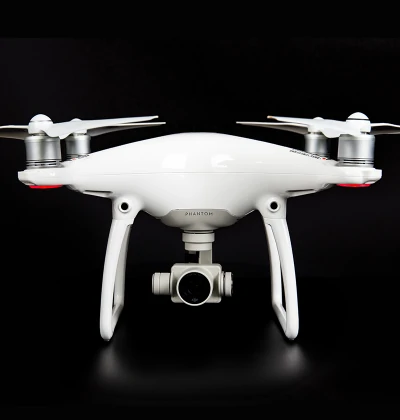

Aerospace & UAV
WJ Prototypes is your 3D manufacturing partner from prototype to large scale production.

Consumer Electronics
New Product Introduction Solutions for Consumer Electronics.

Robotics & Automation
Need some assistance bringing your robotic device or parts from the sketch-board to reality?

Medical Devices
The medical industry needs high quality, dependable and safe parts and products.

Automotive
New Product Introduction Solutions for Automotive

Industrial Machinery
The main purpose of industrial prototyping is to take the product from drawings into the real world.


TL;DR:
- The industrial design iteration process relies on structured phases from concept to mass production, reducing costly late-stage redesigns. It involves five key phases with different fidelity levels and specific goals, where skipping phases increases risks and costs. Effective feedback synthesis and appropriate prototyping methods at each stage ensure smooth development and build product quality.
The industrial design iteration process is a cyclical method of refining product concepts through successive prototyping, testing, and feedback until a validated design is achieved. Known formally as iterative design methodology, it reduces costly late-stage redesigns by surfacing problems early, when changes are cheap. Teams that apply structured iteration move faster, spend less on tooling corrections, and ship products that minimize late-stage changes by anticipating manufacturing constraints before they become budget crises. For product designers and engineers, mastering this process is the single most reliable way to improve both product quality and development predictability.
A structured iteration workflow uses five readiness gates: POC, EVT, DVT, PVT, and MP. Each phase increases design fidelity and carries distinct learning goals. Skipping a phase does not save time. It transfers risk forward, where fixing problems costs ten times more.
Here is what each phase demands:
The POC through MP framework is not a waterfall. Teams often run parallel tracks within EVT and DVT, iterating on industrial design aesthetics and engineering validation simultaneously before converging on a single approved prototype.
| Phase | Primary Goal | Prototype Fidelity |
|---|---|---|
| POC | Feasibility and cost estimation | Low, concept models |
| EVT | Form and function validation | Medium, rapid prototypes |
| DVT | DFM and mold design readiness | High, production-intent parts |
| PVT | Pilot run and packaging validation | Production-representative |
| MP | Supply chain and quality launch | Full production |

Understanding where you are in this sequence tells you which questions to ask and which tools to use. Trying to answer DVT questions with a POC-grade prototype produces misleading data.

The product design feedback loop has four steps: share work, collect traceable input, synthesize feedback into decisions, and iterate again. Miro’s framework defines this sequence precisely, and it identifies synthesis as the most common bottleneck. Teams share and collect well. They fail to synthesize.
Synthesis means grouping similar issues, prioritizing changes, and creating a structured action plan before touching the design. Without it, feedback becomes a list of opinions rather than a set of decisions. AI-assisted tools like Miro Flows can cluster feedback automatically, saving hours that would otherwise be lost sorting through unstructured comments.
Here is a repeatable process for running feedback sessions that produce real progress:
Closing the loop does more than build goodwill. It prevents feedback fatigue. Stakeholders who see their input ignored stop giving useful input. Stakeholders who see their input acted on give sharper, more specific feedback in the next round.
Pro Tip: Run feedback sessions at a fixed cadence tied to phase gates, not ad hoc. Weekly sessions during EVT and bi-weekly during DVT keep iteration momentum without overwhelming the team.
Prototype selection is one of the highest-leverage decisions in the design process refinement cycle. The wrong method at the wrong phase produces feedback that does not transfer to production reality. Early prototypes validate form and fit, while production-representative prototypes validate function and manufacturability. Treating them as interchangeable is a common and expensive mistake.
Here is how the main industrial prototyping techniques map to iteration needs:
| Method | Best Phase | Fidelity Level | Key Limitation |
|---|---|---|---|
| SLA / SLS printing | POC, early EVT | Low to medium | Material properties differ from production |
| CNC machining | EVT, DVT | High | Higher cost per part than printing |
| Vacuum casting | Mid-EVT, DVT | Medium to high | Limited to small batch sizes |
| Die casting | DVT, PVT | Production-representative | Requires tooling investment |
A critical failure mode is assuming prototype materials reflect production realities. A CNC-machined aluminum part behaves differently from a die-cast zinc alloy part under the same load. If your DVT prototype uses the wrong process, your DFM review will miss real problems.
Running parallel synchronized loops for industrial design and engineering validation during EVT and DVT prevents the “pretty but unvalidated” problem. The industrial design track refines aesthetics and ergonomics. The engineering track validates structure and function. Both tracks converge when a prototype satisfies both sets of criteria.
Design for manufacturing reviews are the formal checkpoint where iteration assumptions meet production reality. DFM checks cover material selection against production standards, part count reduction, tolerance realism, and assembly line compatibility. Running these reviews at the DVT-to-PVT transition prevents tooling surprises that derail schedules and inflate costs.
A structured production readiness review covers five areas:
Production-readiness reviews re-validate material grades, tolerances, and assembly sequences to confirm that prototype assumptions hold before tooling is cut. Cutting tooling on an unreviewed design is the most expensive mistake in product development.
Pro Tip: Bring your contract manufacturer into DFM reviews at DVT, not after. Their tooling and process knowledge will surface issues your design team cannot see from CAD alone.
The prototyping process checklist for each phase gate keeps multidisciplinary teams aligned on what must be validated before moving forward. Without a shared checklist, different team members apply different standards, and critical issues slip through.
Iterative formative evaluations, as defined in IEC 62366-1 for medical devices, run early, often, and with increasing fidelity until design maturity is reached. The same principle applies to industrial products. No fixed number of cycles guarantees readiness. Maturity is reached when the design passes its phase gate criteria, not when a calendar date arrives.
The industrial design iteration process succeeds when structured phase gates, disciplined feedback synthesis, and production-aligned prototyping work together from POC through mass production.
| Point | Details |
|---|---|
| Use phase gates, not guesswork | POC through MP phases each carry distinct goals; skipping one transfers risk forward at higher cost. |
| Synthesize feedback before iterating | Grouping and prioritizing input before redesigning prevents wasted cycles and keeps teams moving. |
| Match prototype method to phase | SLA suits early form validation; CNC and vacuum casting suit functional and DFM testing. |
| Run DFM reviews at DVT, not after | Catching tolerance and assembly issues before tooling saves significant cost and schedule time. |
| Close the feedback loop explicitly | Showing stakeholders how their input shaped changes builds engagement and improves future feedback quality. |
The phase gate model looks clean on paper. In practice, the gap between EVT and DVT is where most projects stall. Teams produce a prototype that looks right and functions adequately, then hesitate to call it DVT-ready because the industrial design and engineering tracks have not fully converged. I have seen this hesitation add weeks to timelines that were already tight.
The fix is not to rush convergence. It is to run the two tracks with explicit criteria for what “converged” means before the phase starts. Define the aesthetic acceptance criteria and the functional test pass criteria at the beginning of EVT. When both sets of criteria are met on the same prototype, you have convergence. Without that definition, teams debate readiness indefinitely.
The other pattern I see consistently is underinvesting in feedback synthesis. Teams run great review sessions, collect detailed notes, and then hand the notes to a designer without a synthesis step. The designer interprets the notes through their own lens, addresses the issues they find most interesting, and misses the systemic problems that only appear when you group all the feedback together. Synthesis is not optional. It is the step that turns a review session into a design decision.
Production readiness reviews deserve the same respect. I have watched teams treat the DVT-to-PVT transition as a formality, only to discover during PVT pilot runs that a tolerance was impossible to hold on production tooling. That discovery cost three weeks and a tooling modification. A two-hour DFM review at DVT would have caught it. The math is not complicated.
— Yu
Wjprototypes offers CNC machining, vacuum casting, and die casting services built for teams that need production-representative prototypes at each iteration phase. Whether you are validating form at EVT with vacuum casting materials or confirming DFM assumptions at DVT with CNC machining materials, Wjprototypes delivers parts with the material accuracy and surface finish your reviews require. As an ISO-certified manufacturer with engineers experienced across aerospace, automotive, medical, and industrial machinery, Wjprototypes provides instant quoting and global delivery to keep your iteration cycle moving without delays. Contact Wjprototypes to discuss your current phase and get material recommendations matched to your production process.
The industrial design iteration process is a structured cycle of prototyping, testing, and refining a product design through successive phases until it meets functional, aesthetic, and manufacturing requirements. It typically follows POC, EVT, DVT, PVT, and MP readiness gates.
No fixed number of cycles determines readiness. Iterative evaluations run until design maturity is reached for each phase gate, with fidelity increasing progressively from concept to production-representative prototypes.
The most common failure is skipping synthesis. Teams struggle most with converting collected feedback into structured decisions, which stalls iteration progress and wastes review time.
DFM reviews belong at the DVT phase, before tooling is committed. Checks cover material grades, tolerances, part count, and assembly sequencing to confirm that the design is manufacturable at production volume.
SLA and SLS 3D printing suit POC and early EVT for fast, low-cost geometry validation. CNC machining and vacuum casting are better for EVT and DVT when material accuracy and functional testing are required.
SERVICES
RESOURCES