



- Room 1807, Unit 9, Building 2, Shangxing Commercial Street, Shangde Road, Shangxing Community, Xinqiao Subdistrict, Bao'an District, Shenzhen City, China
CONTACT US

WhatsApp


Contact Us
Our team is on stand by, waiting toassist you.

Videos
A large collection of educational videos and tutorials.

About Us
Learn about our company, leadership, and mission totransform manufacturing.

Privacy Policy
Applies to all personal information collected through and/or processed in connection.
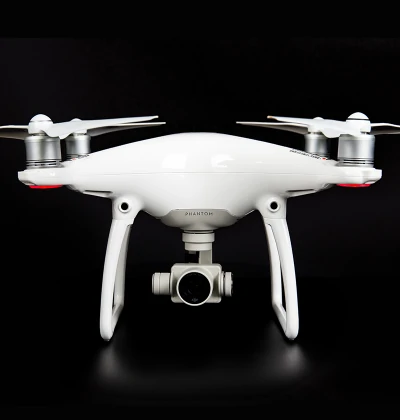

Aerospace & UAV
WJ Prototypes is your 3D manufacturing partner from prototype to large scale production.

Consumer Electronics
New Product Introduction Solutions for Consumer Electronics.

Robotics & Automation
Need some assistance bringing your robotic device or parts from the sketch-board to reality?

Medical Devices
The medical industry needs high quality, dependable and safe parts and products.

Automotive
New Product Introduction Solutions for Automotive

Industrial Machinery
The main purpose of industrial prototyping is to take the product from drawings into the real world.
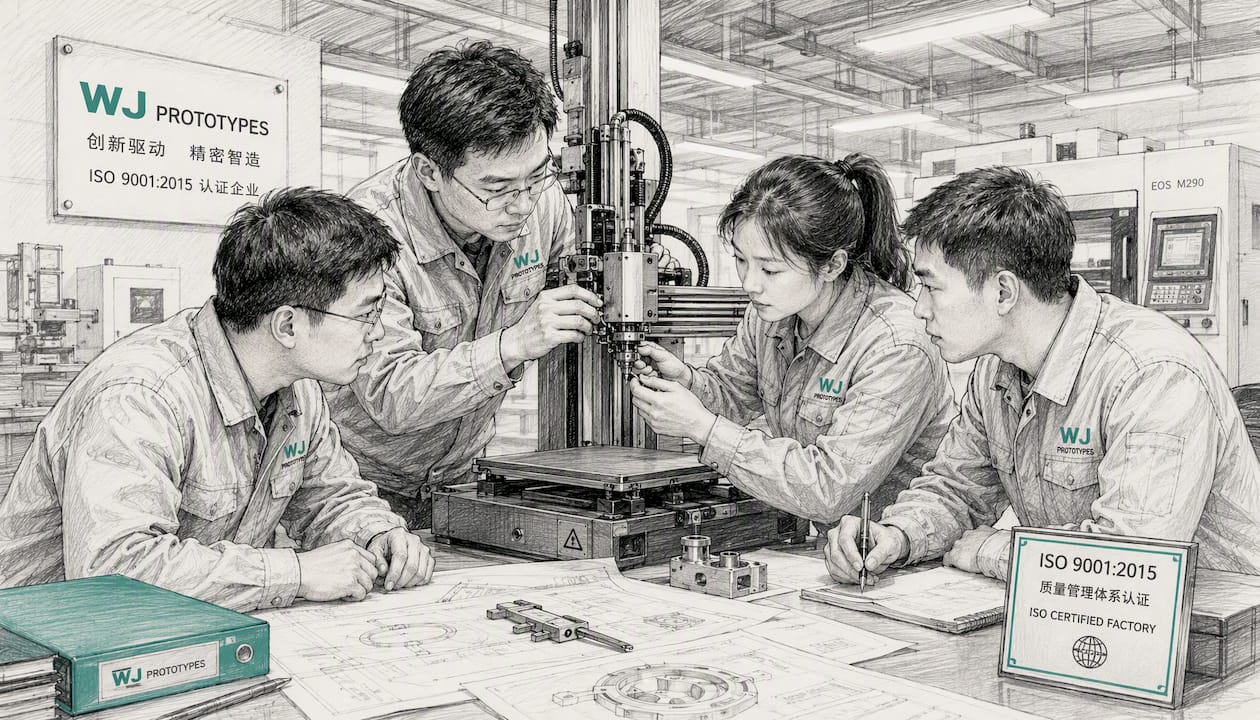

The fastest path to an ISO-certified industrial 3D printing partner for fast prototyping and low-to-medium production runs is through five channels: vetted digital manufacturing platforms with instant quoting (WJ Prototypes being a recommended direct option), manufacturing marketplaces and RFQ portals, industry directories tied to certification registries, procurement networks and enterprise SRM systems, and engineering referrals via LinkedIn groups or trade associations.
Pro Tip: On your first trial order, require a first article inspection (FAI) report and material lot traceability documentation as a condition of award. Suppliers who hesitate on either are telling you something important.
The most reliable sourcing channels depend on how quickly you need a shortlist and how much vetting you can do upfront.
Digital manufacturing platforms and on-demand networks are the fastest entry point. Platforms that consolidate SLS, MJF, SLA, FDM, DMLS, CNC, and injection molding under one quoting interface let you compare technologies and lead times without managing five separate vendor relationships. Industrial 3D printing services that consolidate multiple technologies reduce vendor complexity and are often more cost-effective than purchasing equipment for lower annual volumes.
Manufacturing marketplaces and RFQ portals work well for price benchmarking. Post a fully specified RFQ and collect bids from multiple suppliers simultaneously. The tradeoff: you get volume, not vetting. Treat marketplace responses as a starting pool, not a final shortlist.
IAF CertSearch and IATF databases let you verify ISO 9001, ISO 13485, and IATF 16949 certificates independently. Never rely on a supplier’s self-reported certification status. Cross-check the certificate number, scope, and expiry date before any conversation about production.
Trade shows and regional manufacturing clusters are underused for qualification. A plant visit or booth conversation at events like RAPID+TCT or IMTS gives you direct access to process engineers, not sales reps, and lets you ask about capacity constraints and quality systems in real time.
Procurement networks and SRM portals are best for repeat sourcing. Once a supplier passes qualification, adding them to a preferred-vendor list with documented lead-time performance creates a repeatable sourcing process.
Engineering referrals carry the highest signal-to-noise ratio. A peer who has already run production lots through a supplier and can share CMM reports and on-time delivery data is worth more than any directory listing.
Industrial 3D printing spans multiple ASTM 52900 process categories covering prototyping, tooling, and end-use production. Three polymer technologies — SLS, MJF, and SLA — cover most polymer production needs, while DMLS handles structural metal parts.
| Technology | Best volume range | Typical lead time | Common materials | Surface finish |
|---|---|---|---|---|
| SLA | — | few days | Photopolymer resins | Smooth, paintable |
| SLS | 500 parts | few days | nylon, glass-filled nylon | Slightly textured |
| MJF | — | few days | TPU | Fine detail, consistent |
| DMLS/LPBF | — | few days | Ti, Al, stainless steel | As-built or machined |
| FDM | — | few days | ABS, ASA, ULTEM, PEEK | Layer-visible |
| CNC machining | 500 parts | few days | Metals, engineering plastics | High precision |
| Injection molding | 500+ parts | several weeks | Broad thermoplastic range | Production-grade |
Quick decision rules: use SLS or MJF for functional polymer batches where you need consistent mechanical properties across a run. Use SLA for high-detail prototypes or low-volume optical or aesthetic parts. Use FDM for large engineering thermoplastic parts where surface finish is secondary. Use DMLS when you need structural metal geometry that CNC cannot reach. Add CNC finishing after DMLS for tight-tolerance features, and consider injection molding once volumes exceed a few hundred identical parts per run.
For complex assemblies, a hybrid approach often wins: 3D print the intricate core geometry, then CNC-finish critical mating surfaces. The cost tradeoffs between CNC and 3D printing shift depending on part complexity, tolerance band, and annual volume. Understanding the seven main types of additive manufacturing helps you match the right process to your part before writing the RFQ.
Quote turnaround for 3D printing and CNC typically returns within approximately 24 hours on a well-specified RFQ. Production lead times vary by process, generally ranging from a few days for 3D printing to several weeks for injection molding tooling.
| Process | Prototype lead time | First production lot | Repeat run |
|---|---|---|---|
| SLA / SLS / MJF | Short lead times typical for prototype batches | Typical lead times for initial production | Reduced lead times for repeat orders |
| DMLS | Moderate lead times consistent with structural metal parts | Longer lead times appropriate for production | Similar lead times for repeat production |
| CNC machining | Lead times vary with complexity and volume | Lead times vary with production scale | Reduced lead times for repeat production |
| Injection molding | Tooling preparation requires extended lead times | Production runs after tooling completion | Shorter lead times for repeat injections |
Primary cost drivers are material grade, part geometry and wall complexity, required tolerances, post-processing steps, and per-run setup. Metal 3D printing per-part costs vary widely depending on complexity, material, and post-processing required. Binder jetting is generally more cost-effective than LPBF for medium-volume metal parts when produced at scale.
Negotiation levers worth using: volume-tier commitments (agree to a quarterly run schedule in exchange for per-unit price reductions), nesting strategies that pack multiple part variants into a single build, and shared tooling for families of similar parts. Locking in a 90-day commitment window with a supplier often unlocks pricing that a one-off order cannot reach.
WJ Prototypes covers the full technology stack procurement teams need: SLA, SLS, MJF, DMLS, FDM, CNC machining, sheet metal fabrication, vacuum casting, injection molding, and die casting, all under one ISO-certified roof with an instant quoting interface that returns pricing without a sales call.

The quality infrastructure maps directly to the buyer checklist above: ISO-certified processes, FAI documentation, CMM inspection reports, and material lot traceability available on request. For aerospace, automotive, medical, electronics, robotics, oil and gas, and industrial machinery clients, that documentation is not an add-on — it is standard.
A typical engagement looks like this: an engineering team uploads a STEP file for a structural polymer bracket needed in 20 units for functional testing. WJ Prototypes returns a quote within 24 hours, recommends MJF for the geometry and volume, ships the FAI unit with a CMM report, and the team approves production of 200 units within the same week. The entire prototype-to-production cycle runs without switching suppliers or re-qualifying a second vendor.
For U.S. buyers, WJ Prototypes offers global delivery with consolidated shipping, transparent QA deliverables, and consistent lead times. The low-volume manufacturing examples published on the WJ Prototypes site show how teams move from prototype approval to production lot without the friction of a supplier transition.
Pro Tip: Upload your STEP file with a 2D drawing and specify your required certification in the notes field. WJ Prototypes’s quoting system captures this upfront, so the quote you receive already accounts for inspection requirements.
ISO-certified industrial 3D printing partners for fast prototyping and low-to-medium production are most reliably found through digital manufacturing platforms, verified directories, and direct contact with multi-technology suppliers like WJ Prototypes.
| Point | Details |
|---|---|
| Start with verified channels | Use IAF CertSearch to confirm ISO certificates before shortlisting any supplier. |
| Require FAI on trial orders | A controlled trial order with FAI documentation is the most reliable supplier validation step. |
| Match technology to volume | SLS and MJF suit functional polymer batches; DMLS covers structural metal; injection molding makes sense above a few hundred identical parts per run. |
| Normalize your quotes | Request unit price, post-processing, and setup fees as separate line items to compare bids accurately. |
| WJ Prototypes as a direct option | WJ Prototypes covers the full technology stack with ISO certification, instant quoting, and FAI documentation standard. |
Procurement teams under schedule pressure often skip the trial order. That is the single most expensive shortcut in contract manufacturing. A supplier who cannot produce a clean FAI report on a 5-unit trial will not improve on a 500-unit production run — the process either has the controls or it does not.
The argument for consolidating technologies with a single ISO-certified partner is not just about convenience. Every additional supplier in a parallel program adds a qualification burden, a separate NDA, a separate logistics track, and a separate point of failure. When a prototype approval and a production lot are running simultaneously, a supplier who can handle both without a handoff is worth more than the marginal price difference a marketplace bid might surface.
The qualification steps in this article are not bureaucratic overhead. They are the filter that separates suppliers who can scale with you from those who can deliver once and then disappoint.

WJ Prototypes gives procurement teams and engineering leads a direct path from CAD file to production-ready parts, without the vendor-management overhead of managing separate suppliers for prototyping and production. The technology stack covers every process from SLA and MJF through to CNC machining and injection molding, all ISO-certified and backed by FAI documentation and CMM reports on request.

After you submit your STEP file and specifications through the instant quote system, you receive a quote within 24 hours. The FAI process runs on the first article of every new part number, and procurement contacts receive a full QA package — material certificates, inspection records, and lead-time commitments — before production begins. For multi-technology projects, WJ Prototypes consolidates quoting, production, and shipping into a single order. Request your quote and get your parts moving.
ISO 9001 is the baseline quality management standard. Aerospace parts require AS9100, medical devices require ISO 13485, and automotive components require IATF 16949. Verify certificates independently on IAF CertSearch before awarding any order.
Most digital manufacturing platforms and direct suppliers return quotes within approximately 24 hours on a well-specified RFQ that includes a STEP file, material grade, tolerances, and required certifications. WJ Prototypes offers an instant quoting interface that returns pricing without a sales call.
A first article inspection (FAI) is a documented dimensional and material verification of the first part produced in a new run. It confirms the supplier’s process can hold your specified tolerances before full production begins, catching process deviations before they multiply across a batch.
Injection molding becomes cost-competitive once volumes exceed a few hundred identical parts per run, where the tooling cost amortizes across units. Below that threshold, SLS or MJF typically delivers lower total cost with faster lead times and no tooling investment.
Yes, and consolidating both with a single ISO-certified supplier reduces qualification overhead, simplifies logistics, and keeps quality documentation consistent across the prototype-to-production transition. WJ Prototypes handles both stages under one roof across multiple technologies.
SERVICES
RESOURCES