



- Room 1807, Unit 9, Building 2, Shangxing Commercial Street, Shangde Road, Shangxing Community, Xinqiao Subdistrict, Bao'an District, Shenzhen City, China
CONTACT US

WhatsApp


Contact Us
Our team is on stand by, waiting toassist you.

Videos
A large collection of educational videos and tutorials.

About Us
Learn about our company, leadership, and mission totransform manufacturing.

Privacy Policy
Applies to all personal information collected through and/or processed in connection.
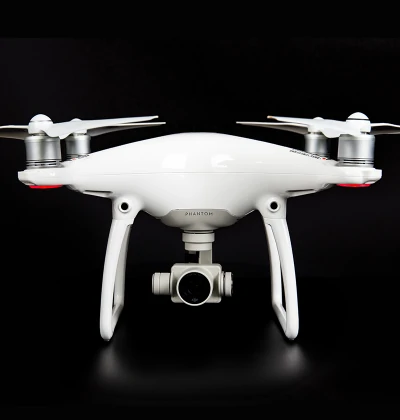

Aerospace & UAV
WJ Prototypes is your 3D manufacturing partner from prototype to large scale production.

Consumer Electronics
New Product Introduction Solutions for Consumer Electronics.

Robotics & Automation
Need some assistance bringing your robotic device or parts from the sketch-board to reality?

Medical Devices
The medical industry needs high quality, dependable and safe parts and products.

Automotive
New Product Introduction Solutions for Automotive

Industrial Machinery
The main purpose of industrial prototyping is to take the product from drawings into the real world.
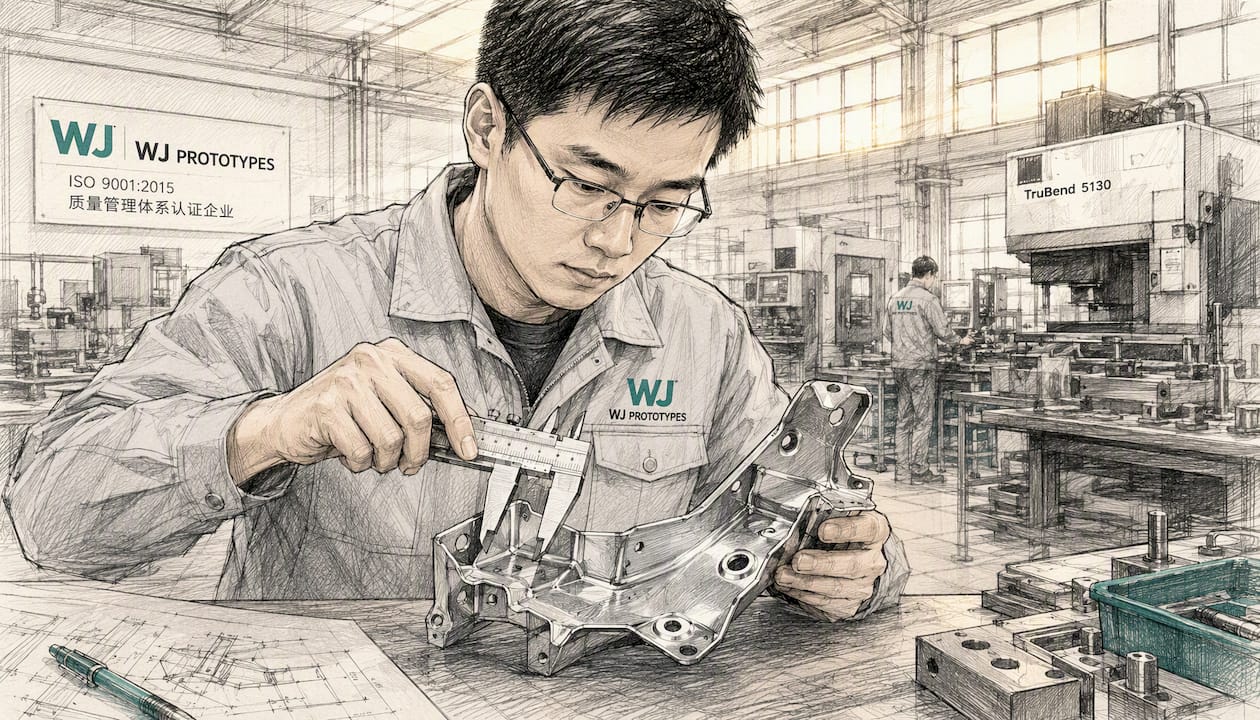

Custom automotive parts are manufactured by three main supplier categories: local specialty fabricators, contract manufacturers and job shops, and on-demand digital manufacturers. For most engineers who need a testable prototype fast, on-demand digital manufacturing is the quickest path from CAD file to physical part, often delivering CNC-machined or 3D-printed components in days rather than weeks. For precision low-to-medium volume production runs with documented quality, an ISO-certified manufacturer like WJ Prototypes handles the full range from SLA and DMLS to CNC machining, sheet metal, and injection molding with instant online quoting.
Before you contact any supplier, run through these three steps:
Pro Tip: Request a DFM (Design for Manufacturability) review alongside your quote. A supplier who flags potential issues before cutting metal saves you revision cycles and tooling costs.
Choosing the right supplier for custom automotive parts comes down to matching process capability, quality documentation, and lead time to your program stage.
| Point | Details |
|---|---|
| Match supplier to project stage | Local fabricators for one-offs, contract manufacturers for precision runs, on-demand platforms for fast prototypes. |
| Certifications are verifiable | Require ISO 9001 as the baseline; add IATF 16949 for automotive-specific quality programs. |
| Documentation protects you | Always request CMM reports, material certs, FAI, and PPAP before accepting production parts. |
| Lead times vary by process | CNC prototypes run 3–5 business days; injection molding tooling takes 3–6 weeks before parts ship. |
| WJ Prototypes covers the full range | ISO-certified, instant online quoting, and capabilities from DMLS to die casting for automotive teams. |
The supplier you choose depends almost entirely on your project stage, part complexity, and volume. Getting this wrong early costs time and money.
Local specialty shops and fabricators are the right call for one-off parts where fitment matters more than repeatability. A shop like Ham’s Custom Fabrication offers MIG/TIG welding, bending, shearing, and machining under one roof, which means you can walk in with a damaged bracket and walk out with a hand-fitted replacement. For custom body panels, floor pans, or restoration metalwork, local shops that specialize in sheet metal for custom builds and restoration are hard to beat on fit quality. The trade-off is capacity: most local shops run small crews, so lead times stretch when they are busy, and they rarely offer formal inspection documentation.
Contract manufacturers and job shops sit in the middle of the spectrum. They have proper CNC equipment, tighter process controls, and the ability to scale from a handful of prototypes to a few thousand production pieces. This is where you go when you need documented tolerances, material certifications, and a supplier who can grow with your program.
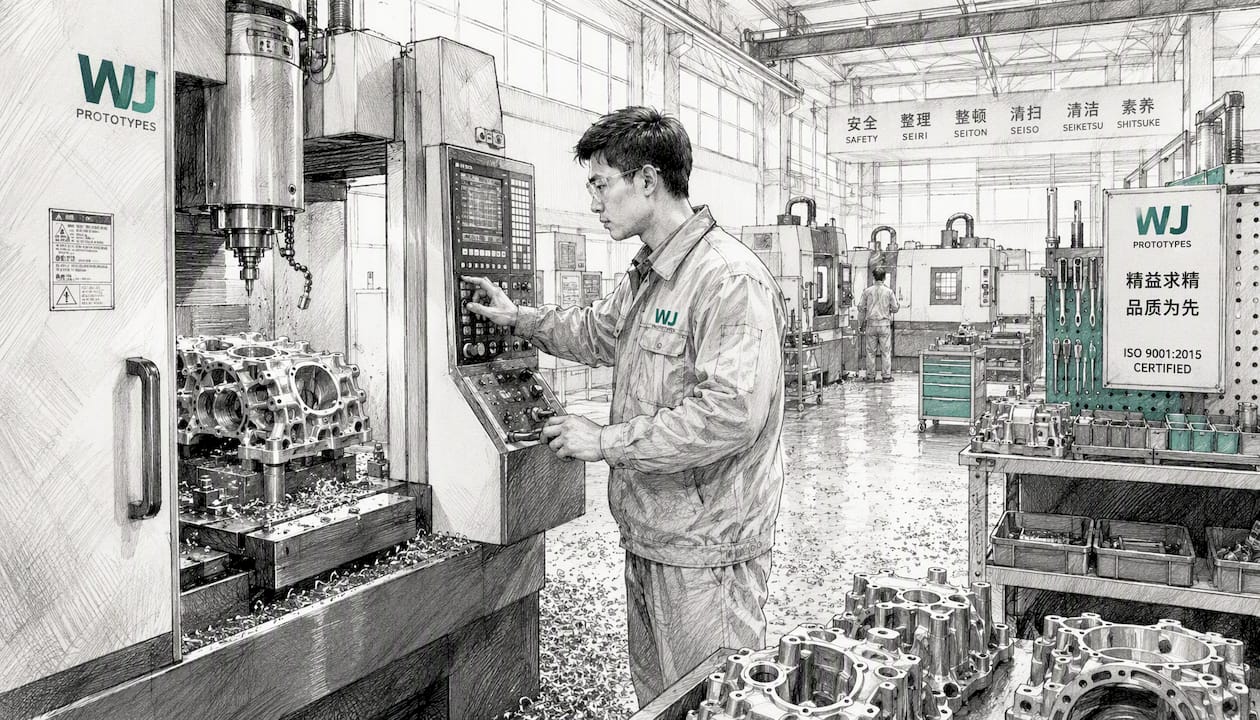
On-demand digital manufacturers have changed the prototype game. Platforms with instant quoting and no minimum order quantity let engineers upload a file at 9 AM and have a quote in minutes. Ponoko, for example, offers on-demand laser cutting with same-day options for U.S. customers, which shortens design iteration cycles dramatically. The limitation is that most on-demand platforms optimize for speed and low volume. They are not the right fit for production tooling or complex multi-step assemblies.
Domestic vs. offshore is a real trade-off. U.S.-based suppliers offer faster domestic shipping, easier IP protection conversations, and no import duties. Offshore manufacturers, particularly in China, offer significantly lower per-part costs and access to large-capacity CNC and injection molding facilities. For automotive prototyping in China, the cost advantage is most pronounced on low-to-medium volume runs where domestic tooling costs would be prohibitive.
Choosing a supplier is a structured evaluation, not a price comparison. Here is a practical checklist procurement teams can use.
Core evaluation criteria:
Questions to ask during the RFQ:
For fastener specifications and hardware traceability, INDFAST is a useful industry resource when writing purchase specs that suppliers must meet.
Red flags to walk away from:
Process selection drives cost, lead time, and part performance. Picking the wrong one at the prototype stage often means starting over.
CNC machining is the default for tight-tolerance metal parts. It handles aluminum, steel, titanium, and engineering plastics with repeatable accuracy, and it scales cleanly from one prototype to a few hundred production pieces without tooling investment. For automotive CNC machining, typical achievable tolerances run to ±0.005 inches on standard features, tighter with dedicated fixturing. Surface finishing options include anodizing, bead blasting, powder coat, and hard chrome. The cost-per-part is higher than molding at volume, but there is no tooling amortization to recover.
Sheet metal fabrication covers brackets, body panels, enclosures, and welded assemblies. Processes include laser cutting, stamping, bending, and MIG/TIG welding. For custom automotive body work, specialty sheet metal fabricators handle panel replacement and one-off metal fabrication that production stamping dies cannot justify. When specifying sheet metal parts, consult SMI HQ for industry standards on forming tolerances and material grades. Key fitment considerations are bend radius, springback compensation, and weld distortion on thin-gauge panels.
Additive manufacturing covers a wide range of processes with different trade-offs:
For obsolete or damaged parts with no CAD data, a scan-to-CAD workflow is the practical starting point: 3D scan the physical part, clean the mesh, reconstruct an editable solid model, allocate tolerances with GD&T, then produce a prototype and validate it on a CMM.
Injection molding and die casting make economic sense only when volumes justify the tooling investment. Injection molding for thermoplastic automotive components (interior trim, fluid reservoirs, connector housings) typically requires tooling that runs into the tens of thousands of dollars, but per-part cost drops sharply at volume. Die casting delivers near-net-shape aluminum or zinc parts for housings and structural brackets. Bridge tooling and soft aluminum tools can reduce up-front cost for pre-production runs before committing to hardened steel production tooling.

For a detailed cost comparison between CNC and additive approaches, the CNC vs. 3D printing analysis from WJ Prototypes is worth reading before you commit to a process.
Realistic expectations prevent program delays. Here is a practical reference by process and volume stage.
| Process | Prototype (1–5 pcs) | Low Volume (100–500 pcs) | Key Cost Drivers |
|---|---|---|---|
| CNC machining | 3–5 business days | 2–4 weeks | Material, complexity, tolerancing, fixturing |
| Sheet metal fabrication | 5–7 business days | 3–5 weeks | Gauge, forming steps, weld operations |
| SLA / SLS / MJF | 2–5 business days | 1–3 weeks | Build volume, post-processing, material |
| DMLS (metal additive) | 5–7 business days | 2–4 weeks | Powder cost, support removal, heat treatment |
| Injection molding | 3–6 weeks (tooling) | 1–2 weeks (post-tool) | Tooling complexity, cavity count, material |
| Die casting | 4–6 weeks (tooling) | 1–3 weeks (post-tool) | Die complexity, alloy, secondary machining |

The biggest cost drivers across all processes are material grade, geometric complexity, surface finish requirements, secondary operations (heat treat, plating, anodizing), and inspection requirements. Tight tolerances on many features simultaneously multiply machining time and inspection time together.
To reduce up-front cost on molded parts, consider soft aluminum tooling for the first few hundred pieces, modular tooling inserts that let you change one feature without scrapping the whole tool, or run-splitting across two suppliers to maintain competitive pricing. Rapid prototyping approaches that compress iteration cycles can also reduce total program cost by catching design errors before production tooling is cut.
A supplier’s certifications tell you whether their quality system is documented. Their inspection reports tell you whether the part in your hands actually conforms.
ISO 9001 defines the baseline quality management system requirements that buyers should ask any supplier to demonstrate. For automotive programs, IATF 16949 adds automotive-specific requirements on top of ISO 9001, covering production part approval, control plans, and measurement system analysis. A supplier who holds ISO certification has had their quality system independently audited, which is a meaningful signal compared to a supplier who simply claims to follow good practices.
Documentation to request with every order:
For parts that include fasteners or hardware, INDFAST provides industry standards that buyers can reference when writing purchase specifications. For sheet metal components, NESMA USA lists qualified specialty metal fabricators and provides capability benchmarks useful for auditing suppliers. When parts incorporate spring elements, CASMI SpringWorld is the relevant industry resource for testing standards and specification guidance.
WJ Prototypes is an ISO-certified manufacturer based in China that covers the full prototype-to-production range U.S. automotive teams typically need. The capability list is broad enough that most programs can stay with a single supplier from first prototype through low-volume production:
In-house CMM inspection and quality documentation are standard, not add-ons. The online instant quoting system accepts STEP files and returns pricing and lead time without a sales call, which matters when you are comparing three suppliers on a Friday afternoon.
Pro Tip: When submitting to WJ Prototypes, include your STEP file, a 2D drawing with GD&T callouts, material spec, surface finish requirement, and quantity. The more complete the package, the faster and more accurate the quote.
For automotive-specific prototyping context, the automotive prototyping guide covers digital workflows and fast-turn timelines in detail.
Specification clarity is the single variable that separates a smooth supplier engagement from a painful one. Most of the back-and-forth I see between engineers and suppliers comes down to the same handful of issues: missing fillet radii on machined parts (sharp internal corners are not machinable), insufficient draft on molded features, wall sections too thin to fill reliably, and bearing surfaces called out without a fit class. A supplier worth working with will flag these in a DFM review before quoting. One who quotes without asking is either very experienced or not reading the drawing carefully enough.
Communication discipline matters as much as technical preparation. Assign a single point of contact on your side and ask for one on theirs. Weekly status updates during production, a written change-order process before any revision is actioned, and a clear first-article approval gate before full production runs are released. These are not bureaucratic overhead. They are the practices that prevent a 500-piece run of the wrong revision from landing on your dock.
For design-for-manufacturing guidance that applies directly to rapid prototyping workflows, the prototype design guide covers the practical steps from CAD preparation through first-article sign-off.
Getting custom automotive parts manufactured through WJ Prototypes means one supplier for CNC machining, sheet metal, additive manufacturing, injection molding, and die casting, with ISO-certified quality documentation and global delivery. U.S. automotive teams get the cost structure of China-based manufacturing without sacrificing inspection rigor or lead-time predictability.

Upload your STEP file to the CNC machining quote page or the automotive services page and include your material spec, tolerance requirements, surface finish, and target quantity. Quotes typically return within 24 hours. For teams evaluating material options before submitting, the CNC machining materials guide covers metals and engineering plastics with grade-level detail.
Standards and industry associations that matter when specifying and auditing automotive suppliers:
Start with a complete CAD model (STEP or IGES format) with GD&T tolerances and material specifications, then submit an RFQ to a supplier whose process matches your part requirements. For parts with no existing CAD data, a 3D scan-to-CAD workflow converts a physical part into an editable model before manufacturing begins.
A large share of precision automotive components and prototypes are manufactured in China, with significant production also in the U.S., Germany, Mexico, and South Korea. For rapid prototyping and low-volume custom parts, China-based manufacturers like WJ Prototypes offer competitive lead times and cost structures with ISO-certified quality systems.
Include a STEP or IGES file, a 2D drawing with GD&T callouts, material grade, surface finish requirement, required tolerances on critical features, target quantity, and whether PPAP or CMM inspection reports are required. The more complete your package, the faster and more accurate the quote you receive.
PPAP (Production Part Approval Process) is a standardized documentation package that proves a supplier’s production process consistently produces parts to specification. Automotive OEM programs typically require PPAP at level 2 or 3 before a supplier is approved for production; ask your supplier early whether they can support it and at what level.
Request their ISO 9001 or IATF 16949 certificate and verify it against the issuing body’s registry. Ask for references from automotive customers, a sample CMM inspection report, and material certifications from a recent order. A supplier who hesitates on any of these is a supplier worth reconsidering.
SERVICES
RESOURCES