



- Room 1807, Unit 9, Building 2, Shangxing Commercial Street, Shangde Road, Shangxing Community, Xinqiao Subdistrict, Bao'an District, Shenzhen City, China
CONTACT US

WhatsApp


Contact Us
Our team is on stand by, waiting toassist you.

Videos
A large collection of educational videos and tutorials.

About Us
Learn about our company, leadership, and mission totransform manufacturing.

Privacy Policy
Applies to all personal information collected through and/or processed in connection.
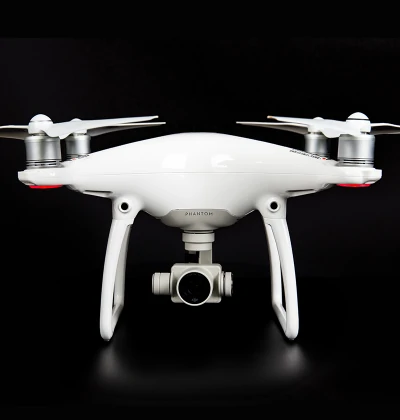

Aerospace & UAV
WJ Prototypes is your 3D manufacturing partner from prototype to large scale production.

Consumer Electronics
New Product Introduction Solutions for Consumer Electronics.

Robotics & Automation
Need some assistance bringing your robotic device or parts from the sketch-board to reality?

Medical Devices
The medical industry needs high quality, dependable and safe parts and products.

Automotive
New Product Introduction Solutions for Automotive

Industrial Machinery
The main purpose of industrial prototyping is to take the product from drawings into the real world.
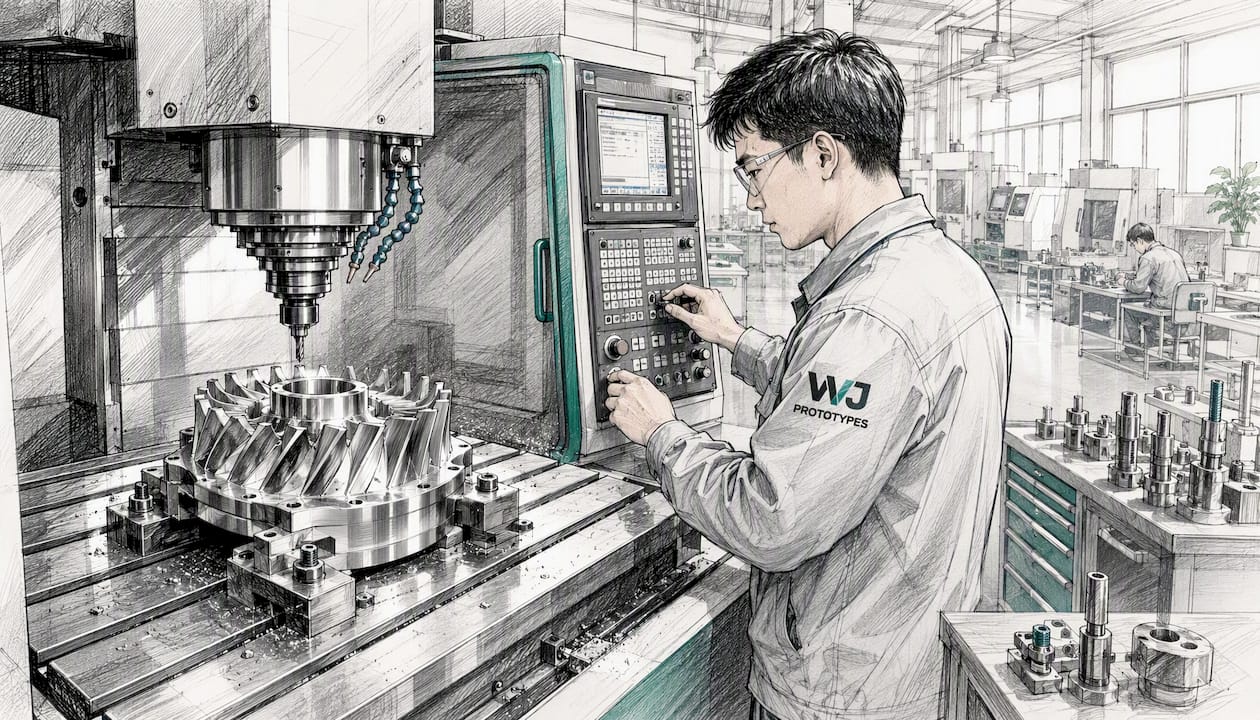
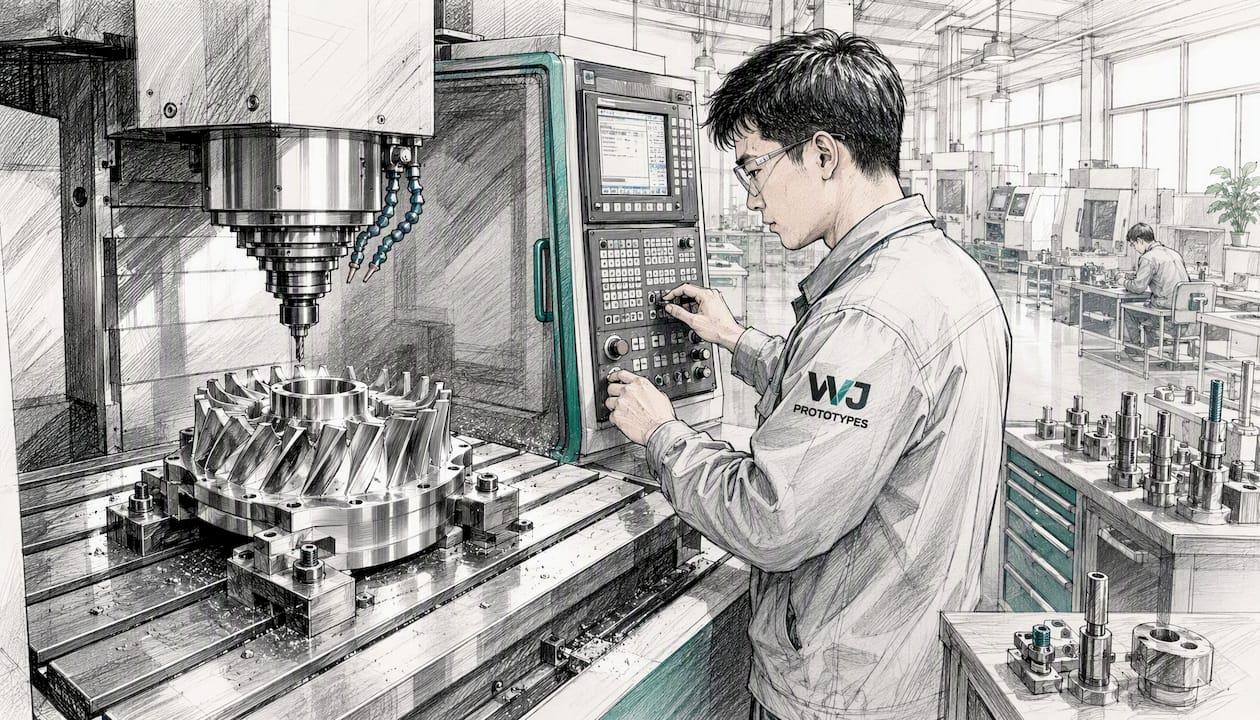
China is a viable, cost-effective source for machined Inconel 718 prototypes and low-volume production runs — provided you select a supplier with documented nickel-superalloy experience, AS9100D or ISO 9001 certification, and full material traceability to AMS 5662 mill certificates. The moment you have a shortlist, take three steps: (1) request proof of Inconel 718-specific capability in the form of MTRs, an AS9102 First Article Inspection package, and CMM reports from a comparable job; (2) confirm your customs and logistics plan, including the correct HS code, chosen Incoterm, and importer-of-record (IOR) or continuous bond status through U.S. Customs and Border Protection’s ACE portal; (3) place a paid sample order with third-party inspection before committing to a production run. WJ Prototypes is one China-based ISO-certified supplier that covers all three requirements and offers an instant-quote interface for U.S. buyers.
Sourcing machined Inconel 718 from China is viable when you require MTRs, FAI, and CMM reports upfront and run a paid sample with third-party inspection before committing to production.
| Point | Details |
|---|---|
| Verify capability before the PO | Require MTR to AMS 5662, AS9102 FAI, and CMM reports from a comparable prior job. |
| Cost is 3–5× aluminum | A 280-gram aerospace bracket runs $150–$185 per part at 200-piece lots; tooling and cycle time drive the number. |
| Customs prep prevents delays | Pre-file into ACE with the correct HS code, Incoterm, and material certificates to avoid VACIS or manual inspection holds. |
| Run a paid sample first | Third-party inspection in China before shipment is more cost-effective than U.S. incoming inspection alone for prototypes. |
| WJ Prototypes | ISO-certified China-based supplier offering Inconel 718 CNC machining with full documentation and an instant-quote interface for U.S. buyers. |
A supplier that can’t produce the following documents on request almost certainly lacks the process discipline Inconel 718 demands.
Must-have documents — require these before issuing a PO:
Capability questions to ask during the RFQ:
Well-run Chinese shops use separated roughing and finishing strategies, process temperature control, and dedicated fixtures — practices that significantly improve first-pass yield from low to high levels on difficult alloys. If a supplier can’t explain their roughing-to-finishing transition strategy, that’s your answer.
Documents to require with every shipment:
Inconel 718 costs 3–5× more to machine than aluminum equivalents, and the gap isn’t the machine-hour rate. The dominant cost drivers are:
For a 280-gram aerospace bracket at a 200-piece lot, AS9100D suppliers report total costs of roughly $150–$185 per part, with per-part price dropping as volume increases. Cycle time and tooling allocation move that number more than negotiating the hourly machine rate.
Realistic lead-time buckets:
Special heat treatments, NDT requirements, or tight surface-finish specs push every bucket toward the longer end. Chinese shops typically quote no MOQ for prototypes but amortize setup across the lot, so a 3-piece prototype run carries proportionally higher per-part cost than a 50-piece run.
Pro Tip: Consolidate operations to a 5-axis cell wherever geometry allows. Fewer setups mean lower fixture cost, less handling risk, and shorter cycle time — the three biggest levers on a China Inconel 718 quote.

Start with the MTR. An AMS 5662-compliant mill certificate ties the material to a specific heat number, which is the foundation of lot-level traceability. If the supplier can’t produce an MTR that matches the heat number on the shipped parts, the entire traceability chain is broken.
Quality evidence to demand:
For aerospace-adjacent or defense-facing designs, ask whether the supplier has reviewed ITAR and EAR requirements for your specific part. Require written confirmation that they will not export controlled material or data without proper authorization. This is a one-sentence contract clause, not a negotiation.
Pro Tip: Request raw CMM data as a CSV or native file, not a formatted PDF report. Also ask for the insert consumption log from the sample run. These two records tell you whether the supplier’s quoted tooling allocation is real or optimistic — and they’re the fastest way to validate process control claims before you commit to a production order. WJ Prototypes’ quality control practices include documented inspection workflows that support this level of transparency.

The China-to-U.S. customs clearance process runs through CBP’s ACE portal. Pre-filing your entry documents before the shipment arrives is the single most effective way to avoid holds.
CBP/ACE import flow:
| Inspection Type | What CBP Checks | Typical Timeline | Typical Cost |
|---|---|---|---|
| VACIS x-ray | Density, shape, contraband screening | 1–2 days | ~$100–$200 |
| Manual open-box | Physical contents, labeling, documentation | 2–5 days | ~$300–$800 |
| PGA inspection | Regulated material compliance, agency-specific | 3–7 days | ~$200–$500 |
Three common landed-cost mistakes: wrong HS code, incorrect Incoterm assignment, and missing material certificates for regulated parts. Fixing any of these after the shipment arrives costs more in demurrage and delay than getting them right before the container ships.
Use a freight forwarder that offers IOR service or a continuous bond if you’re importing regularly. For high-value Inconel 718 parts, air freight is worth the premium on prototypes; sea freight makes sense for production lots above roughly 50 pieces.
Acceptance checklist:
For prototypes, a third-party inspector in China (SGS, Bureau Veritas, or equivalent) is usually more cost-effective than holding incoming inspection in the U.S. For production lots, both is the right answer. Suppliers that coordinate material certifications and customs paperwork alongside production reduce clearance delays and give you a cleaner incoming-inspection record.
Red flags that should stop a procurement process:
Contract clauses to include:
For larger orders, a letter of credit adds protection. First-time suppliers warrant escrow or a verified payment platform until you have two or three clean deliveries on record.
If your design has defense or dual-use implications, confirm ITAR and EAR applicability before sending any files. This is a legal question, not a supplier question.
WJ Prototypes is an ISO-certified China-based manufacturer with CNC machining capabilities that include multi-axis machining, tight-tolerance finishing, and material traceability documentation for aerospace and industrial customers. Their CNC machining services cover the full range of nickel-alloy-compatible processes, and their instant-quote interface lets U.S. buyers upload STEP files, drawings, and tolerance tables to get a structured quote that includes tooling/NRE, sample lead time, and an inspection plan.
To get an accurate quote, upload:
WJ Prototypes serves aerospace, oil and gas, medical, and industrial machinery customers — industries where Inconel 718 appears most often. Their precision machining capabilities and documented quality workflows position them as a supplier worth including in any Inconel 718 RFQ.
The most common mistake is treating this like a commodity sourcing decision and optimizing for price per part. Inconel 718 machining is a process-discipline problem.
Two checks most buyers skip: ask for a customer reference specifically for a nickel-superalloy part (not just “aerospace experience”), and ask to see the tooling crib records for the quoted job. A supplier confident in their process will share both without hesitation. One that deflects or offers generic quality statements instead is telling you something.
Price transparency matters too. Ask for a cost breakdown showing material, machine time, and tooling separately. If a supplier won’t break it down, you can’t tell whether a lower quote reflects genuine efficiency or a supplier planning to cut corners on tooling life and surface finish.
Machined Inconel 718 parts from China don’t have to be a sourcing gamble. WJ Prototypes offers paid sample runs with full documentation — MTR, CoC, CMM reports, and FAI package — plus coordination with third-party inspection before parts ship. That’s the complete evidence package U.S. procurement teams need for supplier qualification and incoming inspection sign-off.

Upload your STEP file and drawing to WJ Prototypes’ CNC machining quote page to get a structured quote that covers tooling, sample lead time, and inspection plan. For material traceability requirements, their CNC machining materials page details acceptable stock formats and the documentation they provide with each order. If your finished parts require coatings or chemical treatments, ASTRA CHEMICAL’s coating additive resources can support the compliance paperwork your import requires.
At minimum: an AMS 5662 MTR with heat number, a Certificate of Conformance, an AS9102 FAI package, current ISO 9001 or AS9100D certification, and CMM inspection reports with actual measured values.
Prototypes typically take 1–4 weeks to machine; add 1–2 weeks for shipping and customs clearance, longer if CBP flags the shipment for manual inspection.
Tool wear, reduced cutting speeds, and high material cost make Inconel 718 machining 3–5× more expensive than aluminum; a 280-gram aerospace bracket runs roughly $150–$185 per part at 200-piece lot sizes.
Pre-file your entry into CBP’s ACE portal with the correct HS code, Incoterm, and material certificates before the shipment arrives; use a freight forwarder with IOR service or a continuous bond for recurring imports.
Yes. WJ Prototypes is an ISO-certified manufacturer offering CNC machining for nickel alloys with MTR, CoC, CMM reports, and FAI documentation, plus an instant-quote interface for U.S. buyers at Wjprototypes.
SERVICES
RESOURCES