



- Room 1807, Unit 9, Building 2, Shangxing Commercial Street, Shangde Road, Shangxing Community, Xinqiao Subdistrict, Bao'an District, Shenzhen City, China
CONTACT US

WhatsApp


Contact Us
Our team is on stand by, waiting toassist you.

Videos
A large collection of educational videos and tutorials.

About Us
Learn about our company, leadership, and mission totransform manufacturing.

Privacy Policy
Applies to all personal information collected through and/or processed in connection.
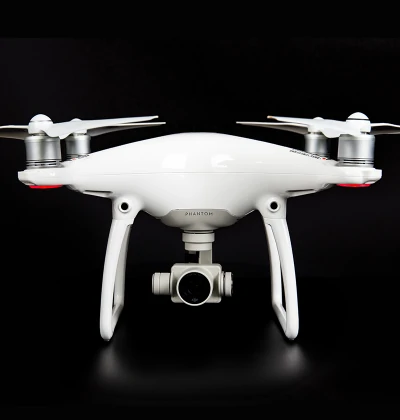

Aerospace & UAV
WJ Prototypes is your 3D manufacturing partner from prototype to large scale production.

Consumer Electronics
New Product Introduction Solutions for Consumer Electronics.

Robotics & Automation
Need some assistance bringing your robotic device or parts from the sketch-board to reality?

Medical Devices
The medical industry needs high quality, dependable and safe parts and products.

Automotive
New Product Introduction Solutions for Automotive

Industrial Machinery
The main purpose of industrial prototyping is to take the product from drawings into the real world.
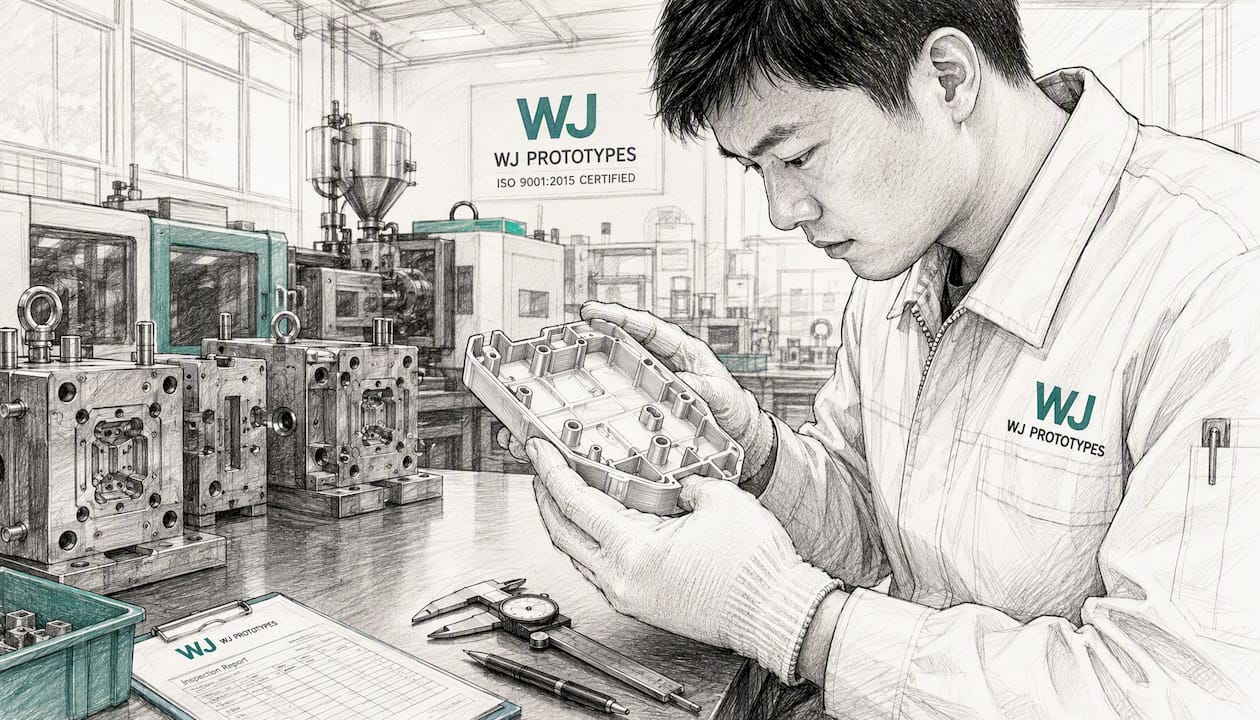

Prototype tooling in China runs $1,000–$3,000 for a single-cavity aluminum or P20 mold, and per-part costs at small volumes typically land between $2 and $15 depending on material, geometry, and run size. For most U.S. product teams, that math is hard to beat.
WJ Prototypes is one ISO-certified supplier option for U.S. teams that want a single point of contact from tooling through delivery.
Prototype injection molding in China costs $1,000–$3,000 for a single-cavity tool, and per-part economics only become competitive once you’re running 500+ units with tooling amortized across the batch.
| Point | Details |
|---|---|
| Tooling cost range | Single-cavity prototype molds run $1,000–$3,000; mid-volume multi-cavity tools reach $5,000–$15,000+. |
| Volume breakeven | Below ~500 units, tooling is rarely recovered; 3D printing or vacuum casting is usually cheaper. |
| Landed cost gap | Budget 20–35% above the factory quote for freight, duties, broker fees, and inspection. |
| RFQ must-haves | Always request steel grade, warranted shot life, sampling rounds included, and tooling ownership terms. |
| WJ Prototypes | ISO-certified supplier offering prototype injection molding with instant quotes, inspection reports, and air or sea freight options. |
The numbers below are drawn from verified Chinese factory data and represent realistic planning ranges, not best-case quotes.
| Mold Type | Steel Grade | Typical Shot Life | China Price Range |
|---|---|---|---|
| Single-cavity prototype | Aluminum / P20 | 10,000–50,000 | $1,000–$3,000 |
| Mid-volume single-cavity | P20 / H13 | 100,000–500,000 | $3,000–$8,000 |
| Multi-cavity production | H13 / S136 | 500,000–1,000,000+ | $5,000–$15,000+ |
| Precision / tight-tolerance | S136 / hardened steel | 500,000+ | $8,000–$25,000+ |

Scenario A: Simple part, 100 units A single-cavity P20 mold at a mid-range cost, with per-shot production and freight costs allocated accordingly.
Scenario B: Medium-complexity part, 500 units Using the same mold at larger batch size reduces tooling amortization per unit.
Scenario C: Precision part, 2,000 units A $5,000 H13 mold with tighter tolerances, per-shot cost $3.00, sea freight $600.
These scenarios assume a single cavity, standard surface finish, and no secondary operations. Use these figures as planning anchors when building your RFQ comparison, not as final quotes.
Pro Tip: Request quotes in the same Incoterms (EXW or FOB) across all suppliers so freight and customs costs are comparable apples-to-apples.
Understanding which variables move the price lets you design for cost before you ever send an RFQ.
Pro Tip: Ask every supplier for a line-item mold cost breakdown: steel material, CNC machining, EDM, hand finishing, mold assembly, and trial shots. A supplier who refuses to itemize is hiding margin or cutting corners on one of those line items.
Lead times from RFQ to first-article delivery for a new prototype tool typically run 6–10 weeks for a U.S. buyer, with repeat runs on an approved mold coming in at 3–6 weeks. That 6–10 week figure covers tooling build (3–4 weeks), sampling and revision (1–2 weeks), and ocean freight (3–4 weeks). Air freight can cut the shipping leg to under a week, at a cost premium.

The amortization math makes the timing decision clear. A $2,000 mold amortizes to $20/unit at 100 parts, $4/unit at 500 parts, and just $0.20/unit at 10,000 parts. That fixed-cost structure means the question isn’t whether China tooling is cheap — it’s whether your volume justifies the upfront spend and the 6–10 week wait.
For prototype aluminum or P20 tools, expect a shot life of 10,000–50,000 cycles. Hardened H13 or S136 production tools extend that to 500,000–1,000,000+ shots. The practical implication: if your design is still iterating, a low-cost P20 tool lets you make changes cheaply before committing to a hardened production tool.
Operational timeline milestones:
Pro Tip: Start your U.S. customs broker paperwork and HTS code classification during the tooling build phase, not after the shipment leaves China. That parallel track can save 5–10 days on the back end.
The factory quote is only part of what you’ll pay. U.S. product teams routinely under-budget landed cost by 20–35% when they treat the EXW or FOB price as the final number.
Pro Tip: For prototype urgency, model both air and sea freight in your cost sheet. If the per-unit cost difference is under $5 and your timeline is tight, air freight often wins on total project cost when you factor in delayed market feedback.
Most quote comparison failures come from sending incomplete RFQs, not from suppliers being evasive. Give every supplier the same complete package and you’ll get quotes you can actually stack against each other.
Your RFQ package should include:
Questions to ask every supplier:
Red flags to watch for:
Platforms that aggregate verified Chinese factories can return a median first quote in roughly 2.2 hours, so there’s no reason to accept a single quote. Request at least three, and insist on line-item breakdowns from all of them.
For volumes under 100 units, prototype injection molding rarely makes financial sense. The tooling cost dominates the per-unit math, and faster, cheaper processes can deliver functional parts without a 6–10 week wait.
Under 100 units:
100–500 units:
This is the gray zone. Tooling starts to make sense if the design is locked and you need production-representative material properties. If the design is still iterating, vacuum casting or a low-cost P20 prototype tool is the smarter call. Per sourcing guidance, tooling investment is rarely recovered below roughly 500 units for many project types.
500–2,000 units:
A single-cavity prototype mold in P20 or H13 becomes cost-competitive. The per-unit tooling amortization drops to $1–$4, and you get production-representative parts in the right material. This is where low-volume injection molding typically wins over alternatives.
Use-case guidance:
WJ Prototypes is an ISO-certified manufacturer based in China offering prototype injection molding services alongside CNC machining, SLA/SLS/MJF 3D printing, vacuum casting, sheet metal fabrication, and die casting. That breadth matters for product teams that need to switch processes mid-development without re-qualifying a new supplier.
For prototype injection molding specifically, WJ Prototypes handles:
Trust signals buyers should verify:
Pro Tip: When submitting to WJ Prototypes, include your target annual volume alongside the prototype quantity. Suppliers who see the full production picture will often recommend the right steel grade and cavity count for the long run, not just the cheapest option for the immediate sample.
The relationship between shot count and unit cost is straightforward but easy to underestimate in early planning. Tooling is a fixed cost. Every additional part you run spreads that fixed cost thinner, which is why the per-unit economics of injection molding improve dramatically with volume.
At 100 shots on a $2,000 mold, tooling alone costs $20/unit. At 1,000 shots, it’s $2/unit. At 10,000 shots, it’s $0.20/unit. The variable costs (resin, machine time, operator labor, and energy) stay relatively flat per shot, so the all-in unit cost curve drops steeply in the first few thousand units and then flattens.
Multi-cavity tools accelerate this curve. The upfront tooling cost is 2–3× higher, but at volumes above a few thousand parts, the per-part savings typically offset that premium within the first production run. For prototype volumes under 500 units, a single-cavity tool almost always makes more sense.
Prototype aluminum molds typically last 10,000–50,000 shots. P20 steel molds extend that to 100,000–500,000 shots. Hardened H13 or S136 production tools are rated for 500,000–1,000,000+ shots, though actual life depends heavily on the resin being run and maintenance practices.
For a product team running 500 prototype parts, a $2,000 aluminum mold with a 20,000-shot life has 19,500 shots of remaining capacity after the first run. That’s useful headroom for design iterations or a second sample round without paying for new tooling.
The breakeven question is really about two things: how many parts you need now, and how confident you are in the design. If the design is locked and you need 500+ parts in the production material, tooling pays off. If you’re still validating geometry, a vacuum casting run or a 3D-printed batch protects you from scrapping a mold after one design change.
A practical minimum: most experienced sourcing teams treat 500 units as the floor for prototype injection molding to make financial sense, and 2,000+ units as the point where it clearly wins on per-part cost against any alternative. Below 500 units, run the numbers honestly before committing to tooling.
The conventional wisdom says China tooling is cheap, fast, and good enough for prototypes. That’s mostly true. The part buyers consistently miss is that “cheap” and “cheap quote” are not the same thing.
The lowest quote in a competitive RFQ round often reflects a lower steel grade, fewer included sampling rounds, or no explicit mold-life warranty. A $1,200 quote for a mold that fails at 8,000 shots is more expensive than a $2,200 quote for one that runs 50,000. The difference rarely shows up in the quote document unless you ask for it explicitly.
The other underestimated variable is tooling ownership. Some Chinese suppliers retain ownership of the mold until full payment, and a few treat the mold as their asset even after payment unless the contract says otherwise. Get explicit written confirmation of tooling ownership terms before you wire a deposit.
Finally, landed cost surprises are almost always avoidable. The 25% Section 301 tariff on certain Chinese goods has been in effect since 2018 and has been reinstated and modified multiple times. Build the full landed-cost model before you approve the tooling quote, not after the shipment is on the water.
For U.S. product teams that want a single supplier from prototype tooling through delivery, WJ Prototypes offers a direct path from CAD to first-article parts.

Submit your STEP file and 2D drawing through the WJ Prototypes injection molding portal and you’ll receive a detailed quote covering tooling cost, per-part production cost, sampling rounds, and shipping options. For standard geometries, the instant-quote tool returns a price immediately. Complex parts with slides, tight tolerances, or engineering resins go through an engineering review, with a detailed quote typically returned within 24 hours.
WJ Prototypes also offers CNC machining and vacuum casting for teams that need parts before tooling is complete or for volumes where injection molding doesn’t yet make sense. Tooling ownership is confirmed in writing with every order, and ISO 9001 documentation is available on request.
Single-cavity prototype tooling typically runs $1,000–$3,000, with per-part production costs of $1–$5 for simple parts at modest volumes. All-in unit cost depends heavily on how many parts you run across the mold.
A prototype aluminum or P20 mold in China costs $1,000–$3,000 for a single cavity. Mid-volume and multi-cavity production tools range from $5,000 to $15,000+, with precision hardened-steel tools reaching $25,000+ for complex geometries.
For U.S. product teams, China is the default choice for prototype and low-volume production tooling.
Rates and classifications have changed over time, so verify the current duty rate for your specific HTS code through the USITC HTS lookup tool before finalizing your cost model.
Once you need 500+ parts in the production material with production-representative properties, a prototype injection mold typically wins on per-part cost. Below 500 units, 3D printing (SLA, SLS, MJF) or vacuum casting usually delivers a lower total project cost without the 6–10 week tooling lead time.
SERVICES
RESOURCES