



- Room 1807, Unit 9, Building 2, Shangxing Commercial Street, Shangde Road, Shangxing Community, Xinqiao Subdistrict, Bao'an District, Shenzhen City, China
CONTACT US

WhatsApp


Contact Us
Our team is on stand by, waiting toassist you.

Videos
A large collection of educational videos and tutorials.

About Us
Learn about our company, leadership, and mission totransform manufacturing.

Privacy Policy
Applies to all personal information collected through and/or processed in connection.

Aerospace & UAV
WJ Prototypes is your 3D manufacturing partner from prototype to large scale production.

Consumer Electronics
New Product Introduction Solutions for Consumer Electronics.

Robotics & Automation
Need some assistance bringing your robotic device or parts from the sketch-board to reality?

Medical Devices
The medical industry needs high quality, dependable and safe parts and products.

Automotive
New Product Introduction Solutions for Automotive

Industrial Machinery
The main purpose of industrial prototyping is to take the product from drawings into the real world.

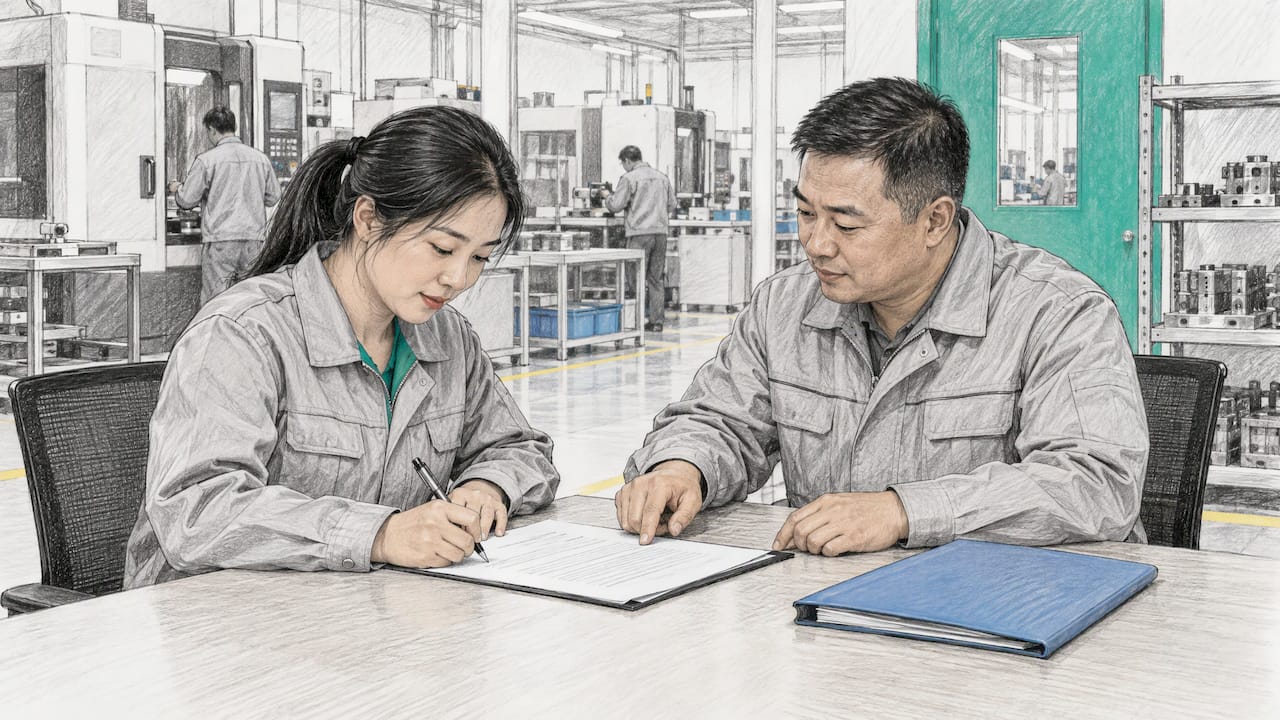
The safest way to prototype in China is to treat IP protection as a sequence you finish before the first CAD file leaves your network: register rights in China, sign an agreement written for Chinese factories, send each supplier only what it needs, and keep a record of who received what. Each step is cheap compared with the cost of finding your design on a marketplace listing. At WJ Prototypes, we work with product designers, R&D teams and procurement managers who send us SLA, SLS, MJF, DMLS, CNC, sheet metal, casting and molding jobs, and this is the order we would work through before sharing any design with any supplier.
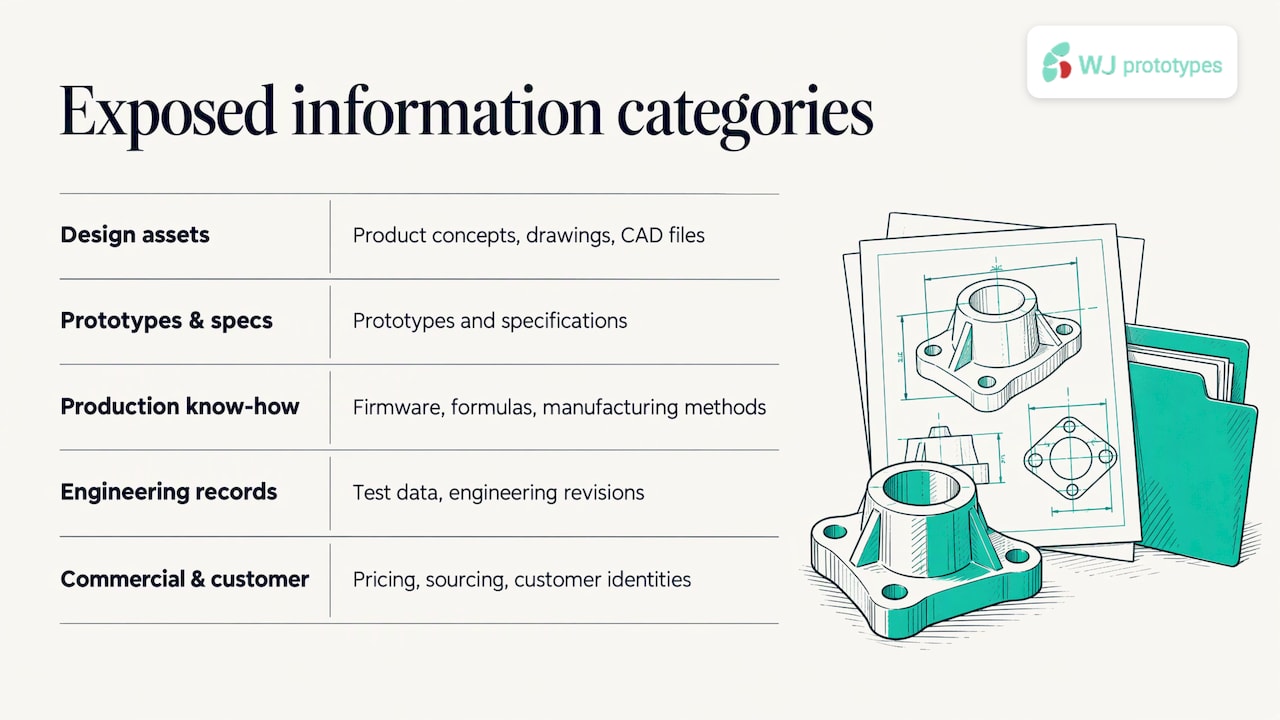
Most teams think of IP as the patent. In a prototyping job, the exposed material is much wider. One China-focused law firm lists product concepts, drawings and CAD files, prototypes, specifications, formulas, manufacturing methods, firmware, bills of materials, pricing and sourcing information, customer identities, test data and engineering revisions. A quote request alone can carry half of that.
The main risk is also not what most people picture. The same source explains that the typical problem is a factory using your information itself, passing it to affiliates or subcontractors, making the product for another buyer, or selling to your customers directly. That is why the checklist below is built around use and access, not only around secrecy.
The USPTO’s China IP toolkit states that US registration confers no rights in China. Plan your filings with the China National Intellectual Property Administration (CNIPA), the body that handles patents, designs and trademarks there.
| Asset | What to do in China | Why it matters |
|---|---|---|
| Brand name and logo | File a trademark with CNIPA, with defensive filings across relevant classes | China is first-to-file, so a bad-faith filer can register your brand before you do |
| Product design and shape | File patents or design patents in China | A US filing does not cover China |
| Drawings, manuals, software | Register copyright voluntarily with the National Copyright Administration | The USPTO calls this highly recommended because a Chinese certificate is easier to use in enforcement than a US one that needs translation, notarization and legalization |
| Formulas, processes, unpublished know-how | Protect as trade secrets through controls, not registration | No registration with PRC authorities is required, but you must take confidentiality measures |
For firmware or source code, Harris Sliwoski advises registering the US copyright before external demos or vendor access, and registering with the Copyright Protection Center of China before any PRC party sees the code. Deposits are typically excerpts, with options to seal or redact sensitive portions.
The Department of Commerce’s trade.gov guidance suggests building a basketful of overlapping rights, for example copyright plus trademark, rather than relying on one form of protection. If a design is still at concept stage and you are not ready to file a patent, filing the trademark and registering the copyright in the drawings still costs little and gives you something to enforce.
We cover the practical side of this in our guide to IP protection when you prototype overseas.
China’s Anti-Unfair Competition Law, in its 2025 revision in force since October 15, 2025, defines a trade secret as technical, operational or commercial information that is not publicly known, has commercial value and is subject to appropriate confidentiality measures. The third part is the one teams skip. If you cannot show measures, you may not have a protectable secret.
The State Administration for Market Regulation then issued new trade-secret provisions, effective June 1, 2026. They replaced the 1995 rules and recognize information with actual or potential commercial value, including phased R&D results and failed experimental data. That is useful for prototyping, where your iteration history is often as valuable as the final part.
In practice:
A standard NDA only stops disclosure. A factory that never discloses anything but quietly builds your product for someone else has not broken it. An NNN agreement adds non-use and non-circumvention. Harris Sliwoski recommends that it name who may receive information and for what purpose, make the contracting party responsible for affiliates, subcontractors and employees, and define permitted use while prohibiting competitive use.
Yucheng IP Law lists situations where one is warranted: sharing proprietary processes or formulas, requesting samples or prototypes based on a unique design, discussing OEM arrangements and sharing pricing. Rapid prototyping hits at least two of those on day one.
For enforceability, GBAI advises the following:
Have a lawyer admitted to practice in China review the agreement. This is the one step where the cost of a mistake is a contract you cannot enforce.
Harris Sliwoski flags a common trap: an agreement binds a Hong Kong sourcing company, while the mainland factory that holds your CAD files has signed nothing. You then have contract rights against the party next to the problem and none against the party causing it. Any entity that receives sensitive information, does essential engineering or holds tooling should sign the NNN itself. Ask for the legal name of the facility that will run your job and match it to the signature block.
Paying for a prototype or a tool does not make you the owner of everything created along the way. Chinese lawyer Ada Ren explains two defaults that surprise US buyers:
So your contract should say who owns improvements, which economic rights are assigned or licensed, for what territory and term, whether source files are delivered, and who can modify or create derivatives. GBAI also recommends assigning project results to the customer. If a PRC patent is ever transferred, the same source notes it needs a written agreement and registration with CNIPA before it takes effect.
If the job involves molds or casting tools, add a tool register with serial numbers and storage locations, and state that the tools are yours and cannot be used for other customers. Our article on Shenzhen’s tooling ecosystem shows how tools move from CAD to production, which helps you decide what the register should include.
The USPTO’s April 2026 IP developments briefing recommends limiting access, requiring NDAs, using technical controls to monitor data flows, vetting partners carefully and compartmentalizing production. For a prototype team that translates into concrete habits:
Ada Ren notes that a blanket NDA clause is weak if files circulate without control, and that protection depends on provable controls: least-privilege access, labels, download and disclosure logs, subcontractor approval, employee offboarding and sample destruction. She also recommends preserving version history at prototype and design-freeze stages, and keeping test purchases and competing-product evidence from before a dispute.
A workable minimum for a small team:
The same discipline applies to non-mechanical parts. If your prototype includes custom control panels or membrane interfaces, the membrane switch prototype selection guide shows how a stage-by-stage approach to prototypes keeps specifications documented from first sample to final design.
Trade.gov’s commercial guide warns that trade-secret theft is common in China and that judicial enforcement is often unsuccessful, which is why the earlier steps matter. If you do need to act, the main routes are these:
Every one of these routes works better when your files are dated, your registrations exist and your agreements name the right parties. Talk to a US IP attorney and a PRC-qualified lawyer before sending any demand letter.
| Before | Done? |
|---|---|
| Trademark filed with CNIPA, including defensive classes | |
| Patents or design patents filed in China where relevant | |
| Copyright registered (drawings, software) | |
| Secret files identified, labeled and version-dated | |
| NNN agreement in Chinese, PRC law, seal and authorized signature | |
| Signing entity matches the facility holding your files | |
| Ownership and improvement terms written into the contract | |
| Product split so no supplier sees the whole design | |
| Transfer log, approver and subcontractor approval rule in place | |
| Return or destruction of files and samples confirmed at project close |
If you want to run this checklist on a real job, our instant online quote is the starting point. We offer SLA, SLS, FDM, MJF and DMLS 3D printing, CNC machining, sheet metal fabrication, vacuum casting, injection molding and die casting, with no minimum order quantity, so you can split a product across processes and order only the parts you need. Each project has a dedicated project manager, and we are an ISO certified manufacturer. For file handling specifics, read how we approach protecting design files in China.
Most IP trouble in China starts with a process gap, not a villain. A design goes out in a quote request, three people forward it, nobody records who has it, and a year later nobody can say where it went.
We build our work for B2B engineering and procurement teams who need prototypes and low-volume runs without minimum order quantities. That matters for IP because you can order a single part per process and keep the rest of your design away from the supplier. A dedicated project manager gives your team one point of contact for files, questions and changes, which makes a transfer log easy to keep.
Our advice is the sequence in this article: file in China, sign an agreement written for Chinese factories, share only what each job needs, and document everything. Teams that do this before the first quote request are in a much stronger position than teams that try to reconstruct it after a dispute.
Nas
No. The USPTO states that US registration confers no rights in China, so patents, designs and trademarks must be filed with CNIPA. Trademarks are first-to-file there, which is a reason to file early, before you start sharing a brand name with suppliers.
If the design is unique, or the quote involves drawings, specifications or pricing you would not want repeated, yes. Law firms that work on China manufacturing list sample and prototype requests based on a unique design as a situation where an NNN is warranted. A short NNN costs far less than a lost product advantage.
Only the contract decides. According to Chinese counsel, if the contract is silent, copyright in commissioned drawings can default to the supplier, and the right to apply for a patent on a commissioned invention can too. State ownership, license scope, source-file delivery and improvement rights in writing.
No, the USPTO toolkit says trade-secret protection needs no registration with PRC authorities. You do need to show confidentiality measures such as labels, restricted access, transfer logs and signed agreements, because Chinese law protects information that is subject to appropriate controls.
Preserve the evidence first: capture and authenticate listings and keep your dated design records. Then speak with a US IP attorney and a PRC-qualified lawyer about options such as a Chinese administrative investigation, platform takedowns or customs recordation, and hold off on demand letters until they advise.
SERVICES
RESOURCES