



- Room 1807, Unit 9, Building 2, Shangxing Commercial Street, Shangde Road, Shangxing Community, Xinqiao Subdistrict, Bao'an District, Shenzhen City, China
CONTACT US

WhatsApp


Contact Us
Our team is on stand by, waiting toassist you.

Videos
A large collection of educational videos and tutorials.

About Us
Learn about our company, leadership, and mission totransform manufacturing.

Privacy Policy
Applies to all personal information collected through and/or processed in connection.
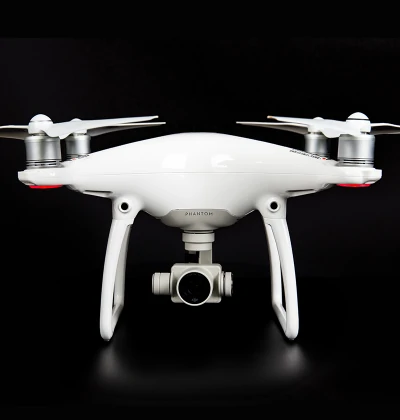

Aerospace & UAV
WJ Prototypes is your 3D manufacturing partner from prototype to large scale production.

Consumer Electronics
New Product Introduction Solutions for Consumer Electronics.

Robotics & Automation
Need some assistance bringing your robotic device or parts from the sketch-board to reality?

Medical Devices
The medical industry needs high quality, dependable and safe parts and products.

Automotive
New Product Introduction Solutions for Automotive

Industrial Machinery
The main purpose of industrial prototyping is to take the product from drawings into the real world.
TL;DR:
Chinese metal box manufacturers offer integrated fabrication that covers design, cutting, welding, and assembly, reducing lead times and errors. They ensure quality through process controls, strict inspections, and compliance with standards like NEMA and ISO, while materials and design features are selected based on application needs. Proper sourcing involves detailed RFQs, design review, sample approval, and verifying certification, avoiding common pitfalls like under-specification and Vague finish standards.
China is the world's leading source for custom metal enclosures, with manufacturers offering fully integrated fabrication from raw sheet metal to finished, tested assemblies. A metal boxes manufacturer in China typically handles laser cutting, CNC bending, welding, surface finishing, and assembly under one roof. This matters for procurement teams because it compresses lead times, reduces coordination costs, and gives engineers direct access to Design for Manufacturing (DFM) expertise. The result is a production path that scales from prototype quantities to high-volume runs without switching suppliers.
Explore competitive Metal Boxes Manufacturing Services with expert support from WJ Prototypes.
Whether you're comparing suppliers or looking to optimize costs, our team can help you evaluate the best option for your project.
👉 Request A Quote now or email us at info@wjprototypes.com to get started.
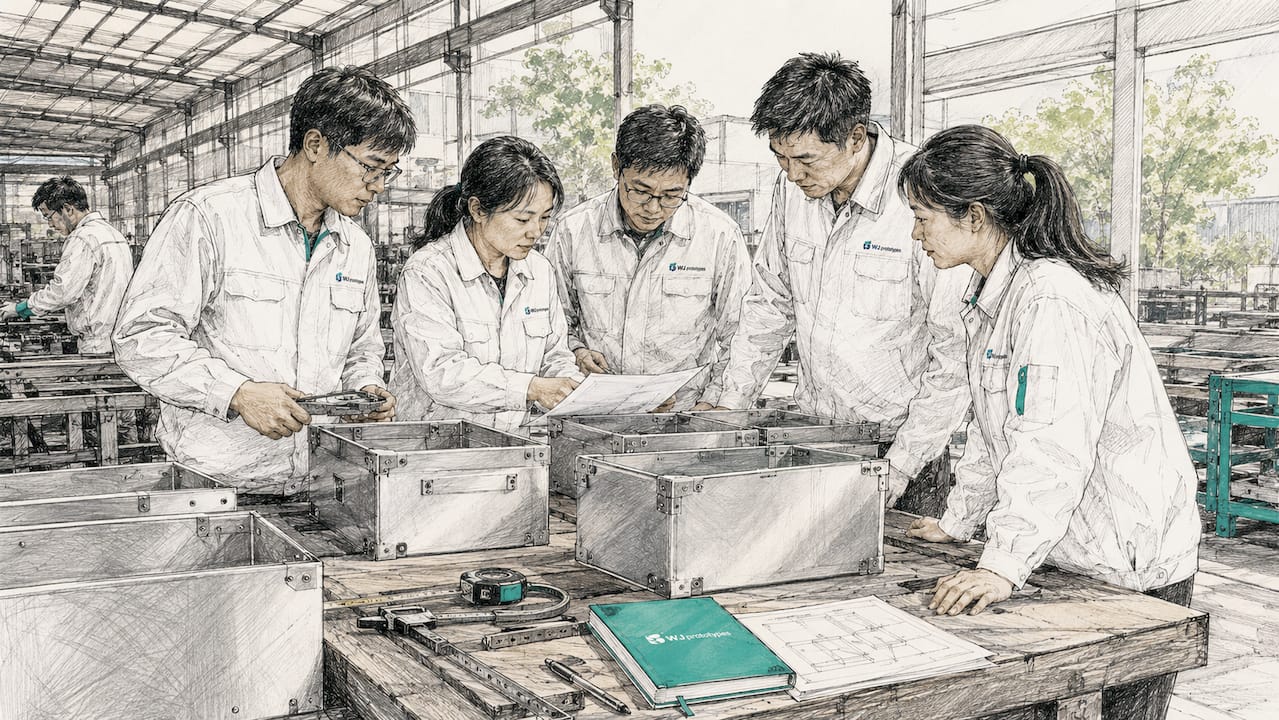
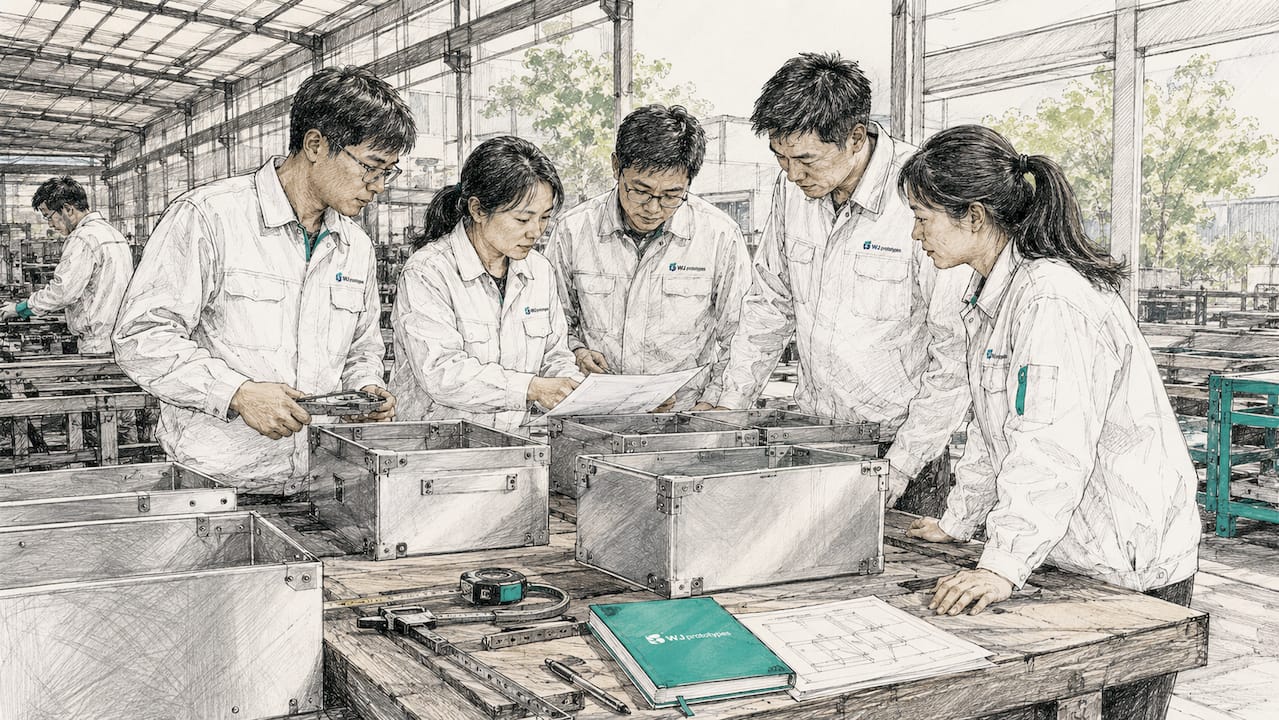
Chinese sheet metal fabrication facilities deliver end-to-end production, not just cutting and bending. One-stop fabrication services cover design optimization, laser cutting, CNC bending, welding, powder coating, and final assembly in a single facility. That integration removes the handoff errors that occur when separate vendors handle different stages.
Material options are broad. Top manufacturers work with galvanized steel, stainless steel, aluminum, and carbon steel, each suited to different load, corrosion, and weight requirements. Skilled workers averaging 12+ years of experience handle complex OEM requests and provide tailored solutions across all four material families.
Assembly capacity is a differentiator worth examining before you place an order. Professional assembly teams of 10 or more specialists focus exclusively on complex enclosures and housings, which reduces fit-and-finish errors on multi-component builds. Common output types include electrical enclosures, instrument housings, storage boxes, industrial control cabinets, and custom packaging containers.
Pro Tip:Request a factory tour video or live walkthrough before committing to a supplier. A facility with dedicated assembly bays and labeled quality checkpoints signals process maturity, not just production capacity.
The full fabrication sequence at a capable Chinese metal container factory runs as follows:
Quality in metal box production China depends on process controls built into every fabrication stage, not just end-of-line inspection. The most reliable Chinese metal box manufacturers run pre-installation fitment checks as a standard step, not an optional add-on. Pre-installation hardware and seal checks prevent over 90% of field issues found after shipment in OEM applications. That statistic reflects how much damage a single missed fitment problem can cause once a product is in the field.
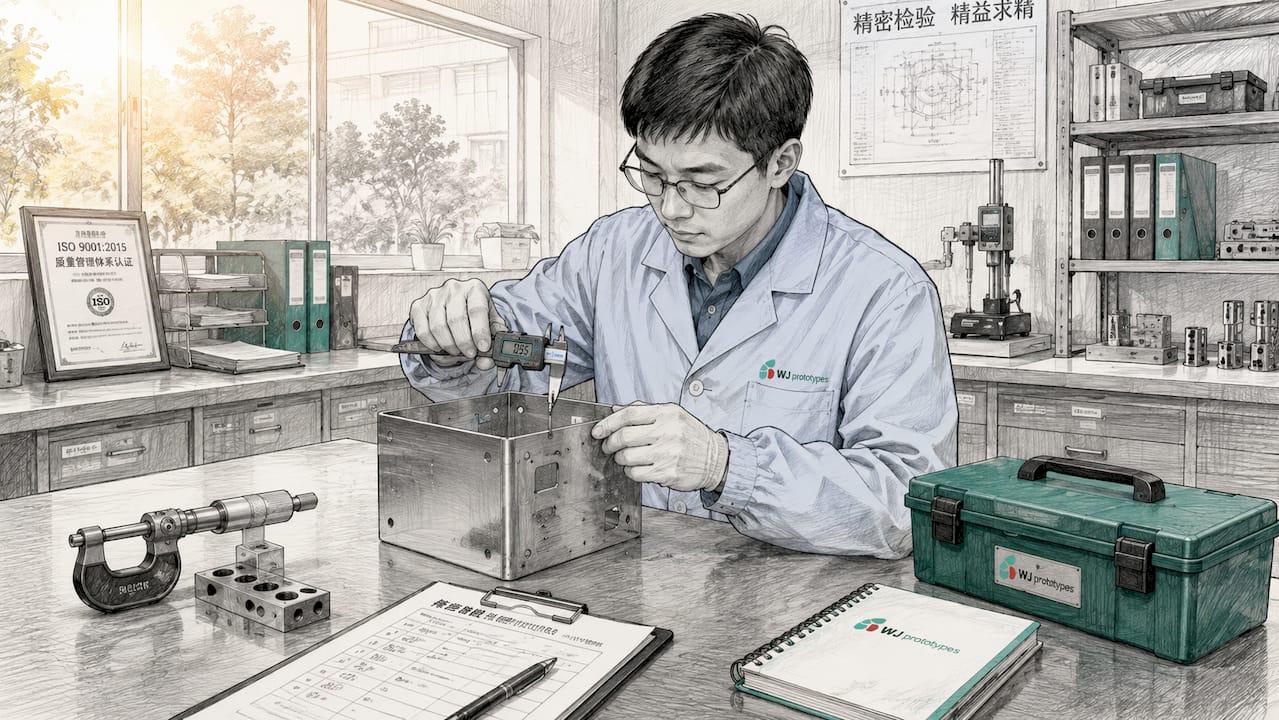
Compliance with recognized standards is the second pillar of quality assurance. Manufacturers serving industrial clients build to NEMA ratings, which define protection levels against dust, water, and corrosive atmospheres. Surface finish specifications for corrosion resistance are equally critical, particularly for electronics enclosures destined for outdoor or coastal installations.
A structured quality workflow at a reputable facility follows these steps:
Pro Tip: Ask your manufacturer for inspection reports from a recent production batch. A supplier who shares actual measurement data, not just a quality certificate, operates a real quality system.
Experienced manufacturers also employ quality control practices that mirror those used in CNC machining, including traceability records and nonconformance documentation. That level of rigor matters when you are sourcing bulk metal boxes for regulated industries like medical devices or aerospace ground support equipment.
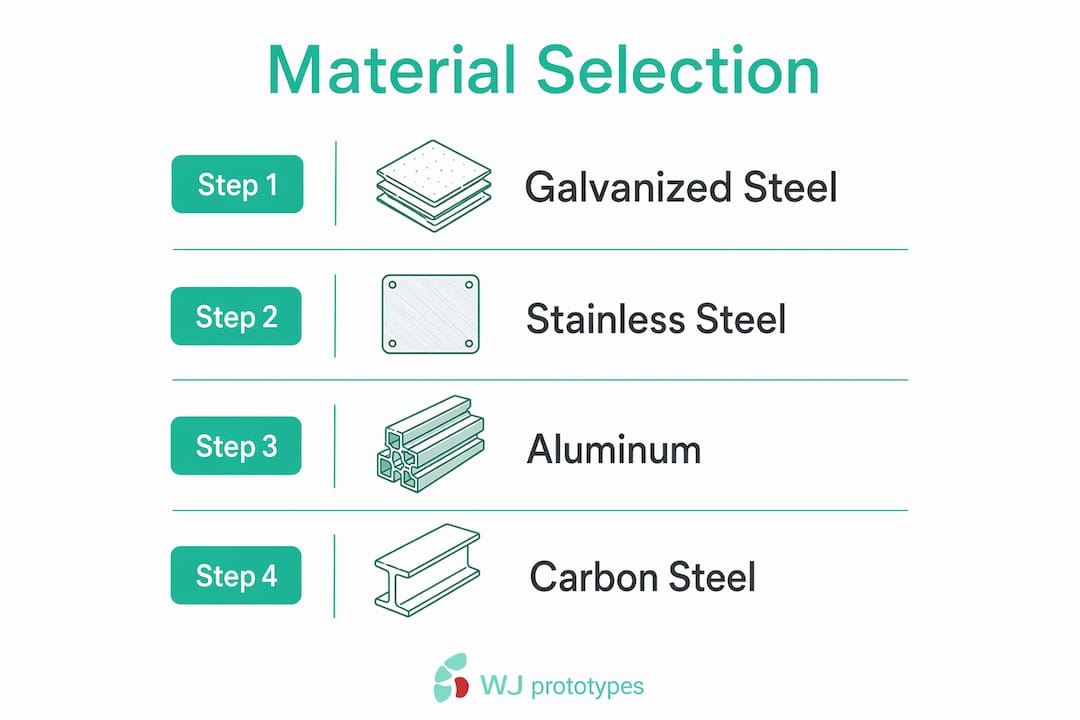
Material selection is the first structural decision in any metal box project, and it has direct consequences for cost, weight, and service life. The table below summarizes the four materials most commonly offered by Chinese metal box manufacturers.
| Material | Key properties | Best applications |
|---|---|---|
| Galvanized steel | High strength, good corrosion resistance, lower cost | General industrial enclosures, storage boxes |
| Stainless steel | Excellent corrosion resistance, hygienic surface | Food processing, coastal environments, medical |
| Aluminum | Lightweight, good thermal conductivity, natural oxide layer | Electronics housings, aerospace, portable units |
| Carbon steel | Very high strength, lower corrosion resistance without coating | Structural frames, heavy-duty industrial boxes |
Surface finishing choices affect durability as much as material selection does. Powder coating adds a hard, impact-resistant layer and is available in any RAL color. Anodizing is the standard for aluminum and creates a surface that resists scratching without adding significant thickness. Electroplating with nickel or zinc extends corrosion resistance on steel parts.
Special design features separate commodity boxes from application-specific enclosures. NEMA-rated sealing and specialized gasket systems are more critical than base material choice for longevity in coastal or chemically aggressive environments. EMI shielding, ventilation louvers, and cable entry glands are additional features that experienced manufacturers can integrate during fabrication rather than as aftermarket additions.
Early design collaboration with your manufacturer on these features avoids costly tooling changes later. A manufacturer who reviews your design before quoting and offers DFM feedback is worth more than one who simply accepts your files and starts cutting.
Explore competitive Metal Boxes Manufacturing Services with expert support from WJ Prototypes.
Whether you're comparing suppliers or looking to optimize costs, our team can help you evaluate the best option for your project.
👉 Request A Quote now or email us at info@wjprototypes.com to get started.
Plate deformation, non-compliant powder coatings, and budget overruns are the three most frequent complaints from buyers sourcing custom metal boxes in China. Pre-installation testing and integrated quality control address all three when they are built into the manufacturer's standard process. The problem is that many buyers do not ask whether these steps exist until after a defective shipment arrives.
The sourcing pitfalls that cause the most damage include:
Verifying manufacturer capabilities before ordering protects your project. Ask for a capability statement that lists machine types, maximum sheet dimensions, and material certifications. A manufacturer who serves over 500 global companies and ships more than 10,000 custom enclosures annually has the production depth to handle complex and time-sensitive orders. That volume also implies a quality system capable of consistent output.
A structured sourcing process reduces risk and produces better outcomes than ad hoc communication. The steps below reflect how experienced procurement teams work with metal packaging suppliers from first contact to delivery.
The sheet metal fabrication workflow from prototype to volume production follows a predictable path when both parties communicate clearly at each stage. Suppliers who offer post-production support and are willing to document their process in writing are the ones worth building long-term relationships with.
The most reliable metal box manufacturers in China combine integrated fabrication, DFM collaboration, and pre-installation quality testing to deliver consistent, application-ready enclosures at scale.
| Point | Details |
|---|---|
| Integrated services reduce risk | Choose suppliers who handle design, cutting, welding, finishing, and assembly in one facility. |
| DFM review prevents costly errors | Request design feedback before production starts to catch structural and cost issues early. |
| Pre-installation testing is non-negotiable | Suppliers who test hardware fit and seal integrity before shipping prevent over 90% of field failures. |
| Material choice drives application fit | Match galvanized steel, stainless steel, aluminum, or carbon steel to your environment and load requirements. |
| Verify certifications independently | Confirm ISO and NEMA compliance with certificate numbers, not just website claims. |
The most expensive mistake I see procurement teams make is treating a metal box as a commodity. They send a drawing, accept the lowest quote, and skip the sample stage to save two weeks. Then they receive 500 units with deformed lids and powder coat that flakes at the edges. The rework cost and schedule delay far exceed whatever they saved on unit price.
The manufacturers worth working with are the ones who push back on your design. A supplier who asks why you specified a 2mm wall when 1.5mm meets your load requirement is thinking about your project, not just filling an order. That kind of early design input is the clearest signal that a manufacturer has genuine engineering depth.
I have also seen buyers underestimate the importance of sealing specifications. A box that looks perfect on the bench can fail within months in a coastal or industrial chemical environment if the gasket material and NEMA rating were not specified correctly. The sealing and finish standards matter more than the base material in those conditions. Buyers who learn this after a field failure learn it expensively.
The practical advice is simple: spend more time on the RFQ and the sample stage than feels necessary. The manufacturers who welcome that rigor are the ones who will deliver consistently at volume.
— Nas
WJ Prototypes operates as an ISO-certified manufacturer in China with direct capabilities in sheet metal fabrication and CNC machining, covering the full production path from design review to finished enclosure. The team works with galvanized steel, stainless steel, aluminum, and carbon steel, and provides DFM feedback as a standard part of the quoting process.
For businesses sourcing custom metal boxes, WJ Prototypes offers instant online quoting, prototype production, and volume manufacturing with global delivery. The CNC machining services complement sheet metal work for projects that require machined features, threaded inserts, or precision-fit components. Request a quote directly on the WJ Prototypes website to get material options, lead times, and pricing for your specific application.
Explore competitive Metal Boxes Manufacturing Services with expert support from WJ Prototypes.
Whether you're comparing suppliers or looking to optimize costs, our team can help you evaluate the best option for your project.
👉 Request A Quote now or email us at info@wjprototypes.com to get started.
Chinese manufacturers produce electrical enclosures, instrument housings, industrial control cabinets, storage boxes, and custom packaging containers using materials including steel, aluminum, and galvanized sheet metal.
Request ISO certification numbers and verify them independently, ask for inspection reports from recent production batches, and require a physical first-article sample before approving full production.
Design for Manufacturing (DFM) feedback is a review of your 3D and 2D files by the manufacturer's engineers before production starts. It identifies structural weaknesses and cost reduction opportunities that prevent expensive errors during mass production.
Stainless steel with NEMA-rated sealing is the standard choice for coastal, chemical, or high-humidity environments. The sealing system and surface finish often matter more than the base material for long-term corrosion resistance.
Minimum order quantities vary by manufacturer and complexity. Many Chinese metal packaging suppliers accept prototype quantities of one to ten units, with volume pricing starting at higher quantities that depend on part complexity and tooling requirements.
CNC Machining Instructions | Step-by-Step Guide to Sourcing from China
Cost-Effective Prototyping in China | Guide for UK Manufacturers & Engineers
Sheet Metal Fabrication in China - Trends and Innovations
Sheet Metal Fabrication UK: China Sourcing Guide | WJ Prototypes
Explore competitive Metal Boxes Manufacturing Services with expert support from WJ Prototypes.
Whether you're comparing suppliers or looking to optimize costs, our team can help you evaluate the best option for your project.
👉 Request A Quote now or email us at info@wjprototypes.com to get started.
SERVICES
RESOURCES