




- Room 1807, Unit 9, Building 2, Shangxing Commercial Street, Shangde Road, Shangxing Community, Xinqiao Subdistrict, Bao'an District, Shenzhen City, China
CONTACT US

WhatsApp



Contact Us
Our team is on stand by, waiting toassist you.

Videos
A large collection of educational videos and tutorials.

About Us
Learn about our company, leadership, and mission totransform manufacturing.

Privacy Policy
Applies to all personal information collected through and/or processed in connection.


Aerospace & UAV
WJ Prototypes is your 3D manufacturing partner from prototype to large scale production.

Consumer Electronics
New Product Introduction Solutions for Consumer Electronics.

Robotics & Automation
Need some assistance bringing your robotic device or parts from the sketch-board to reality?

Medical Devices
The medical industry needs high quality, dependable and safe parts and products.

Automotive
New Product Introduction Solutions for Automotive

Industrial Machinery
The main purpose of industrial prototyping is to take the product from drawings into the real world.
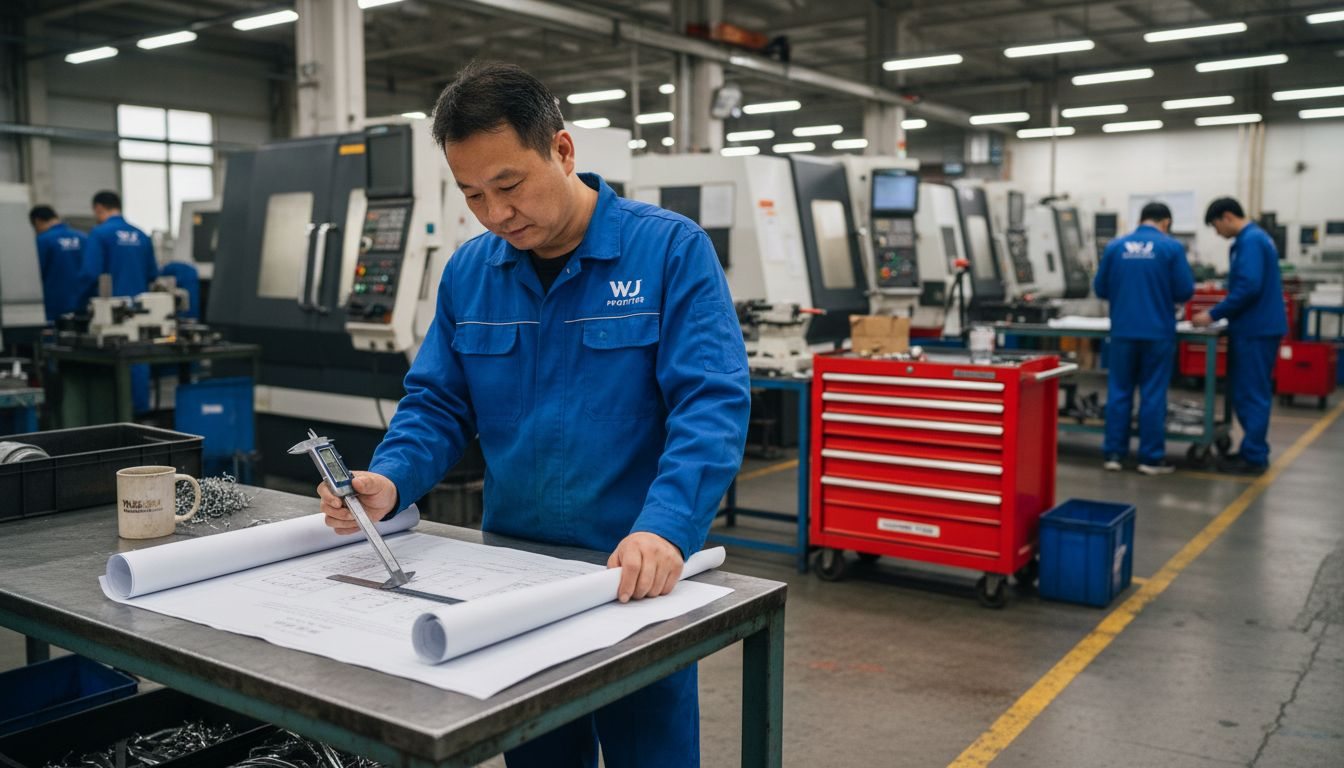
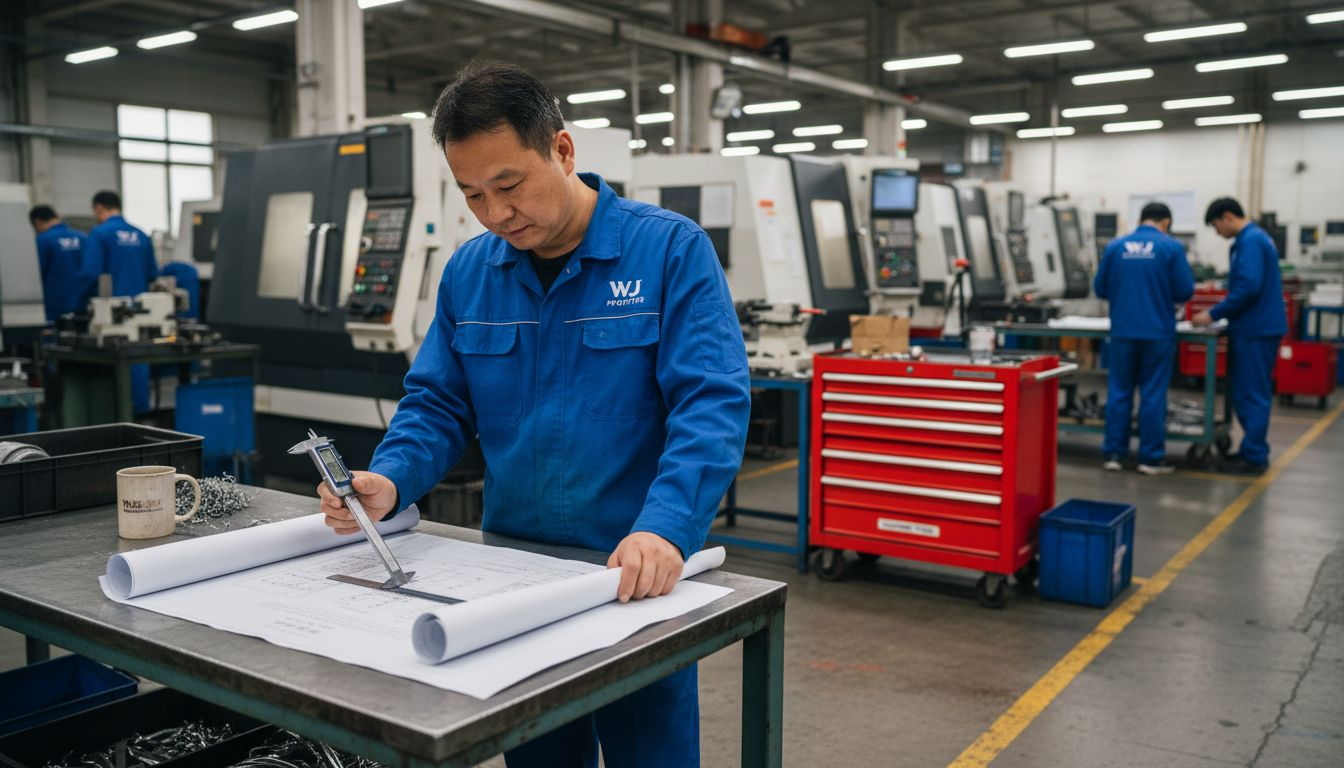
British, Canadian, and American engineers are discovering that over 60 percent of North American product development managers now turn to Chinese CNC machining for prototype production. When aerospace and automotive innovation hinges on rapid precision, getting the details right from the outset changes everything. This guide breaks down every essential step so you achieve high-quality results, cost savings, and efficient project timelines—clear, practical advice for modern design teams with urgent demands.
| Key Point | Explanation |
|---|---|
| 1. Define Detailed Project Requirements | Clearly document specifications ensuring precision, material selection, and functional needs for successful manufacturing. |
| 2. Evaluate and Select Reliable Suppliers | Conduct thorough research to assess suppliers based on qualifications, certifications, and their ability to meet technical standards. |
| 3. Request Detailed Quotations | Prepare a comprehensive RFQ to understand costs, manufacturing capabilities, and facilitate transparent comparisons among suppliers. |
| 4. Approve Prototypes Rigorously | Evaluate prototypes against specifications, ensuring they meet your requirements before proceeding to mass production. |
| 5. Ensure Quality and Plan Shipping | Implement quality checks and develop an efficient shipping strategy to guarantee safe delivery of components to your location. |
Successfully sourcing CNC machining services in China begins with meticulously defining your project requirements. This crucial step determines the precision, cost efficiency, and overall success of your manufacturing process.
Start by comprehensively documenting the technical specifications of your part or component. Understanding machine tool selection processes helps minimise potential production challenges. Identify critical parameters including material type, geometric complexity, dimensional tolerances, surface finish requirements, and anticipated production volume. Consider the mechanical properties needed for your specific application, such as strength, flexibility, or heat resistance.
Material selection plays a pivotal role in defining project requirements. Different materials demand unique machining approaches and tooling strategies. For instance, aluminium requires different cutting parameters compared to stainless steel or titanium. Assess your component’s functional requirements alongside manufacturability to ensure optimal performance and cost effectiveness.
Electronic design files such as CAD models become essential communication tools when working with Chinese manufacturers. Prepare high quality 3D models with precise geometric details and annotate critical dimensions thoroughly. Include technical drawings that clearly specify tolerance ranges, surface finish expectations, and any special manufacturing instructions.
Professional Advice: Invest time in creating comprehensive technical documentation that leaves no room for misinterpretation when communicating with Chinese CNC machining providers.
Navigating the landscape of Chinese CNC machining suppliers requires a strategic and methodical approach to ensure you partner with reliable manufacturers who can meet your precise engineering requirements. This section will guide you through a comprehensive evaluation process that minimises risks and maximises potential manufacturing partnerships.
Begin by conducting thorough online research and leveraging professional networks to compile an initial list of potential CNC machining providers. Investigating Chinese manufacturing providers can help you understand the range of capabilities and specialisations available. Examine their digital presence critically looking for indicators of professionalism such as detailed company websites, comprehensive service descriptions, quality certifications like ISO 9001, and robust portfolios demonstrating prior project work. Key aspects to scrutinise include manufacturing equipment capabilities, quality control processes, engineering expertise, and previous experience in your specific industry sector.
Develop a structured assessment framework to systematically evaluate potential suppliers. Request comprehensive quotations that include detailed breakdowns of material costs, machining processes, surface treatments, and potential additional expenses. Ask for sample parts or prototype demonstrations to validate their technical capabilities and quality standards. Consider factors beyond pricing such as communication responsiveness, technical support quality, intellectual property protection policies, and potential long term collaboration potential. Pay close attention to their engineering team’s qualifications, their technology investment levels, and their ability to provide technical recommendations during the design optimisation phase.
Communicate your technical requirements with extreme precision. Prepare detailed technical documentation including 3D CAD models, engineering drawings, material specifications, dimensional tolerances, and functional performance expectations. This comprehensive approach demonstrates your seriousness and helps potential suppliers provide accurate and competitive proposals.
Below you will find a useful comparison of key supplier evaluation criteria and their business impact:
| Evaluation Criterion | Why It Matters | Potential Business Impact |
|---|---|---|
| Quality Certification (e.g., ISO 9001) | Proven process reliability | Reduced defect risk |
| Engineering Expertise | Advanced technical support | Enhanced part performance |
| IP Protection Policies | Secure proprietary data | Minimised legal risk |
| Communication Responsiveness | Fast problem resolution | Shorter project lead time |
Professional Advice: Always arrange video conferences or factory visits whenever possible to personally verify a supplier’s actual manufacturing capabilities and operational standards before committing to a long term partnership.
Requesting and comparing quotations is a critical phase in selecting the right Chinese CNC machining supplier for your project. This strategic process will help you understand pricing structures, manufacturing capabilities, and potential collaboration challenges before making a final commitment.
Prepare a comprehensive request for quotation (RFQ) package that includes precise technical specifications, 3D CAD models, engineering drawings, material requirements, surface finish expectations, and production volume estimates. Examining CNC machining lead times in China can provide valuable insights into potential production timelines. Request itemised quotations that break down costs including raw material expenses, machining processes, surface treatments, quality inspections, packaging, and potential shipping charges. Ensure each supplier provides a detailed cost breakdown that allows for transparent and accurate comparison.

Develop a systematic evaluation matrix to compare quotations objectively. Create a scoring system that considers multiple factors beyond simple pricing such as technical capability, communication quality, delivery timeframes, quality certifications, and potential value added services. Pay attention to variations in quotation details that might indicate different understanding levels of your technical requirements. Look for suppliers who provide additional engineering recommendations or design optimisation suggestions rather than simply responding with a price.

Carefully review intellectual property protection policies and request non disclosure agreements before sharing sensitive technical documentation. Seek clarification on potential additional costs such as tooling expenses, prototype development charges, and minimum order quantities. Be prepared to negotiate and understand that the lowest price does not always represent the best overall value for your specific manufacturing needs.
Professional Advice: Always request quotations from a minimum of three different suppliers to ensure a comprehensive market perspective and leverage competitive pricing strategies.
Once initial prototypes are manufactured, a rigorous evaluation process becomes crucial to ensure your design meets precise engineering specifications and functional requirements. This stage represents a critical checkpoint in transforming your design concept into a manufacturable product.
Implementing quality management systems provides a structured framework for systematically assessing prototype performance. Conduct a comprehensive dimensional inspection using advanced coordinate measuring machines to verify geometric tolerances, comparing actual measurements against original technical specifications. Perform functional testing that simulates real world operational conditions to validate mechanical performance, material durability, and structural integrity. Examine surface finish characteristics, material consistency, and overall manufacturing precision. Request detailed measurement reports and 3D scan comparisons that document every critical dimension and geometric feature.
Establish clear communication protocols with your Chinese manufacturing partner during the prototype approval phase. Schedule video conferences to review measurement reports collaboratively, allowing immediate discussions about potential design modifications or manufacturing adjustments. Request multiple prototype iterations if initial samples do not completely satisfy your technical requirements. Pay particular attention to potential manufacturing variations that might impact part functionality, ensuring each prototype progressively approaches your exact engineering specifications.
Develop a structured approval matrix that defines explicit acceptance criteria across multiple evaluation dimensions. This matrix should include quantitative metrics for dimensional accuracy, material properties, surface finish quality, and functional performance. Document every prototype iteration meticulously, maintaining a comprehensive record of design evolution and manufacturing improvements.
Professional Advice: Allocate sufficient time and resources for prototype evaluation to prevent costly production errors and ensure your final manufactured components meet the highest engineering standards.
The final stage of your CNC machining journey involves comprehensive quality verification and strategic international shipping arrangements. This crucial phase ensures your manufactured components meet precise engineering standards and arrive safely at your designated location.
Implementing rigorous quality management principles provides a systematic approach to final product inspection. Conduct a statistically significant random sampling process to validate dimensional accuracy, material consistency, and functional performance across your entire production batch. Engage third party quality inspection agencies specialising in international manufacturing verification to perform independent assessments. These professional inspectors will evaluate critical parameters including geometric tolerances, surface finish quality, material properties, and overall manufacturing precision.
Develop a comprehensive shipping strategy that addresses potential logistical challenges associated with international freight transportation. Select appropriate shipping methods based on your specific requirements considering factors such as delivery urgency, component fragility, and overall consignment volume. Evaluate different international shipping options including air freight for time sensitive components and sea freight for larger production volumes. Negotiate precise shipping terms that clearly define responsibility transfer points responsibilities including packaging standards, insurance coverage, and customs clearance protocols.
Ensure all packaging meets international shipping standards to protect your precision engineered components during transportation. Use specialised packaging materials that provide robust protection against mechanical shock, vibration, humidity, and temperature variations. Include detailed documentation including comprehensive technical specifications, quality inspection certificates, material test reports, and precise handling instructions to facilitate smooth customs clearance and protect your shipment.
Here is a summary comparing different international shipping methods for precision CNC components:
| Shipping Method | Delivery Timeframe | Suitable Consignment Type | Cost Level |
|---|---|---|---|
| Air Freight | 3-7 days worldwide | Urgent, fragile, small batches | High |
| Sea Freight | 2-6 weeks globally | Large, non-urgent volumes | Low |
| Courier Services | 1-5 days regionally | Prototypes, samples | Very High |
| Rail Freight | 2-3 weeks (Eurasia) | Medium batches, moderate urgency | Medium |
Professional Advice: Always maintain a contingency budget and timeline for potential shipping delays or unexpected quality verification requirements to prevent project disruptions.
Navigating the complexities of defining precise project requirements, evaluating reliable suppliers, and managing prototype approvals in Chinese CNC machining can be overwhelming. If you seek to eliminate uncertainties related to material selection, technical documentation, or quality assurance, WJ Prototypes offers expert support tailored to your needs. Our ISO certified manufacturing and advanced CNC machining services ensure exceptional dimensional accuracy, functional performance, and on-time delivery for your prototypes and small to medium production runs.
Experience a seamless manufacturing journey with WJ Prototypes by leveraging our fast quoting system and comprehensive engineering expertise. Discover how our global delivery capacity and robust quality control processes align perfectly with your sourcing challenges discussed in the article. Take control of your project today by visiting WJ Prototypes and exploring our CNC Machining services to ensure your design transforms into a precision-engineered product without delay.
Start by thoroughly documenting your part’s technical specifications, including material type, geometric complexity, and dimensional tolerances. Use high-quality CAD models to communicate your requirements clearly to Chinese manufacturers.
Assess suppliers based on quality certifications, manufacturing capabilities, communication responsiveness, and engineering expertise. Develop a structured evaluation framework to compare their quotations, focusing on both price and additional services offered.
Prepare a clear request for quotation package that includes detailed specifications, CAD models, and production volume estimates. Create a systematic evaluation matrix to objectively compare suppliers based on pricing, technical capability, and potential added value services.
After prototype approval, conduct a thorough quality inspection and request detailed measurement reports. Maintain clear communication with your manufacturing partner to address any necessary design modifications and document each iteration carefully.
Implement a rigorous shipping strategy by choosing appropriate methods based on urgency and component fragility. Ensure all packaging meets international shipping standards and includes necessary documentation for smooth customs clearance.
Maintain a contingency budget and timeline to accommodate potential shipping delays or unexpected quality verification needs. Prepare to seek clarification from your manufacturer and allow for adjustments to your production schedule if necessary.
SERVICES
RESOURCES