



- Room 1807, Unit 9, Building 2, Shangxing Commercial Street, Shangde Road, Shangxing Community, Xinqiao Subdistrict, Bao'an District, Shenzhen City, China
CONTACT US

WhatsApp


Contact Us
Our team is on stand by, waiting toassist you.

Videos
A large collection of educational videos and tutorials.

About Us
Learn about our company, leadership, and mission totransform manufacturing.

Privacy Policy
Applies to all personal information collected through and/or processed in connection.
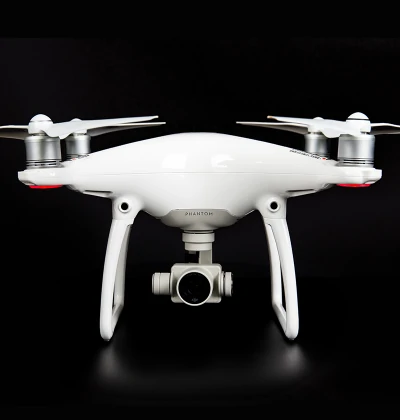

Aerospace & UAV
WJ Prototypes is your 3D manufacturing partner from prototype to large scale production.

Consumer Electronics
New Product Introduction Solutions for Consumer Electronics.

Robotics & Automation
Need some assistance bringing your robotic device or parts from the sketch-board to reality?

Medical Devices
The medical industry needs high quality, dependable and safe parts and products.

Automotive
New Product Introduction Solutions for Automotive

Industrial Machinery
The main purpose of industrial prototyping is to take the product from drawings into the real world.


PA12 is the safer default for stiff, dimensionally precise parts such as housings, enclosures and snap-fit assemblies. PA11 is the better pick when a part has to bend, flex or take a hit without cracking. The two nylons differ by a single carbon atom in the polymer chain, and that small change shifts toughness, feedstock and how a printed part behaves in service.
This guide compares them on the properties that decide real projects, shows where the published numbers mislead, and ends with a checklist for reading a datasheet before you commit a production run.
The numbers in the names count carbon atoms in the monomer chain: PA11 has eleven, PA12 has twelve. Both are semicrystalline thermoplastics in the nylon family, and both are used in powder-bed fusion, differing by one carbon atom in the backbone.
The feedstock is where the difference becomes tangible. PA11 is a 100% bio-based polymer made from castor oil, while PA12 is petroleum-derived. For teams with sustainability targets or customer-facing material declarations, that can matter as much as any mechanical property.
Both materials run on the main industrial nylon processes. If you want the process background first, our guide to SLS 3D printing covers how the powder bed works, and our MJF materials guide covers the HP Multi Jet Fusion side.
The table summarizes the general pattern reported by the manufacturer and academic sources cited below. Treat it as a way to shortlist, not as design data.
| Factor | PA11 | PA12 |
|---|---|---|
| Feedstock | Bio-based (castor oil) | Petroleum-based |
| Ductility and impact | Higher; suited to flexing and impact | Lower; stiffer and more brittle at break |
| Cold-temperature behavior | Stronger performer at very low temperatures | Good, but less forgiving |
| Moisture uptake | Typically higher | Typically lower |
| Dimensional stability in humidity | Good | Usually preferred for tight tolerances |
| Typical positioning (HP) | Functional and final parts | Functional prototypes, housings, enclosures |
| Typical cost position | Generally higher | Generally lower |
The clearest difference is ductility. The manufacturer of Rilsan PA11 states that it offers superior ductility, impact strength, abrasion and fatigue resistance compared with PA12, especially at very cold temperatures. That is a producer’s claim, so read it as the direction of the difference, not a guaranteed margin.
The practical reading is simple. If a part will be snapped on, bent repeatedly, dropped or loaded in a cold environment, PA11 gives you more room before it cracks. Engineers often review PA11 when ductility, impact tolerance or repeated flexing may matter.

There is also a design consequence. Because PA11 tolerates more strain, it allows thinner-wall designs, which can mean lighter parts, less waste and faster production. If you are weighing that trade, the same logic applies to any weight-driven redesign, which we cover in our materials guide on weight reduction.
The same Arkema page also notes that PA11 shows superior isotropic performance compared with PA12. In plain terms, PA11 parts tend to lose less strength along the Z axis. For a part with loads in several directions, that is a real advantage.
PA12 is the workhorse. It is the benchmark for technical nylon printing, and HP describes it as a strong, low-cost material for functional prototypes, complex assemblies, housings and enclosures. It is stiffer than PA11, which is exactly what you want for a housing that must hold its shape or a bracket that should not flex under load.
Moisture is the second reason to lean toward PA12. Academic work on conditioned printed polyamides notes that environmental conditions, particularly temperature and moisture, affect mechanical performance, and PA11 typically absorbs moisture at a higher rate than PA12. Parts that absorb less moisture move less when humidity changes, so PA12 is the usual choice for tight clearances and press fits.
The same study adds a useful perspective: temperature had a more profound effect on strength and stiffness than moisture did. So if your part runs hot, check the temperature behavior of the specific grade before worrying about humidity.
PA12 also has regulatory paperwork that buyers ask for. HP’s datasheet states that its High Reusability PA 12 meets USP Class I-VI and US FDA guidance for Intact Skin Surface Devices, based on HP internal testing. That applies to that specific HP material, not to every PA12 powder on the market.
Search for “SLS nylon strength” and you will find tensile figures that conflict from one page to the next. That is not always an error. In SLS, tensile strength and modulus can vary significantly with part thickness, build orientation and laser energy density. A bar printed flat in a dense packing layout and a bar printed upright in a sparse one can give you different results from the same powder.
Four things change the number you read:
A worked example. Suppose one datasheet reports elongation at break for PA11 in the XY direction and another reports PA12 in the Z direction. The comparison is meaningless even if both are accurate. Always compare the same orientation, the same conditioning and the same test method, or ask your supplier for parts printed and tested the same way.
On heat, PA12 is generally described as having slightly better resistance, while PA11 holds up better in the cold. Both resist many oils, fuels and chemicals well, which is why both appear in automotive and industrial applications. Do not rely on the family name for this, though. Check the datasheet’s continuous-use temperature rather than the melting point, and confirm chemical compatibility at your actual concentration and temperature, as general nylon selection guidance advises.
Outdoor use needs its own check. In accelerated weathering tests, PA12 degraded, while carbon-reinforced PA12 with a UV varnish changed the least and protective coatings improved weathering resistance. If a part will sit in sunlight, plan a coating or dye and test it.
PA11 fits parts that move or take abuse. Arkema lists printed air ducts, roller-bearing cages, prostheses, robotics, medical devices and tooling among its applications. Think living hinges, clips that are opened many times, protective guards, drone and robot components, and orthotic or prosthetic parts.
PA12 fits parts that must stay put. Think electronics enclosures, fluid manifolds, brackets, jigs and fixtures, and assemblies where several printed parts mate with tight clearances. It is also the usual choice for early functional prototypes, because it is cost-effective and well understood.

If you are also comparing PA12 with a different nylon family, our article on nylon 12 vs nylon 6 covers that decision.
PA12 is the more common and generally cheaper powder, which is why many quotes default to it. The cost gap does not stop at powder price, though. Thinner walls in PA11 can offset some material cost, and part count, nesting density and finishing time often matter more than the per-kilogram price of the powder. Our breakdown of SLS printing cost in China explains the main cost drivers.
Powder reuse is another consideration. U.S. Department of Energy documentation notes that PA12 powder has poor reusability, and used powder is typically mixed with virgin powder at about 50:50, leaving a significant fraction to be discarded. Arkema counters that PA11 offers lower waste through thinner walls, and both materials allow substantial reuse of unfused powder. In practice, refresh ratios depend on the platform and the powder grade, so ask your supplier how they manage them.
For teams buying in the United States, the practical point is lead time and logistics rather than powder availability. Both materials are standard on industrial MJF and SLS platforms, so you can source parts from overseas suppliers without being locked into one material.
Most material questions we get start with “which is stronger?” The better question is “how will this part fail?” If the answer is cracking under impact or fatigue, we steer engineers to PA11. If the answer is warping, creeping out of tolerance or failing to fit, we steer them to PA12.
We also push back on picking a material from a comparison table alone. Because strength and elongation shift with orientation, wall thickness and conditioning, the only reliable test is a printed sample of your own geometry. For early prototypes, we often suggest printing the same design in both materials, since there is no minimum order quantity and the cost of a second small batch is far lower than a redesign after tooling.
For production parts, tell us the operating temperature, the loads, the environment and any certification you need. Our project managers will help you choose the material and the process, whether that is SLS, MJF or another route entirely.
— Nas
The engineering team behind one SLS supplier’s guide stresses that family names are only useful for building a shortlist; real validation needs the exact powder grade, build orientation and environmental conditioning. Use this list when you read any PA11 or PA12 datasheet:
If a supplier cannot answer these, treat the numbers as indicative only.
We print nylon parts through SLS and MJF, backed by ISO certification, experienced engineers and dedicated project managers, with no minimum order quantity. Upload your CAD file for an instant online quote, then confirm the material, finish and quantity with an engineer before production. You can browse the 3D printing materials we offer to see what else is available.
It depends on what you mean by strong. PA11 is tougher: it stretches more and absorbs more impact before breaking. PA12 is typically stiffer. Tensile figures also swing with orientation and conditioning, so compare like with like.
Generally yes, because PA12 is the more established and widely stocked powder. The final part cost also depends on wall thickness, nesting and finishing, so request quotes for both materials on your actual geometry.
PA12 is usually preferred for tight clearances, because it typically absorbs less moisture than PA11 and so changes less with humidity. Confirm the tolerance your process can hold on your specific geometry before you finalize the drawing.
Yes. PA11 is made from castor oil, whereas PA12 is petroleum-derived. Ask your supplier for the specific powder’s documentation if you need to report bio-based content.
SERVICES
RESOURCES