



- Room 1807, Unit 9, Building 2, Shangxing Commercial Street, Shangde Road, Shangxing Community, Xinqiao Subdistrict, Bao'an District, Shenzhen City, China
CONTACT US

WhatsApp


Contact Us
Our team is on stand by, waiting toassist you.

Videos
A large collection of educational videos and tutorials.

About Us
Learn about our company, leadership, and mission totransform manufacturing.

Privacy Policy
Applies to all personal information collected through and/or processed in connection.
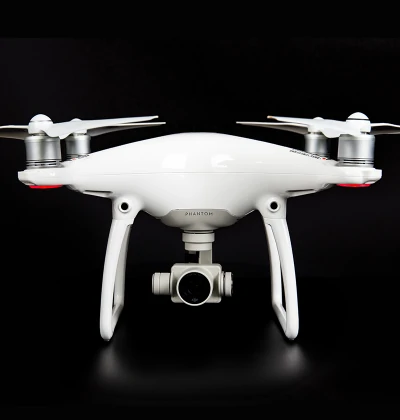

Aerospace & UAV
WJ Prototypes is your 3D manufacturing partner from prototype to large scale production.

Consumer Electronics
New Product Introduction Solutions for Consumer Electronics.

Robotics & Automation
Need some assistance bringing your robotic device or parts from the sketch-board to reality?

Medical Devices
The medical industry needs high quality, dependable and safe parts and products.

Automotive
New Product Introduction Solutions for Automotive

Industrial Machinery
The main purpose of industrial prototyping is to take the product from drawings into the real world.
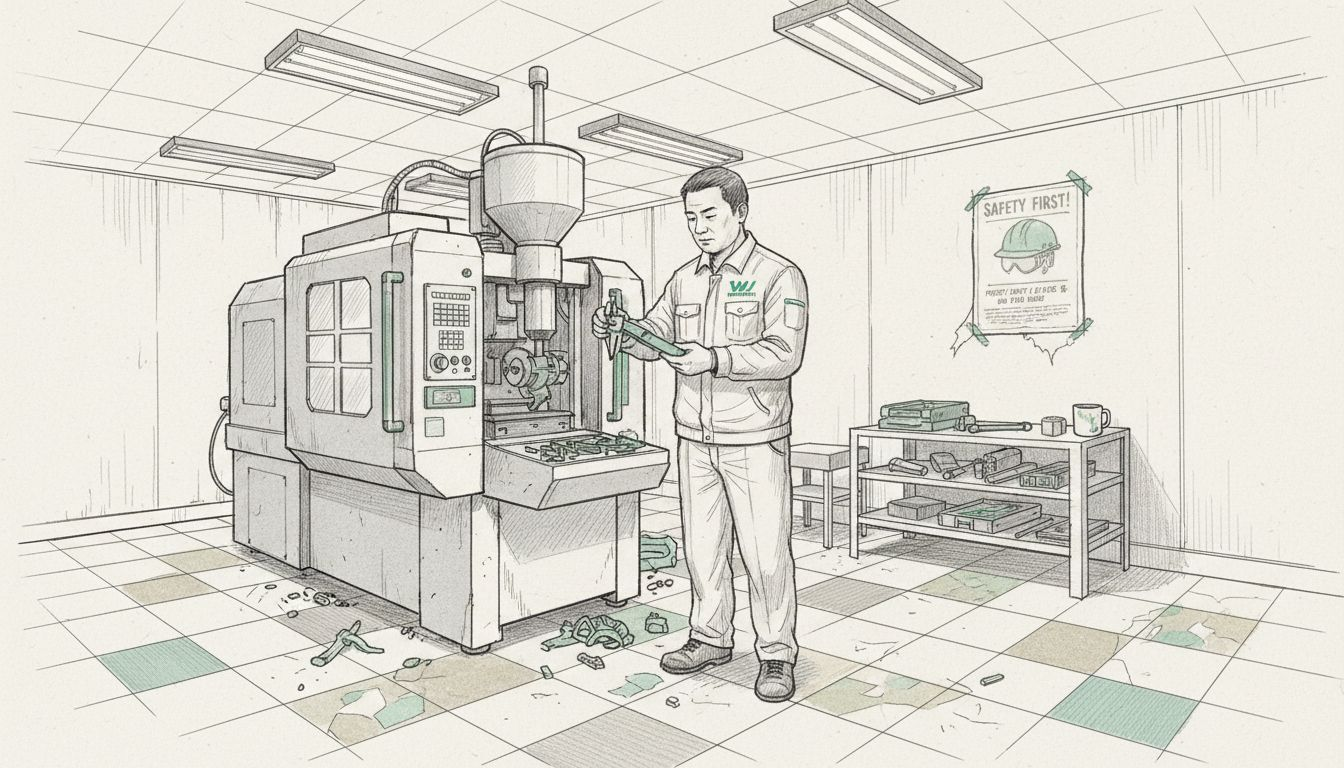
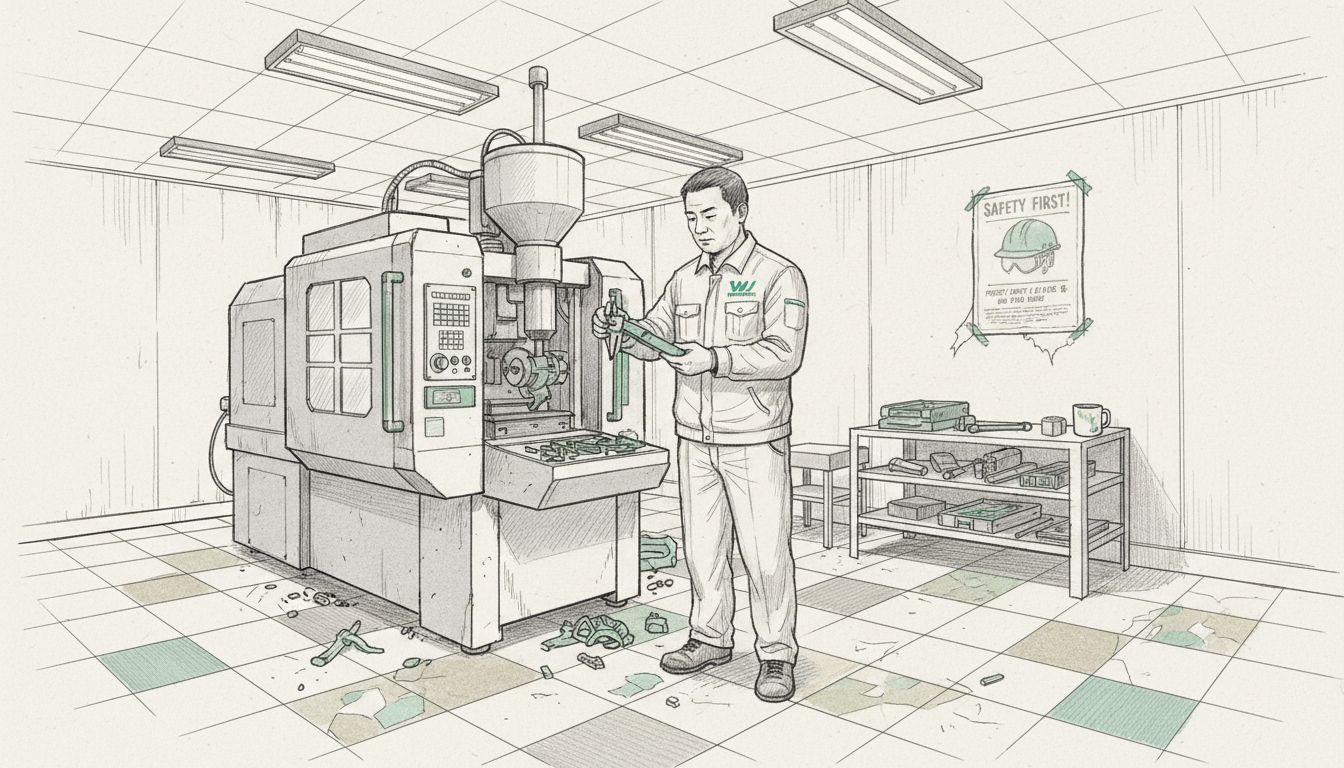
What happens when a single flawed plastic component disrupts an entire American or European production run? In automotive and aerospace manufacturing, even small inconsistencies can lead to costly delays and dissatisfied customers. With plastic injection molding, quality control is much more than a checklist—it is a constant, data-driven cycle that integrates advanced computer-aided engineering and intelligent algorithms to spot, prevent, and manage defects. This article explores how modern validation methods and adaptive process management help teams achieve reliable precision and maintain global competitiveness in low to medium volume production.
| Point | Details |
|---|---|
| Quality Control is a Continuous Process | Effective quality control in plastic injection molding involves systematic monitoring and improvement throughout the production cycle. |
| Emphasis on Process Parameters | Key parameters like injection speed and mold temperature must be meticulously controlled to achieve high-quality outputs. |
| Advanced Inspection Techniques | Utilizing AI-driven inspection methods enhances defect detection and ensures consistent product quality. |
| Risk Management is Essential | Implementing proactive risk management strategies can help manufacturers identify and mitigate potential production challenges. |
Quality control in plastic injection molding represents a sophisticated, dynamic process critical to manufacturing precision and product consistency. Injection molding technologies integrate advanced computer-aided engineering techniques to optimize manufacturing parameters and minimize defects.
At its core, quality control encompasses a comprehensive approach targeting multiple critical aspects of production. Key elements include:
Manufacturers implementing robust quality control strategies aim to achieve zero-defect production. This requires a systematic methodology that tracks and validates every stage of the injection molding process, from initial design through final product inspection.
Modern quality control leverages intelligent algorithms and sophisticated simulation technologies to predict and prevent potential manufacturing issues. Predictive modeling allows engineers to simulate critical behaviors like material flow, cooling rates, and potential shrinkage before actual production begins.
Quality control is not a single action, but a continuous improvement cycle that demands precision, expertise, and technological integration.
Statistical process control plays a pivotal role in maintaining consistent results. By establishing predefined control points and characteristics during design and production stages, manufacturers can systematically monitor product quality, reduce waste, and enhance overall customer satisfaction.
Pro tip: Implement real-time monitoring systems that track multiple production parameters simultaneously to catch potential deviations before they become significant quality issues.
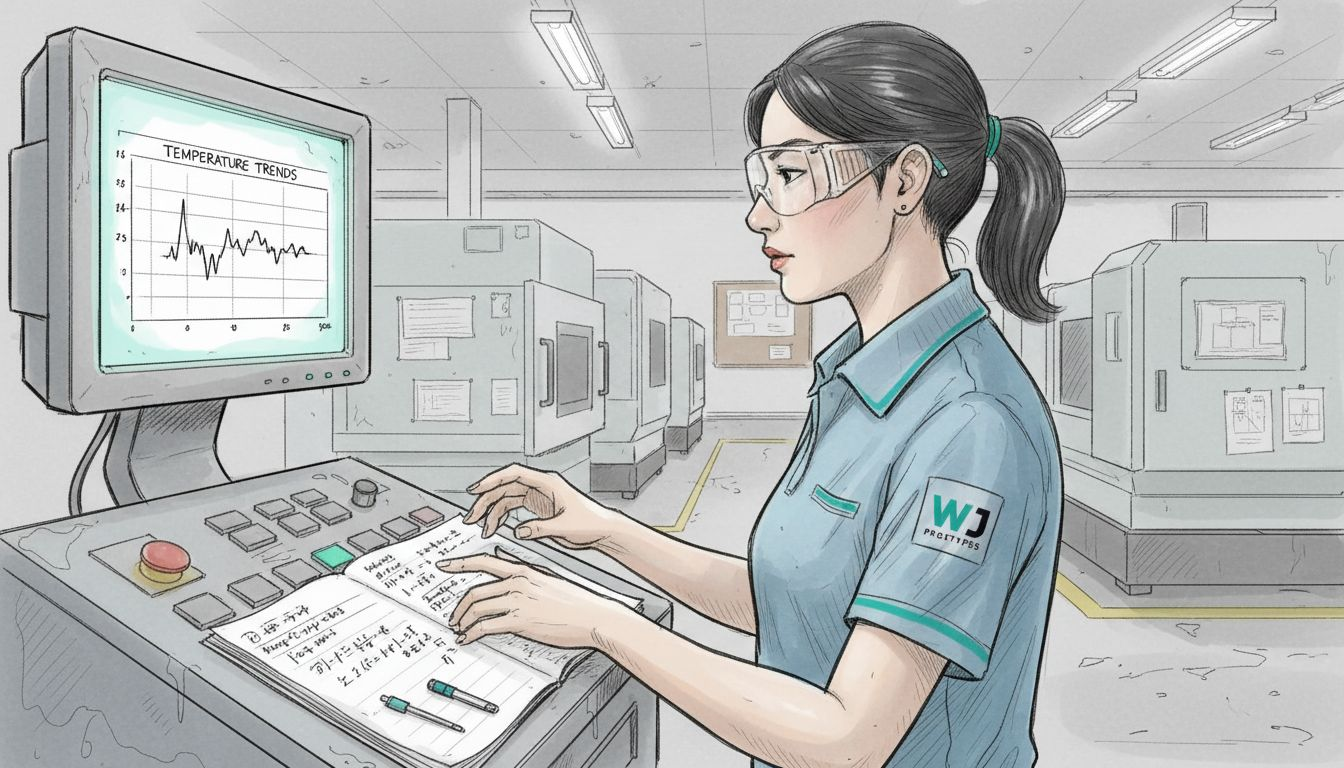
In plastic injection molding, advanced control systems optimize critical process parameters through intelligent algorithms and real-time monitoring. These sophisticated technologies ensure consistent product quality by precisely managing multiple manufacturing variables.
The most crucial process parameters that require meticulous control include:
Each parameter plays a critical role in producing high-quality plastic components. Adaptive control systems utilize neural network technologies to dynamically adjust these parameters, minimizing variation and reducing potential manufacturing defects.
Precise monitoring of injection nozzle pressure and temperature sensors enables manufacturers to maintain tight tolerances and achieve consistent output. By implementing adaptive control techniques, engineers can systematically manage switchover positions and injection speeds to optimize production results.
Here’s a summary of how key process controls influence injection molding quality:
| Parameter | Impact on Quality | Typical Adjustment Methods | Related Quality Risk |
|---|---|---|---|
| Injection Speed | Controls part filling | Algorithmic dynamic optimization | Flow marks, voids |
| Holding Pressure | Ensures part density | Neural network-based adjustments | Sink marks, poor bonding |
| Mold Temperature | Impacts surface quality | Sensor feedback, adaptive logic | Warpage, poor finish |
| Cooling Time | Affects dimensional stability | Predictive modeling, sensor tuning | Shrinkage, deformation |
Advanced process control is not about eliminating variation completely, but about understanding and managing it strategically.
Modern injection molding facilities increasingly rely on intelligent systems that integrate machine learning algorithms with real-time sensor data. These technologies enable predictive maintenance, immediate parameter adjustments, and comprehensive quality assurance throughout the manufacturing process.
Pro tip: Implement comprehensive data logging systems that track all critical process parameters to enable retrospective analysis and continuous process improvement.
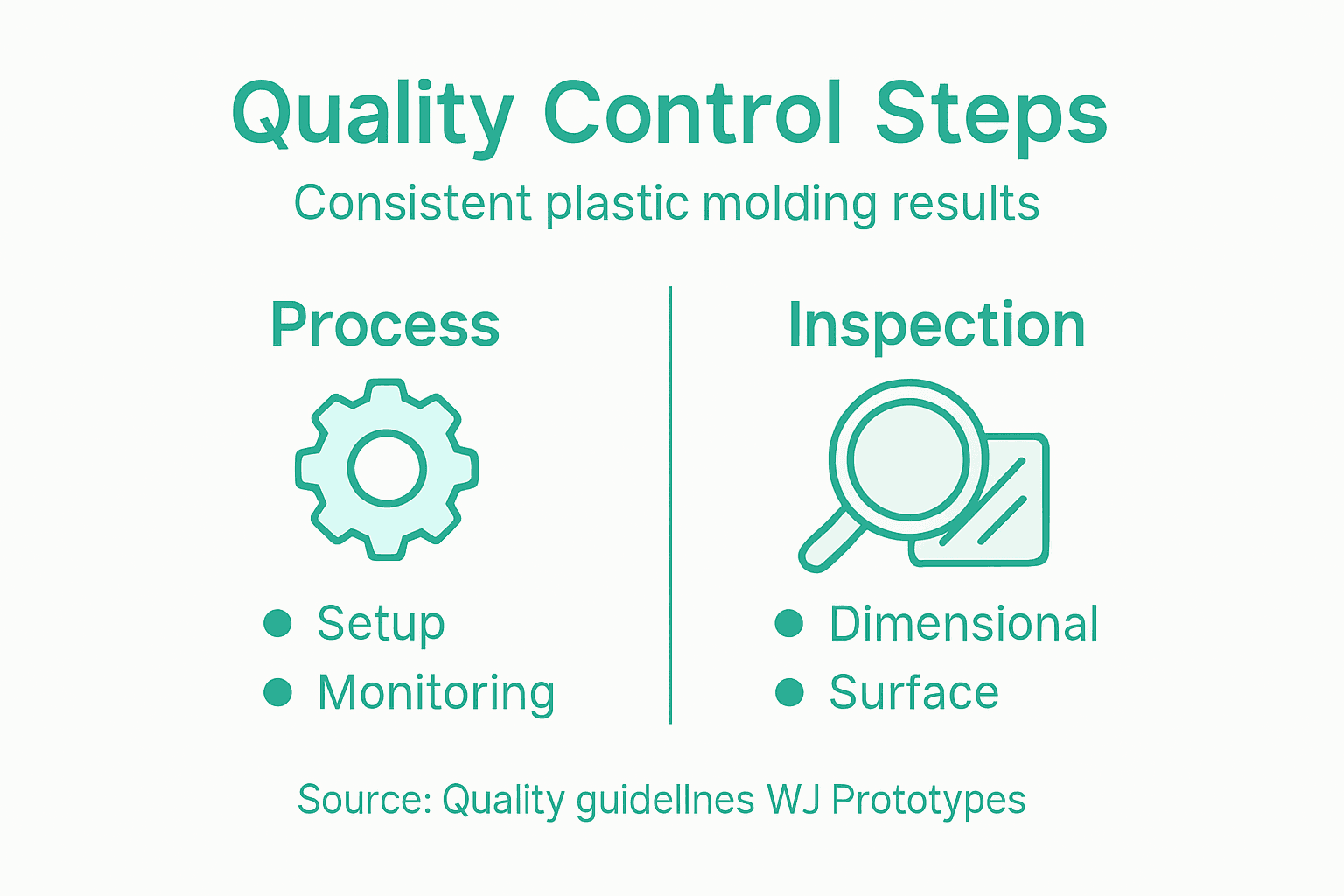
Modern plastic injection molding relies on advanced automated quality monitoring techniques that leverage artificial intelligence and sophisticated sensor technologies to ensure consistent product quality. These innovative approaches replace traditional manual inspection methods with intelligent, data-driven validation systems.
Key inspection methods for ensuring high-quality plastic injection molded parts include:
Cutting-edge validation techniques now incorporate self-supervised learning frameworks that dramatically improve defect detection capabilities. Automated quality control systems utilize convolutional neural networks to analyze surface characteristics, dimensional properties, and potential manufacturing anomalies with unprecedented accuracy.
The integration of real-time sensor data and machine learning algorithms enables immediate quality assessment and process adjustment. These intelligent systems can detect microscopic variations that would be invisible to human inspectors, providing a level of precision previously unattainable in manufacturing environments.
Quality validation is no longer about finding defects, but predicting and preventing them before they occur.
Advanced inspection methodologies now combine multiple technological approaches, including computer vision, thermal imaging, and predictive analytics. This multi-modal approach ensures comprehensive quality control that goes far beyond traditional single-point inspection techniques.
This table outlines modern inspection technologies and their primary value for manufacturers:
| Inspection Technology | Primary Benefit | Sample Application |
|---|---|---|
| Coordinate Measuring Machine | High geometric accuracy | Complex part verification |
| AI-Powered Vision System | Rapid defect identification | Microscopic flaw detection |
| Thermal Imaging | Detects hidden thermal issues | Evaluating cooling uniformity |
Pro tip: Implement a layered inspection strategy that combines automated AI-driven systems with strategic manual verification to maximize defect detection and process optimization.
Quality management in plastic injection molding demands rigorous supplier audit processes that ensure comprehensive adherence to international standards and regulatory requirements. These systematic evaluations are critical for maintaining consistent product quality and mitigating potential supply chain risks.
Key components of an effective supplier audit and compliance strategy include:
Regulatory compliance extends beyond simple documentation, requiring a comprehensive approach that integrates multiple layers of quality assurance. Manufacturers must develop robust systems that track every aspect of production, from initial material sourcing to final product delivery.
Successful supplier audits demand a multi-dimensional evaluation framework that goes beyond traditional checklist-based approaches. This involves deep analysis of manufacturing processes, quality control systems, technological capabilities, and continuous improvement mechanisms.
Effective regulatory compliance is not about meeting minimum standards, but about creating a culture of continuous quality improvement.
Modern compliance strategies increasingly leverage digital technologies to create transparent, real-time monitoring systems. These advanced approaches enable manufacturers to conduct more frequent, detailed, and data-driven supplier assessments that provide unprecedented insights into production capabilities.
Pro tip: Develop a comprehensive supplier scorecard that weights both quantitative performance metrics and qualitative improvement potential to drive continuous innovation.
Plastic injection molding manufacturers face numerous challenges that require sophisticated risk management strategies to maintain consistent product quality and operational efficiency. Understanding these potential pitfalls is crucial for developing proactive prevention mechanisms.
Common risk areas in injection molding production include:
Failure Mode and Effects Analysis (FMEA) provides a systematic approach to identifying and mitigating potential manufacturing risks. Case-based reasoning systems enable manufacturers to anticipate and address potential issues before they escalate into significant production challenges.
Risk management in injection molding requires a multifaceted approach that integrates advanced diagnostic tools, continuous monitoring, and proactive intervention strategies. Manufacturers must develop robust mechanisms that can detect subtle variations and implement corrective actions quickly and efficiently.
Effective risk management transforms potential vulnerabilities into opportunities for continuous improvement and operational excellence.
Modern risk mitigation strategies leverage data analytics, machine learning algorithms, and real-time monitoring technologies to create predictive and adaptive quality control frameworks. These intelligent systems enable manufacturers to move beyond reactive problem-solving toward anticipatory and preventative approaches.
Pro tip: Implement a comprehensive risk tracking system that categorizes potential failures by severity and probability, enabling targeted and strategic mitigation efforts.
Ensuring consistent results in plastic injection molding means mastering every critical process parameter while embracing advanced quality control and risk management strategies. If you face challenges like process variation, dimensional instability, or material inconsistency, you understand the urgency of precise parameter monitoring and adaptive inspection techniques to maintain product excellence. With concepts such as predictive modeling, AI-powered inspection, and supplier audits reshaping manufacturing, your need for a reliable partner to navigate these complexities is clear.
At WJ Prototypes, we specialize in delivering high-quality injection molding solutions backed by robust quality assurance policies and cutting-edge technologies that align perfectly with the rigorous demands discussed in this article. Our expertise in managing injection speed, holding pressure, mold temperature, and comprehensive dimensional verification ensures every prototype and production run meets your exact standards. Experience rapid turnaround times and consistent quality through our fully integrated approach found at WJ Prototypes Quality Assurance.
Do not let quality control pitfalls slow your product development or production efficiency. Take advantage of our professional manufacturing services designed to meet your tight tolerances and regulatory requirements. Explore how our advanced fabrication technologies can help you prevent defects before they happen by visiting WJ Prototypes Injection Molding Services, and get your next project started today by requesting an instant quote on WJ Prototypes. The time to ensure flawless and consistent plastic injection molded parts is now.
Quality control in plastic injection molding is a systematic process that ensures the manufacturing of precision parts with consistent quality by monitoring production parameters, detecting defects, and continuously improving the process.
Advanced control systems optimize crucial process parameters like injection speed and mold temperature using intelligent algorithms and real-time monitoring, ensuring consistent product quality and minimizing variation and defects.
Common inspection methods include dimensional measurement using CMM, surface quality assessment with optical scanning, weight and density verification, structural integrity testing, and AI-powered visual inspections to detect defects accurately.
Manufacturers can manage risks by implementing methodologies such as Failure Mode and Effects Analysis (FMEA) and utilizing predictive analytics and real-time monitoring to identify potential issues early and take corrective actions effectively.
SERVICES
RESOURCES