



- Room 1807, Unit 9, Building 2, Shangxing Commercial Street, Shangde Road, Shangxing Community, Xinqiao Subdistrict, Bao'an District, Shenzhen City, China
CONTACT US

WhatsApp


Contact Us
Our team is on stand by, waiting toassist you.

Videos
A large collection of educational videos and tutorials.

About Us
Learn about our company, leadership, and mission totransform manufacturing.

Privacy Policy
Applies to all personal information collected through and/or processed in connection.
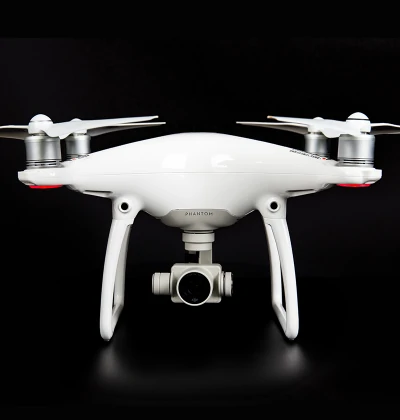

Aerospace & UAV
WJ Prototypes is your 3D manufacturing partner from prototype to large scale production.

Consumer Electronics
New Product Introduction Solutions for Consumer Electronics.

Robotics & Automation
Need some assistance bringing your robotic device or parts from the sketch-board to reality?

Medical Devices
The medical industry needs high quality, dependable and safe parts and products.

Automotive
New Product Introduction Solutions for Automotive

Industrial Machinery
The main purpose of industrial prototyping is to take the product from drawings into the real world.
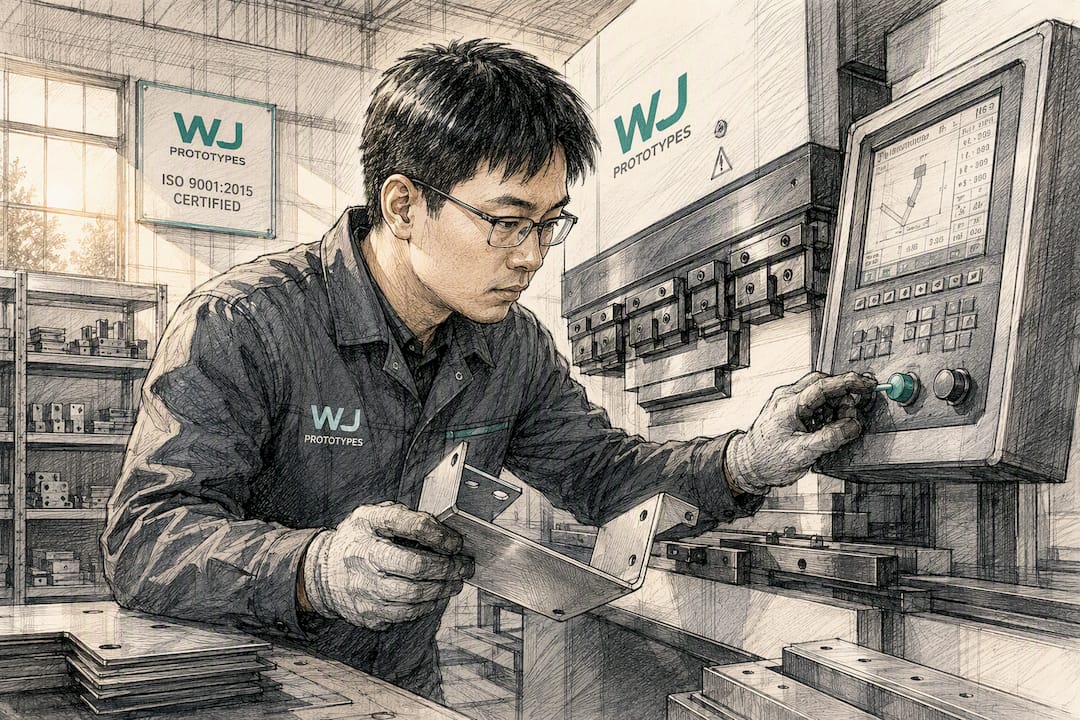

The shops worth your time are contract manufacturers and job shops that explicitly advertise both rapid prototyping and low- to medium-volume production, with DFM reviews, first article inspection (FAI), and ISO-grade quality documentation baked into their process, not bolted on after a complaint. That combination matters because a shop set up only for one-off prototypes usually lacks the fixturing, nesting discipline, and inspection infrastructure to hold tolerances across multiple parts. A shop built purely for mass production, on the other hand, often won’t touch your project until volumes justify hard tooling.
Here’s what to do this week, before you sign anything:
WJ Prototypes and shops like it sit in that middle zone on purpose. That’s the profile to shortlist first.
Choosing a sheet metal shop for prototype-to-production work comes down to documented process control, not equipment lists or the lowest quote.
| Point | Details |
|---|---|
| Prototype with production intent | Use final material, gauge, and datums from the first part to avoid costly redesigns later. |
| Demand the FAI package | Require sample inspection reports and fixture documentation before committing to a pilot run. |
| Standardize materials per family | Limit part families to one or two alloys and gauges to cut scrap and simplify sourcing. |
| Weight documentation over price | Score ISO certificates, DFM reports, and case studies above the cheapest quote. |
| WJ Prototypes fits the middle ground | WJ Prototypes combines DFM review, ISO-certified QA, and instant quoting for prototype and low- to medium-volume sheet metal runs. |
The right shop isn’t the one with the biggest press brake or the flashiest laser cell. It’s the one that can hand you a working prototype on Tuesday and still be running your 200th unit six months later without the tolerance stack drifting. That’s a specific operational profile, and it shows up in a handful of checkable signals.
Equipment and process mix. Look for laser or turret cutting, CNC press brakes, robotic or manual welding, and in-house finishing (powder coat, plating, passivation) under one roof. Shops that subcontract every finishing step add lead time and quality risk you can’t audit directly.
Capacity signals that actually predict reliability:
Inspection capabilities. A shop that owns a CMM, builds dedicated inspection fixtures tied to production datums, and can show you a real FAI report from a past job is telling you something a quote alone never will: that it has already solved the problem you’re about to hand it.
Materials and finishing breadth. Production intent means the shop can source and hold your specified alloy and gauge consistently, not substitute “something close” when the mill run changes. Coating, plating, paint, and passivation options should be available in-house or through a controlled and traceable subcontractor.
How quoting actually works for small batches. Fixture and tooling costs get amortized across the batch, so ask specifically how that math is done. A shop quoting flat per-part pricing regardless of quantity either hasn’t thought it through or is padding the number to cover surprises later.
Pro Tip: Ask any shortlisted shop to walk you through one past job where the prototype geometry changed after FAI. How they answer tells you more about their production discipline than any brochure will.
Most cost overruns in small-batch sheet metal don’t come from the supplier. They come from decisions made back at the CAD stage, when a designer picked a bend radius or hole pattern that worked fine for a single prototype but falls apart at 200 units. According to All Metals Fabrication’s guide on scaling sheet-metal parts, small DFM choices invisible in a one-off prototype often multiply cost, stretch cycle time, and destabilize takt once you move to production.
Here’s the sequence that avoids that trap:
Adopting production datums and standard fasteners like PEMs during the prototype phase, rather than after, preserves FAI validity later and cuts rework when you scale, a detail WJ Prototypes’ fabrication workflow guide flags as one of the more overlooked levers in the whole process.
Before you commit to a 100-unit pilot, you need proof the process can actually hold. That proof has a name: the FAI package, and it’s not optional paperwork.
A complete FAI package includes the part drawing with datums called out clearly, references to the inspection fixture used, and a sample inspection report showing actual measured values against spec, not just a pass/fail stamp. WJ Prototypes’ production workflow builds this around inspection fixtures that align to the same datums used in the production fixture itself, which removes the ambiguity that causes most FAI disputes.
The pilot run itself should follow a fixed sequence: pre-production DFM review, design freeze, then a few sample parts pulled through full inspection before the rest of the batch runs. Any engineering change after that point needs a tracked ECO, not a verbal “just fix it” to the shop floor, a discipline outlined in WJ Prototypes’ precision prototyping guide.
Track these three numbers during the pilot:
| Metric | What it tells you |
|---|---|
| First-pass yield (FPY) | Percentage of parts that pass inspection without rework |
| Time to close ECO | How fast the shop absorbs a design change without stalling the line |
| Rework hours per N parts | Hidden labor cost the per-part quote didn’t capture |
Modular fixturing and part-family classification matter here too. A shop that groups similar parts under shared pallet designs can hold repeatability across revisions without rebuilding tooling every time you tweak a hole.
Score suppliers on documentation before you score them on price. A shop that can’t produce a sample FAI report is telling you it hasn’t run a real pilot before, no matter how confident the sales call sounded.
Request these five items from every shop on your shortlist:
Ask directly: what happens to my fixtures if I need to dual-source later? Who’s actually running the welding or plating, in-house or subcontracted? What’s your traceability record for raw material lots?
Pro Tip: A vague answer on subcontracting is the single biggest red flag. If a shop can’t name who does its plating or can’t produce a lot traceability record on request, assume that gap shows up in your parts eventually.
Shops that publish ISO certification, real FAI samples, and case studies are giving you evidence, not just claims. Weight that evidence above the lowest line-item quote every time.
Tooling that survives 20 prototype parts can fail differently at part 2,000. Punch and die wear accelerates on abrasive or coated stock, and a tool that held ±0.005 inches on day one can drift outside spec by the middle of a long batch if nobody’s tracking wear on a schedule.
Process drift is the quieter problem. A press brake set up perfectly for the first 50 units can produce a slightly different bend angle by unit 400 as the tooling heats and settles, springback behavior shifts, or an operator changeover introduces small setup variance. Shops that handle this well build inspection checkpoints into the run itself, not just at the start and end, and use inspection fixtures tied to production datums so drift gets caught before it compounds.
Nesting efficiency also degrades if part mix changes mid-run without re-optimizing the sheet layout. A shop running five SKUs off shared raw stock needs software that recalculates nesting per batch, not a static template from job one.

The fix across all three problems is the same: schedule tooling maintenance against cycle counts rather than calendar dates, keep inspection fixtures aligned to the exact datums used on the production tool, and re-nest whenever the part mix shifts by more than a small margin. None of this is exotic engineering. It’s discipline, applied consistently, by a shop that’s run this playbook before.
Aerospace brackets, avionics enclosures, and structural panels all depend on sheet metal fabrication that can hold tight tolerances across hundreds of identical parts, often with full material traceability required by the customer’s own quality system. Automotive suppliers use it for chassis components, battery enclosures, and HVAC housings where dimensional consistency affects downstream assembly across an entire production line.
Medical device manufacturers need sheet metal for equipment housings and cart frames, where surface finish and corrosion resistance carry real regulatory weight. Electronics and robotics companies rely on it for chassis, brackets, and enclosures that protect sensitive components while keeping weight down. Oil and gas operations use heavier-gauge sheet metal for equipment housings and panels built to survive corrosive, high-vibration environments.
Industrial machinery makers are probably the most volume-diverse group of all. A single OEM might need ten prototype enclosures one quarter and 300 production units of a slightly revised design the next, which is exactly the kind of program that rewards a shop comfortable moving between rapid prototyping and low- to medium-volume runs without renegotiating the entire relationship each time volume shifts.
What connects all of these industries isn’t the part geometry. It’s the requirement that the fifth unit off the line measures the same as the five-hundredth, and that someone can prove it on paper if a customer asks.

Laser cutting and stamping solve the same basic problem, cutting flat sheet into a shape, in almost opposite ways, and picking the wrong one for your volume is one of the more expensive mistakes a program can make.
Laser and turret cutting need no hard tooling, so they’re fast to set up and flexible when a design is still evolving. That flexibility comes at a cost: per-part cycle time is higher, and at very high volumes the machine time adds up faster than a stamping press would. Stamping requires a hard die, which is expensive and slow to build, but once it exists, cycle times drop dramatically and stay consistent part after part.
For prototype and low- to medium-volume work, that math almost always favors laser or turret cutting paired with CNC press brakes. You avoid the upfront die cost entirely, and you keep the flexibility to revise the design without scrapping tooling you’ve already paid for. Stamping only starts to make financial sense once volume climbs high enough that the die cost gets absorbed across enough parts to beat laser cutting’s per-part rate, a crossover point that depends heavily on part complexity and material.
Welding process choice matters here too. Robotic welding pays off at higher, steadier volumes; manual TIG or MIG welding stays more cost-effective when part designs are still shifting between batches. The right shop asks which stage you’re in before recommending either.
Cost and lead time behave differently once a program moves past prototype quantities, and treating them the same way you did during development is a common planning mistake.
Material procurement becomes the first bottleneck. Ordering enough raw sheet stock for hundreds of units means working with mill lead times and minimum order quantities that a prototype run never touches, and that timeline needs to start well before the pilot run even finishes inspection. Tooling and fixture costs, if you’re moving toward stamping or dedicated jigs, get amortized across the batch, so the true per-part cost only becomes clear once you know your total run size, not just the next order.
Labor and cycle time shift too. A shop running a steady batch can schedule dedicated machine time and staffing, which usually lowers per-part labor cost compared to a stop-start prototype cadence, but only if the batch size is large enough to justify that dedicated scheduling.
Finishing and QA add their own timeline layer. Powder coating, plating, and passivation processes often run in batches themselves, meaning your finishing lead time depends on the finisher’s own queue, not just your fabricator’s. Build that dependency into your schedule early, because it’s the step most programs forget to ask about until the pilot run is already sitting in a queue.
Raw material sourcing gets harder, not easier, as volume climbs. A shop that can source small quantities of a common gauge reliably may struggle to guarantee the same alloy and thickness consistently across a 500-unit order if it doesn’t have an established mill relationship.
Ask your shortlisted shops directly how they handle material lot traceability at volume, and whether they qualify a backup supplier for critical alloys. A single-source dependency on one mill or one distributor is a real risk if that supplier has a bad quarter.
Standardizing your part family to one or two alloys and gauges, the same DFM discipline that helps nesting efficiency, also simplifies sourcing dramatically. Fewer material variants means fewer supplier relationships to manage and less exposure to a shortage on any single spec.
Finally, build in lead time buffer for raw material specifically, separate from your fabrication lead time. Mill lead times fluctuate with broader market demand in ways your fabricator can’t control, and a shop that’s upfront about that variability, rather than promising a fixed date regardless of material availability, is usually the more trustworthy partner for a program that needs to hit a real launch date.
Most advice on choosing a fabrication shop treats it like a vendor selection exercise: compare equipment lists, get three quotes, pick the cheapest one that meets spec. That approach misses the actual failure mode, which isn’t a bad shop. It’s a good shop working from a prototype that was never designed to scale.
The conventional checklist asks “can this shop cut and bend this part?” The better question is “will this exact geometry, this datum scheme, this bend radius still make sense at part 200?” Those are different questions, and only the second one predicts whether your program hits its cost and schedule targets.
What gets underrated in most guidance: the DFM review isn’t a courtesy step your supplier offers. It’s the single highest-leverage conversation you’ll have before committing budget, because it’s the last point where a five-minute geometry change costs five minutes instead of a re-cut die or a scrapped batch. Treat the FAI package the same way, as evidence you demand, not paperwork you hope shows up eventually.
If you take one thing from this, take this: qualify shops on their documentation discipline first, their equipment second. The equipment tells you what’s possible. The documentation tells you whether they’ve actually done it before.
— Nas
If you’ve read this far, you already know the gap between a shop that can cut a prototype and one that can carry your part through a 300-unit pilot without surprises. WJ Prototypes was built for that middle stretch specifically: sheet metal fabrication with a DFM review built into the quoting process, ISO-certified quality documentation, and an instant online quoting system that shows real cycle-time assumptions instead of a flat number.

Where a lot of shops make you choose between fast prototyping and production-grade QA, WJ Prototypes runs both under the same roof, with sample FAI reports and published workflow guides available before you commit a dollar. If your program is heading toward a pilot run in the next quarter, the smartest move is to request an instant quote and DFM review directly from WJ Prototypes and see how their cycle-time assumptions compare to what you’re currently getting.
There’s no fixed cutoff, but most shops in this category comfortably handle runs from roughly 50 to a few thousand units without requiring hard stamping tooling.
Request the quote and DFM review together. A shop that reviews your design alongside pricing usually surfaces cost-saving changes before you commit budget, not after.
It should show the part drawing with datums, the inspection fixture used, and actual measured values against spec, not just a pass or fail result.
WJ Prototypes builds DFM review and ISO-certified inspection into its standard sheet metal fabrication workflow, with published guides covering fixture planning and pilot-run practices.
Vague answers about subcontracting or an inability to produce a sample FAI report from a past job both signal the shop hasn’t proven its process at scale.
SERVICES
RESOURCES