



- Room 1807, Unit 9, Building 2, Shangxing Commercial Street, Shangde Road, Shangxing Community, Xinqiao Subdistrict, Bao'an District, Shenzhen City, China
CONTACT US

WhatsApp


Contact Us
Our team is on stand by, waiting toassist you.

Videos
A large collection of educational videos and tutorials.

About Us
Learn about our company, leadership, and mission totransform manufacturing.

Privacy Policy
Applies to all personal information collected through and/or processed in connection.


Aerospace & UAV
WJ Prototypes is your 3D manufacturing partner from prototype to large scale production.

Consumer Electronics
New Product Introduction Solutions for Consumer Electronics.

Robotics & Automation
Need some assistance bringing your robotic device or parts from the sketch-board to reality?

Medical Devices
The medical industry needs high quality, dependable and safe parts and products.

Automotive
New Product Introduction Solutions for Automotive

Industrial Machinery
The main purpose of industrial prototyping is to take the product from drawings into the real world.
TL;DR:
- Designing sheet metal parts with manufacturability in mind prevents costly rework and delays.
- Material selection impacts part performance, cost, and ease of fabrication in the prototype phase.
- Real-world prototyping feedback is essential to identify issues that simulations may miss.
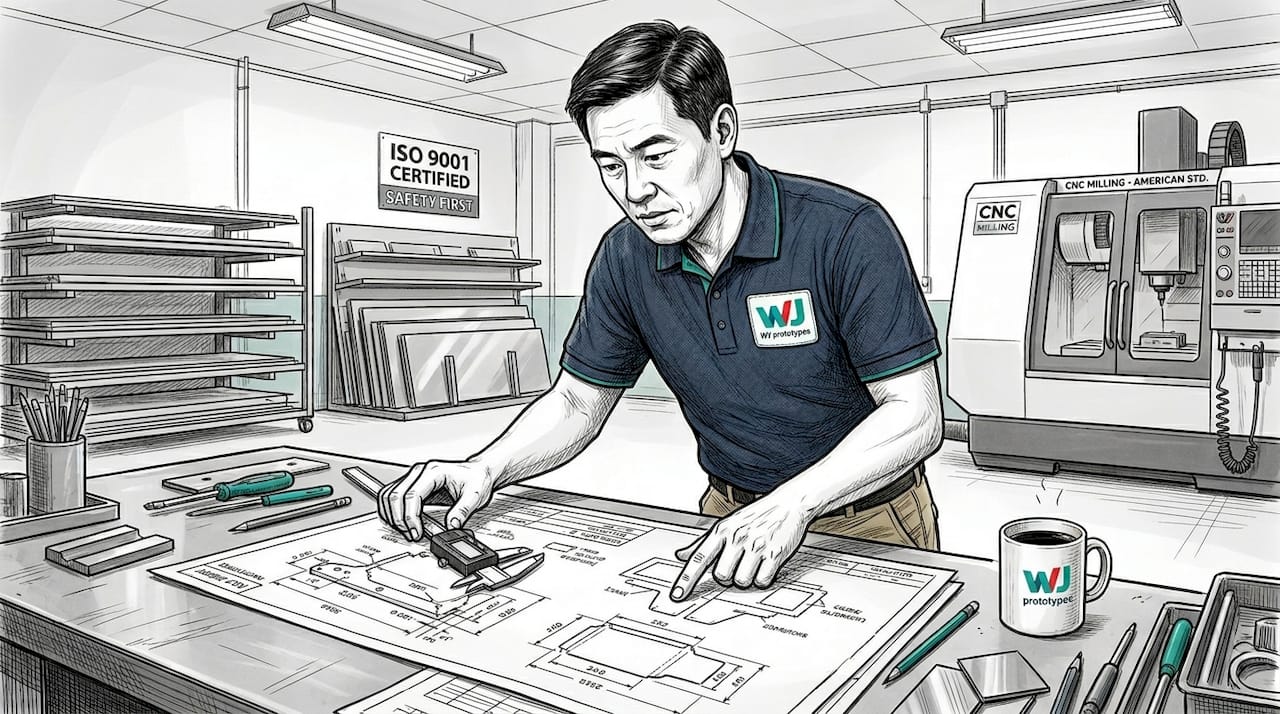
Balancing manufacturability, cost, and design integrity is one of the most demanding challenges in product development. A single poorly placed hole or an incorrect bend radius can cascade into scrapped prototypes, rework costs, and delayed timelines. For engineers working across aerospace, automotive, and medical applications, sheet metal design decisions made early in the process have an outsized impact on both prototype quality and production scalability. This article offers practical, process-grounded tips covering design for manufacturability, material selection, common pitfalls, and prototyping strategies to help you move faster and smarter from concept to production.
| Point | Details |
|---|---|
| Prioritize manufacturability | Design rules for bending and forming prevent costly errors in production. |
| Choose the right material | Material selection balances durability, weight, and cost for your application. |
| Avoid common pitfalls | Keep tolerances realistic and use proper fasteners to ensure assembly success. |
| Optimize for prototyping | Standardized, modular designs enable rapid iteration and smoother scaling. |
Every sheet metal part begins as a flat blank. How that blank gets cut, bent, and formed dictates what your design can and cannot do. Engineers who treat manufacturability as a finishing thought rather than a starting point consistently face the most expensive surprises. Design for manufacturability minimizes costly production changes by locking in process-compatible geometry before tooling is even ordered.
The most impactful decisions happen at the feature level:
Choosing the right process isn’t just about unit economics. It’s about what the geometry actually allows. A precision prototyping guide confirms that appropriate bend radii directly reduce cracking risk, which matters especially in medical enclosures and aerospace brackets where structural integrity is non-negotiable.
Pro Tip: When reviewing a design for the first time, mark every bend on the flat pattern and check each one against your material’s published minimum bend radius table before sending to fabrication. This takes ten minutes and can save days of rework.
The broader takeaway is this: designing with the process in mind isn’t a constraint. It’s actually where design freedom is earned. Engineers who learn the rules of bending, punching, and cutting find more creative solutions within those boundaries than those who fight against them.
Once your design is process-aligned, material selection determines whether your part survives its application environment and whether your project survives its budget. Material choice is the primary driver for both cost and prototype performance, influencing everything from machinability to final part weight.
Here’s how the most common sheet metal materials compare:
| Material | Strength | Weight | Cost | Best use case |
|---|---|---|---|---|
| Mild steel | High | Heavy | Low | Structural frames, brackets |
| Aluminum | Moderate | Light | Moderate | Aerospace, automotive panels |
| Stainless steel | Very high | Heavy | High | Medical, food-grade, corrosive environments |
| Copper/brass | Moderate | Moderate | High | Electrical, decorative components |
| Titanium alloys | Very high | Light | Very high | High-performance aerospace, medical implants |
Thickness is just as critical as alloy choice. Thicker gauges improve rigidity and allow tighter tolerances on formed features, but they also increase forming force requirements and can limit the minimum bend radius your press brake can achieve. Thinner gauges save weight and cost, but they’re more prone to warping during welding or cutting.
Surface treatments deserve attention too:
Pro Tip: If your prototype needs to match production material properties exactly, avoid substituting a cheaper alloy “just for the prototype.” Material behavior differences in forming and fatigue can mask real design issues that only emerge in production.
Balancing material performance against fabrication constraints early prevents the painful scenario of a design that performs beautifully in simulation but requires a material that doubles your tooling cost.
Understanding material limitations sets the stage for addressing the most frequent mistakes engineers make in the design phase. These errors are predictable, and that means they’re preventable.
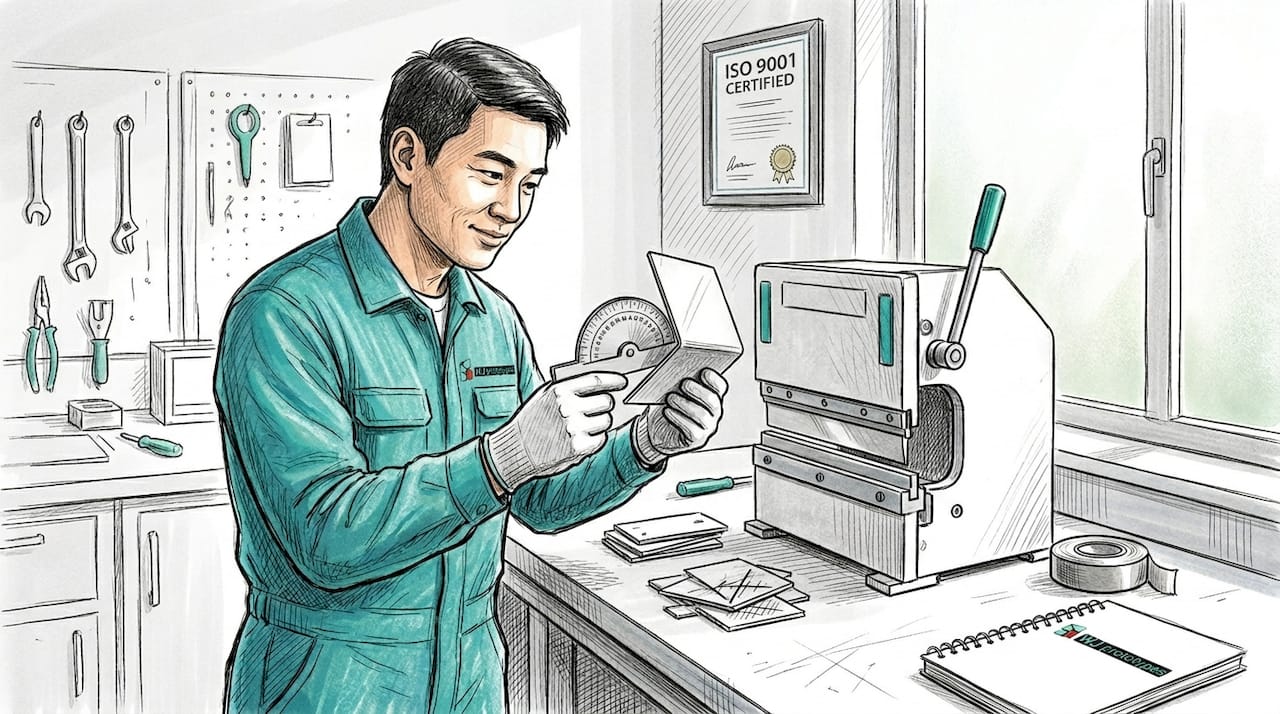
Incorrect tolerances cause 25% of prototype rejections. Sheet metal is not a precision machining process. Tight tolerances achievable on a CNC mill are often unrealistic on a press brake. When engineers specify tolerances tighter than the process can reliably hold, parts fail inspection, schedules slip, and costs climb.
Here are the most common pitfalls and how to avoid them:
“The best time to fix a design problem is before the first piece of metal is cut. Every revision made at the prototype stage costs a fraction of the same change made during production.”
For a broader view of where the industry is heading with design standards and tolerancing practices, the evolving fabrication trends in precision manufacturing offer useful context. Understanding the role of fabrication in integrated product development also helps engineers frame design decisions within the full manufacturing lifecycle.
Avoiding design pitfalls gets you a manufacturable part. Optimizing for prototyping gets you a manufacturable part faster, with a clearer path to production. Simplifying part count and standardizing features can cut prototyping lead times by 30%, which is meaningful when your development cycle is measured in weeks, not months.
Here are the most effective strategies for prototyping optimization:
Pro Tip: Build your first prototype with intentionally loose tolerances on non-critical features. Use the physical part to identify where tightening actually matters functionally, then revise. This approach consistently reveals that 60 to 70 percent of tight tolerances in first designs are over-specified.
The fabrication workflow for prototyping in high-mix, low-volume environments rewards designers who think about assembly sequence from the first sketch. A prototyping guide for metal parts reinforces that modular thinking translates directly into smoother production scaling.
Simulation tools have become extraordinarily capable. Finite element analysis (FEA) can predict stress concentrations, and forming simulations can model springback with impressive accuracy. But there’s a category of knowledge that software still cannot reliably deliver: the behavior of real material, real fasteners, and real assembly sequences under real conditions.
We’ve seen designs that passed every simulation checkpoint fail at the prototype stage because a weld heat-affected zone behaved differently than the model assumed, or because a technician couldn’t physically access a fastener location that looked fine in CAD. These aren’t modeling failures. They’re reminders that manufacturing is a physical process with human and environmental variables.
Small real-world discoveries often carry major cost implications. Catching a misaligned bracket geometry on a first prototype costs hours. Finding the same issue after production tooling is built costs weeks and significant money. Step-by-step prototyping with physical parts built into every major design gate is the most reliable way to surface these issues early.
Build physical testing into your iteration plan from the start, not as an afterthought. The engineers who close the loop between design intent and physical reality fastest are the ones who consistently deliver on schedule.
At WJ Prototypes, we specialize in turning well-designed sheet metal parts into high-quality prototypes and production-ready components with fast turnaround and transparent pricing. Whether you need precision-formed enclosures for medical devices or lightweight structural brackets for aerospace applications, our engineering team works alongside you to optimize for both manufacturability and cost. Explore our CNC machining in China services for custom prototypes, or review our CNC machining materials to find the right fit for your project. Request an instant quote today and move your design forward.
The minimum bend radius is typically equal to the material thickness, but always check manufacturer guidelines for your specific material. Tighter radii risk cracking, particularly in harder alloys and higher-strength materials.
Use symmetrical designs, minimize cutouts near bends, and select materials with suitable thickness to reduce warping. Material thickness directly affects both bendability and the likelihood of distortion during forming and welding.
Select fasteners compatible with both material type and expected load direction, paying attention to shear versus tensile requirements. Referencing metal fastening solutions standards or supplier recommendations ensures your joint design holds under real operating conditions.
Stainless steel offers the highest corrosion resistance for most engineering applications, especially in harsh or wet environments. Review the full sheet metal materials options to match corrosion protection level to your application requirements.
Standardize design features and modularize assemblies to enable faster manufacturing and quicker iteration cycles. A structured fabrication workflow built around standard tooling and modular sub-assemblies consistently reduces lead times across prototype runs.
SERVICES
RESOURCES