



- Room 1807, Unit 9, Building 2, Shangxing Commercial Street, Shangde Road, Shangxing Community, Xinqiao Subdistrict, Bao'an District, Shenzhen City, China
CONTACT US

WhatsApp


Contact Us
Our team is on stand by, waiting toassist you.

Videos
A large collection of educational videos and tutorials.

About Us
Learn about our company, leadership, and mission totransform manufacturing.

Privacy Policy
Applies to all personal information collected through and/or processed in connection.


Aerospace & UAV
WJ Prototypes is your 3D manufacturing partner from prototype to large scale production.

Consumer Electronics
New Product Introduction Solutions for Consumer Electronics.

Robotics & Automation
Need some assistance bringing your robotic device or parts from the sketch-board to reality?

Medical Devices
The medical industry needs high quality, dependable and safe parts and products.

Automotive
New Product Introduction Solutions for Automotive

Industrial Machinery
The main purpose of industrial prototyping is to take the product from drawings into the real world.
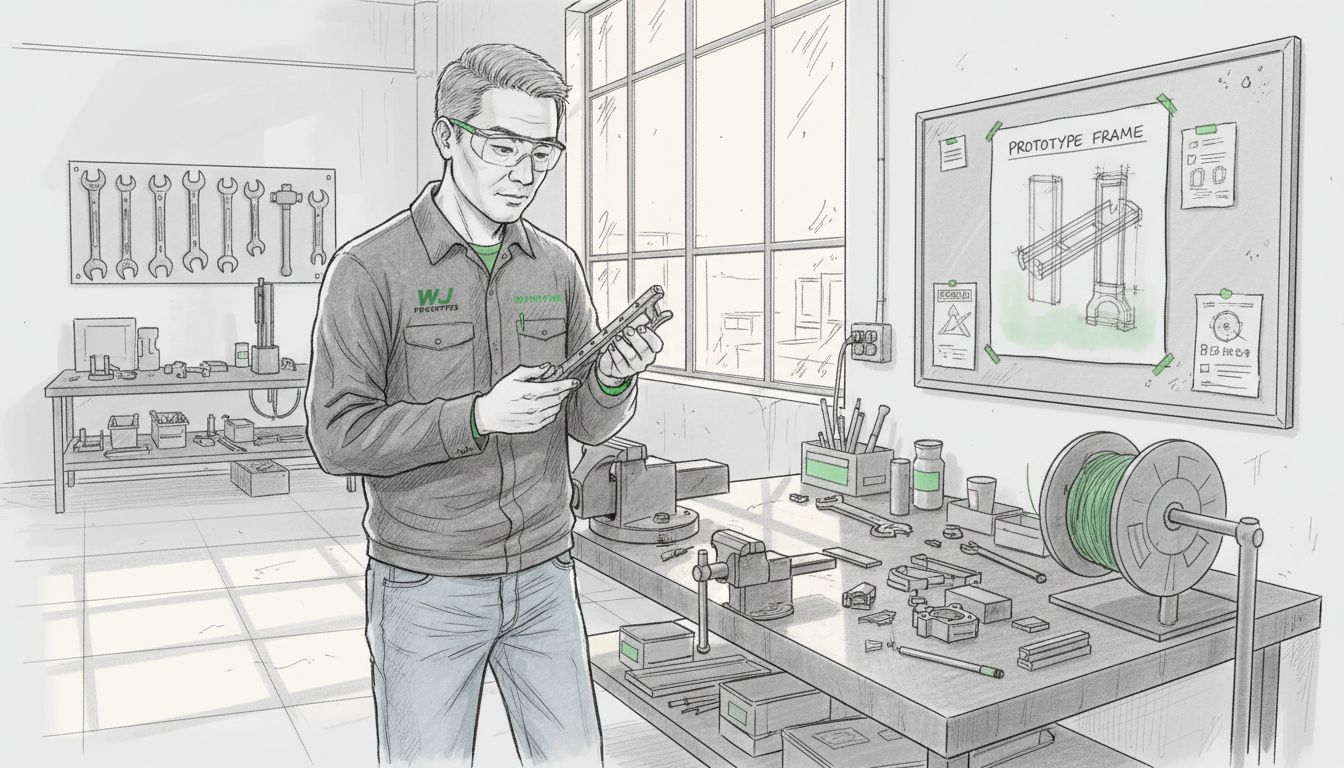

Precision metal prototypes often begin with tough questions about performance, cost, and compliance. In sectors like Aerospace and Automotive, the smallest material decision can influence everything from durability to lifecycle costs. By focusing on functional constraints and careful design documentation, engineers can streamline fabrication and maintain global standards, elevating both prototype quality and project feasibility in highly competitive environments.
| Key Point | Explanation |
|---|---|
| 1. Define fabrication requirements first | Establishing precise design requirements and material selection is crucial for product performance and cost-effectiveness. |
| 2. Create detailed CAD designs | Accurate CAD drawings communicate specifications to manufacturing teams, preventing misinterpretations and errors during production. |
| 3. Implement rigorous safety protocols | Comprehensive safety measures and equipment setup ensure worker protection and operational efficiency in the fabrication workspace. |
| 4. Master core fabrication techniques | Understanding and executing the right cutting, forming, and joining processes is essential for creating high-quality prototypes. |
| 5. Verify tolerances through inspection | Conducting thorough inspections using precise measurement tools ensures prototypes meet dimensional and performance specifications. |
Defining precise fabrication requirements and strategically selecting materials are foundational steps in creating successful metal prototypes. This critical phase determines the overall performance, durability, and cost-effectiveness of your final product.
Engineers must systematically analyze multiple factors when selecting materials for precision prototyping. Start by identifying the functional constraints of your prototype, which include mechanical stress, environmental conditions, and performance expectations. Material selection involves analyzing functional requirements to match design criteria accurately.
Key considerations for material selection include:
Prioritize materials that balance technical performance with manufacturing feasibility. Evaluate candidate materials based on their ability to meet specific prototype requirements while maintaining cost efficiency. This approach ensures you select materials that not only perform technically but also remain economically viable for your project.
Material selection is a strategic decision that directly impacts prototype quality, production speed, and overall project success.
Pro tip: Always request material datasheets and conduct preliminary testing to validate performance characteristics before full-scale production.
Creating precise computer-aided design (CAD) drawings is a critical foundation for successful metal fabrication prototypes. This step transforms your conceptual design into a detailed technical blueprint that communicates exact specifications to manufacturing teams.
Technical drawings detail critical dimensions and fabrication processes with remarkable precision. Your CAD design must comprehensively capture every aspect of the prototype, including:
Professional CAD preparation involves more than just creating a visual representation. You need to develop a comprehensive technical document that leaves no room for misinterpretation. Key elements of an effective technical drawing include:
Technical drawings are the universal language between design and manufacturing, translating complex concepts into actionable instructions.
Pro tip: Invest time in creating highly detailed CAD models and always request a design review from experienced manufacturing engineers to catch potential fabrication challenges early.
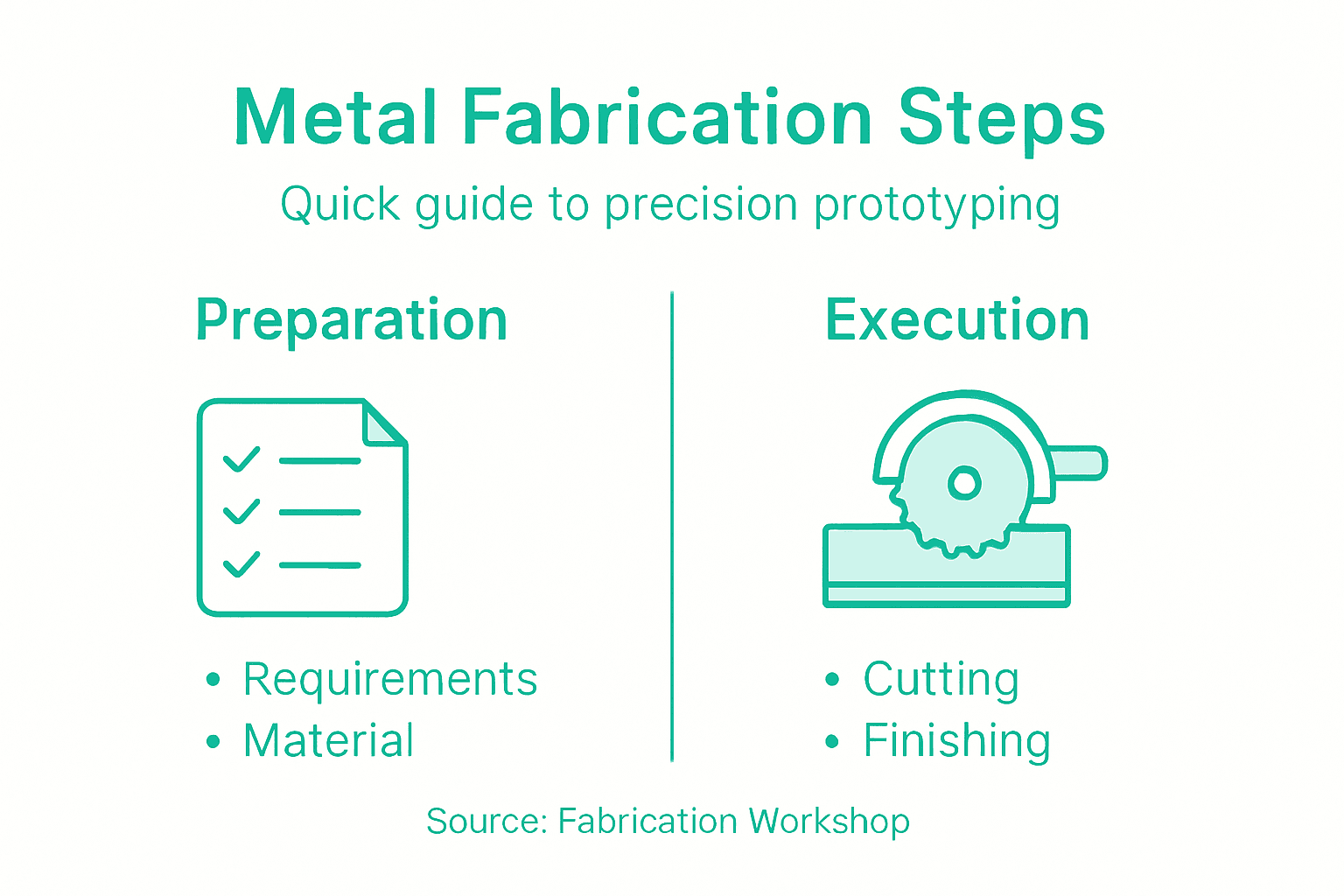
Preparing your metal fabrication workspace requires meticulous attention to equipment setup and comprehensive safety protocols. This critical stage ensures both operational efficiency and worker protection throughout the prototyping process.
Metal fabrication safety protocols address critical workplace hazards by implementing comprehensive protective measures. Essential safety equipment includes:
Implementing safety procedures involves several key steps:
Equipment setup demands systematic organization and rigorous safety checks. Pay special attention to machine positioning, electrical connections, and potential hazard zones. Proper workspace layout minimizes accident risks and enhances operational workflow.
Safety is not an option in metal fabrication - it’s an absolute requirement for professional operations.
Pro tip: Conduct a daily pre-shift safety briefing and equipment inspection to identify and mitigate potential risks before beginning work.
Transforming raw metal into precision prototype components requires mastering core fabrication techniques that shape, separate, and connect materials with exceptional accuracy. Successfully executing these processes demands technical skill and strategic approach.
Core metal fabrication processes include cutting, forming, and joining techniques that progressively transform raw materials. Essential fabrication methods encompass:
Cutting processes:
Forming techniques:
Joining methods:
Successful metal fabrication requires understanding each technique’s strengths and limitations. Precision execution involves selecting the right process for your specific prototype requirements, considering factors like material thickness, complexity, and desired final geometry.
Here’s a concise comparison of major cutting methods for rapid prototyping:
| Cutting Method | Precision Level | Best For |
|---|---|---|
| Laser Cutting | Very high | Thin metals, complex shapes |
| Waterjet Cutting | High, no heat distortion | Thick or heat-sensitive metals |
| Plasma Cutting | Moderate | Fast production, thick steel |
| Mechanical Shear | Medium | Simple cuts, sheet metals |
Mastering metal fabrication means knowing not just how to cut, form, and join - but when and why to use each technique.
Pro tip: Always perform test runs and create sample pieces to validate your chosen fabrication processes before full-scale production.
Precision finishing transforms your fabricated prototype from a raw metal component into a refined, high-performance part with exceptional surface quality and functional integrity. This critical stage ensures your prototype meets the most exacting engineering standards.
Precision machining defines critical manufacturing accuracy through meticulous surface treatment techniques. Surface finishing methods include:
Mechanical treatments:
Chemical treatments:
Protective coatings:
Each finishing technique serves specific purposes - from enhancing aesthetic appearance to improving corrosion resistance, reducing friction, or increasing durability. Strategic surface treatment involves selecting methods that align precisely with your prototype’s functional requirements and performance specifications.

Here’s a quick reference to how common finishing treatments enhance metal prototype performance:
| Finishing Method | Key Benefit | Typical Application |
|---|---|---|
| Electroplating | Corrosion resistance | Electronics, automotive |
| Powder coating | Durable color finish | Appliances, outdoor parts |
| Polishing | Improved surface smoothness | Medical, decorative parts |
| Anodizing | Oxidation protection | Aerospace, consumer devices |
| Painting | Custom appearance | Industrial machinery |
Surface finishing is not just about appearance - it’s about enhancing the fundamental performance characteristics of your metal prototype.
Pro tip: Always test multiple surface finishing techniques on sample pieces to determine the optimal treatment for your specific material and application.
The final inspection phase is your critical quality assurance checkpoint, where precision measurements transform theoretical design into verified engineering reality. This meticulous process ensures your prototype meets every specified performance and dimensional requirement.
Precision inspection methods verify critical metal fabrication parameters with exceptional accuracy. Measurement techniques include:
Dimensional measurement tools:
Critical inspection parameters:
Tolerance verification methods:
Successful inspection requires systematic evaluation against original design specifications. Comprehensive verification means checking not just individual dimensions, but overall geometric compatibility and functional performance.
Tolerance verification is the final guardian of engineering excellence - where design intent becomes manufactured reality.
Pro tip: Establish a consistent measurement protocol and always calibrate inspection tools before critical measurement sessions to ensure absolute accuracy.
Navigating the complex steps of metal fabrication for precision prototyping requires meticulous attention to material selection, detailed CAD design, equipment setup, and thorough finishing. Challenges such as ensuring exact tolerances, choosing the right cutting and joining methods, and implementing effective surface treatments can often delay your prototype development or compromise quality. If you want to overcome these obstacles with confidence, partnering with a manufacturing expert who understands these critical processes is essential.
At WJ Prototypes, we specialize in high-quality metal fabrication and rapid prototyping services tailored to your precise requirements. From initial material analysis to advanced CNC machining and sheet metal fabrication, our ISO-certified facilities and experienced engineers ensure your project meets exact specifications and industry standards. Take advantage of our comprehensive manufacturing solutions and fast turnaround times to bring your designs to reality without compromise. Explore how our team can support every step of your metal prototyping journey by visiting our services page today. Don’t wait to transform your prototype with precision and efficiency—start your quote now and experience the WJ Prototypes difference.
The essential steps include defining fabrication requirements and material selection, preparing detailed CAD designs, setting up equipment and safety protocols, executing cutting, forming, and joining processes, conducting precision finishing and surface treatment, and verifying tolerances through inspection. Follow each step carefully to ensure high-quality outcomes.
To select the right materials, analyze the functional constraints like mechanical stress and environmental conditions, and prioritize properties such as strength, ductility, and corrosion resistance. Create a list of potential materials and evaluate their performance against your specific prototype requirements for optimal results.
Include exact geometric dimensions, material specifications, tolerance ranges, surface finish requirements, and detailed process instructions in your CAD designs. Ensure your technical drawings are comprehensive to minimize misinterpretation during manufacturing.
Ensure safety by preparing the workspace with proper equipment setup, conducting thorough inspections, and implementing protective measures like personal protective equipment. Establish a routine for daily safety briefings and equipment checks to consistently mitigate risks.
Best inspection techniques include using digital calipers, micrometers, and coordinate measuring machines (CMM) to verify critical dimensions and tolerances. Regularly calibrate your measurement tools and establish a consistent inspection protocol to maintain accuracy throughout the verification process.
Finishing treatments such as electroplating for corrosion resistance, polishing for a smooth surface, and powder coating for durability can enhance performance. Choose a method that aligns with your prototype’s functional requirements, as this will significantly impact its longevity and effectiveness.
SERVICES
RESOURCES