



- Room 1807, Unit 9, Building 2, Shangxing Commercial Street, Shangde Road, Shangxing Community, Xinqiao Subdistrict, Bao'an District, Shenzhen City, China
CONTACT US

WhatsApp


Contact Us
Our team is on stand by, waiting toassist you.

Videos
A large collection of educational videos and tutorials.

About Us
Learn about our company, leadership, and mission totransform manufacturing.

Privacy Policy
Applies to all personal information collected through and/or processed in connection.
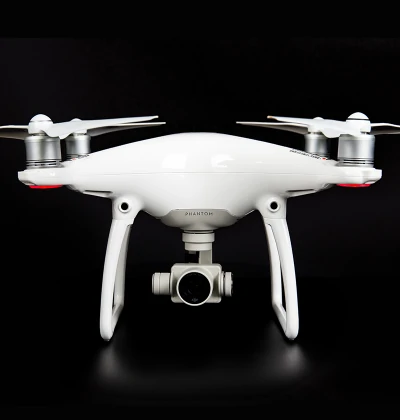

Aerospace & UAV
WJ Prototypes is your 3D manufacturing partner from prototype to large scale production.

Consumer Electronics
New Product Introduction Solutions for Consumer Electronics.

Robotics & Automation
Need some assistance bringing your robotic device or parts from the sketch-board to reality?

Medical Devices
The medical industry needs high quality, dependable and safe parts and products.

Automotive
New Product Introduction Solutions for Automotive

Industrial Machinery
The main purpose of industrial prototyping is to take the product from drawings into the real world.
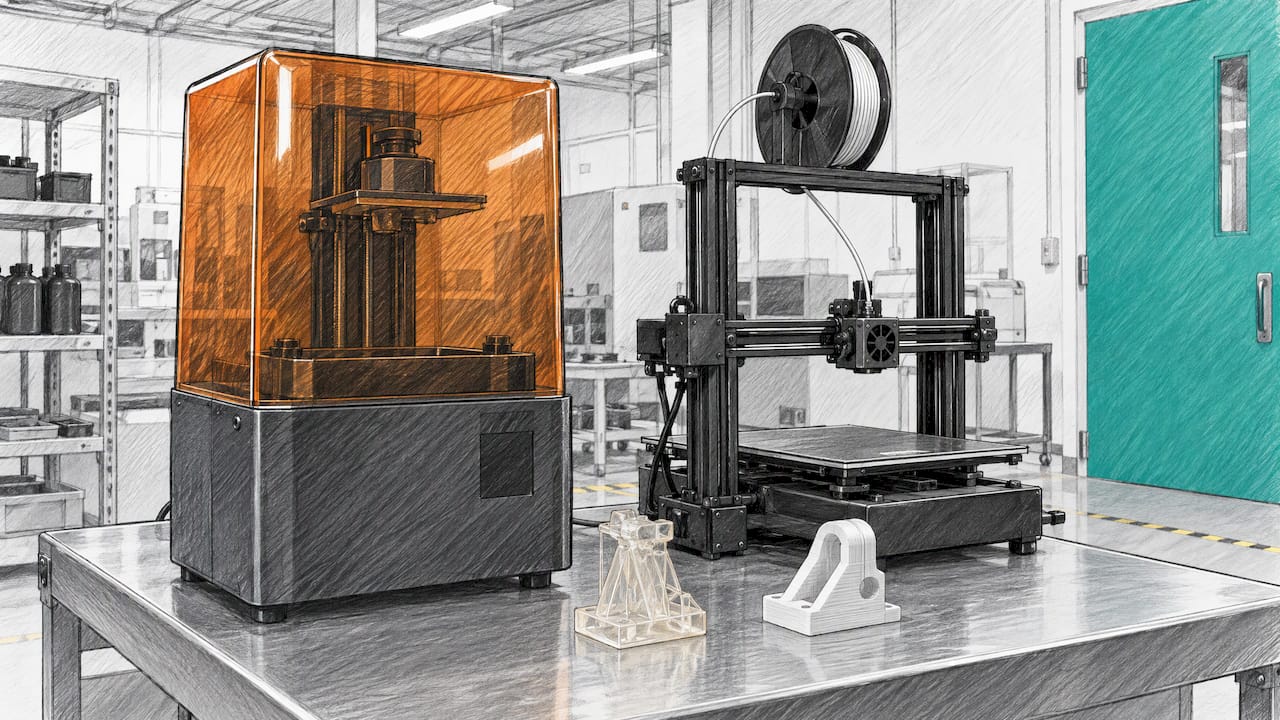
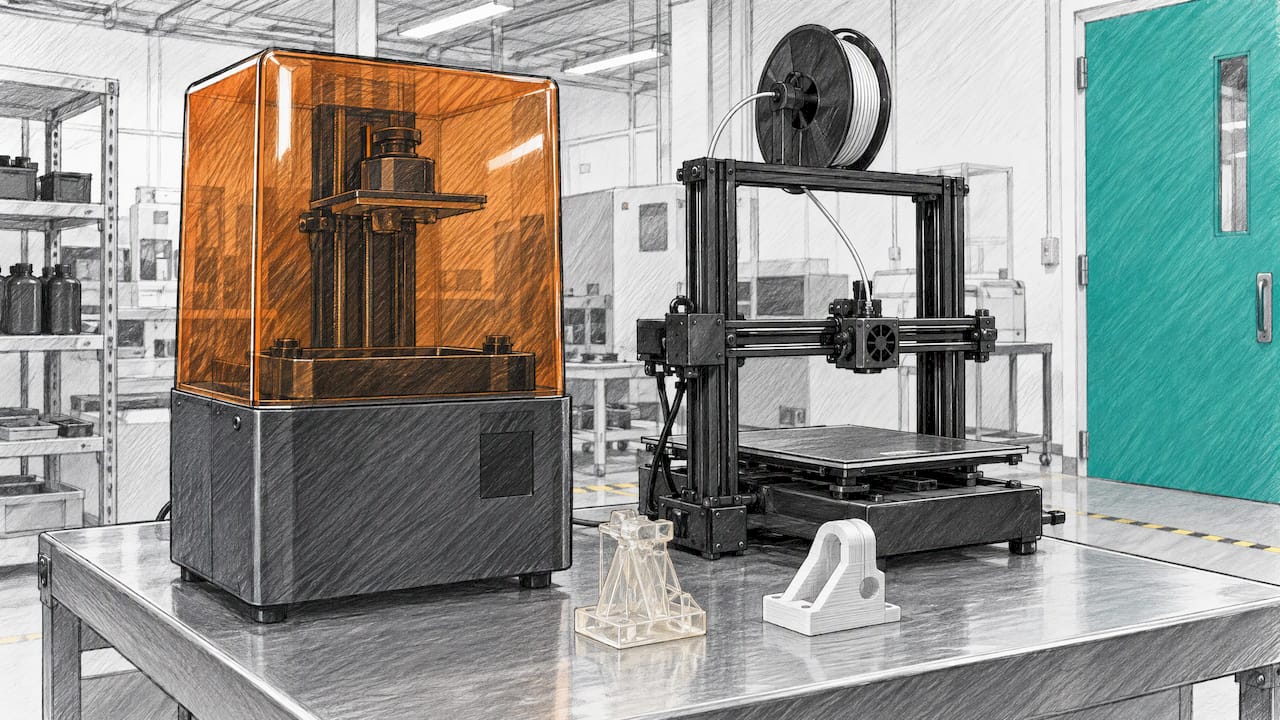
Choose SLA when the part needs fine detail, tight tolerances or a smooth cosmetic surface. Choose FDM when you need a tough, large or low-cost part fast and can live with visible layer lines. SLA cures liquid resin with a UV laser. FDM melts thermoplastic filament through a nozzle. That one difference drives almost everything else: accuracy, strength, cost, finish and post-processing.
This guide compares the two the way an engineering team or a procurement manager needs them compared: by what the part has to do, not by which machine is cooler.
FDM (fused deposition modeling) extrudes heated thermoplastic filament through a nozzle and builds the part layer by layer. The part is a stack of fused beads of plastic. Layer height is limited by nozzle diameter, so lines are usually visible on the surface.
SLA (stereolithography) is a vat polymerization process in which a UV laser selectively cures liquid photosensitive resin into a solid, layer by layer. The laser spot is small and layers are thin, so the surface is smooth and small features survive.
A peer-reviewed review of polymer additive manufacturing sums up the trade: SLA can print high-resolution parts, while FDM is the most suitable in terms of process simplicity. Keep that sentence in mind. It explains most of the table below.
| Factor | SLA | FDM |
|---|---|---|
| Feedstock | Liquid photopolymer resin | Thermoplastic filament |
| Typical tolerance | About 0.05 mm | About 0.15 to 0.20 mm |
| Surface finish | Smooth, near injection-molded look | Visible layer lines |
| Internal structure | Fully solid | Adjustable infill, often hollow-ish |
| Relative part cost | Higher | About 60% lower per part |
| Post-processing | Wash, support removal, often UV or heat cure | Support removal, optional sanding |
| Best for | Detailed, cosmetic, precision parts | Large, tough, low-cost parts and fixtures |
The tolerance and cost figures come from a 2025 head-to-head evaluation of FDM and SLA. Treat them as typical values from one study. Your actual result depends on part geometry, size, material and the machine that makes it.
If your question is whether SLA is more accurate than FDM, the answer is yes. The 2025 MDPI study found that SLA consistently achieves tighter tolerances of 0.05 mm, compared with 0.15 to 0.20 mm for FDM. That gap matters in three situations:
FDM is not inaccurate in a practical sense. For brackets, enclosures with generous clearances, jigs and gauges, 0.15 to 0.20 mm is often fine. The mistake is specifying a tight tolerance on an FDM part and then being surprised at inspection.
Accuracy is also a wider industry issue, not just a printer issue. NIST work on additive manufacturing notes that gaps in part accuracy, surface finish and standardized material property measurements hinder broader adoption. In practice, that means you should state critical dimensions on your drawing and agree on how they will be inspected before you order.
SLA parts can go straight to paint, clear coat or light polishing. FDM parts typically need sanding, filling or vapor smoothing to look finished, which adds labor and can shift dimensions. If a part needs a cosmetic finish anyway, the cheaper FDM print may not stay cheaper.
The searches for SLA vs FDM strength rarely get a clean answer, because strength is not one number.
Material matters more than process. FDM can print engineering thermoplastics such as ABS, nylon and polycarbonate, which tolerate impact and repeated loading. Standard SLA resins are photopolymers that tend to be stiffer and more brittle, though tougher engineering resins exist.
Orientation matters. FDM parts are anisotropic: layers bond less strongly than the filament itself, so a part loaded across the layers can fail early. SLA parts are far more uniform in all directions, which helps predictability.
Infill matters. SLA typically produces fully solid parts, while FDM lets you set infill to save material and weight, with some compromise in structural integrity at low infill. Raise infill and wall count where the load goes.
Post-curing matters for SLA. Many resins reach their rated properties only after a UV and heat cure. A part that comes straight out of the printer is not the part the datasheet describes.
Practical guidance:
FDM has the wider choice of familiar engineering plastics and generally allows bigger build volumes at lower cost. SLA offers resin families tuned for clear, flexible, rigid, high-temperature or castable behavior, but each resin is a formulation rather than a standard commodity polymer, so properties vary by supplier.
For large enclosures, fixtures or frames, FDM is usually the practical route. For small, intricate parts, SLA is. If you need a broad view of what each process can use, see our 3D printing materials page.
The MDPI evaluation found FDM parts about 60% less expensive per part than SLA. The reasons are straightforward: filament is cheaper than photopolymer, machines run larger builds, and there is no wash and cure stage.
But compare total cost, not print cost:
If you are buying parts rather than machines, the question is simpler: what does the finished, inspected part cost, and how fast does it arrive? That is why we quote per project on the actual geometry and material instead of publishing a generic price per cubic centimeter.
FDM parts come out ready to use, though supports may need removal. SLA parts must be washed, and may require UV and heat curing to reach final strength. Washing uses isopropyl alcohol (IPA) or specialized cleaning solutions, and IPA gives off odor and flammable vapors, so it needs ventilation and proper storage. Uncured resin is a skin irritant, so gloves are standard practice. Follow the resin supplier’s safety data sheet for handling and disposal.
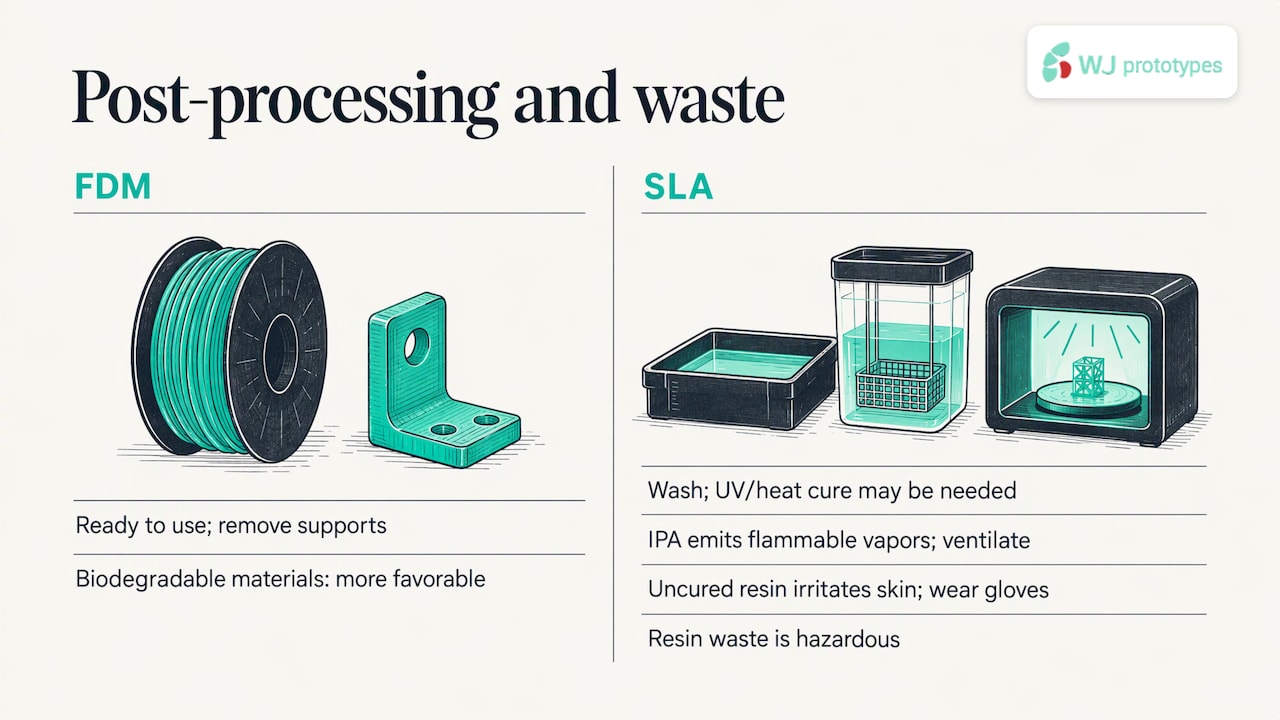
Waste is the other side. The 2025 MDPI study suggests that no single process is universally superior: FDM is more environmentally favorable with biodegradable materials, while SLA resin waste is hazardous. Hazardous waste has to be handled by a shop set up for it. That is one reason many engineering teams buy SLA parts from a service rather than run a resin station in the office. Shipping adds its own footprint, so it is also worth looking at reducing packaging waste across your operation.
| Your part | Better fit | Why |
|---|---|---|
| Visual prototype for a design review | SLA | Smooth finish, fine detail |
| Tight-tolerance fit check | SLA | Tighter tolerance, uniform properties |
| Large fixture, jig or housing | FDM | Bigger builds, lower cost |
| Impact-loaded functional part | FDM (nylon, ABS) or SLS | Tougher thermoplastics |
| Small intricate part with thin walls | SLA | Resolution |
| Cheap early-stage concept iterations | FDM | Lowest cost per part |
| Pattern for vacuum casting | SLA | Surface quality transfers to the cast |
The research agrees with this split: FDM suits large, low-cost prototypes and fixtures, while SLA suits detailed cosmetic models such as dental models and jewelry prototypes. The 2025 study reaches the same conclusion in one line: FDM is cost-effective for prototyping, SLA excels in precision and surface finish.
In aerospace, automotive, medical and oil and gas work, the process is only one input. Material certification, traceability, biocompatibility and temperature or chemical resistance decide whether a printed part can be used beyond a bench test. Before you commit, confirm with your quality team what the application requires, and ask the manufacturer for material data and inspection reports. For metal parts, neither SLA nor FDM is the answer: look at DMLS or machining.
For a wider look at the options, see our guides to the types of additive manufacturing and what SLA 3D printing is.
Most teams that ask us SLA or FDM are really asking a different question: what is this part for? Once that is clear, the choice is rarely close.
We run both processes, along with SLS, MJF, DMLS, CNC machining, vacuum casting and injection molding, so we have no reason to push one over another. Our advice is to match the process to the stage. Early concept checks go well in FDM. Once the geometry is frozen and tolerances or appearance matter, SLA is where our engineers usually send the part, and it is also the natural master for vacuum casting short runs.
There is no minimum order quantity, so a single part is a normal order. Our project managers review the file, confirm material and tolerance expectations with you, and flag anything that would be a poor fit before printing starts. If the right answer is a different process, we will say so.
Read more in our advantages of SLA 3D printing for engineers.
Nas
Not sure which process your part needs? Upload the CAD file and specifications to our 3D printing service for an instant quote, or go straight to SLA or FDM. Pricing is confirmed per project after we check the specifications, and our team will tell you if a different process serves the part better.
Neither wins on every count. SLA is better for precision, fine detail and surface finish. FDM is better for low cost, larger parts and tough thermoplastics. Decide by the requirement that must not fail.
Yes, in general. A 2025 study measured tolerances of about 0.05 mm for SLA and 0.15 to 0.20 mm for FDM. Actual results depend on geometry, size, material and the machine used, so state critical tolerances on your drawing.
Not as a rule. FDM in nylon or ABS usually handles impact and flexing better, while SLA parts are more uniform in every direction and can be stiff and strong once post-cured. Orientation and material choice matter more than the process name. Test a prototype for any load-bearing use.
Often yes for low volumes, jigs, fixtures and manufacturing aids, if the material meets the application’s requirements. For regulated sectors such as medical or aerospace, confirm material certification and testing needs with your quality team first.
SERVICES
RESOURCES