



- Room 1807, Unit 9, Building 2, Shangxing Commercial Street, Shangde Road, Shangxing Community, Xinqiao Subdistrict, Bao'an District, Shenzhen City, China
CONTACT US

WhatsApp


Contact Us
Our team is on stand by, waiting toassist you.

Videos
A large collection of educational videos and tutorials.

About Us
Learn about our company, leadership, and mission totransform manufacturing.

Privacy Policy
Applies to all personal information collected through and/or processed in connection.
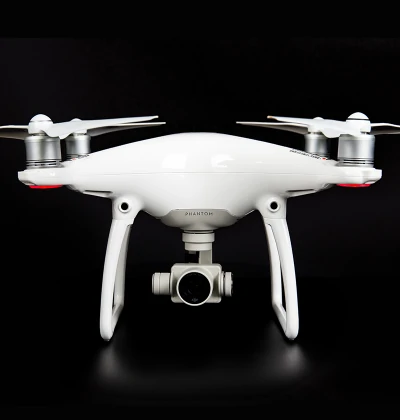

Aerospace & UAV
WJ Prototypes is your 3D manufacturing partner from prototype to large scale production.

Consumer Electronics
New Product Introduction Solutions for Consumer Electronics.

Robotics & Automation
Need some assistance bringing your robotic device or parts from the sketch-board to reality?

Medical Devices
The medical industry needs high quality, dependable and safe parts and products.

Automotive
New Product Introduction Solutions for Automotive

Industrial Machinery
The main purpose of industrial prototyping is to take the product from drawings into the real world.
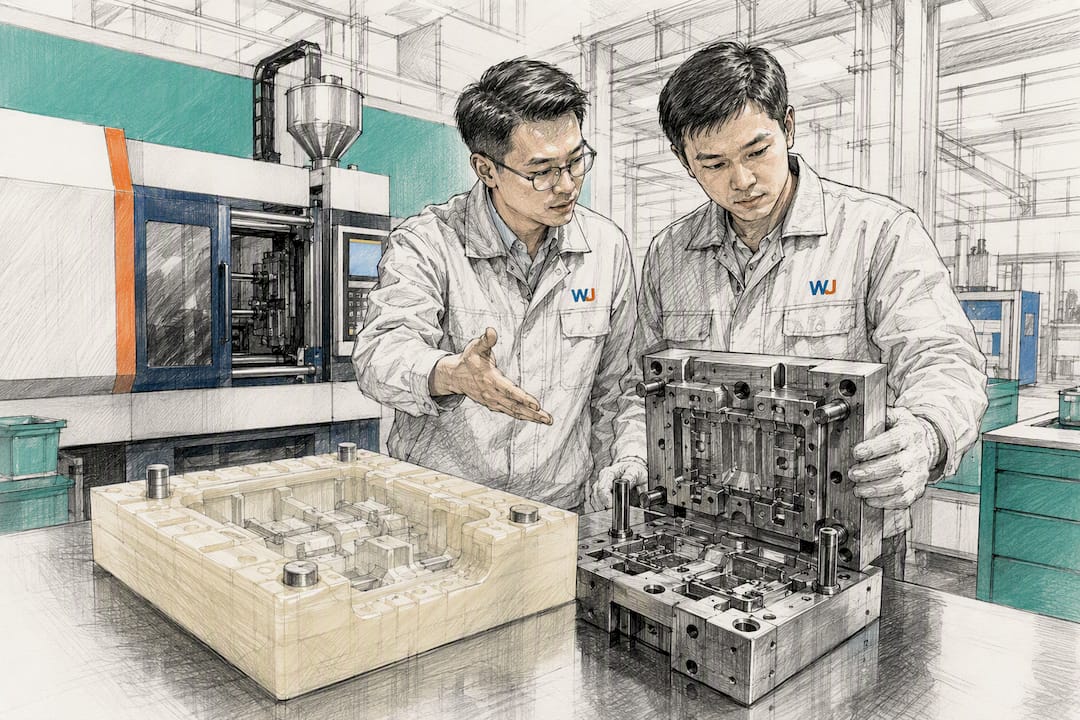

If your projected annual volume climbs past a few hundred units, or your product needs true production-grade thermoplastic properties, it’s time to plan the move from vacuum casting to injection molding. Start with a rough break-even estimate. If the math favors steel or aluminum tooling, request a pilot mold quote from a manufacturer that can carry your design intent forward, such as WJ Prototypes, so nothing gets lost in a vendor handoff.
TL;DR:
- The break-even volume for switching from vacuum casting to injection molding varies widely, from a few hundred to tens of thousands of parts, depending on material and design specifics.
- Aluminum molds are suitable for pilot runs supporting 1,000 to 5,000 cycles, offering a balance between cost and life span before transitioning to steel tooling.
- Critical factors affecting the switch include certified thermoplastic properties, overmolding needs, and regulatory or customer requirements for specific resins or finishes.
- Managing design intent during vendor handoffs is crucial, and a unified supplier like WJ Prototypes reduces rework by controlling master CAD files, material specs, and tooling documentation.
- Post-launch quality monitoring should involve regular process data review, mold maintenance, and micro-adjustments based on cycle and dimension data to prevent drift and ensure consistent parts.
Vacuum casting pours liquid urethane into a silicone mold pulled from a master pattern; injection molding forces molten thermoplastic into a hardened steel or aluminum cavity under thousands of pounds of pressure. That difference in force and material drives everything downstream.
Vacuum casting can simulate the look, feel, and fit of a production part remarkably well, but urethane resins don’t behave like ABS, polypropylene, or glass-filled nylon under long-term load, heat, or UV exposure. If your part needs certified thermoplastic properties, casting can’t get you there.
Throughput is the other wall. A single vacuum casting cycle can run up to 90 minutes, and the silicone tooling typically wears out before 50 casting cycles. That caps practical output at a few hundred parts per mold, sometimes fewer.
The break-even point (BEP) is where injection molding’s higher upfront tooling cost gets offset by its lower per-unit cost. Below that volume, casting wins on total spend; above it, steel or aluminum tooling wins.
Four variables move that number more than anything else: resin cost, cycle time, scrap rate, and expected mold life. Change any one and the BEP shifts substantially.
Break-even is a range, not a rule. Published case studies and industry data put realistic BEP anywhere from several hundred to several tens of thousands of parts, depending heavily on part geometry and material assumptions. Anyone quoting you a single universal number is oversimplifying.
Volume isn’t the only trigger. Watch for these non-volume signals too:
Tooling choice is really a bet on how many cycles you’ll actually need. Silicone soft molds cost roughly $200 to $1,000 and deliver parts in about 10 days from a finished master model, with per-unit prices commonly landing between $10 and $100.
Aluminum molds sit in the middle. They cost more than silicone but far less than hardened steel, and they typically support 1,000 to 5,000 cycles, which makes them ideal for validating a design before committing to production tooling. Rapid tooling approaches, including 3D-printed inserts, can cut lead time roughly in half compared to hardened steel.
Chinese tooling shops quote steel molds based largely on cavity count, geometry complexity, and surface finish class (SPI or VDI grade). A simple single-cavity mold with a matte finish moves fast; a multi-cavity mold with textured, high-polish surfaces and tight tolerances stretches the timeline considerably.
Run your DFM review and tooling quote in parallel, not sequentially. Waiting for design sign-off before requesting quotes routinely adds weeks to a schedule that didn’t need to lose them.
Design-for-manufacturing (DFM) review is where most rework gets prevented or created. Work through these in order:
The most common defects at this stage are flash, sink, short shots, and warpage, and nearly all of them trace back to inconsistent wall thickness or a poorly placed gate rather than a machine problem.
Pro Tip: Build small test features, such as a boss with three rib thickness variants or a gate location comparison, directly into your pilot mold. It costs little extra machining and saves an entire validation round later.
A pilot run of a few hundred to a thousand parts is usually enough to catch process and tooling issues before committing to mass production. Every pilot should end with a first-article inspection (FAI) report checking critical dimensions, surface finish, and material properties against your approved drawing.
During the trial, record injection pressure, melt temperature, cooling time, and cycle time. These parameters become your process control window. Statistical process control (SPC) on a handful of critical dimensions catches drift before it produces a bad batch.
The single biggest cause of expensive rework during scale-up is losing design intent between the prototype vendor and the production molding vendor. Every re-explanation of tolerances, material specs, or gate preferences is a chance for something to get misread.
A unified supplier who manages the master pattern, the vacuum casting, and the production tooling under one engineering team avoids this entirely, since nothing needs to be re-translated between companies.
Before you hand off a project, confirm these items are locked and documented:
| Handoff item | Who owns it | When it’s due |
|---|---|---|
| Master CAD + revision log | Engineering lead | Before tooling quote |
| Material spec sign-off | Product owner | Before pilot mold cut |
| Pilot tooling acceptance | Supplier + client | After first pilot run |
| Mold maintenance schedule | Supplier | At tooling handover |
Your contract should also spell out corrective-action timelines if the pilot run misses spec, plus a commitment to deliver mold drawings and a maintenance schedule alongside the tooling itself.
WJ Prototypes offers SLA and other 3D printing for master patterns, vacuum casting, rapid and hardened tooling, injection molding, and CNC machining under one ISO-certified quality system. That range matters because it means one engineering team, not three separate vendors, carries your design from prototype to production.
A typical engagement follows a clear sequence: instant quote, prototype build, pilot tooling, pilot run with FAI, then production ramp. Each milestone has a defined deliverable before the project moves forward, which keeps surprises from stacking up at the end.

Because WJ Prototypes manages master patterns through mold maintenance, the disjointed handoff that derails so many transitions, where DFM intent gets lost between a prototyping shop and a separate molder, simply doesn’t happen. The same team that validated your casting resin also owns the shrinkage math for your production thermoplastic.
Prototyping volumes rarely stress a supply chain. Production volumes do, and the gap catches teams off guard almost every time.
Resin and colorant sourcing needs its own lead time separate from tooling. Popular engineering grades sometimes face regional shortages, so confirm your molder has a secondary resin supplier qualified against the same spec, not just a single source they hope stays available.
Freight strategy shifts too. Air freight covers a pilot run of a few hundred parts without much pain. At production volume, ocean freight becomes the default, and that adds four to six weeks of transit time you need to build into your inventory planning, plus buffer for customs clearance and port congestion during peak shipping seasons.
Packaging design also changes. A part that survived hand-carried pilot samples in foam inserts needs drop-tested, stackable packaging once it’s shipping by the pallet. Factor this into your DFM review, not as an afterthought after the mold is already cut.
Finally, plan for a secondary or backup molder relationship once you’re at real volume. A single-source strategy that works fine for a 500-unit pilot becomes a real exposure at 50,000 units if that one factory has an equipment failure, a labor shortage, or a quality escape. Many manufacturing decision-makers qualify a second tool or a second vendor specifically to de-risk this, even if it adds modest cost.
Tooling cost gets all the attention, but it’s rarely the number that determines whether your product is profitable at scale. Per-unit cost at production volume includes resin, labor, energy, secondary operations, packaging, freight, and quality overhead, and each of those lines shifts as volume grows.
Resin cost per part is straightforward to calculate once you know part weight and material price per kilogram, but don’t forget regrind allowances and scrap rate in that math. A 5 percent scrap rate at high volume adds up fast.
Labor and energy costs vary by region and by how automated the molding cell is. A fully automated cell with robotic part removal costs more to set up but lowers per-unit labor cost meaningfully once you’re running continuous shifts.
Secondary operations, like pad printing, assembly, or ultrasonic welding, often get underestimated in early cost models because they weren’t part of the vacuum casting workflow at all. Price them separately rather than folding them into a rough “finishing” line item.
Quality overhead includes inspection labor, gauge calibration, and the cost of holding safety stock while a new process proves itself stable. Build a simple per-unit cost model that separates fixed tooling amortization from variable per-part cost, then update it after your pilot run with real numbers instead of quoted estimates. That single spreadsheet becomes your best tool for deciding whether to renegotiate resin pricing, add a second cavity, or hold pricing steady.
Intellectual property exposure changes character once you move from a small casting run to a full production tool sitting in a factory for years.
Start with the contract, not the factory floor. A well-drafted NNN agreement (non-disclosure, non-use, non-circumvention), written under Chinese law and enforceable in a Chinese court, protects you far better than a standard Western NDA, which often has limited enforceability in China. Have it reviewed by counsel familiar with Chinese IP law before signing.
Mold ownership matters just as much as the NDA. Confirm in writing that you own the production tooling, not the factory, and that the mold cannot be run for a third party or relocated without your written approval. Some manufacturers stamp an ownership plate directly onto the mold base as a physical record of that agreement.
Registering your design and any relevant patents in China itself, not just in your home market, closes a gap many companies miss. Chinese IP protection follows a first-to-file system, so registering only in the US or Europe leaves your design unprotected inside the country where it’s actually being produced.
Finally, consider splitting sensitive sub-assemblies or proprietary components across separate suppliers so no single factory holds your complete design. It adds coordination overhead, but for genuinely proprietary mechanisms, that separation is often worth the extra logistics.
The work doesn’t end when production parts start shipping. The first few months at volume reveal issues that a pilot run of a few hundred parts simply can’t surface.
Track first-pass yield, cycle time consistency, and dimensional drift on a rolling basis rather than checking only at the end of a production batch. A mold that ran perfectly for the first 2,000 cycles can start showing wear patterns that shift dimensions slightly by cycle 8,000, and catching that early prevents a shipment of out-of-spec parts.
Set a review cadence, monthly for the first two quarters, then quarterly, where you compare current process data against your original pilot-run baseline. Any parameter that’s drifted outside its established window deserves investigation before it becomes a customer complaint.
Mold maintenance schedules matter more than most teams expect. Steel tooling needs periodic cleaning, venting checks, and wear inspection on high-stress features like thin ribs or sharp corners. A maintenance log that your supplier updates after every few thousand cycles gives you an early warning system instead of a surprise failure.
Continuous improvement at this stage usually means small design tweaks, adjusting a gate size, adding a vent, or thickening a rib fractionally, rather than a full redesign. Keep a running log of these micro-changes tied to mold revision numbers so nothing gets applied twice or lost between production runs.

Every transition from casting to molding carries predictable risk points, and most of them are manageable if you plan for them instead of discovering them mid-project.
Schedule risk is the most common. Tooling delays cascade into launch delays, so build buffer time into your timeline for at least one design revision after the first pilot mold trial, because it’s rare to nail every dimension on the first cut.
Quality risk shows up when pilot-run data gets treated as production-ready before enough cycles have run to reveal wear-related drift. Require a minimum cycle count on pilot tooling, not just a part count, before signing off on production readiness.
Financial risk comes from underestimating costs beyond tooling, particularly secondary operations and freight, which is why the per-unit cost model matters as much as the tooling quote itself.
Vendor risk is the one engineers underestimate most. Splitting master pattern work, casting, and molding across separate companies multiplies the chances that DFM intent gets lost in translation somewhere along the chain. A single supplier managing the full sequence removes that failure point structurally rather than relying on better communication to fix it after the fact.
Three steps, executed in order, get you from vacuum casting to a production-ready mold without the usual delays.
Step 1: Build a BEP spreadsheet using your real resin cost, cycle time, and scrap rate assumptions. Output: a decision memo stating whether to move to injection molding now or continue casting.
Step 2: Order a pilot tool, aluminum if volumes are uncertain, steel if they’re confirmed. Output: pilot parts plus a first-article inspection report.
Step 3: Lock your process parameters from the pilot data and build a production approval pack before scaling.
Avoid signing off on production readiness using part count alone. Require minimum cycle count validation and confirmed secondary-operation performance before ramp.
There’s no shortage of ways to piece together a transition from vacuum casting to injection molding. You can hunt for a casting shop, a separate tooling machinist, and a third molding factory, then manage the handoffs yourself. WJ Prototypes offers a different route: one engineering team that carries your master pattern, casting resin data, and shrinkage assumptions straight into production tooling, so nothing gets lost when the project moves from prototype to mold.

That means your vacuum-cast validation parts and your production injection-molded parts get reviewed against the same CAD file, by the same team, under one ISO-certified quality system. For master patterns or tooling components that need machined precision before a mold is cut, WJ Prototypes’ CNC machining materials page covers the metal and plastic options available for that step. Submit your part files for an instant quote and specify your projected annual volume so the team can recommend aluminum pilot tooling or full production steel from the start.
There’s no single universal number. Realistic break-even points range from several hundred to several tens of thousands of parts depending on material, geometry, and cycle assumptions, so calculate your own BEP rather than relying on a rule of thumb.
It depends heavily on cavity count, geometry complexity, and surface finish grade; simple single-cavity aluminum tools move faster than multi-cavity steel molds with textured finishes.
Not fully. Vacuum casting reproduces fit, finish, and general feel well, but urethane resins don’t match the long-term strength or heat resistance of true engineering thermoplastics.
Losing design and DFM intent in the handoff between vendors, which is why a unified supplier managing the process from master pattern to production mold, such as WJ Prototypes, reduces rework significantly.
Aluminum molds typically support 1,000 to 5,000 cycles at lower cost, making them ideal for validating a design before committing to hardened steel tooling meant for full production volume.
SERVICES
RESOURCES