



- Room 1807, Unit 9, Building 2, Shangxing Commercial Street, Shangde Road, Shangxing Community, Xinqiao Subdistrict, Bao'an District, Shenzhen City, China
CONTACT US

WhatsApp


Contact Us
Our team is on stand by, waiting toassist you.

Videos
A large collection of educational videos and tutorials.

About Us
Learn about our company, leadership, and mission totransform manufacturing.

Privacy Policy
Applies to all personal information collected through and/or processed in connection.
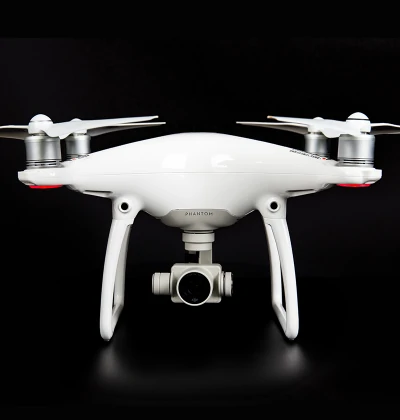

Aerospace & UAV
WJ Prototypes is your 3D manufacturing partner from prototype to large scale production.

Consumer Electronics
New Product Introduction Solutions for Consumer Electronics.

Robotics & Automation
Need some assistance bringing your robotic device or parts from the sketch-board to reality?

Medical Devices
The medical industry needs high quality, dependable and safe parts and products.

Automotive
New Product Introduction Solutions for Automotive

Industrial Machinery
The main purpose of industrial prototyping is to take the product from drawings into the real world.
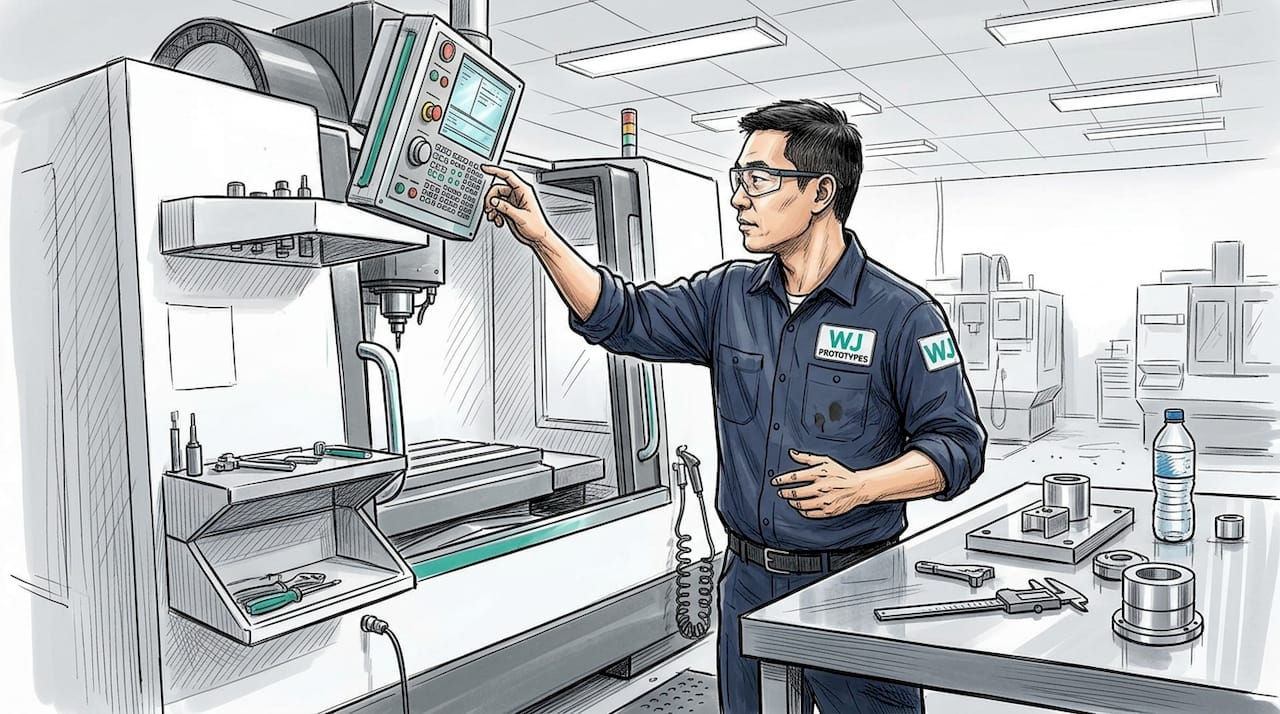

Selecting the right machining process for aerospace and automotive prototypes requires balancing precision, speed, and material versatility. CNC machining provides superior precision, consistency, and speed for complex parts, making it the preferred choice for manufacturing engineers developing critical components. This article explores the major benefits of CNC machining, from unmatched accuracy and advanced material compatibility to optimized surface quality and cutting-edge automation technologies that streamline prototype development and low-volume production workflows.
| Point | Details |
|---|---|
| Precision and consistency | CNC delivers micron level accuracy and repeatable parts across many cycles, reducing process variance. |
| Material versatility | CNC machining handles titanium, aluminum, and Inconel with adaptive cutting strategies suitable for aerospace and automotive demands. |
| Surface quality gains | Optimized toolpaths and controlled speeds produce consistent surface finishes and lower scrap across production runs. |
| Five axis automation | Five axis capability and automation shorten setups and enable smoother transitions from prototype to production. |
| Prototype to production | Integrated CNC workflows support rapid iterations and scalable production, accelerating development cycles. |
Computer numerical control fundamentally transforms how manufacturing engineers approach prototype development by eliminating the variability inherent in manual operations. CNC machines execute programmed instructions with micron-level accuracy, producing identical parts across hundreds or thousands of cycles without drift or operator fatigue. This reproducibility becomes critical when developing aerospace components where dimensional consistency directly impacts safety and performance.
Manual machining offers flexibility for one-off custom work, but operator skill levels vary significantly and human error accumulates over extended production runs. Traditional methods struggle with complex three-dimensional geometries that require multiple setups and precise angular relationships. CNC systems maintain programmed tolerances regardless of part complexity or production duration, making them ideal for precision engineering in prototyping applications.
The speed advantage compounds when producing multiple prototype iterations. Programming changes take minutes rather than hours of manual setup recalibration. Consider these precision benefits:
Automotive prototype development particularly benefits from CNC’s ability to produce functional test components that accurately represent production specifications. Engineers can validate designs with parts that match final manufacturing tolerances, eliminating the guesswork associated with manually machined approximations. This precision enables meaningful performance testing and accelerates the development timeline from concept to validated design.
Pro Tip: Program CNC toolpaths with conservative initial parameters, then optimize based on measured results to achieve the best balance of speed and surface quality for your specific material and geometry.
Aerospace and automotive applications demand materials that deliver exceptional strength-to-weight ratios and performance under extreme conditions. CNC machining excels at processing these challenging alloys, from titanium Ti-6Al-4V used in aircraft structural components to aluminum 7075 for lightweight automotive parts and Inconel for high-temperature engine applications. Each material requires specific cutting strategies, but modern CNC systems adapt parameters dynamically to optimize results.

Titanium machining presents unique challenges due to the material’s low thermal conductivity and tendency to work harden. CNC machines address these issues through precise control of cutting speeds, feed rates, and coolant delivery. The computer control maintains optimal chip formation and heat management throughout the cutting process, preventing tool wear and achieving consistent surface quality on parts ranging from prototype brackets to flight-critical fittings.
Aluminum 7075 machines more readily but requires careful attention to achieve aerospace-grade surface finishes. CNC machining enables precise surface finishes (Ra 0.25-0.40 μm) through optimized flow strategies and parameter selection. The ability to program specific spindle speeds, depths of cut, and tool paths for aluminum alloys makes CNC ideal for producing lightweight prototype components that meet strict dimensional and surface quality requirements.
Key material capabilities include:
The CNC machining materials available span the full spectrum of aerospace and automotive requirements. This versatility allows engineers to prototype with production-intent materials, ensuring test results accurately predict final component performance. Material selection no longer constrains design possibilities when CNC machining for aerospace alloys provides the flexibility to machine virtually any engineering material.
Balancing surface finish quality with material removal rate represents one of the most critical optimization challenges in prototype manufacturing. Surface roughness directly impacts part performance in aerospace applications, affecting aerodynamics, fatigue life, and coating adhesion. Simultaneously, machining efficiency determines project timelines and costs. CNC technology enables precise control over both factors through programmable parameter adjustment.
Spindle speed and feed rate form the foundation of surface quality optimization. Higher spindle speeds and feed rates increase material removal rates but can worsen surface roughness if pushed beyond optimal ranges. Research on aluminum 7075 machining demonstrates that spindle speeds around 2250 RPM deliver an ideal balance, maximizing productivity while maintaining aerospace-grade surface finishes. Depth of cut and tool geometry further refine results for specific component requirements.
Flow machining strategies represent an advanced approach to surface quality enhancement. These techniques optimize tool path patterns to maintain consistent chip loads and minimize vibration during cutting operations. The result is superior surface finish without sacrificing material removal rates. Engineers developing prototypes can achieve production-quality surfaces in initial iterations, eliminating secondary finishing operations and accelerating validation timelines.
| Parameter | Low Setting | Optimal Setting | High Setting |
|---|---|---|---|
| Spindle Speed (RPM) | 1500 | 2250 | 3000 |
| Feed Rate (mm/min) | 200 | 350 | 500 |
| Surface Roughness (Ra μm) | 0.25 | 0.32 | 0.45 |
| Material Removal Rate | Low | Balanced | High |
Modern precision CNC machining optimization leverages simulation software to predict outcomes before cutting begins. Engineers input material properties, tool specifications, and desired surface quality to generate optimized parameter sets. This predictive capability reduces trial and error, particularly valuable when working with expensive aerospace alloys or tight project schedules.
Pro Tip: Use advanced parameter tuning software to model different cutting scenarios and identify optimal settings before committing to production runs, saving both time and material costs.
The trade-offs between speed and quality become manageable through systematic parameter optimization. Prototype components requiring cosmetic appearance or aerodynamic surfaces justify slower speeds and finer finishes. Structural components hidden from view can use aggressive parameters that maximize material removal. CNC programming flexibility allows engineers to apply different strategies to different features within the same part, optimizing overall efficiency without compromising critical specifications.
Multi-axis CNC systems eliminate geometric limitations that constrain conventional three-axis machines. Five-axis machining accesses complex contours and undercuts in single setups, dramatically reducing total production time and improving dimensional accuracy by eliminating cumulative setup errors. This capability proves essential for aerospace components with compound curves and automotive prototypes requiring integrated mounting features at multiple angles.
The setup time reduction alone justifies 5-axis investment for many prototype applications. Traditional 3-axis machining of complex geometries requires multiple fixtures and careful alignment between operations. Each setup introduces potential errors and consumes valuable engineering time. Five-axis CNC reduces setup times and total machining duration by allowing the cutting tool to approach the workpiece from any angle without repositioning.
Machine learning integration represents the cutting edge of CNC optimization. Predictive models analyze historical machining data to forecast energy consumption, surface roughness, and tool wear before cutting begins. These systems continuously refine their predictions as they accumulate more operational data, creating a feedback loop that improves efficiency over time. For prototype manufacturers, this translates to more accurate project estimates and reduced development costs.
Key technology advantages include:
| Feature | 3-Axis CNC | 5-Axis CNC | ML-Integrated CNC |
|---|---|---|---|
| Setup Changes | Multiple | Single | Single + Optimized |
| Geometric Complexity | Limited | Extensive | Extensive + Predicted |
| Surface Quality | Good | Excellent | Excellent + Consistent |
| Process Optimization | Manual | Manual | Automated |
| Energy Efficiency | Standard | Improved | Maximized |
Custom CNC machining technologies continue evolving with automation integration. Robotic loading systems and pallet changers enable lights-out manufacturing, where CNC machines run unattended overnight or across weekends. This automation particularly benefits prototype development by maximizing machine utilization without requiring additional labor costs. Engineers submit designs in the evening and retrieve finished parts the next morning, compressing development cycles.
Pro Tip: Leverage design for manufacturability principles during the CAD phase to optimize parts for CNC production, ensuring smooth transitions from prototype to full-scale manufacturing.
The combination of multi-axis capability and intelligent process control creates unprecedented opportunities for rapid prototype iteration. Engineers can explore complex design alternatives knowing that CNC systems will efficiently produce even challenging geometries. This freedom accelerates innovation in aerospace and automotive development, where performance requirements constantly push the boundaries of conventional manufacturing.
WJ Prototypes delivers comprehensive CNC machining services specifically tailored for aerospace and automotive prototype development. Our advanced manufacturing capabilities span the full range of CNC machining materials, including titanium alloys, aluminum 7075, Inconel, and specialized engineering plastics. With ISO certification and experienced engineers, we provide the precision and reliability critical applications demand.
Our 5-axis machining centers and optimized process parameters ensure superior surface quality while maintaining competitive lead times. Whether you need a single prototype for design validation or low-volume production runs for market testing, our flexible manufacturing approach scales to your project requirements. We also offer complementary services including sheet metal fabrication materials for integrated assemblies.
Experience the advantages of professional CNC machining services in China with global delivery capabilities. Our team provides design for manufacturability consultation to optimize your parts for efficient production, ensuring smooth transitions from initial prototypes through full-scale manufacturing.
Computer control delivers superior accuracy and repeatability compared to manual operations, eliminating operator variability and maintaining consistent tolerances across production runs. CNC machines execute programmed instructions with micron-level precision, producing identical parts regardless of quantity or complexity. This consistency proves essential for aerospace and automotive prototypes where dimensional accuracy directly impacts performance and safety. Precision engineering in prototyping applications particularly benefit from CNC’s ability to maintain tight specifications throughout development cycles.
Titanium alloys like Ti-6Al-4V, aluminum 7075, and Inconel represent the most commonly machined materials for aerospace and automotive applications due to their exceptional strength-to-weight ratios and performance characteristics. CNC systems handle these challenging alloys through optimized cutting parameters and specialized tooling strategies. Engineering plastics and stainless steel variants also machine effectively for functional prototypes and corrosion-resistant components. The full range of CNC machining materials available enables engineers to prototype with production-intent alloys, ensuring test results accurately predict final component performance.
Optimal spindle speeds and feed rates balance material removal rates with surface roughness requirements, typically achieving Ra 0.25-0.40 μm finishes on aerospace alloys. Flow machining strategies and advanced tool path programming further enhance surface quality without sacrificing productivity. Modern CNC systems use simulation software to predict outcomes and identify ideal parameter combinations before cutting begins. This precision CNC machining optimization approach reduces trial and error while delivering production-quality surfaces in initial prototype iterations, eliminating costly secondary finishing operations.
Five-axis machining reduces setup times and enables complete part production in single operations by accessing complex geometries from any angle without repositioning. This capability eliminates cumulative setup errors and dramatically improves dimensional accuracy for components with compound curves or integrated features at multiple angles. The technology proves particularly valuable for aerospace prototypes requiring intricate contours and automotive parts with complex mounting configurations. Custom CNC machining technologies like 5-axis systems accelerate development timelines while improving part quality, making them ideal for demanding prototype applications.
SERVICES
RESOURCES