



- Room 1807, Unit 9, Building 2, Shangxing Commercial Street, Shangde Road, Shangxing Community, Xinqiao Subdistrict, Bao'an District, Shenzhen City, China
CONTACT US

WhatsApp


Contact Us
Our team is on stand by, waiting toassist you.

Videos
A large collection of educational videos and tutorials.

About Us
Learn about our company, leadership, and mission totransform manufacturing.

Privacy Policy
Applies to all personal information collected through and/or processed in connection.


Aerospace & UAV
WJ Prototypes is your 3D manufacturing partner from prototype to large scale production.

Consumer Electronics
New Product Introduction Solutions for Consumer Electronics.

Robotics & Automation
Need some assistance bringing your robotic device or parts from the sketch-board to reality?

Medical Devices
The medical industry needs high quality, dependable and safe parts and products.

Automotive
New Product Introduction Solutions for Automotive

Industrial Machinery
The main purpose of industrial prototyping is to take the product from drawings into the real world.
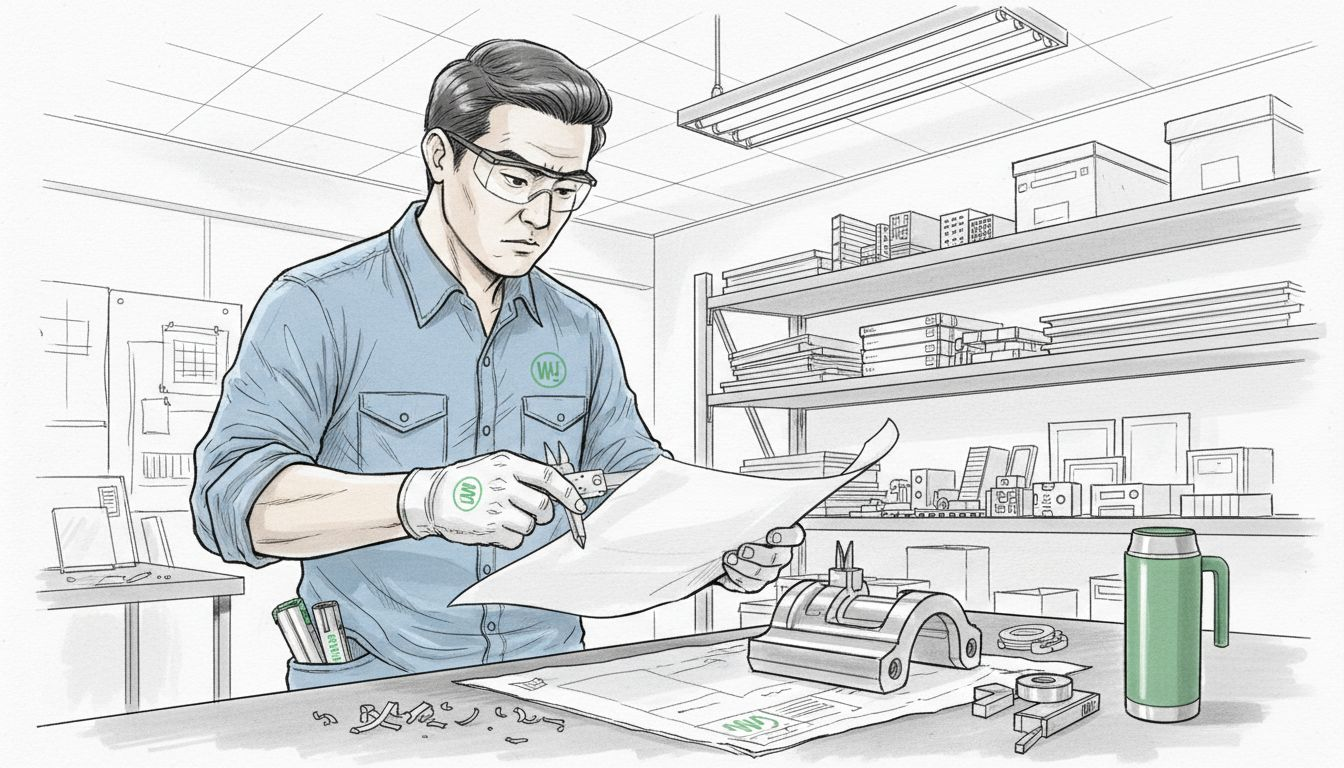
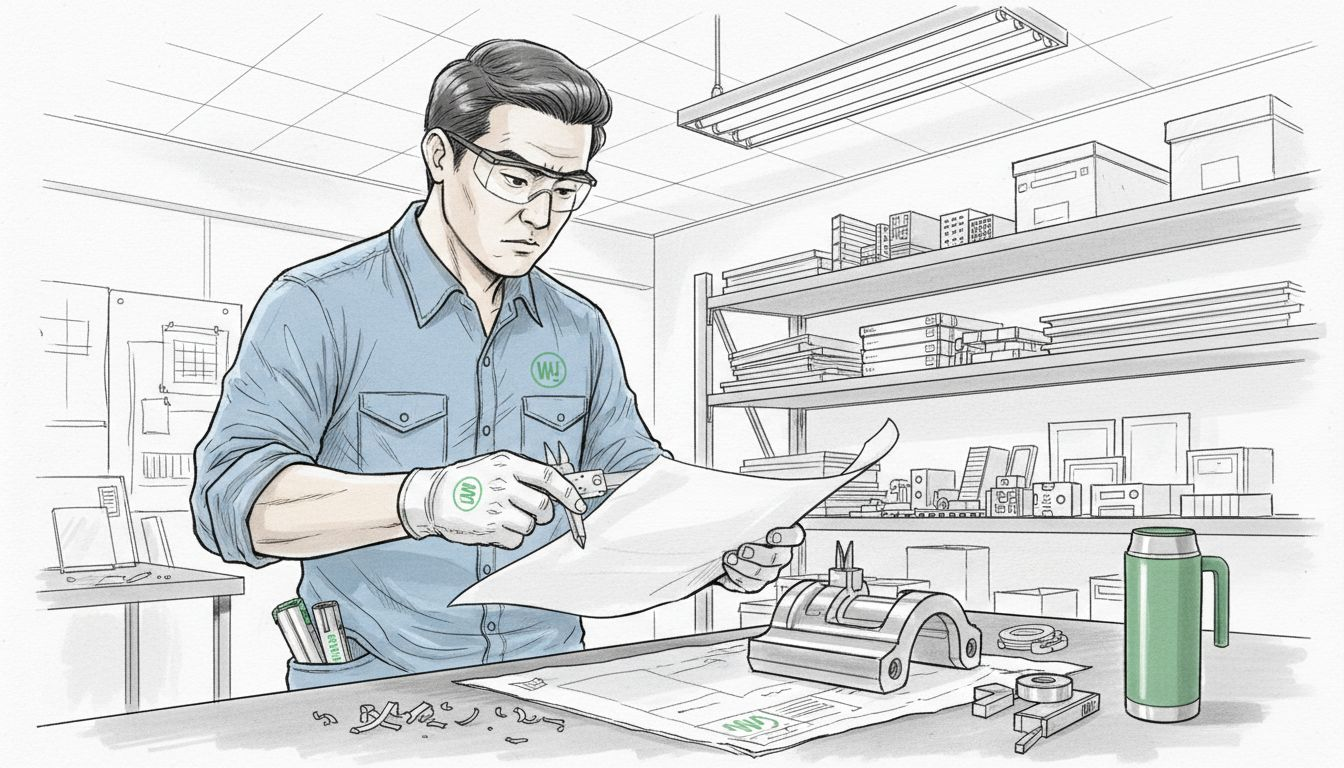
Bringing your aerospace or automotive prototype from concept to reality often feels overwhelming. Every detail, from precise cuts to the strength of your joints, can make or break your project’s success. If you struggle to balance speed, accuracy, and cost, you are not alone.
This guide reveals practical techniques you can use right away. You will learn how proven methods like CNC machining, laser cutting, and smart finishing choices can transform ordinary metalwork into high-quality parts—each step designed to help you avoid common pitfalls and achieve reliable, repeatable results.
Get ready to uncover clear, actionable strategies that professionals rely on when fabricating sheet metal components. The insights ahead will equip you to make better decisions, deliver stronger prototypes, and meet your toughest manufacturing goals.
| Takeaway | Explanation |
|---|---|
| 1. Understand Material Properties | Grasping material anisotropy and springback is crucial for accurate designs. This knowledge directly influences component reliability and performance in prototypes. |
| 2. Leverage CNC Machining for Precision | CNC machining enables high dimensional accuracy and repeatability, essential for low-volume production of critical aerospace and automotive parts. |
| 3. Utilize Laser Cutting for Efficiency | Laser cutting offers rapid production of intricate designs with tight tolerances, reducing lead times significantly compared to traditional methods. |
| 4. Choose Appropriate Welding Techniques | Selecting the right welding method affects joint strength and durability. Proper technique is vital for meeting performance requirements in prototypes. |
| 5. Integrate Finishing Processes Early | Specify surface finish requirements during the design phase to enhance performance and ensure production-ready components meet certification standards. |
Sheet metal fabrication is the process of transforming thin metal sheets into precision components through cutting, bending, and joining techniques. For engineers in aerospace and automotive sectors, understanding these fundamentals is crucial to optimizing rapid prototyping and low-volume production.
At its core, sheet metal fabrication involves processes like shearing, bending, and drawing to create parts from metal sheets typically less than 6 millimeters thick. The process demands careful attention to material behavior, particularly how metals respond to deformation under pressure.
Why does this matter for your work? Sheet metal components form the backbone of structural panels, chassis parts, and enclosures across automotive and aerospace applications. Getting the basics right directly impacts your prototype quality, production speed, and overall cost efficiency.
Understanding material anisotropy is your first essential step. Sheet metals have directional properties, meaning they respond differently depending on the direction of applied force. This affects how your parts will perform under stress.
Springback is another critical factor. After bending, metal naturally tries to return to its original shape, slightly reducing the angle of your bend. Engineers must account for this when designing die angles and tooling specifications for accurate final dimensions.
Residual stresses develop during fabrication as metal is deformed. These internal stresses can cause warping or failure later if not properly managed through stress-relief processes or controlled cooling rates.
Formability determines what shapes you can realistically achieve. Material properties such as grain size and directionality significantly influence how easily metal can be bent, drawn, or stretched without cracking.
Key factors affecting your fabrication outcomes include:
Different deformation modes demand specific control strategies. Bending requires precise angle management, while stretching demands careful force distribution to avoid tearing. Your understanding of which deformation mode applies to each feature determines manufacturing success.
Mastering these basics transforms you from someone executing processes to an engineer who controls them with precision and predictability.
For aerospace and automotive applications, the stakes are high. A structural panel that fails due to residual stress or a chassis component with incorrect springback compensation can compromise vehicle safety. Your foundational knowledge directly influences component reliability and production efficiency.
The practical reality: manufacturers worldwide produce high-quality sheet metal parts across industries by controlling these fundamental variables. Your job is understanding which variables matter most for your specific application and tolerances.
Pro tip: Always request material mill certificates showing grain size and mechanical properties, then cross-reference them against your die design calculations to predict springback and adjust tooling angles accordingly before production begins.
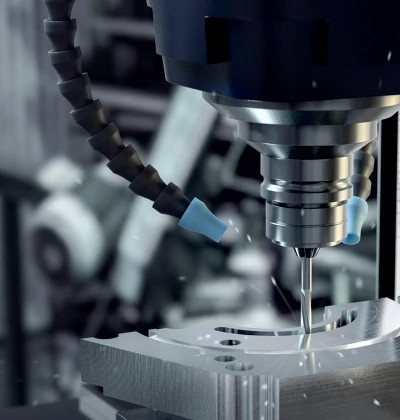
CNC machining represents a fundamental shift from manual fabrication to automated precision manufacturing. This technology controls multi-axis machine tools through programmable instructions, enabling you to produce complex parts with exceptional repeatability and accuracy.
For aerospace and automotive engineers, CNC machining is indispensable. You rely on it to create components where dimensional accuracy determines whether a part functions correctly or fails in the field.
How does CNC technology achieve this precision? Computer-controlled systems execute your toolpath with consistent speed, feed rates, and cutting depths across every part. Unlike manual machining where operator skill varies, CNC delivers identical results across production runs.
Dimensional accuracy is the most obvious benefit. Modern CNC systems maintain tolerances well within aerospace standards, critical for structural components and bearing surfaces where precision directly impacts assembly fit and performance.
Repeatability ensures every part meets specifications. When producing low-volume batches for prototyping, you need confidence that part 50 matches part 1 without rework or compensation.
Cutting tool compensation and thermal error management represent advances that separate modern CNC from older equipment. Advances in CNC technology have enhanced toolpath generation and surface finish while compensating for mechanical and thermal errors that would otherwise accumulate across production runs.
Key advantages for your rapid prototyping workflow include:
When you need to move from design to tested prototype quickly, CNC machining compresses your timeline. Your CAD model converts directly to machine code, eliminating manual template creation and layout work.
CNC machining transforms your design intent into physical parts with the precision your engineering calculations demand.
For aerospace applications requiring structural integrity validation, CNC-produced test samples meet material certification requirements immediately. Automotive engineers benefit similarly when crash testing or functional validation demands production-equivalent components.
The practical reality: your competition uses CNC machining routinely. Parts requiring aluminum or steel with tight tolerances find their way to CNC machines in rapid prototyping shops worldwide because the alternative methods simply cannot match the speed and accuracy combination.
Pro tip: When programming your CNC toolpath, build in specific tool compensation values based on actual measurements from your first part, then validate on part two before running your full batch.
Laser cutting represents a game-changing capability for engineers developing aerospace and automotive prototypes. This technology transforms your CAD designs directly into precise metal parts without expensive tooling or extended lead times.
What makes laser cutting so valuable for your rapid prototyping workflow? The process delivers rapid production of intricate geometries while maintaining tight tolerances and producing exceptionally clean cuts with minimal post-processing requirements.
Unlike traditional stamping or machining, laser cutting requires no die fabrication. You move from design approval to finished parts in days instead of weeks, compressing your prototype iteration cycles significantly.
Heat control is fundamental to laser cutting quality. The process minimizes thermal deformation by controlling heat input and using gas assist to manage the cutting zone, preventing warping that would compromise your dimensional accuracy.
You gain the ability to produce complex geometries with high repeatability across multiple parts. Each component maintains identical dimensions and surface characteristics, critical when validating aerodynamic or structural performance.
Minimal burrs mean less finishing work. Traditional cutting methods leave rough edges requiring hand deburring or secondary grinding operations. Laser-cut edges are clean, reducing labor costs and accelerating your path to final assembly and testing.
Key advantages laser cutting brings to your prototyping process include:
When you need a structural steel component tested in 48 hours, laser cutting delivers results that machining or stamping cannot match. Your design can incorporate intricate slot patterns, compound angles, and detailed geometry without increasing production time.
Laser cutting collapses the timeline between design concept and validated prototype, accelerating your entire development cycle.
Aerospace applications benefit particularly from laser precision. When validating structural concepts or testing load-bearing brackets, your prototype parts must perform identically to production equivalents. Laser cutting ensures this consistency.
Automotive engineers use laser cutting for chassis mockups, mounting brackets, and thermal management components where accuracy directly impacts assembly fit and functional validation.
Pro tip: Submit your CAD files with all features at least 1.5 millimeters apart to avoid thermal damage from cutting, and specify your material grade and thickness upfront to optimize gas assist settings for the cleanest cuts.
Welding is the backbone of structural integrity in aerospace and automotive manufacturing. The quality of your welds directly determines whether assembled components withstand operational stresses and maintain performance throughout service life.
Choosing the right welding technique transforms your prototype from a collection of parts into a unified, structurally sound assembly. Different methods suit different materials and performance requirements, so understanding your options is essential for success.
Why does welding technique matter so much? Because heat input, shielding protection, and filler material composition all influence joint strength, fatigue resistance, and thermal stability in your finished products.
Shielded Metal Arc Welding (SMAW) offers versatility and reliability. This manual process gives operators direct control over heat input and is excellent for thicker sections and field repairs where portability matters.
Tungsten Inert Gas (TIG) welding delivers superior joint quality and precision. You achieve excellent control and cleaner welds with minimal spatter, making TIG ideal for aluminum alloys and critical aerospace components requiring flawless surfaces.
Metal Inert Gas (MIG) welding provides speed and efficiency. This semi-automatic process balances productivity with quality, making it practical for low-volume production runs where you need faster cycle times without sacrificing strength.
Advanced techniques like friction stir welding and laser beam welding enhance joint strength and structural integrity while minimizing defects. These modern processes improve fatigue resistance and thermal stability, critical for aerospace and defense applications where failure is not an option.
Key factors influencing weld quality include:
When prototyping aerospace structures, your welding approach determines whether prototype testing reveals design flaws or masks them. Poor weld quality hides problems until production, creating costly delays.
Strong joints begin with proper technique selection, meticulous parameter control, and verification that your chosen method matches material properties and design loads.
Automotive applications demand welds that survive repeated stress cycling. Your low-volume prototype batches must demonstrate fatigue performance identical to production equivalents, requiring welding methods and parameters validated for endurance.
Pro tip: Always conduct test welds on scrap material using your exact parameters before welding prototype components, then cut samples for mechanical testing to verify your process delivers required strength before committing critical parts.
Metal stamping transforms flat sheet metal into complex, finished components through high-speed, high-pressure forming. For engineers transitioning from prototyping to low-volume production, stamping offers capabilities that fundamentally change your manufacturing economics.
Why consider stamping when you have already validated your design through CNC machining or laser cutting? Because stamping delivers speed, consistency, and cost advantages that accelerate your path from prototype to production at scale.
Stamping excels when you need identical parts produced repeatedly with minimal variation. Your aerospace bracket design that took weeks to perfect through iterative prototyping can now be produced in hours once tooling is complete.
Cycle time is dramatically reduced compared to machining. A component requiring 30 minutes of CNC programming and machine time can be stamped in seconds once the die is ready, multiplying your daily output exponentially.
Material efficiency improves significantly. Unlike CNC machining that cuts away excess material as chips, stamping shears and forms the metal you need with minimal waste. This reduces material costs and environmental impact across your production run.
Dimensional consistency reaches levels machining struggles to match. Each stamped part emerges identically from the die, eliminating variation caused by tool wear or operator technique. Your automotive chassis components maintain tight tolerances across thousands of units.
Surface finish quality comes directly from die design. Your production parts exit the stamping press ready for assembly without secondary machining or finishing operations, compressing lead times further.
Key advantages stamping brings to your low-volume production strategy include:
When scaling from prototype to initial production, understanding sheet metal fabrication fundamentals helps you design stampable features and optimize your tooling strategy from the beginning.
Stamping transforms your proven prototype design into production reality with speed and consistency that handmade or machined parts cannot match.
Aerospace applications benefit when producing brackets, ducts, or structural reinforcements where identical geometry across production batches validates airworthiness. Automotive engineers rely on stamping for chassis components, brackets, and enclosures where cost per unit directly impacts vehicle pricing.
Pro tip: Design your stamped parts with generous radii on internal corners and consistent wall thickness to minimize die stress and extend tool life while improving part quality and reducing scrap rates.
Finishing processes separate acceptable prototypes from production-ready components. The surfaces of your fabricated parts directly influence appearance, function, durability, and whether they meet aerospace or automotive certification requirements.
Your CNC-machined bracket or laser-cut panel emerges with surface imperfections that affect performance. Finishing processes remove these irregularities, improve dimensional accuracy, and enhance fatigue resistance critical to structural integrity.
Why does finishing matter beyond aesthetics? Because surface roughness affects stress concentration, corrosion resistance, and how components perform under operational loads in real-world conditions.
Polishing creates smooth, visually appealing surfaces by progressively removing microscopic irregularities. This traditional method works well for aesthetic components and those requiring corrosion resistance through smooth surfaces that prevent contaminant trapping.
Electropolishing removes material electrochemically, producing surfaces smoother than mechanical polishing alone. This technique excels for stainless steel components where corrosion resistance and biocompatibility matter, particularly in aerospace and medical applications.
Abrasive Flow Machining forces abrasive media through your components, finishing internal passages and complex geometries unreachable by conventional methods. This process is invaluable when your prototype contains intricate cooling channels or internal passageways.
Chemical Mechanical Polishing combines chemical and mechanical action for ultra-smooth surfaces and improved geometric accuracy. These advanced finishing technologies enhance surface roughness and wear resistance while improving material properties essential in precision engineering applications.
Finishing methods address different requirements across your fabrication needs:
Surface finishing improves fatigue life and geometric accuracy, addressing internal and external surfaces that affect component performance in demanding applications. Your aerospace structural test samples must demonstrate production-equivalent surface quality and fatigue characteristics.
Finishing transforms raw fabricated parts into validated components meeting engineering specifications and performance requirements.
Automotive engineers recognize that dashboard components requiring specific surface finish specifications demand integrated finishing planning from design through delivery. Aerospace applications demand even stricter attention because surface quality directly influences certification and safety.
Pro tip: Specify your required surface finish and roughness values early in your design phase, then communicate these requirements to your fabrication partner during quoting so finishing is budgeted and scheduled as an integrated step rather than expensive afterthought.
This table summarizes the key points and considerations related to various metalworking techniques and their applications in aerospace and automotive engineering projects as described in the article.
| Topic | Description | Key Considerations |
|---|---|---|
| Sheet Metal Fabrication | The process of transforming thin sheets of metal into components using techniques such as cutting, bending, and joining. | Optimal material selection, understanding material behavior during deformation, and mastering concepts like springback and residual stress management are critical for accurate and reliable prototypes and efficient production. |
| CNC Machining | Utilizing computer-controlled tools to create precise, repeatable parts by material removal. | It enables high dimensional accuracy, repeatability, and supports complex geometries, making it invaluable for rapid prototyping and low-volume production. |
| Laser Cutting | A technique for producing intricate and precise parts directly from CAD designs without tooling requirements. | Heat management, minimal thermal deformation, and superior cut quality enable fast turnaround of prototypes with high precision and consistency. |
| Welding | Techniques to join metal components creating strong and durable assemblies. | Heat input, filler material selection, and post-weld treatments are essential for ensuring structural integrity and fatigue resistance in aerospace and automotive applications. |
| Metal Stamping | High-speed manufacturing process for shaping sheet metal into consistent components using custom dies. | Stamping is cost-effective for large-scale production with tight tolerances and minimal waste but requires investment in tooling. |
| Finishing Processes | Post-fabrication steps to improve surface quality, aesthetics, and performance. | Includes polishing, electropolishing, and abrasive methods; critical for meeting certifications and enhancing durability and fatigue resistance. |
Mastering the 6 essential metal fabrication processes means addressing challenges like material behavior, precision in CNC machining, efficient laser cutting, strong welding joints, cost-effective stamping, and top-quality finishing. Whether you are battling springback in sheet metal, demanding exact tolerances from CNC parts, or seeking flawless welds for aerospace prototypes, these complexities can slow your development timeline and increase costs.
At WJ Prototypes, we understand the critical role these processes play in your rapid prototyping and low-volume production needs. Our comprehensive manufacturing expertise and advanced technologies ensure your designs transform seamlessly into functional, reliable components. With capabilities spanning from precision sheet metal fabrication and CNC machining to laser cutting and finishing, we deliver high quality, consistent results that accelerate your engineering goals.
Take control of your fabrication challenges now. Partner with WJ Prototypes to leverage professional support focused on reducing springback impacts, managing residual stresses, and achieving precise surface finishes that satisfy aerospace and automotive standards. Visit our website, explore our services, and request a quote today to experience fast turnaround and cost-effective production tailored to your project requirements.
Sheet metal fabrication primarily involves cutting, bending, and joining techniques. Engineers should focus on mastering the basics of shearing, bending, and forming to ensure precision and quality in their prototypes.
CNC machining achieves exceptional precision through automated control of multi-axis machine tools, ensuring that the dimensional accuracy of parts consistently meets engineering specifications. To get started, program your CNC toolpath with exact measurements to maintain tight tolerances in every production run.
Laser cutting offers rapid production of intricate geometries while maintaining tight tolerances and producing clean cuts. To maximize benefits, utilize laser cutting for designs needing quick iterations and precise features, significantly reducing lead times by days compared to traditional methods.
The choice of welding technique depends on material type and required joint strength. For high-quality, precise welds, consider using Tungsten Inert Gas (TIG) welding, particularly for critical aerospace applications, to improve joint integrity and performance.
Finishing processes enhance the surface quality of your components, improving attributes like corrosion resistance and dimensional accuracy. Ensure to integrate appropriate finishing strategies during the design phase to meet specific surface finish requirements, as this affects overall performance and durability.
Metal stamping enables high-speed and high-volume production of consistent parts with minimal material waste and labor costs. To optimize your transition from prototyping to production, design components that facilitate easy stamping for faster assembly, significantly reducing lead times.
SERVICES
RESOURCES