



- Room 1807, Unit 9, Building 2, Shangxing Commercial Street, Shangde Road, Shangxing Community, Xinqiao Subdistrict, Bao'an District, Shenzhen City, China
CONTACT US

WhatsApp


Contact Us
Our team is on stand by, waiting toassist you.

Videos
A large collection of educational videos and tutorials.

About Us
Learn about our company, leadership, and mission totransform manufacturing.

Privacy Policy
Applies to all personal information collected through and/or processed in connection.
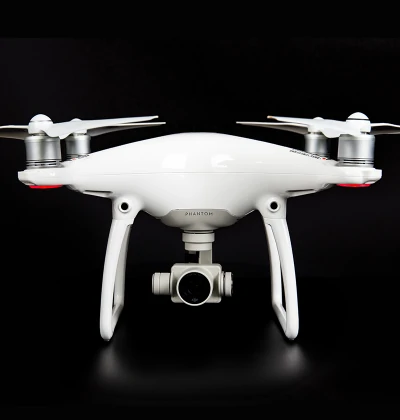

Aerospace & UAV
WJ Prototypes is your 3D manufacturing partner from prototype to large scale production.

Consumer Electronics
New Product Introduction Solutions for Consumer Electronics.

Robotics & Automation
Need some assistance bringing your robotic device or parts from the sketch-board to reality?

Medical Devices
The medical industry needs high quality, dependable and safe parts and products.

Automotive
New Product Introduction Solutions for Automotive

Industrial Machinery
The main purpose of industrial prototyping is to take the product from drawings into the real world.


TL;DR:
- The product development lifecycle is a structured, multi-stage process that transforms ideas into commercial products through phases like ideation, prototyping, testing, and launch. Agile methodologies and stage gates improve efficiency by enabling early feedback, iterative development, and risk management. Most failures result from viewing the lifecycle as linear and neglecting post-launch monitoring and strategic planning.
The product development lifecycle (PDLC) is defined as the structured, multi-stage process that transforms a raw idea into a commercial product through phases like ideation, prototyping, testing, and launch. Unlike the broader product lifecycle (PLC), which tracks a product’s market performance from introduction through decline, the PDLC focuses entirely on execution. It governs how cross-functional teams in R&D, marketing, and finance collaborate across stages to reduce risk and reach market faster. Frameworks like Agile and concepts like the Minimum Viable Product (MVP) have reshaped how teams move through these stages in 2026.
The PDLC spans 6 to 9 stages depending on the framework your team adopts, but the core activities remain consistent: ideation, market research, planning, prototyping, testing, launch, and post-launch monitoring. Each stage acts as a checkpoint. Teams validate assumptions before committing resources to the next phase, which is what makes the process a risk management tool rather than just a project plan.
A 9-stage model from Shopify maps the full arc: ideation through monitoring covers ideation, market research, planning, prototyping, sourcing, marketing strategy, final production, launch, and ongoing monitoring. That level of granularity matters for physical products especially, where sourcing and production carry significant cost risk. Software teams often compress these into 6 stages, treating sourcing and production as a single engineering sprint.
The table below compares three common stage-count frameworks:
| Framework | Stage count | Key emphasis |
|---|---|---|
| Asana (2026) | 6 stages | Cross-functional collaboration and sprint planning |
| Nulab | 7 stages | Iterative cycles and post-launch feedback loops |
| Shopify | 9 stages | Physical product sourcing, production, and monitoring |
One critical element most teams skip is the Product Innovation Charter (PIC). The PIC sets strategic boundaries for a development initiative, defining goals, constraints, and success criteria before a single prototype is built. Without it, teams drift into feature creep and extend timelines without realizing it.
Pro Tip: Before your team moves from ideation to prototyping, write a one-page PIC that defines what success looks like and what is explicitly out of scope. Review it at every stage gate.
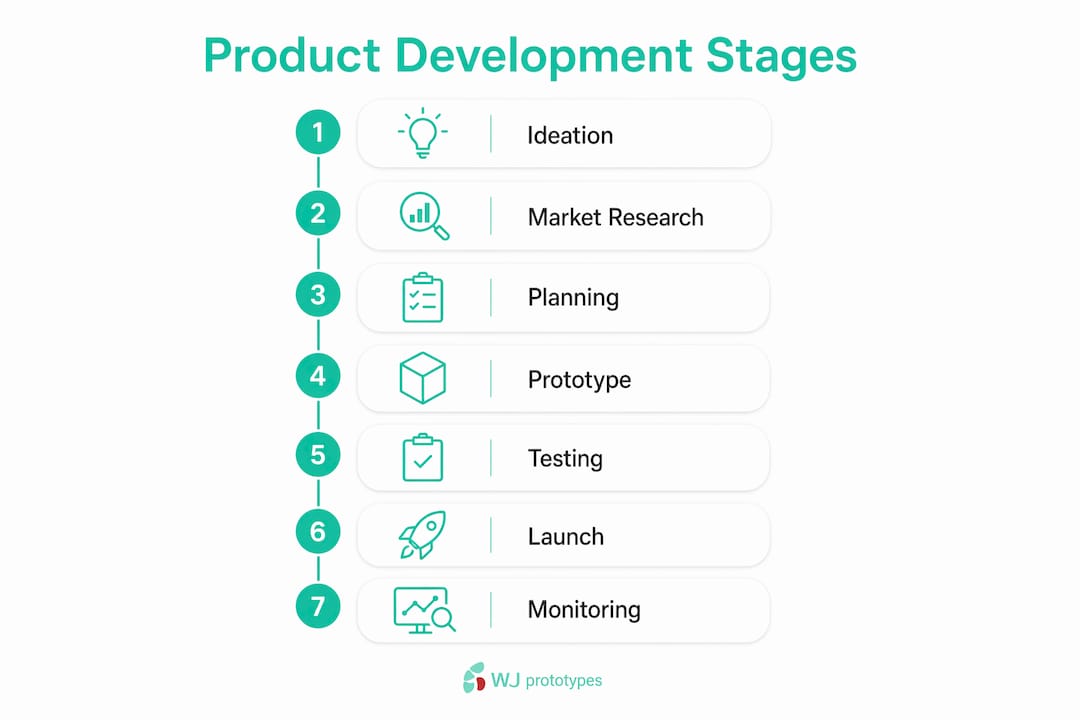
The PDLC is also not strictly linear. Stages repeat iteratively for feature updates, product pivots, or market repositioning. A product that launches successfully still cycles back through ideation and testing when user needs shift. Treating the lifecycle as a one-way road is one of the most common and costly mistakes product teams make.
Agile transforms the traditional PDLC from a sequential process into an overlapping, feedback-driven system. Instead of waiting until late-stage testing to learn whether users want the product, Agile teams release an MVP early and collect real user data within weeks of starting development. That shift alone eliminates months of wasted effort on features no one asked for.
The practical difference shows up in cycle time. Traditional waterfall-style PDLC can take 12–24 months from concept to launch. Agile teams using two-week sprints and continuous delivery compress that window significantly by overlapping discovery, design, and testing phases. The result is faster market release and a product that reflects actual user behavior rather than assumptions made at kickoff.
Agile best practices that directly improve PDLC outcomes include:
Agile is not without friction. Teams transitioning from traditional PDLC often struggle with scope discipline. Without stage gates, Agile can become an excuse to keep building indefinitely. The Agile MVP approach works best when paired with clear release criteria that define when a product is ready for the next stage.
Pro Tip: Use design prototypes to test assumptions before your first sprint. Wjprototypes’ guide on rapid product development outlines how physical and digital prototypes can validate concepts before a single line of code is written.
The PDLC and the product lifecycle (PLC) are related but describe entirely different spans of a product’s existence. The PDLC covers product creation from concept through launch, while the PLC tracks what happens after launch: growth, maturity, and eventual decline. One is about building; the other is about managing.
Product managers need to understand both because decisions made during the PDLC directly affect how a product performs in the PLC. A product built without clear differentiation will hit the maturity phase faster and decline sooner. A product built with strong user research and iterative testing tends to sustain growth longer.
| Attribute | PDLC | PLC |
|---|---|---|
| Time span | Concept to launch | Launch to product retirement |
| Primary focus | Building and validating the product | Managing market performance |
| Key stakeholders | R&D, engineering, design, QA | Marketing, sales, finance, customer success |
| Core objective | Reduce development risk | Maximize revenue and extend market life |
| Outcome measure | Successful launch | Revenue, market share, retention |
The overlap between PDLC and PLC occurs at launch. A product entering the market is simultaneously completing its development lifecycle and beginning its commercial lifecycle. Teams that treat these as separate handoffs, rather than a continuous process, often lose momentum at exactly the wrong moment.
Cross-functional collaboration across R&D, marketing, finance, and manufacturing is the single most reliable predictor of PDLC success. Teams that silo these functions produce products that are technically sound but commercially misaligned. Bringing marketing into ideation and finance into prototyping prevents expensive course corrections later.

Prototyping deserves more investment than most teams give it. A physical or digital prototype surfaces usability problems, manufacturing constraints, and cost issues before they become launch blockers. The role of prototyping in the PDLC extends beyond proof of concept. It is the primary tool for aligning stakeholders, testing assumptions, and reducing the cost of late-stage changes.
Stage gates are equally critical. Structured decision gates between phases force teams to evaluate whether the product still meets market needs before committing additional resources. This prevents the sunk cost fallacy, where teams continue investing in a failing product because they have already spent so much on it.
Best practices for managing the full product development process:
High-performing teams treat PDLC stages as overlapping, especially during discovery and validation. Running market research in parallel with early prototyping, for example, cuts weeks off the planning phase without adding risk. The key is knowing which activities can run concurrently and which require sequential completion.
The product development lifecycle succeeds when teams treat it as a cyclical, cross-functional system with defined gates, not a linear checklist that ends at launch.
| Point | Details |
|---|---|
| PDLC vs. PLC distinction | PDLC covers concept to launch; PLC tracks market performance after launch. |
| Stage count varies by context | Frameworks range from 6 to 9 stages; physical products typically need more stages than software. |
| Agile accelerates the cycle | MVP releases and iterative sprints compress timelines and improve product-market fit. |
| Stage gates prevent waste | Structured decision checkpoints stop teams from investing in misaligned or failing products. |
| Post-launch is a stage, not an endpoint | Ongoing monitoring and iteration are as critical to profitability as the initial launch. |
I have worked with enough product teams to know that the most common mistake is not skipping a stage. It is treating the lifecycle as a straight line with a finish line at launch. That mental model causes real damage. Teams celebrate the launch, disband the cross-functional group, and hand the product off to customer success. Six months later, they wonder why retention is falling.
The PDLC is a loop. The iterative, cyclical nature of the process means that a mature product is always somewhere in a new development cycle, whether that is a feature update, a market expansion, or a full pivot. The teams that internalize this outperform those that do not, consistently.
I also think the Agile vs. traditional PDLC debate is a false choice. The best teams I have seen use Agile sprints within a structured stage-gate framework. They get the speed of Agile and the discipline of defined checkpoints. Neither approach alone is sufficient for complex products, especially in hardware, medical devices, or aerospace, where regulatory and manufacturing constraints demand sequential validation.
The Product Innovation Charter is underused and undervalued. Most teams skip it because it feels like extra paperwork at the start of a project. Every team I have seen skip it has regretted it by the prototyping phase, when scope has expanded and no one can agree on what the product is actually supposed to do.
— Yu
The prototyping and testing stages of the product development lifecycle are where physical products succeed or fail before they reach market. Wjprototypes offers CNC machining materials and services purpose-built for rapid prototype production, letting your team validate designs in real materials before committing to full production tooling. For complex geometries and low-volume runs, vacuum casting services and die casting options give you production-grade parts at prototype timescales. Wjprototypes works with aerospace, automotive, medical, and electronics teams globally, with ISO-certified quality and fast turnaround. Get an instant quote and move your product from concept to validated prototype faster.
The product development lifecycle is the structured process of taking a product from initial idea through design, prototyping, testing, and launch to post-launch monitoring. It focuses on execution stages rather than market performance after release.
Stage counts range from 6 to 9 depending on the framework. Shopify’s model uses 9 stages for physical products, while Asana’s 2026 framework uses 6 stages with an emphasis on cross-functional collaboration.
The PDLC covers the creation and launch of a product, while the PLC tracks market performance from introduction through growth, maturity, and decline. PDLC ends roughly where PLC begins.
Agile reshapes the PDLC by replacing sequential phases with iterative sprints and early MVP releases. This approach shortens cycle times and integrates user feedback continuously rather than at the end of a development phase.
The most common causes are skipping stage gates, ignoring post-launch monitoring, and treating the lifecycle as linear rather than iterative. Teams that lack a Product Innovation Charter also tend to suffer from scope creep that extends timelines and dilutes product focus.
SERVICES
RESOURCES