



- Room 1807, Unit 9, Building 2, Shangxing Commercial Street, Shangde Road, Shangxing Community, Xinqiao Subdistrict, Bao'an District, Shenzhen City, China
CONTACT US

WhatsApp


Contact Us
Our team is on stand by, waiting toassist you.

Videos
A large collection of educational videos and tutorials.

About Us
Learn about our company, leadership, and mission totransform manufacturing.

Privacy Policy
Applies to all personal information collected through and/or processed in connection.


Aerospace & UAV
WJ Prototypes is your 3D manufacturing partner from prototype to large scale production.

Consumer Electronics
New Product Introduction Solutions for Consumer Electronics.

Robotics & Automation
Need some assistance bringing your robotic device or parts from the sketch-board to reality?

Medical Devices
The medical industry needs high quality, dependable and safe parts and products.

Automotive
New Product Introduction Solutions for Automotive

Industrial Machinery
The main purpose of industrial prototyping is to take the product from drawings into the real world.
TL;DR:
- Finishing in manufacturing involves processes that improve a product’s surface for enhanced appearance, performance, or durability before shipping. It includes mechanical and chemical methods that ensure coating adhesion, corrosion resistance, and proper fit, all crucial for product quality and longevity. Integrating finishing as a design and process control element reduces defects, lowers costs, and ensures consistent high-quality outcomes across industries.
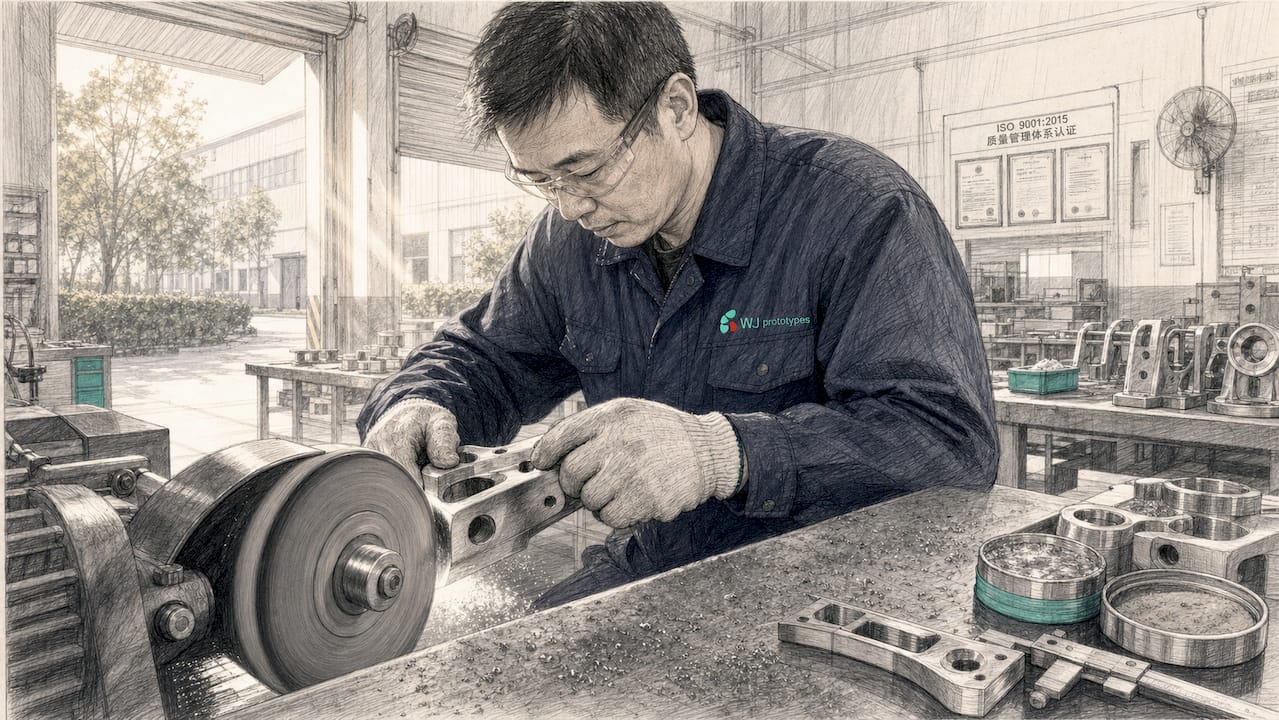
Finishing in manufacturing is defined as the set of processes that alter a product’s surface to improve its appearance, functional performance, or durability before it reaches the end user. Surface finishing is the industry’s standard term for this discipline, and it covers everything from mechanical polishing and grinding to chemical treatments like electroplating and anodizing. Automotive brake components, aerospace aluminum housings, and consumer electronics enclosures all depend on finishing to meet dimensional, cosmetic, and corrosion resistance specifications. Without it, even a precisely machined part fails in service or on the shelf.
Finishing in manufacturing modifies the outermost layer of a part to meet performance, safety, or aesthetic requirements that raw machining or molding cannot achieve alone. The process sits at the intersection of quality control and production engineering. It is not cosmetic polish applied at the end of a line. It is a functional step that determines whether a part survives its operating environment.
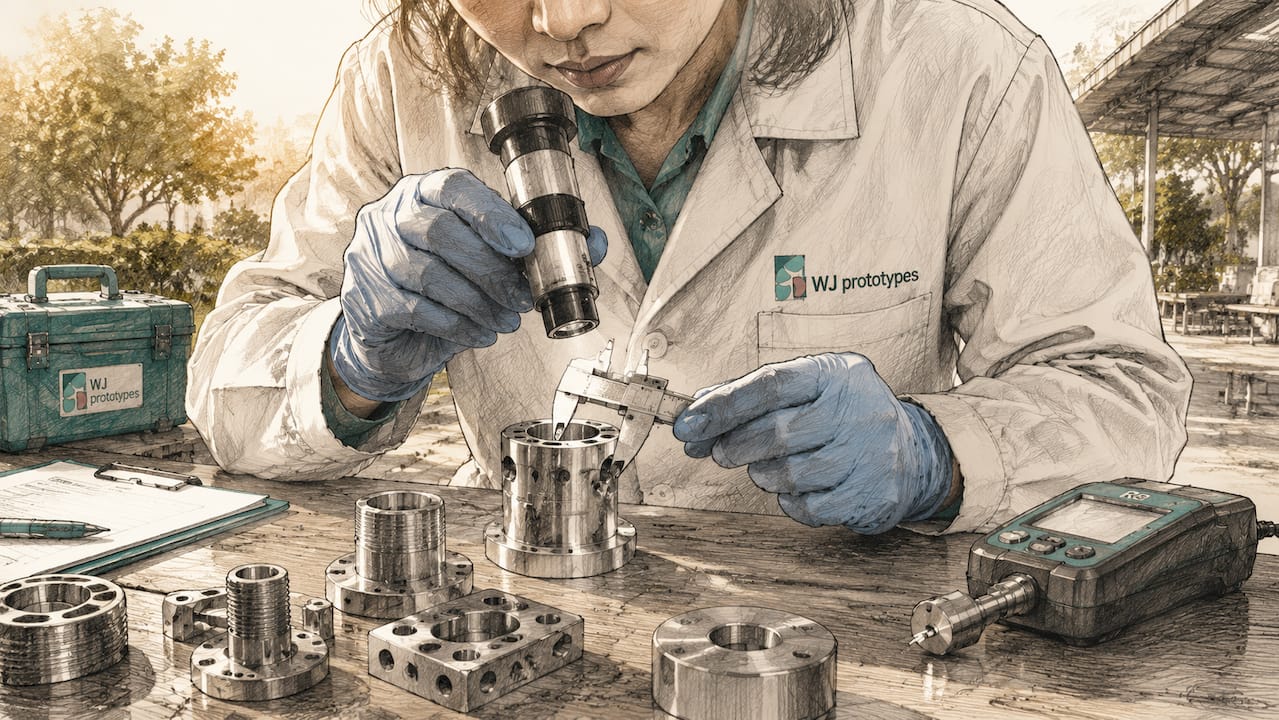
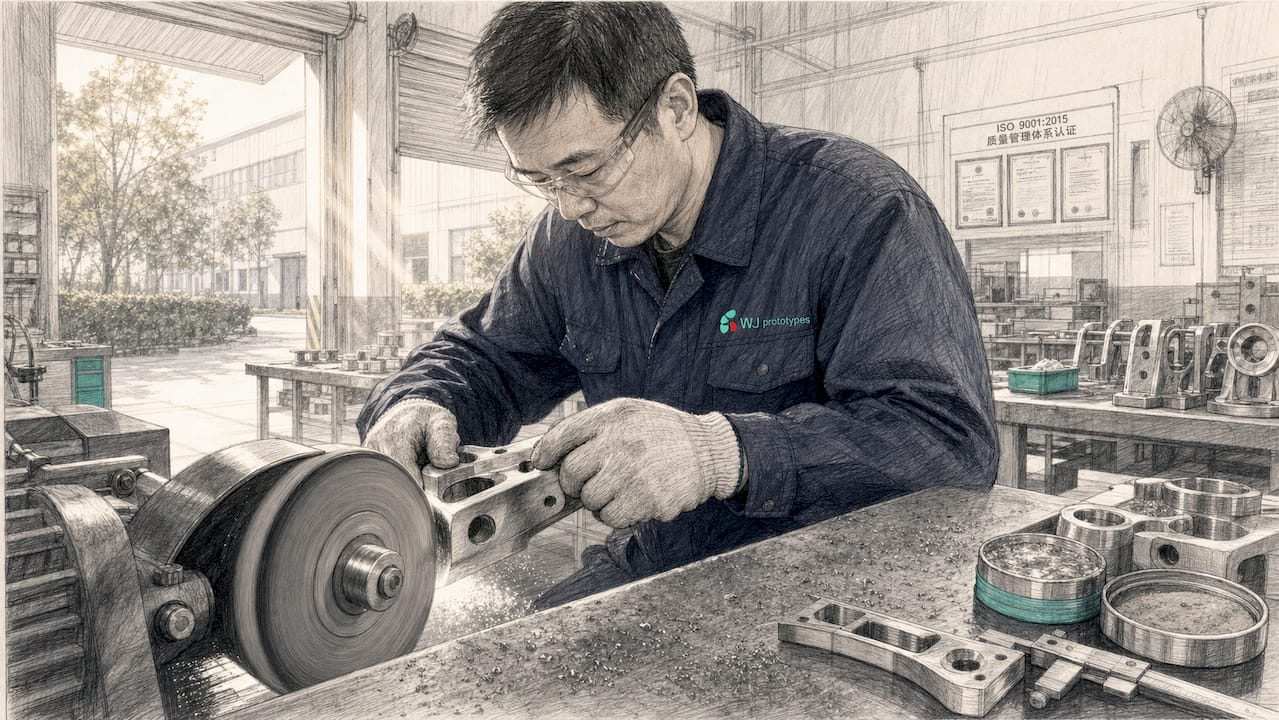
Finishing processes improve corrosion resistance, wear resistance, and surface cleanliness to enhance product durability and performance. That means a finished aluminum aerospace bracket resists oxidation longer, bonds better to protective coatings, and fits mating assemblies with tighter tolerances than an unfinished one. The downstream savings in warranty costs and field failures are significant.
Three core purposes drive every finishing decision:
Finishing processes include mechanical finishes such as polishing, deburring, and grinding, as well as chemical treatments like electroplating and anodizing, and they can be performed wet or dry depending on the material and required outcome. Understanding the categories helps product designers specify the right method early in the design phase rather than scrambling at the end of production.
Mechanical finishing physically removes or redistributes surface material. Polishing uses abrasive compounds to reduce roughness and create reflective surfaces on stainless steel medical instruments. Deburring removes sharp edges left by CNC machining or stamping, which is critical for assembly safety and sealing integrity. Grinding achieves tight dimensional tolerances on hardened steel components used in gearboxes and bearing housings.
Chemical finishing changes surface properties without significant material removal. Electroplating deposits a thin metal layer, such as nickel or chrome, onto a substrate to improve hardness and corrosion resistance. Anodizing creates an oxide layer on aluminum that is harder than the base metal and accepts dye for color coding in aerospace and consumer products. Passivation treats stainless steel with nitric or citric acid to remove free iron and maximize corrosion resistance.

The table below compares the most common finishing types by method, primary advantage, and typical industry application.
| Finishing Type | Primary Advantage | Typical Application |
|---|---|---|
| Polishing | Reduces surface roughness | Medical instruments, optical components |
| Deburring | Removes sharp edges | CNC machined parts, stamped metal |
| Electroplating | Adds corrosion and wear resistance | Automotive hardware, electronics connectors |
| Anodizing | Hardens aluminum surface | Aerospace housings, consumer electronics |
| Shot blasting | Cleans and strengthens surface | Structural steel, casting preparation |
| Passivation | Maximizes corrosion resistance | Stainless steel medical and food equipment |
Pro Tip: Specify your finishing method during the design phase, not after first article inspection. Surface roughness requirements, masking needs, and dimensional allowances for plating thickness all affect your CAD tolerances.
Surface finishing integrated properly reduces scrap by eliminating defects such as poor coating adhesion and contamination. That single outcome drives the business case for treating finishing as a quality gate rather than an optional polish. When finishing fails, the defects it was supposed to prevent show up as field returns, assembly rejections, and rework costs that dwarf the original finishing budget.
The quality benefits stack across four dimensions:
“Surface finishing should be considered part of the production system to build quality into the manufacturing process, not just a post-production step.” — Surface Finishing Methods to Reduce Scrap & Improve Quality
The electronics sector illustrates this clearly. A printed circuit board connector that skips passivation will oxidize at contact points within months in a humid environment. The failure mode looks like a product defect, but the root cause is a skipped finishing step. Catching that gap before shipment costs a fraction of a field recall.
Mass finishing cycle times vary widely by material, from 10 minutes for nonferrous parts to 120 minutes for hardened steel. That 12x difference in cycle time has direct implications for production scheduling, equipment utilization, and cost per part. Engineers who ignore material-specific cycle time data when planning finishing operations routinely underestimate throughput requirements.
Three variables control finishing outcomes across all process types.
Media type and size: Abrasive media in vibratory or tumble finishing must match the part geometry and target surface roughness. Coarse ceramic media cuts fast but leaves a rougher finish. Fine plastic media produces smoother results but requires longer cycles. Mismatching media to material is the most common cause of over-processed or under-processed parts.
Chemical compounds: Mass finishing uses compounds categorized as deburring, burnishing, cleaning, and water stabilizers to optimize results. Each compound type serves a specific function. Deburring compounds accelerate material removal. Burnishing compounds produce bright, smooth surfaces. Cleaning compounds remove oils and chips. Water stabilizers control foam and pH to protect both parts and equipment.
Batch versus continuous operation: Batch finishing loads a fixed quantity of parts, runs a timed cycle, and unloads. Continuous finishing feeds parts through a conveyor-based system without stopping. Batch systems suit low-volume, high-mix production like prototyping and custom orders. Continuous systems suit high-volume, single-part-number production lines in automotive stamping or fastener manufacturing.
| Variable | Batch Finishing | Continuous Finishing |
|---|---|---|
| Volume suitability | Low to medium | High volume |
| Flexibility | High (easy changeover) | Low (dedicated setup) |
| Cycle time control | Per-batch adjustment | Real-time parameter control |
| Typical use case | Prototyping, custom parts | Automotive, fasteners |
Pro Tip: Log cycle time, media wear rate, and compound concentration together for every material you run. Patterns in that data will tell you when media is degrading before you see it in part quality.
Manufacturers should view finishing as an integral quality control step rather than an isolated operation to optimize throughput and product reliability. The practical difference between a finishing step bolted on at the end of production and one designed into the workflow is measurable in scrap rates, cycle times, and first-pass yield.
Here is a proven sequence for embedding finishing as a quality gate:
Automotive Tier 1 suppliers apply this approach to brake caliper finishing, where surface cleanliness directly affects brake fluid seal integrity. Aerospace manufacturers apply it to turbine blade polishing, where surface roughness affects aerodynamic efficiency and fatigue life. Electronics contract manufacturers apply it to connector plating, where coating thickness uniformity determines electrical contact reliability. The finishing as a quality gate principle applies across all three sectors because the failure modes are different but the root cause is the same: an uncontrolled surface process.
For teams scaling from prototype to production, the transition from manual finishing to process-controlled finishing is where most quality problems emerge. Reviewing finishing in prototyping before committing to production parameters saves significant rework.
Finishing in manufacturing is a functional quality control discipline that determines corrosion resistance, coating adhesion, assembly fit, and product lifespan across every major industrial sector.
| Point | Details |
|---|---|
| Finishing is a quality gate | Integrate finishing into the production system to reduce scrap and defects, not as a final cosmetic step. |
| Method selection drives outcomes | Match mechanical or chemical finishing to material type and downstream coating or assembly requirements. |
| Cycle time varies by material | Nonferrous parts finish in as little as 10 minutes; hardened steel requires up to 120 minutes of mass finishing. |
| Parameters must be controlled | Media type, compound concentration, and cycle time all affect surface quality and must be monitored continuously. |
| Early specification saves cost | Defining Ra values and edge conditions at design review prevents expensive redesign after tooling is committed. |
I have reviewed finishing failures across dozens of production programs, and the pattern is almost always the same. The engineering team treated finishing as something the shop floor handles after the “real” manufacturing is done. By the time the surface defects show up in field returns or coating adhesion tests, the root cause is three months old and buried in a process that nobody documented.
The shift that actually works is treating finishing the same way you treat machining tolerances. You would not leave a critical bore diameter unspecified and hope the operator gets it right. You should not leave surface roughness, edge condition, or coating preparation unspecified either. The parts that perform best in service are the ones where the finishing parameters were locked in during process qualification, not adjusted on the fly during production.
What I find underappreciated is how much finishing technology has advanced in process control. Vibratory finishing systems now support real-time compound dosing and pH monitoring. Electroplating lines use automated rectifier controls that hold current density within tight limits across an entire rack. These are not exotic capabilities. They are available to any manufacturer willing to specify them. The teams that use them see measurable reductions in batch rejection rates and coating rework. The teams that do not are still blaming the plating shop for problems that started in their own process design.
— Yu
Wjprototypes delivers CNC machining services across a broad range of materials for precision finishing, including aluminum alloys, stainless steel, titanium, and engineering plastics suited for anodizing, plating, and polishing. Every part leaves our facility with surface conditions matched to your downstream finishing or assembly process. Whether you need a single prototype with a specific Ra value or a low-volume production run with controlled edge conditions, Wjprototypes engineers specify finishing parameters from the first quote. Get a quote through our CNC machining services page and tell us your surface requirements upfront.
Finishing in manufacturing is the set of processes that alter a part’s surface to improve appearance, corrosion resistance, wear resistance, or coating adhesion. It includes mechanical methods like polishing and deburring, and chemical methods like electroplating and anodizing.
Mechanical finishing physically removes or redistributes surface material through abrasion, grinding, or burnishing. Chemical finishing changes surface properties through reactions, such as anodizing aluminum to form a hard oxide layer or electroplating steel to add a corrosion-resistant metal coating.
Cycle times depend on material and method. Mass finishing ranges from 10 minutes for nonferrous metals to 120 minutes for hardened steel parts, based on abrasive media type, compound selection, and target surface roughness.
Finishing eliminates defects like surface contamination and poor coating adhesion before parts reach assembly or shipment. When finishing is integrated as a quality gate rather than a final step, defect rates drop because problems are caught and corrected earlier in the production sequence.
Finishing requirements should be defined at design review, before tooling is committed. Surface roughness values, edge conditions, and coating preparation needs all affect CAD tolerances and material selection, making early specification critical to avoiding costly redesign.
SERVICES
RESOURCES