



- Room 1807, Unit 9, Building 2, Shangxing Commercial Street, Shangde Road, Shangxing Community, Xinqiao Subdistrict, Bao'an District, Shenzhen City, China
CONTACT US

WhatsApp


Contact Us
Our team is on stand by, waiting toassist you.

Videos
A large collection of educational videos and tutorials.

About Us
Learn about our company, leadership, and mission totransform manufacturing.

Privacy Policy
Applies to all personal information collected through and/or processed in connection.
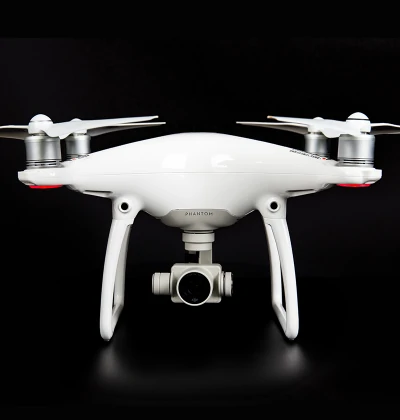

Aerospace & UAV
WJ Prototypes is your 3D manufacturing partner from prototype to large scale production.

Consumer Electronics
New Product Introduction Solutions for Consumer Electronics.

Robotics & Automation
Need some assistance bringing your robotic device or parts from the sketch-board to reality?

Medical Devices
The medical industry needs high quality, dependable and safe parts and products.

Automotive
New Product Introduction Solutions for Automotive

Industrial Machinery
The main purpose of industrial prototyping is to take the product from drawings into the real world.
TL;DR:
- A smart factory is a highly automated and digitally connected manufacturing facility that enables real-time data exchange and autonomous decision-making. It integrates advanced technologies like CPS, IIoT, AI, and digital twins to optimize production, reduce downtime, and improve efficiency. Successful implementation requires a modular approach, workforce upskilling, strong data practices, and viewing the system as an ongoing operational strategy.
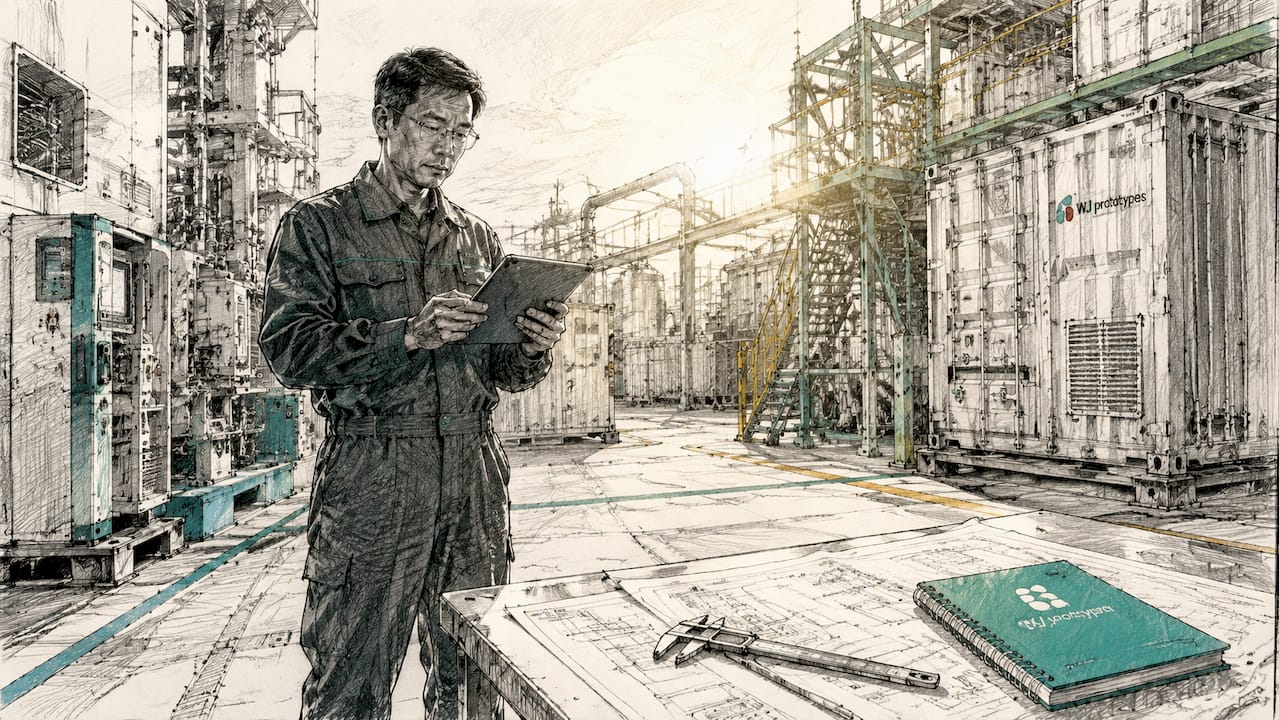
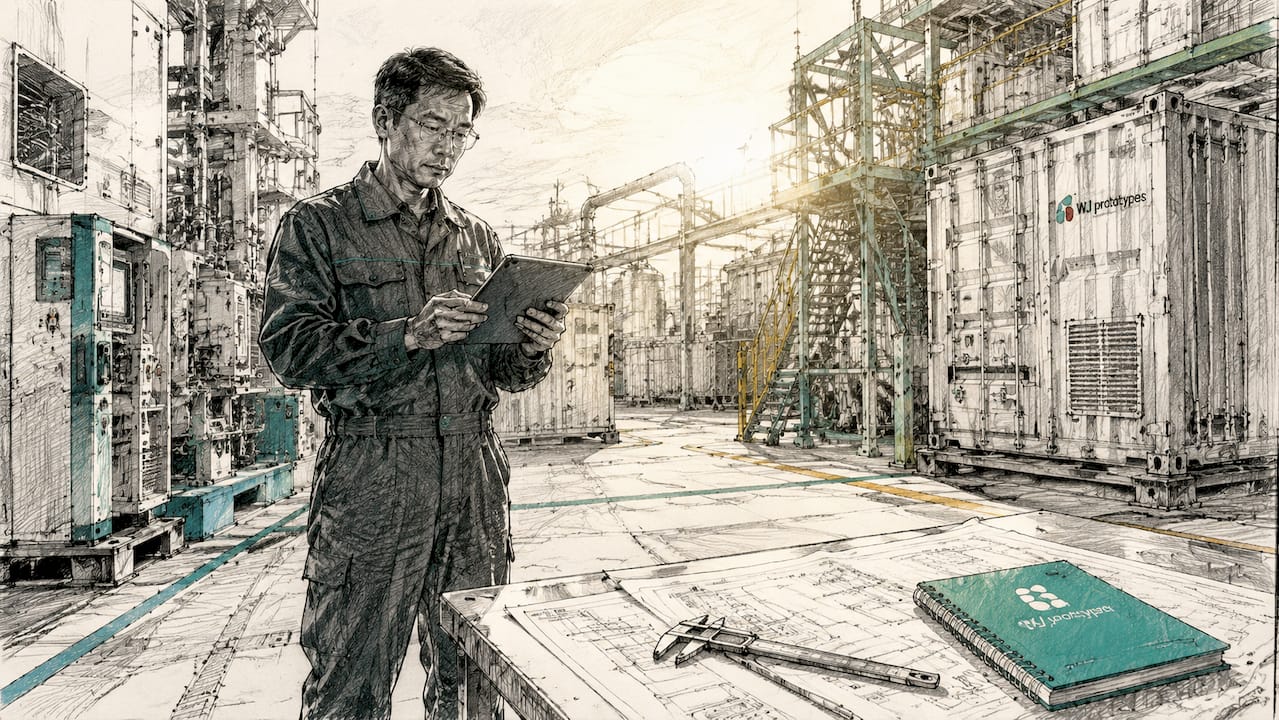
A smart factory is a highly automated, digitally connected manufacturing facility where machines, systems, and people exchange data in real time to enable autonomous decision-making and continuous process optimization. The concept sits at the core of Industry 4.0 and is the physical execution environment for what the industry calls smart manufacturing. According to Deloitte’s 2025 smart manufacturing survey, 49% of manufacturers adopt smart factory initiatives primarily for operational benefits, while 44% do so for financial gains. Those numbers tell you this is not a technology experiment. It is a business decision with measurable returns.

A smart factory is defined as a production facility that integrates Cyber-Physical Systems (CPS), Industrial Internet of Things (IIoT), artificial intelligence, and advanced automation to create a self-optimizing manufacturing environment. Unlike a traditional factory, where machines operate in isolation and data lives in spreadsheets, a smart factory connects every asset, process, and person through a unified digital layer. That connectivity is what makes real-time decisions possible.
The term “smart factory” is often used interchangeably with “Factory 4.0” or “digital factory,” but the recognized industry standard is the smart factory definition rooted in Industry 4.0 principles developed by the German government and adopted globally by organizations like SAP, Siemens, and the World Economic Forum. Understanding the digital manufacturing foundation behind these concepts helps clarify where smart factories fit in the broader transformation picture.
The result of full integration is a facility that detects equipment faults before they cause downtime, adjusts production schedules in response to supply chain disruptions, and tracks quality metrics at every stage without manual inspection.
Smart factories rely on Cyber-Physical Systems, IIoT sensors, AI and machine learning, digital twins, 5G connectivity, edge and cloud computing, and collaborative robotics working together as an integrated stack. Each layer serves a distinct function, and removing any one of them degrades the whole system.
Here is how each technology contributes:
Pro Tip: Before selecting any technology stack, map your current production bottlenecks first. The most effective smart factory implementations solve a specific, measurable problem rather than deploying technology across the board.

Smart factory initiatives drive 10–30% productivity improvements, reduce machine downtime by up to 50%, and unlock 10–15% additional production capacity. Those gains compound over time because the system continuously learns and improves.
The primary benefits break down into five categories:
The financial case is strongest in high-wage manufacturing regions. BCG research confirms that economic benefits are larger and payback periods shorter where labor costs are highest, because automation delivers absolute dollar savings rather than marginal efficiency gains.
Smart manufacturing is the overarching digital strategy; a smart factory is the physical, digitally connected facility that executes that strategy on the production floor. The distinction matters because confusing the two leads to misaligned investment decisions.
| Dimension | Smart Factory | Smart Manufacturing |
|---|---|---|
| Scope | Single production facility | Full value chain including suppliers and customers |
| Focus | Physical assets, machines, and processes | Data strategy, systems integration, and business model |
| Ownership | Operations and engineering teams | C-suite and cross-functional leadership |
| Output | Optimized production runs | Competitive differentiation and market responsiveness |
| Example | A connected assembly line with real-time quality monitoring | An enterprise-wide platform linking design, production, and delivery |
Think of smart manufacturing as the strategy and the smart factory as the instrument that plays it. A company can have a smart factory without a mature smart manufacturing strategy, but it will capture only a fraction of the available value. Conversely, a smart manufacturing strategy without connected facilities is just a plan on paper.
Pro Tip: When presenting the business case internally, frame the smart factory as the operational layer and smart manufacturing as the strategic layer. That framing helps finance and operations align on scope and budget without talking past each other.
Modular, incremental implementation focused on specific bottlenecks consistently outperforms big-bang overhauls. The facilities that fail are almost always the ones that tried to transform everything at once.
A proven implementation sequence looks like this:
Successful transformation requires simultaneous investment in cybersecurity, internal teams, and organizational culture, not just technology. Companies that treat smart factory adoption as a pure technology project consistently underperform those that treat it as an organizational change program.
Pro Tip: Upskill your existing workforce to interpret data and collaborate with automated systems. Workers who understand the “why” behind the data are far more likely to catch anomalies that algorithms miss.
Reviewing current prototyping innovations alongside your implementation roadmap helps identify where rapid iteration and physical validation fit into your digital transformation plan.
A smart factory delivers measurable productivity, cost, and quality gains only when technology investment is matched by data discipline, workforce development, and a clear operational strategy.
| Point | Details |
|---|---|
| Core definition | A smart factory connects machines, systems, and people through real-time data to enable autonomous decisions. |
| Technology stack | CPS, IIoT, AI, digital twins, 5G, and cobots each serve a distinct role and must work as an integrated system. |
| Quantified benefits | Expect 10–30% productivity gains, up to 50% less downtime, and 30–50% labor cost reductions with full implementation. |
| Smart factory vs. smart manufacturing | The factory is the physical execution layer; smart manufacturing is the enterprise-wide digital strategy above it. |
| Implementation approach | Start modular, fix data quality first, and invest in people alongside technology to avoid common failure points. |
The most consistent mistake I see manufacturers make is treating the smart factory as a destination. They set a budget, deploy sensors and software, and then declare the project complete. Six months later, productivity gains plateau and the investment looks disappointing on paper.
The facilities that actually sustain their gains treat the smart factory as an operating system, not a project. They have a standing team reviewing data weekly, a backlog of improvement hypotheses, and a culture where floor operators are expected to flag anomalies, not just follow instructions.
The human factor is genuinely underestimated. Upskilling workers to interpret data and act on it is not a soft benefit. It is the mechanism that converts sensor readings into actual process improvements. I have seen facilities with world-class IIoT infrastructure produce mediocre results because nobody on the floor trusted the data or knew what to do with it.
The other thing worth saying plainly: the economic case is not uniform. BCG’s analysis confirms that payback is faster in high-wage regions because the absolute labor savings are larger. If you are operating in a lower-wage environment, the ROI math changes, and you need to weight quality, flexibility, and speed-to-market benefits more heavily in your business case.
The smart factory concept is sound. The execution is where most companies either win or lose, and execution is almost always a people and process problem before it is a technology problem.
— Yu
Smart factories depend on precise, fast, and reliable part production, especially during the prototyping and validation phases where design changes happen quickly. Wjprototypes provides CNC machining services and a full range of fabrication capabilities including SLA, SLS, DMLS, injection molding, and die casting, all backed by ISO-certified quality systems and experienced engineers. Whether you need a single prototype to validate a new automated assembly fixture or a small production run of custom components, Wjprototypes delivers with the speed and accuracy that smart manufacturing timelines demand. Explore the full range of CNC machining materials available for custom parts and get an instant quote to move your project forward.
A smart factory is a manufacturing facility where machines, sensors, and software are connected to share data in real time, allowing the facility to detect problems, adjust processes, and improve output automatically without constant human intervention.
A factory becomes smart when its physical equipment is connected through IIoT sensors and managed by AI systems that can analyze data and make or recommend decisions autonomously. Traditional factories rely on manual monitoring, batch reporting, and reactive maintenance.
Smart factories deliver 10–30% productivity improvements, up to 50% reduction in machine downtime, and labor cost reductions of 30–50%, according to Deloitte and BCG research. They also enable mass customization and real-time supply chain visibility.
A smart factory is the physical, connected production facility. Smart manufacturing is the broader digital strategy that spans the entire value chain including suppliers, logistics, and customers. The factory is one component of the larger smart manufacturing ecosystem.
Implementation timelines vary by facility size and complexity, but a modular approach targeting specific bottlenecks typically shows measurable results within 90–180 days for the initial phase. Full-scale transformation across a facility generally takes two to four years.
SERVICES
RESOURCES