



- Room 1807, Unit 9, Building 2, Shangxing Commercial Street, Shangde Road, Shangxing Community, Xinqiao Subdistrict, Bao'an District, Shenzhen City, China
CONTACT US

WhatsApp


Contact Us
Our team is on stand by, waiting toassist you.

Videos
A large collection of educational videos and tutorials.

About Us
Learn about our company, leadership, and mission totransform manufacturing.

Privacy Policy
Applies to all personal information collected through and/or processed in connection.
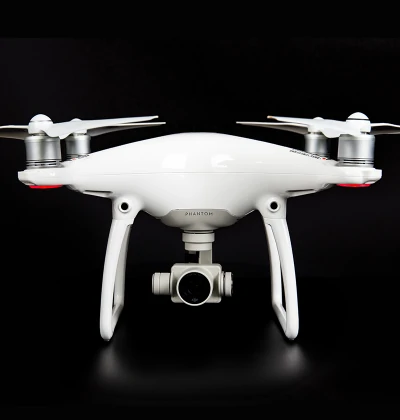

Aerospace & UAV
WJ Prototypes is your 3D manufacturing partner from prototype to large scale production.

Consumer Electronics
New Product Introduction Solutions for Consumer Electronics.

Robotics & Automation
Need some assistance bringing your robotic device or parts from the sketch-board to reality?

Medical Devices
The medical industry needs high quality, dependable and safe parts and products.

Automotive
New Product Introduction Solutions for Automotive

Industrial Machinery
The main purpose of industrial prototyping is to take the product from drawings into the real world.


TL;DR:
- Using online instant-quote services is ideal for small batches of simple sheet metal parts with standard tolerances. For complex assemblies or tight tolerances, ISO-certified contract manufacturers like Wjprototypes provide comprehensive engineering review and quality assurance. Buyers should match supplier type to part complexity, quantity, and required turnaround to optimize costs and quality.
For most engineers and product developers, the fastest route to small-batch sheet metal parts is an online instant-quote fabricator for simple flat or bent parts, and an ISO-certified contract manufacturer like Wjprototypes for anything requiring tighter tolerances, secondary operations, or assembly. Here is the short version:
TL;DR: For prototype pieces, an instant-quote service or Wjprototypes gets you parts fastest. For larger quantities with finishes or assemblies, an ISO-certified contract manufacturer gives you better repeatability. At higher volumes, you enter short-run production territory where per-part cost decreases with a dedicated manufacturing partner.
The table below maps the practical dimensions that actually affect your decision. Generic labels are used for service categories; Wjprototypes is called out separately as the recommended contract manufacturer option.
| Dimension | Online instant-quote services | Marketplace / broker platforms | Local job shops | Wjprototypes (contract manufacturer) |
|---|---|---|---|---|
| Best for | Simple laser-cut / bent parts, fast verification | Multi-vendor price comparison | Urgent local needs, low complexity | Prototypes to short-run with tight tolerances, finishing, assembly |
| Minimum order qty | Often 1 piece | Varies by shop | Varies, often 1–5 | 1 piece (prototype) |
| Typical turnaround | 1–5 business days | 3–10+ days | 1–5 days (local) | 3–10 days depending on complexity |
| Quoting workflow | Instant online quote (DXF/STEP upload) | RFQ to multiple vendors | Phone/email quote | Online RFQ with engineering review |
| Materials supported | Aluminum, mild steel, stainless, some specialty | Depends on matched shop | Limited to shop inventory | Broad sheet metal materials catalog |
| Finishes & secondary ops | Powder coat, anodize, basic hardware | Variable | Limited | Powder coat, plating, welding, assembly |
| Typical tolerance band | ±0.005″–±0.010″ (laser cut) | Variable | Variable | ±0.1 mm and tighter on request |
| Location / Made in USA | U.S.-based (varies by service) | Mixed | Local U.S. | China-based, global delivery |
| Pricing model | Per-part or per-nest, transparent | Competitive bid | Hourly or per-part | Per-project quote, no setup minimums stated |
| Quality guarantees | Basic QC, some offer C of C | Variable | Variable | ISO 9001 certified, FAI and C of C available |
Note on offshore vs. domestic: U.S.-based instant-quote services typically ship within 3–5 business days domestically. Wjprototypes ships globally and lead times include international transit; factor that into your schedule for time-sensitive prototypes.
Understanding how each category actually operates saves you from sending a complex bent assembly to a service built for flat laser cuts, or paying contract-manufacturer rates for a simple bracket.

These services accept DXF or STEP files, price the job algorithmically based on material, cut length, and bend count, and return a quote in seconds to minutes. SendCutSend and OSH Cut are well-known U.S. examples in this category. They work best for parts that are relatively flat, have standard bend radii, and do not require welding or complex assembly. Tolerances are typically ±0.005″–±0.010″ on laser-cut features, which covers most enclosure panels, brackets, and mounting plates.
Strengths for small batches:
Limitations:
This category includes companies like Wjprototypes that handle the full fabrication chain: cutting, bending, welding, finishing, and inspection under one roof. The quoting workflow involves submitting an RFQ with your STEP file and specs, then receiving a human-reviewed quote that accounts for manufacturability. That review step adds a day or two but catches problems before metal is cut.
Strengths for small batches:
Limitations:
Platforms like Xometry and Protolabs connect buyers to a network of vetted shops. You upload a file, set your specs, and receive quotes from multiple fabricators. The advantage is price competition; the risk is that quality and communication depend on which shop wins the job.
Strengths: Speed of comparison, broad material and process coverage, U.S.-based shops available. Limitations: Less direct communication with the fabricator, variable rework policies, quality depends on the matched shop.
Short-run fabrication shops offer something the online services cannot: you can walk in, discuss the part, and get same-day or next-day turnaround on simple work. For urgent fixture brackets or one-off test pieces, a local shop often beats any online service on speed. The tradeoff is limited material selection, less consistent tolerances, and pricing that is usually hourly rather than per-part.

Pro Tip: Before sending files to any service, run a DFM check specifically on bend reliefs and minimum bend radii. A missing bend relief or a radius tighter than the material thickness allows is the single most common reason a quote comes back with a price spike or a rejection. Most CAD tools have a sheet metal environment that flags these automatically.
The decision comes down to four variables: part complexity, required tolerance, quantity, and turnaround. Map those against the supplier categories above and the choice usually becomes clear.
Part complexity: A flat laser-cut panel with two bends and standard hardware inserts is a perfect fit for an instant-quote service. A welded enclosure with a powder-coated finish and a ±0.05 mm critical feature needs a contract manufacturer with engineering review.
Tolerance: Standard sheet metal tolerances run ±0.1 mm to ±0.3 mm for bent features and tighter for laser-cut edges. If your design calls for tighter than ±0.1 mm on a bent feature, verify the supplier can hold it before ordering, not after.
Quantity and nesting: For 1–10 pieces, per-part cost is high regardless of supplier. At 10–100 pieces, nesting efficiency starts to matter. A supplier who nests multiple parts per sheet reduces material waste and drops per-part cost meaningfully. Ask explicitly whether the supplier nests your parts or runs them individually.
Turnaround: Domestic instant-quote services are fastest for simple parts. For complex parts from an offshore contract manufacturer, add 5–10 business days for international shipping. Plan accordingly.
Questions to ask before placing an order:
Red flags: A supplier who cannot state their tolerances in writing, offers no rework policy, gives vague lead times (“a few weeks”), or cannot provide a C of C for regulated applications is a risk for any order, but especially for small batches where there is no buffer stock.
The process is more predictable than most buyers expect once you have done it once. Here is the standard flow from file to delivery.
Pro Tip: When submitting an RFQ, include a one-line note on intended use (e.g., “prototype enclosure for EMC testing” or “production bracket for automotive assembly”). This gives the engineer reviewing your file context to flag issues that a purely geometric review would miss, and it often speeds approval.
Preparing your CAD and documentation before you reach out to any supplier is worth the extra hour. Resources like prototype stage guides and open-source CAD workflows can help you structure your files and BOMs before the first quote request.
Cost and lead time vary more than most buyers expect, and the variables are not always obvious.

Primary cost drivers:
Material choice is the biggest lever. Stainless steel costs significantly more per pound than mild steel, and aluminum’s cost falls between the two depending on grade and thickness. The Wjprototypes sheet metal materials catalog lists available grades and their typical applications. Switching from stainless to aluminum on a non-structural enclosure can cut material cost significantly without affecting function.
Secondary operations add cost fast. Powder coating, anodizing, plating, welding, and hardware insertion each add a line item. Secondary operations add cost quickly. Powder coating can notably increase the per-part cost relative to a raw finish. Welding on small batches is often quoted with a flat setup fee plus per-weld time, which makes it more expensive at low quantities.
Quantity and nesting efficiency matter more than most buyers realize. At very low quantities, you are paying for a large fraction of a full sheet regardless of part size. At moderate quantities, nesting efficiency improves and per-part cost drops. Increasing quantity significantly reduces per-part cost on simple parts, though the exact amount depends on part geometry and material.
Typical turnaround bands:
| Quantity range | Part type | Typical lead time |
|---|---|---|
| Small quantities | Simple laser-cut / some bends | several business days (domestic instant-quote) |
| Small quantities | Complex bends, welding, or finishing | about one to two weeks (contract manufacturer) |
| Moderate quantities | Standard sheet metal with finish | one to two weeks |
| Large quantities | Short production run | multiple weeks |
Instant-quote vs. custom RFQ pricing: Instant-quote services price algorithmically based on cut length, material, and bend count. This is fast and transparent but does not account for part-specific setup complexity. Custom RFQ pricing from a contract manufacturer takes longer but often comes in lower for complex parts because a human engineer can optimize the nesting and process sequence. For simple parts under 10 pieces, instant-quote wins on speed. For anything with welding, tight tolerances, or multi-step finishing, the RFQ route usually produces a more accurate and often lower final price.
Quality on small-batch sheet metal is not just about whether the parts look right. It is about whether they will function as designed, meet your inspection requirements, and hold up in service.
Process-driven tolerances:
Sheet metal processes each have a natural tolerance band. Laser cutting holds tighter tolerances on cut edges (typically ±0.1 mm or better on modern fiber lasers) than bending does. Bending tolerances depend on material springback, tooling condition, and operator skill, and typically run ±0.5°–±1° on angle and ±0.2–0.5 mm on flange length for standard press brake work. Stamping and deep drawing, as distinct sheet metal forming processes, have their own tolerance characteristics driven by die design and material behavior.
| Process | Typical tolerance (cut/formed feature) | Recommended inspection level |
|---|---|---|
| Laser cutting | ±0.1 mm on cut edges | Dimensional check on first article |
| Press brake bending | ±0.5°–±1° angle, ±0.3 mm flange | FAI for critical bent features |
| Welding (MIG/TIG) | ±0.5 mm on welded joints | Visual + dimensional per drawing |
| Stamping / deep drawing | Per die design, typically ±0.2–0.5 mm | PPAP for production intent |
Inspection options to request:
For prototype parts, a basic dimensional check against your drawing is usually sufficient. For production-intent or regulated parts, request a first article inspection (FAI) report that documents every critical dimension on the first piece before the batch runs. A certificate of conformity (C of C) states that the parts meet the specified requirements and is required by many aerospace, medical, and defense supply chains. For automotive production, a PPAP (Production Part Approval Process) package may be required. The Wjprototypes precision prototyping guide covers these inspection options in the context of small-batch fabrication.
Certifications that matter:
ISO 9001:2015 is the baseline quality management certification to look for. It does not guarantee a specific tolerance, but it does mean the supplier has documented processes, traceability, and a corrective action system. For aerospace, AS9100 is the relevant standard; for medical, ISO 13485. Wjprototypes holds ISO 9001 certification, which covers its sheet metal fabrication workflow.
Wjprototypes operates as a full-service contract manufacturer, not just a cutting service. That distinction matters when your part needs more than a laser cut and a bend.
Relevant capabilities for small-batch sheet metal:
Industries served: Aerospace, automotive, medical devices, electronics, robotics, oil and gas, and industrial machinery. These are not decorative claims; they reflect the tolerance and documentation requirements those sectors impose.
Where Wjprototypes fits best:
Pro Tip: When requesting a quote from Wjprototypes, include your STEP file, a 2D drawing with GD&T callouts if you have one, material and finish specs, target quantity, and your required delivery date. The more complete the submission, the faster the engineering review and the more accurate the quote.
For small-batch custom sheet metal parts, the right supplier depends on part complexity, tolerance, quantity, and turnaround, not just price.
| Point | Details |
|---|---|
| Match supplier to part complexity | Use instant-quote services for simple flat/bent parts; use a contract manufacturer for welding, tight tolerances, or assembly. |
| Quantity drives per-part cost | Moving from 5 to 25 pieces can reduce per-part cost significantly on simple parts due to nesting efficiency. |
| Request inspection upfront | Ask for FAI or C of C before production starts on regulated or safety-critical parts, not after delivery. |
| Material choice is the biggest cost lever | Stainless steel costs roughly 2–3x more per pound than mild steel; switching materials on non-structural parts can cut cost significantly. |
| Wjprototypes for complex small batches | ISO 9001 certified, handles cut-to-assembly in one workflow, and scales from 1 prototype to 100+ short-run pieces. |
Speed and cost pull in opposite directions on small batches, and most buyers do not fully reckon with that until they have made the wrong call once.
An instant-quote service is genuinely fast for a simple bracket or panel. Upload a DXF, pay online, get parts in three days. That speed is real and it is valuable when you are validating fit on a prototype and the tolerance is not critical. But the same speed that makes those services efficient is what limits them: the quoting is algorithmic, the DFM feedback is minimal, and the engineering support stops at the upload button.
The mistake I see repeatedly is engineers sending a complex welded assembly to an instant-quote service because the interface is familiar and the price looks lower. The quote comes back fine, the parts arrive, and then the weld distortion is out of spec, or the powder coat is the wrong texture, or the bend angle is off by two degrees on a critical mating surface. At that point, the “fast” service has cost more time than a slower, more thorough contract manufacturer would have.
The flip side is also true. Paying contract-manufacturer rates and lead times for a simple laser-cut panel is wasteful. If your part is flat, has standard tolerances, and needs no secondary operations, an instant-quote service is the right tool.
The practical rule: use the simplest supplier that can reliably hold your tolerance and finish. For low-volume manufacturing where the parts feed into a product that ships to customers, err toward the higher-touch supplier. The cost of a rework on a 10-piece batch is small. The cost of a field failure on a product built from out-of-spec parts is not.
If you have a part that needs more than a laser cut, Wjprototypes is worth a direct quote request. The service covers the full fabrication chain: cutting, bending, welding, finishing, and inspection, all under ISO 9001 quality management. Engineering review is included in the quoting process, which means DFM issues get caught before production, not after.

To get an accurate quote fast, prepare the following before you reach out: a STEP file (preferred) or DXF for flat patterns, material and grade (e.g., 5052 aluminum, 0.090″ thick), surface finish (raw, powder coat color, anodize spec), target tolerances for critical features, quantity, and your required delivery date. The more complete your submission, the faster the engineering review.
Wjprototypes serves buyers across aerospace, automotive, medical, electronics, and industrial sectors globally, with air freight options for time-sensitive orders. For buyers who also need machined features or secondary CNC work, the CNC machining service runs on the same quote platform. Request a sheet metal quote directly on the Wjprototypes site.
Per-part cost for small batches (1–10 pieces) varies widely based on material, complexity, and finish. Simple laser-cut aluminum brackets can cost varying amounts at low quantities; welded stainless assemblies with powder coat can run several hundred dollars per part. Per-part cost drops significantly as quantity increases toward 25–100 pieces due to nesting efficiency.
U.S.-based instant-quote services like SendCutSend and OSH Cut accept DXF/STEP uploads and return prices in minutes for standard sheet metal parts. For more complex parts requiring engineering review, welding, or tight tolerances, Wjprototypes offers an online RFQ with global delivery and ISO 9001 quality assurance.
Fabricators typically do not quote sheet metal work on a straight hourly basis for standard parts. Laser cutting and bending are usually priced per part or per nest. Welding and assembly work on small batches is often quoted as a flat setup fee plus per-operation time. Hourly rates at U.S. job shops vary, but per-part quoting is more common and more predictable for buyers.
The main sheet metal forming processes include bending (press brake), deep drawing, stamping, roll forming, and spinning. Laser cutting and waterjet cutting are cutting processes rather than forming processes, but they are typically part of the same fabrication workflow. Each process has its own achievable tolerance band and minimum feature size.
Most fabricators accept DXF for flat patterns and STEP (or IGES) for 3D models with bend information. DXF is sufficient for simple flat-cut parts; STEP is preferred for anything with bends, hardware, or assembly features because it carries full 3D geometry. Always include material thickness in the file name or a separate spec sheet to avoid quoting errors.
SERVICES
RESOURCES