



- Room 1807, Unit 9, Building 2, Shangxing Commercial Street, Shangde Road, Shangxing Community, Xinqiao Subdistrict, Bao'an District, Shenzhen City, China
CONTACT US

WhatsApp


Contact Us
Our team is on stand by, waiting toassist you.

Videos
A large collection of educational videos and tutorials.

About Us
Learn about our company, leadership, and mission totransform manufacturing.

Privacy Policy
Applies to all personal information collected through and/or processed in connection.
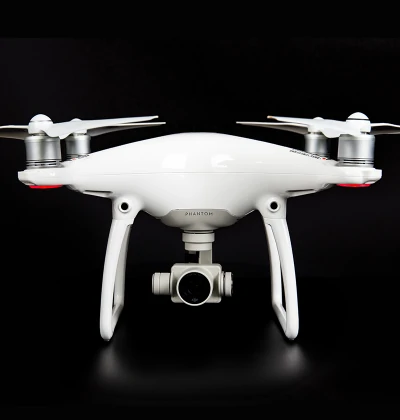

Aerospace & UAV
WJ Prototypes is your 3D manufacturing partner from prototype to large scale production.

Consumer Electronics
New Product Introduction Solutions for Consumer Electronics.

Robotics & Automation
Need some assistance bringing your robotic device or parts from the sketch-board to reality?

Medical Devices
The medical industry needs high quality, dependable and safe parts and products.

Automotive
New Product Introduction Solutions for Automotive

Industrial Machinery
The main purpose of industrial prototyping is to take the product from drawings into the real world.
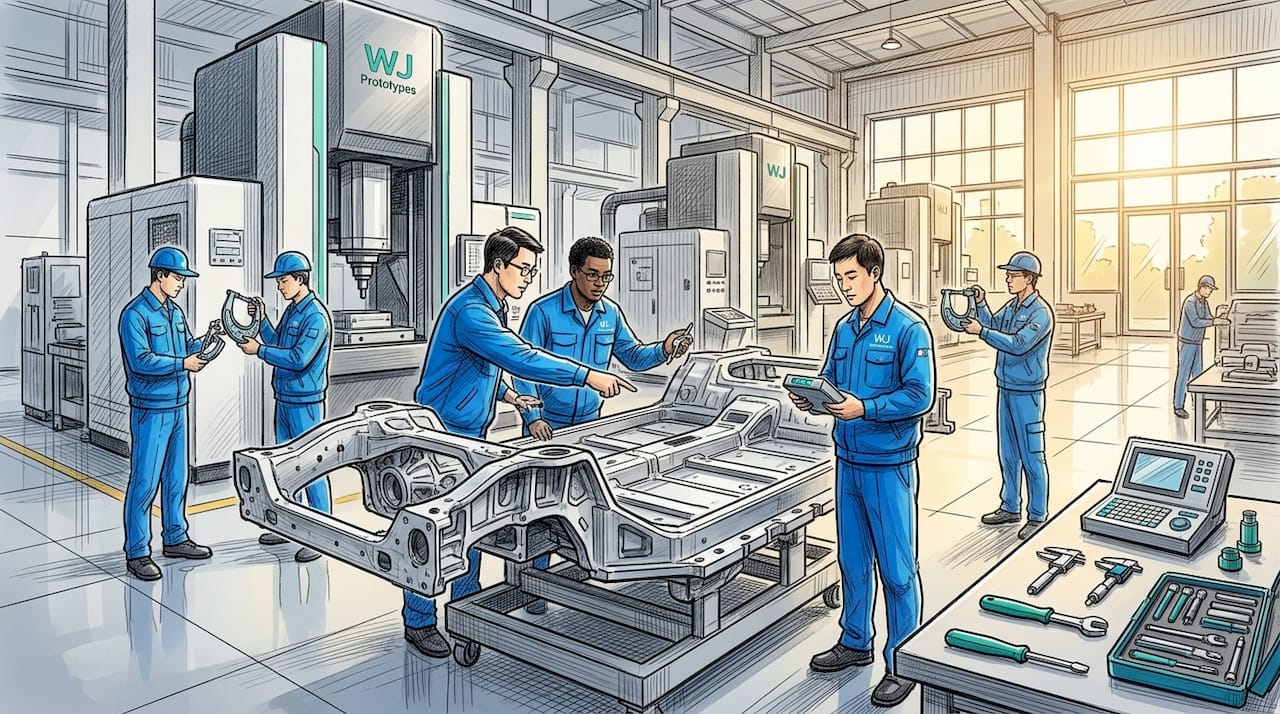

TL;DR:
- Mega-casting replaces numerous steel parts with a single aluminum structure, reducing assembly complexity and cycle times. Chinese foundries lead this shift due to large presses, process innovation, and cost advantages, making mega-casting suitable for high-volume EV platforms. However, high initial costs and repair complexities pose challenges for OEM adoption.
Mega-casting is defined as a process that replaces 60–100 welded steel parts with a single large aluminum structure, cast under extreme pressure in one shot. Automotive OEMs are turning to Chinese mega-casting for EV production because it cuts assembly complexity, shrinks cycle times, and reduces manufacturing costs at a scale no conventional body shop can match. China leads this shift because its foundries operate the world’s largest presses, have compressed the learning curve faster than any other region, and face domestic margin pressure that forces relentless efficiency. For OEM executives and engineers evaluating next-generation EV platforms, understanding this technology is no longer optional.
Mega-casting consolidates what was once a multi-stage stamping and welding process into a single high-pressure die-cast aluminum component. Floor structures produced in 120 seconds replace assembly lines that previously required dozens of robots and hours of cycle time. That compression in production time translates directly into lower labor costs, smaller factory footprints, and fewer quality inspection points.
The structural logic is straightforward. A single casting eliminates hundreds of weld joints, each of which is a potential failure point and a source of dimensional variation. Fewer joints mean tighter tolerances across the body structure, which matters enormously for battery pack fitment in EV platforms where millimeter-level precision affects both safety and range.
China’s role is not accidental. Chinese foundries invested early in 6,000-ton and 9,000-ton presses, then scaled to machines that no Western facility had yet commissioned. That head start created a dense ecosystem of tooling suppliers, alloy developers, and process engineers concentrated in a single geography, which is why global OEMs source mega-casting knowledge and capacity from China even when final assembly happens elsewhere.
The cost case for mega-casting rests on three pillars: part consolidation, cycle time compression, and tooling economics.

Part consolidation is the most visible benefit. Value chain lead times have shrunk from months of multi-stage staging to days of production. That is not an incremental improvement. It is a structural change in how factories are organized and how capital is deployed.
Key cost and complexity reductions from mega-casting include:
Chinese foundries add another cost layer that Western facilities cannot easily replicate. Labor rates, energy costs, and the density of local alloy and tooling suppliers all compress the total cost of ownership for a mega-casting cell in China versus Europe or North America.
Pro Tip: When evaluating a mega-casting supplier, ask for cycle time data across at least three production shifts, not just peak-performance figures. Consistent cycle time is the real indicator of process maturity.
The press tonnage gets the headlines, but the real technological edge in Chinese mega-casting comes from metallurgy and process control.

Semi-solid metal rheocasting produces a dense, forge-like structure with near-zero porosity. That matters for EV drivetrain components because thermal cycling and dimensional stability under load are non-negotiable. Conventional high-pressure die casting traps gas in the melt, creating micro-porosity that weakens structural sections. Rheocasting eliminates that defect mode.
Advanced alloys compound the advantage. RidgeAlloy, developed specifically for mega-casting applications, tolerates up to 1.5% iron and silicon while maintaining ductile elongation. That tolerance means foundries can use secondary aluminum with higher impurity levels, reducing dependence on primary aluminum and shielding production costs from commodity price swings.
The table below compares traditional casting and mega-casting across key process metrics:
| Process metric | Traditional casting | Mega-casting |
|---|---|---|
| Parts per body section | 60–100 | 1 |
| Cycle time per structure | Hours (multi-stage) | ~120 seconds |
| Porosity level | Moderate to high | Near-zero (rheocasting) |
| Alloy flexibility | Limited | High (RidgeAlloy tolerates 1.5% Fe/Si) |
| Quality control method | Manual inspection | AI-driven automated scanning |
| Tooling suppliers required | Multiple | Single die set |
AI-driven quality control closes the loop. Vision systems and machine learning models scan each casting for surface defects, dimensional drift, and internal voids in real time. The result is a feedback loop that tightens process windows without adding human inspection labor. For metal casting methods engineers, this integration of materials science and digital process control represents the clearest signal that mega-casting has moved past the experimental phase.
Pro Tip: Specify rheocasting capability explicitly in your supplier qualification criteria. Not every foundry operating large-tonnage presses uses semi-solid processing, and the structural difference in the final part is significant.
Mega-casting is not a universal solution. The barriers are real, and OEM engineers need to account for them before committing capital.
The capital expenditure is the first filter. A single 16,000-ton press costs over 100 million yuan, approximately $14 million, and that figure excludes the building modifications, cranes, and thermal management systems the machine requires. Full factory upgrades at scale can reach $2 billion. The economics only work above roughly 100,000 units per platform per year, which rules out low-volume specialty vehicles entirely.
Repair economics create a second set of problems. Repair costs for mega-cast vehicles run 3–4 times higher than for conventional body structures because a collision that damages a structural casting requires replacing the entire section rather than a stamped panel. That drives up insurance premiums and increases total-loss rates, which affects resale values and customer perception.
Key challenges OEM teams must plan for:
The repair problem is generating its own engineering response. Sacrificial extrusions bolted to cast nodes allow collision repair shops to replace a bolt-on section rather than the entire casting. This approach does not eliminate the cost premium, but it reduces the frequency of total-loss write-offs and brings repair economics closer to conventional vehicles.
China’s leadership in mega-casting is a direct consequence of margin compression at home. Chinese automotive profit margins fell from 6.1% in 2021 to 2.9% by early 2026. That pressure forced manufacturers to find structural cost reductions, not incremental ones. Mega-casting delivered exactly that, and the foundries that built the capability are now exporting it.
The strategic implications for global OEMs break down into two categories: those with the volume to justify in-house mega-casting investment, and those that will source castings from Chinese foundries as Tier 1 suppliers.
| OEM profile | Recommended approach | Key consideration |
|---|---|---|
| High-volume platform (100,000+ units/year) | In-house mega-casting cell | Requires $14M+ press and full factory reconfiguration |
| Mid-volume platform (50,000–100,000 units/year) | Shared foundry or Tier 1 sourcing | Reduces capital risk, limits design control |
| Low-volume or specialty platform | Conventional multi-part assembly | Mega-casting economics do not apply |
| OEM in early EV transition | Prototype and validation phase | Use Chinese foundry partnerships for process learning |
Foundry consolidation is accelerating this dynamic. As mega-casting drives smarter assemblies that require integrated engineering for manufacturability and sustainability, smaller Tier 1 suppliers without rheocasting or AI quality control capability are losing contracts. The supply base is narrowing around a handful of technically advanced foundries, most of them in China.
For OEM executives, the strategic question is not whether to engage with Chinese mega-casting capability. The question is how to structure that engagement to protect design IP, manage supply chain concentration risk, and build internal process knowledge before the next platform cycle. Understanding automotive prototyping advantages in China is a practical starting point for teams evaluating supplier relationships.
Chinese mega-casting is the most consequential shift in EV body manufacturing since the move from steel to aluminum, and OEMs that delay engagement with the technology risk falling behind on both cost and production speed.
| Point | Details |
|---|---|
| Part consolidation | One casting replaces 60–100 welded parts, cutting assembly complexity and quality inspection steps. |
| Cycle time advantage | Large floor structures now produce in approximately 120 seconds, compressing value chain lead times from months to days. |
| Metallurgy matters | Rheocasting and RidgeAlloy deliver near-zero porosity and alloy flexibility that conventional die casting cannot match. |
| Capital threshold | Mega-casting presses cost over $14M and only make economic sense above 100,000 units per platform annually. |
| Repair trade-off | Repair costs run 3–4x higher, but sacrificial extrusion designs are reducing total-loss rates at the collision repair level. |
The conversation about mega-casting in most engineering reviews focuses on press tonnage and part counts. Those numbers are real, but they miss the deeper change happening in Chinese foundries right now.
What I find more significant is the metallurgy race. The move to rheocasting and alloys like RidgeAlloy is not a supplier upgrade. It is a redefinition of where cost is created in the vehicle. Tier 1 suppliers that built their business on assembly efficiency are now competing on metallurgy as the primary cost driver, and most of them are not ready for that shift.
The OEMs I see making the smartest moves are not the ones committing the most capital to mega-casting cells. They are the ones running structured learning programs with Chinese foundry partners, building internal process knowledge before they need to make a $14 million press decision. The learning curve on mega-casting is steep, and the penalty for entering it late on a high-volume platform is severe.
Mega-casting is also part of a broader industrial logic change that includes battery pack insourcing and AI-powered quality control. Teams that treat it as an isolated manufacturing decision will miss the integration requirements. The factories that win the next decade of EV production will be the ones that designed mega-casting, battery integration, and digital quality control as a single system from the start.
— Yu
OEM engineers moving from concept to prototype on mega-cast components need a manufacturing partner that understands both the material science and the production economics.

Wjprototypes operates ISO-certified die casting and CNC machining services in China, with material options spanning aluminum alloys suited for structural EV components. Whether you need a first-article casting for dimensional validation or a short production run for durability testing, Wjprototypes delivers fast turnaround with engineering support built in. The team works directly with OEM engineers on die casting materials selection and tolerancing, and the CNC machining services cover post-cast finishing to final specification. Request a quote directly through the Wjprototypes platform for a response within 24 hours.
Mega-casting is a high-pressure die casting process that produces large aluminum structural components in a single shot, replacing 60–100 welded steel parts. It reduces assembly complexity, cuts cycle times, and lowers the number of quality inspection points in EV body production.
Chinese foundries invested earlier and at greater scale in large-tonnage presses, and domestic margin pressure accelerated process refinement. Profit margins in the Chinese automotive sector fell from 6.1% in 2021 to 2.9% by early 2026, forcing foundries to drive down costs through mega-casting efficiency.
Mega-casting presses cost over $14 million per unit and require platform volumes above 100,000 units annually to justify the capital expenditure. Below that threshold, conventional multi-part assembly remains more economical.
Semi-solid metal rheocasting produces a dense, forge-like aluminum structure with near-zero porosity, eliminating the gas entrapment defects common in conventional high-pressure die casting. This is critical for EV structural components that must maintain dimensional stability under thermal and mechanical load.
Repair costs for mega-cast vehicles run 3–4 times higher than for conventional body structures because collision damage often requires replacing an entire casting section. Sacrificial extrusion designs bolted to cast nodes are reducing this problem by enabling localized repairs without full casting replacement.
SERVICES
RESOURCES