



- Room 1807, Unit 9, Building 2, Shangxing Commercial Street, Shangde Road, Shangxing Community, Xinqiao Subdistrict, Bao'an District, Shenzhen City, China
CONTACT US

WhatsApp


Contact Us
Our team is on stand by, waiting toassist you.

Videos
A large collection of educational videos and tutorials.

About Us
Learn about our company, leadership, and mission totransform manufacturing.

Privacy Policy
Applies to all personal information collected through and/or processed in connection.
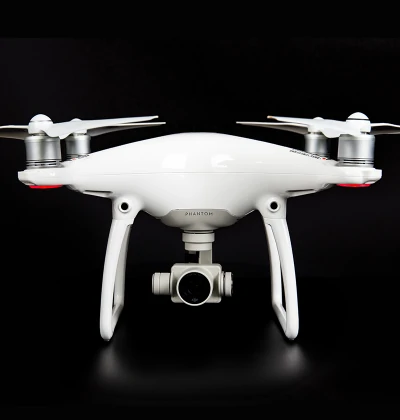

Aerospace & UAV
WJ Prototypes is your 3D manufacturing partner from prototype to large scale production.

Consumer Electronics
New Product Introduction Solutions for Consumer Electronics.

Robotics & Automation
Need some assistance bringing your robotic device or parts from the sketch-board to reality?

Medical Devices
The medical industry needs high quality, dependable and safe parts and products.

Automotive
New Product Introduction Solutions for Automotive

Industrial Machinery
The main purpose of industrial prototyping is to take the product from drawings into the real world.

TL;DR:
- Shenzhen’s dense manufacturing ecosystem enables prototype development in just 1 to 3 days. The city’s geographic concentration reduces costs and accelerates iteration cycles compared to Silicon Valley. This structure provides a significant competitive edge for hardware innovation and rapid product validation.
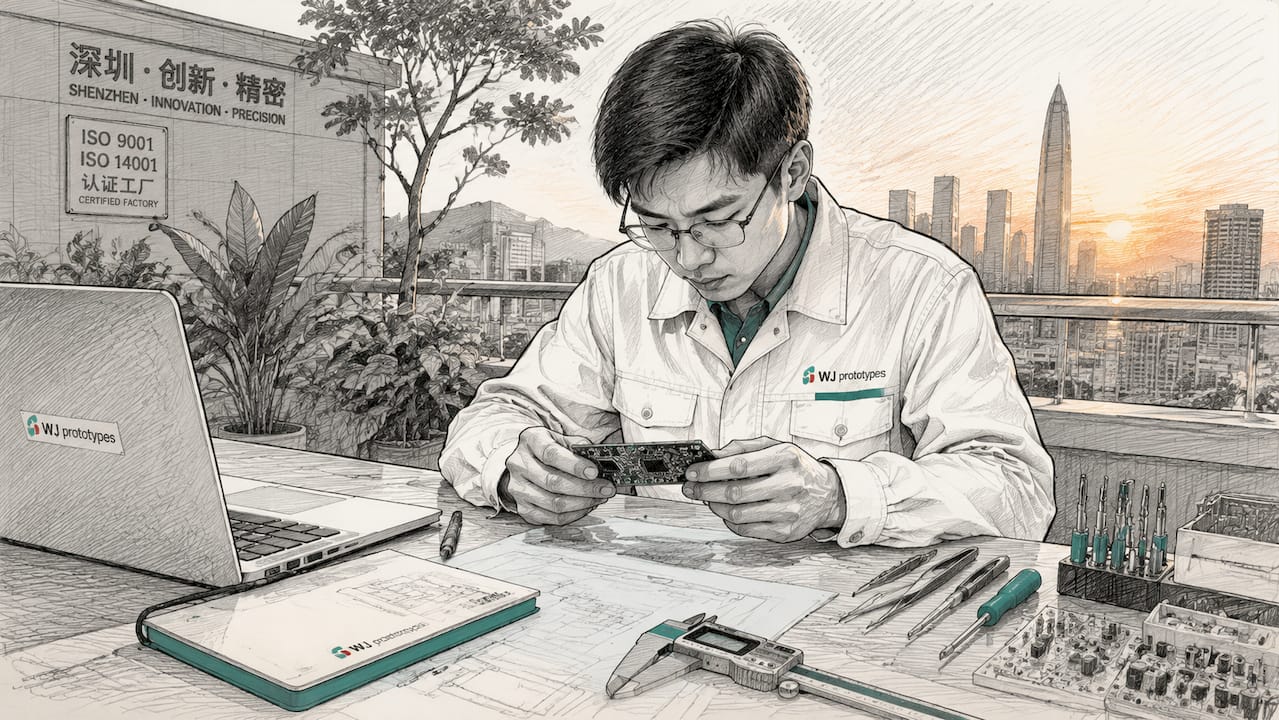
Shenzhen is the fastest hardware prototyping hub on the planet, collapsing design-to-prototype cycles from several weeks down to 1–3 days through an ecosystem density that no other city has replicated. The Huaqiangbei electronics market alone covers 1.45 square kilometers and puts component sourcing, fabrication, and assembly within walking distance of each other. A smart home device prototype that costs over $50,000 in Silicon Valley can be built in Shenzhen for under $15,000, including tooling and an initial production run. For product developers and entrepreneurs racing to validate hardware ideas, understanding why Shenzhen beats Silicon Valley for prototyping speed is not an academic exercise. It is a competitive decision that directly affects how fast you reach market. Wjprototypes operates inside this ecosystem, giving clients direct access to its speed and cost advantages.
The single biggest reason Shenzhen wins on speed is geographic concentration. The 1.45-square-kilometer Huaqiangbei electronics ecosystem in Futian, combined with Nanshan Robot Valley, puts suppliers, fabricators, and testing workshops within minutes of each other. A founder can source a custom PCB, order injection-molded enclosures, and test a working assembly all in the same afternoon. That is not a figure of speech. It is the daily operating reality for hardware teams working in Shenzhen.
Silicon Valley’s supply chain is structurally different. Design labs, component distributors, and contract manufacturers are spread across multiple counties, often requiring days of shipping between steps. Silicon Valley’s isolated design labs create a structural disadvantage for hardware scaling that software-focused venture capital cannot fix. When every design change triggers a new shipping cycle, iteration speed collapses.
Shenzhen’s density eliminates that dead time. Short iterative design-build-test loops within the same day compress weeks of work into hours. A team can run three or four design variations in a single afternoon using specialized workshops clustered within a few city blocks. That kind of iteration velocity is simply not available in any Western manufacturing hub at comparable cost.

| Factor | Shenzhen | Silicon Valley |
|---|---|---|
| Prototype cycle time | 1–3 days | Several weeks |
| Component sourcing | Same-day, on-site | Multi-day shipping |
| Supply chain density | Concentrated within km² | Dispersed across counties |
| Iteration loops per day | Multiple | One or fewer |
Pro Tip: When you arrive in Shenzhen, spend your first half-day walking Huaqiangbei before you meet any supplier. You will spot components, materials, and fabrication options you did not know existed, and that knowledge will sharpen every conversation you have afterward.
Cost is not just a budget concern. It is a direct multiplier of iteration speed. When a single prototype run costs $50,000, you build one version and hope it works. When the same prototype costs under $15,000, you can afford to build three versions simultaneously and test competing design choices in parallel. That shift in economics changes how hardware teams think about risk and experimentation.
Shenzhen’s cost reduction of roughly 70% compared to Silicon Valley comes from several compounding factors:
For startups, this cost structure changes the viability calculation entirely. A team with a $150,000 seed budget can run ten full prototype iterations in Shenzhen. The same budget in Silicon Valley might cover two or three. The startup that runs ten iterations ships a better product faster. That is the real competitive advantage the Shenzhen prototyping model delivers. You can see a detailed breakdown of how these savings stack up in a China vs. US cost comparison that quantifies the gap across common hardware categories.
High-mix, low-volume production is another area where Shenzhen’s cost structure shines. Workshops there are built to handle small batches without the setup penalties that Western factories charge. A run of 50 units is as accessible as a run of 5,000, which means you can validate market demand before committing to full-scale tooling.

Speed in Shenzhen is not automatic. It requires specific behaviors from founders and product teams. The ecosystem rewards preparation and penalizes vagueness.
Be on-site. Physical presence dramatically improves turnaround times and prototype quality. Remote communication creates misunderstandings that add days to every cycle. Suppliers respond faster and more accurately when they can ask questions face-to-face and see your reaction to a sample in real time.
Bring complete technical packages. Manufacturers prefer CAD files and BOMs before they engage seriously. Arriving with a vague sketch or a verbal description causes delays or outright rejection. A complete technical package signals professionalism and lets the supplier quote and start work immediately.
Run parallel iterations. Because costs are low and workshops are close, you can send the same design brief to three different suppliers simultaneously. Compare outputs, pick the best result, and refine from there. This parallel approach is impossible at Silicon Valley pricing.
Build supplier relationships deliberately. Successful hardware founders treat supplier relationships as assets. A supplier who knows your product history, tolerances, and quality standards will prioritize your jobs and flag problems early. That relationship compounds over time into faster turnarounds and better quality.
Iterate the same day. When a prototype comes back with a defect or a fit issue, fix the CAD file and resubmit before you leave the district. Waiting until the next morning adds a full day to your cycle. Shenzhen’s workshops often run late, and suppliers expect this kind of urgency.
Pro Tip: Bring a bilingual technical brief for every supplier meeting. Even if your contact speaks English, a Chinese-language spec sheet eliminates ambiguity at the workshop floor level, where the machinists and assemblers who actually build your part may not.
Shenzhen’s advantage extends well past fast turnaround times. The city has built an integrated innovation infrastructure that Silicon Valley simply does not have for hardware. University-industry collaboration is embedded in the district structure. Institutions like Southern University of Science and Technology feed engineering talent directly into the Nanshan and Futian manufacturing clusters, creating a pipeline of engineers who understand both design and production.
Government policy actively supports rapid hardware development. Regulatory approvals for new manufacturing processes move faster in Shenzhen than in most Western cities, and infrastructure investment in the city’s industrial parks has created purpose-built environments for hardware iteration. This is not incidental. It reflects a deliberate policy choice to make Shenzhen the global center for physical product development.
“Shenzhen has evolved from a cheap-labor factory floor into a high-speed iteration and AI-enhanced manufacturing hub that Silicon Valley cannot replicate. The gap is not about wages anymore. It is about infrastructure, density, and a manufacturing culture that treats speed as the primary metric.”
The contrast with Silicon Valley is structural, not cultural. Silicon Valley excels in software and venture capital but lacks the manufacturing community density that fuels hardware innovation. A software startup can be built entirely in the cloud. A hardware startup needs physical proximity to the people who make things. Shenzhen provides that proximity at every level of the supply chain, from raw materials to finished assemblies.
The benefits of Shenzhen for startups also include a vertical factory model, where a single building may house design, prototyping, small-batch production, and quality testing on different floors. That vertical integration removes the coordination overhead that slows hardware teams down in distributed manufacturing environments. Wjprototypes operates within this model, offering services from rapid prototyping in China through to low-volume production runs under one roof.
Shenzhen beats Silicon Valley for prototyping speed because its geographic density, cost structure, and integrated manufacturing culture compress weeks of iteration into days.
| Point | Details |
|---|---|
| Cycle time advantage | Shenzhen delivers prototypes in 1–3 days versus several weeks in Silicon Valley. |
| Cost reduction | Prototyping a smart device costs under $15,000 in Shenzhen versus over $50,000 in Silicon Valley. |
| On-site presence matters | Founders who visit Shenzhen in person get faster turnarounds and fewer miscommunications. |
| Preparation drives speed | Arriving with complete CAD files and BOMs eliminates delays and gets suppliers working immediately. |
| Ecosystem depth | Shenzhen’s university links, government support, and vertical factories create advantages beyond raw speed. |
Most founders arrive in Shenzhen expecting a cost advantage and leave having discovered a speed advantage they did not anticipate. The two are connected, but speed is the harder one to explain from the outside. You have to experience walking Huaqiangbei, handing a spec sheet to a machinist, and holding a finished part two hours later to understand what the ecosystem actually delivers.
The founders who get the most out of Shenzhen are the ones who treat it as a design environment, not just a manufacturing location. They iterate on-site, they build relationships with three or four core suppliers, and they use the cost savings to run experiments they would never have budgeted for at home. The ones who struggle are the ones who try to manage everything remotely and treat Shenzhen suppliers like they would treat a Western contract manufacturer with formal purchase orders and long lead times.
Shenzhen has also changed. The city that was known primarily for low-cost assembly a decade ago is now a genuine innovation hub with AI-instrumented manufacturing lines and engineering talent that rivals any city in the world. Founders who still think of it as a cheap factory are missing the bigger story. The real advantage is not the price. It is the speed of learning you get when you can test a physical idea the same day you have it.
— Yu
Wjprototypes delivers the full range of services that hardware teams need to move fast inside Shenzhen’s ecosystem. From CNC machining services with rapid turnaround to vacuum casting, SLA, SLS, and injection molding, every process is supported by experienced engineers and ISO-certified quality control.

The CNC machining materials catalog covers metals, engineering plastics, and specialty alloys suited for functional prototypes and custom parts across aerospace, medical, robotics, and electronics applications. Instant quoting, global delivery, and a team that understands the urgency of hardware development cycles make Wjprototypes the right partner for teams that cannot afford to wait. Get a quote today and put Shenzhen’s speed to work for your next product.
Shenzhen’s dense supply chain reduces prototype cycle time from several weeks to 1–3 days. Multiple design iterations are possible within a single afternoon when suppliers are within walking distance.
A smart home device prototype costs under $15,000 in Shenzhen compared to over $50,000 in Silicon Valley, a reduction of roughly 70%. That cost gap allows startups to run more iterations with the same budget.
Physical presence is strongly recommended. Remote communication leads to misunderstandings and slower turnarounds, while on-site visits enable real-time problem solving and faster supplier responses.
Bring complete CAD files and a bill of materials before engaging any manufacturer. Vague sketches cause delays or rejection, while a full technical package lets suppliers quote and start work immediately.
Silicon Valley’s supply chain is geographically dispersed, adding shipping time between every design and fabrication step. Shenzhen’s integrated manufacturing community concentrates every step within a few square kilometers, which is a structural advantage that capital alone cannot replicate.
SERVICES
RESOURCES