



- Room 1807, Unit 9, Building 2, Shangxing Commercial Street, Shangde Road, Shangxing Community, Xinqiao Subdistrict, Bao'an District, Shenzhen City, China
CONTACT US

WhatsApp


Contact Us
Our team is on stand by, waiting toassist you.

Videos
A large collection of educational videos and tutorials.

About Us
Learn about our company, leadership, and mission totransform manufacturing.

Privacy Policy
Applies to all personal information collected through and/or processed in connection.
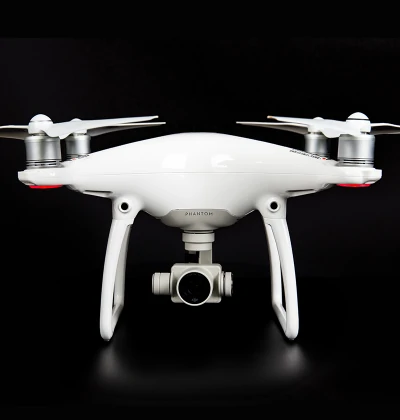

Aerospace & UAV
WJ Prototypes is your 3D manufacturing partner from prototype to large scale production.

Consumer Electronics
New Product Introduction Solutions for Consumer Electronics.

Robotics & Automation
Need some assistance bringing your robotic device or parts from the sketch-board to reality?

Medical Devices
The medical industry needs high quality, dependable and safe parts and products.

Automotive
New Product Introduction Solutions for Automotive

Industrial Machinery
The main purpose of industrial prototyping is to take the product from drawings into the real world.

TL;DR:
- Reverse engineering analyzes finished products to understand their design and operational logic without access to original documentation. It involves systematic phases of information extraction, modeling, and review, applicable to software and physical components. Legal use typically covers security, compatibility, and legacy support, while copying for resale is generally prohibited.
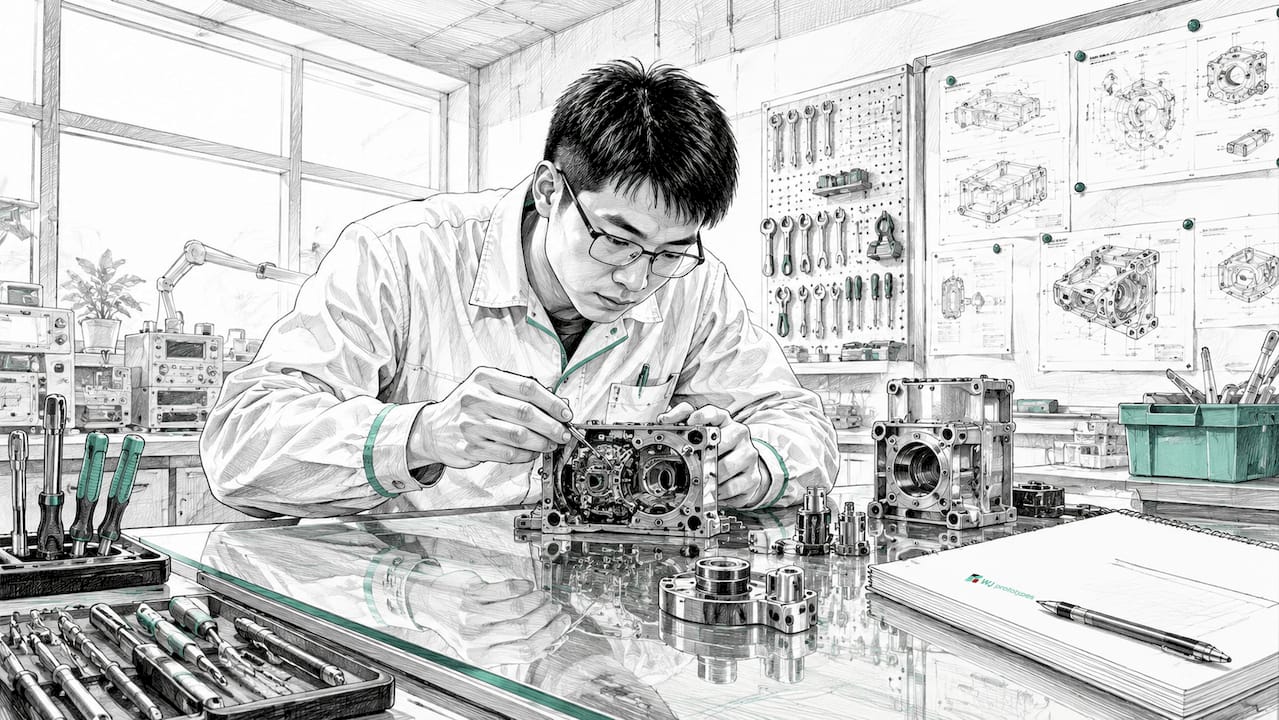
Reverse engineering is defined as the systematic process of analyzing a finished product or system to reconstruct its design, function, and operational logic without access to original documentation. Engineers, security researchers, and product developers use this discipline across software, hardware, and manufacturing. Industry frameworks like IEEE and SEBoK formalize the process into three core phases: information extraction, modeling, and review. Wjprototypes applies reverse engineering outputs daily, turning digitized physical data into manufacturable prototypes for aerospace, automotive, and medical clients worldwide.
Reverse engineering works by starting from a finished artifact and working backward to uncover the original design intent. Experts describe it as forward engineering in reverse, reconstructing design knowledge from completed products when no blueprints or source files exist. This approach recovers lost design logic in legacy systems and undocumented products, making it indispensable for maintenance and innovation.
The three-phase IEEE and SEBoK model structures the process clearly. Phase one extracts all available information from the artifact. Phase two builds a model that represents the system’s structure and behavior. Phase three reviews that model for accuracy and completeness. The process can begin at any stage in a product’s life cycle, not just from a finished end product.
This structured approach applies whether the subject is a compiled software binary, a mechanical assembly, or a circuit board. The discipline is observational and analytical by nature. The goal is understanding, not modification.
The methods differ significantly depending on whether the subject is software or a physical object.
Software reverse engineering workflows follow five steps as of 2026: data collection and analysis, static analysis, dynamic analysis, code reconstruction, and documentation. Each step builds on the last to produce a complete picture of how a program functions.

Static analysis examines the binary or bytecode without executing it. Tools like Ghidra, IDA Pro, and Radare2 disassemble compiled code into human-readable assembly. Dynamic analysis runs the program in a controlled environment. Tools like x64dbg and WinDbg reveal live memory access, file operations, and network calls during execution.
Pro Tip: Never rely on static analysis alone. Static analysis cannot observe runtime behavior, so combining static and dynamic analysis consistently produces more accurate results than either method used in isolation.
Physical reverse engineering follows a different sequence:
| Dimension | Software reverse engineering | Physical reverse engineering |
|---|---|---|
| Primary input | Compiled binary or bytecode | Physical component or assembly |
| Core tools | Ghidra, IDA Pro, x64dbg, WinDbg | 3D scanners, CMM, CAD software |
| Key output | Reconstructed source logic, documentation | CAD model, dimensional data |
| Main challenge | Code obfuscation, compiler optimization | Measurement accuracy, material identification |
| Primary applications | Security research, interoperability, forensics | Legacy part reproduction, product development |
Reconstructing high-level logic from a compiled binary is technically demanding. Compilers transform readable source code into machine instructions, discarding variable names, comments, and structural context. The resulting assembly code requires deep knowledge of CPU architecture to interpret correctly.
Knowledge of assembly language is critical for effective use of tools like Ghidra and IDA Pro. Analysts who skip this foundation misread disassembled output and draw incorrect conclusions about program behavior. This is the most common failure point for engineers new to software analysis.
Code obfuscation adds another layer of difficulty. Developers sometimes intentionally obscure logic to protect intellectual property. Automated decompilers frequently misinterpret obfuscated or heavily optimized code, producing pseudo-code that looks plausible but contains errors.
Pro Tip: Always cross-check decompiled output against the raw assembly. Compiler optimizations can collapse or reorder logic in ways that decompilers misrepresent, and catching those errors early saves hours of misdirected analysis.
Key challenges in software reverse engineering include:
Physical reverse engineering drives product development in industries where original design files are unavailable or where a competitor’s product must be understood for interoperability. Aerospace, mechanical engineering, and medical device manufacturing rely on this discipline to reproduce legacy parts and accelerate new product cycles.
The process centers on accurate digitization. 3D scanning, CAD modeling, and coordinate measuring machines convert physical components into precise digital representations. That digital data then feeds directly into manufacturing workflows, enabling rapid prototyping and low-volume production runs without starting from scratch.

Legacy part reproduction is one of the clearest use cases. When a manufacturer discontinues a component and no drawings exist, reverse engineering recovers the geometry needed to produce a replacement. Medical device teams use the same approach to understand implant geometry for custom fitting. Automotive engineers apply it to analyze competitor assemblies for benchmarking and interoperability planning.
The connection to digital manufacturing is direct. Once a physical part becomes a validated CAD model, it enters the same digital workflow as any designed-from-scratch component. That model can be machined, cast, or printed with the same precision as an original design.
| Industry | Typical application | Key benefit |
|---|---|---|
| Aerospace | Legacy component reproduction | Maintains airworthiness without original drawings |
| Medical devices | Custom implant geometry capture | Enables patient-specific manufacturing |
| Automotive | Competitor assembly benchmarking | Informs design decisions and interoperability |
| Industrial machinery | Worn part replacement | Reduces downtime when suppliers are unavailable |
Reverse engineering is legal in most jurisdictions when applied for specific purposes. Understanding those boundaries protects engineers and organizations from intellectual property liability.
Reverse engineering is distinct from re-engineering. Reverse engineering is observational and analytical. Re-engineering modifies the system, which requires full code or design ownership and carries separate legal considerations. Crossing from analysis into modification changes the project’s legal standing entirely.
Legally accepted uses include:
The risk zone starts when reverse engineering produces a direct copy for commercial sale, violates an end-user license agreement (EULA), or circumvents digital rights management (DRM) protections. Engineers should review applicable licensing terms before beginning any reverse engineering project. When in doubt, legal counsel familiar with IP law is the right resource.
Reverse engineering is the structured analysis of a finished artifact to reconstruct its design intent, using methods that span software binaries, physical components, and embedded systems.
| Point | Details |
|---|---|
| Three-phase structure | IEEE and SEBoK define reverse engineering as information extraction, modeling, and review. |
| Software tools matter | Ghidra, IDA Pro, and x64dbg each serve distinct roles across static and dynamic analysis. |
| Physical digitization | 3D scanning and CMM convert physical parts into CAD models ready for manufacturing. |
| Legal boundaries are clear | Reverse engineering for interoperability and security research is legal; copying for resale is not. |
| Assembly knowledge is foundational | Analysts without CPU architecture knowledge cannot accurately interpret disassembled code. |
Most engineers treat reverse engineering as a last resort, something you do when documentation is missing or a vendor goes dark. That framing undersells it badly. Reverse engineering is one of the most rigorous analytical disciplines in product development, and the engineers who practice it well are among the most technically capable people in any organization.
The software side taught me this clearly. You cannot fake your way through disassembled code. Either you understand x86 or ARM instruction sets, or you misread the output and build on a false foundation. The tools have improved dramatically, but Ghidra and IDA Pro still demand real knowledge from the analyst. Accessible tools lower the entry barrier; they do not eliminate the need for foundational skill.
On the physical side, the shift toward 3D scanning and CMM-based digitization has changed what is possible. Teams that once spent weeks manually measuring a legacy component now capture full geometry in hours. That speed matters enormously in product development cycles where time to prototype directly affects time to market.
The ethical dimension is real and worth taking seriously. Reverse engineering for understanding is legitimate. Reverse engineering to copy and sell is not. That line is clear in most legal systems, and engineers who respect it protect both their work and their organizations.
My honest recommendation: treat reverse engineering as a core competency, not a workaround. The teams that build this skill proactively are the ones who can recover from supplier failures, respond to security incidents, and understand competitor products with genuine depth.
— Yu
Once a reverse engineering project produces a validated CAD model or reconstructed design, the next challenge is manufacturing it accurately. Wjprototypes specializes in exactly this step. The team works with CNC machining materials suited for prototypes and custom parts, covering metals, engineering plastics, and specialty alloys that match the tolerances reverse engineered designs demand. Whether the output is a legacy aerospace component, a medical device part, or an automotive assembly, Wjprototypes’ ISO-certified manufacturing process takes the digital model from file to finished part with fast turnaround and global delivery. For teams ready to move from analysis to production, CNC machining services are available with instant quoting.
Reverse engineering is the process of analyzing a finished product or system to understand how it was designed and how it works, without using the original blueprints or source files.
Software reverse engineering uses tools like Ghidra and IDA Pro to disassemble compiled code into readable assembly, then reconstructs the program’s logic through static and dynamic analysis.
Reverse engineering enables legacy part reproduction, competitor benchmarking, and digital transformation of physical components into CAD models ready for rapid prototyping and production.
Reverse engineering is legal for interoperability, security research, and legacy system support in most jurisdictions. It becomes legally problematic when used to copy products for commercial resale or to violate licensing agreements.
Reverse engineering is purely observational and analytical. Re-engineering modifies the system, which requires full ownership of the code or design and carries distinct legal and technical responsibilities.
SERVICES
RESOURCES