



- Room 1807, Unit 9, Building 2, Shangxing Commercial Street, Shangde Road, Shangxing Community, Xinqiao Subdistrict, Bao'an District, Shenzhen City, China
CONTACT US

WhatsApp


Contact Us
Our team is on stand by, waiting toassist you.

Videos
A large collection of educational videos and tutorials.

About Us
Learn about our company, leadership, and mission totransform manufacturing.

Privacy Policy
Applies to all personal information collected through and/or processed in connection.
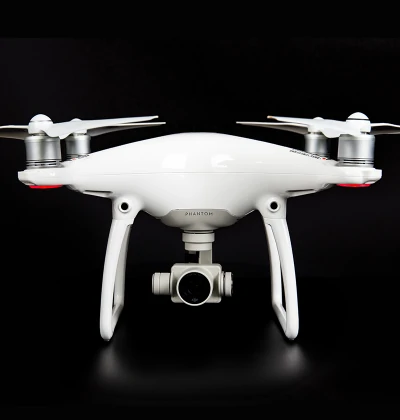

Aerospace & UAV
WJ Prototypes is your 3D manufacturing partner from prototype to large scale production.

Consumer Electronics
New Product Introduction Solutions for Consumer Electronics.

Robotics & Automation
Need some assistance bringing your robotic device or parts from the sketch-board to reality?

Medical Devices
The medical industry needs high quality, dependable and safe parts and products.

Automotive
New Product Introduction Solutions for Automotive

Industrial Machinery
The main purpose of industrial prototyping is to take the product from drawings into the real world.


TL;DR:
- Speeding up product development relies on structured NPI frameworks, AI-embedded workflows, and disciplined decision-making to reduce timelines without sacrificing quality. Organizational trust and focus on scope reduction, outsourcing, and parallel workflows are essential to overcome cultural barriers and accelerate delivery. The most effective approach combines process discipline, strategic scope management, and fostering a culture that embraces rapid iteration.
Speeding up product development is the practice of applying structured frameworks, AI-powered workflows, and focused decision-making to reduce launch timelines without sacrificing quality. The gap between companies that ship fast and those that don’t is rarely about talent. It comes down to process, tooling, and organizational discipline. Companies that master these three areas consistently outpace competitors, capture market share earlier, and spend less money fixing problems after launch. This guide breaks down exactly how to shorten your development cycle using methods that work in 2026.
The single most reliable method to accelerate product development is adopting a formal New Product Introduction (NPI) framework. NPI is the industry-standard term for the structured process that takes a product from concept through design, validation, and launch using defined phases and milestones. Companies using formal NPI frameworks achieve 30-50% faster time-to-market and 40% fewer post-launch quality issues than those using ad-hoc methods. That gap exists because structured phases eliminate the guesswork that causes rework, missed handoffs, and late-stage surprises.
The core advantage of NPI is that it forces cross-functional teams to work in parallel rather than in sequence. Traditional stage-gate processes make design wait for specs, QA wait for stable builds, and manufacturing wait for final drawings. Collapsing sequential stage gates and starting cross-functional testing on day one removes those wait times entirely. The result is that problems surface weeks earlier, when they cost a fraction of what they cost to fix post-launch.
Pro Tip: Map your current process and identify every handoff point where one team waits for another. Each wait is a compressible delay. Eliminating even two or three of them can recover weeks from your schedule.
Standardized milestones also create accountability. When every team knows the criteria to exit a phase, decisions happen faster and fewer items get reopened. Tools like Jira, Asana, and Productboard support milestone tracking across cross-functional teams, giving product managers a single source of truth for progress.
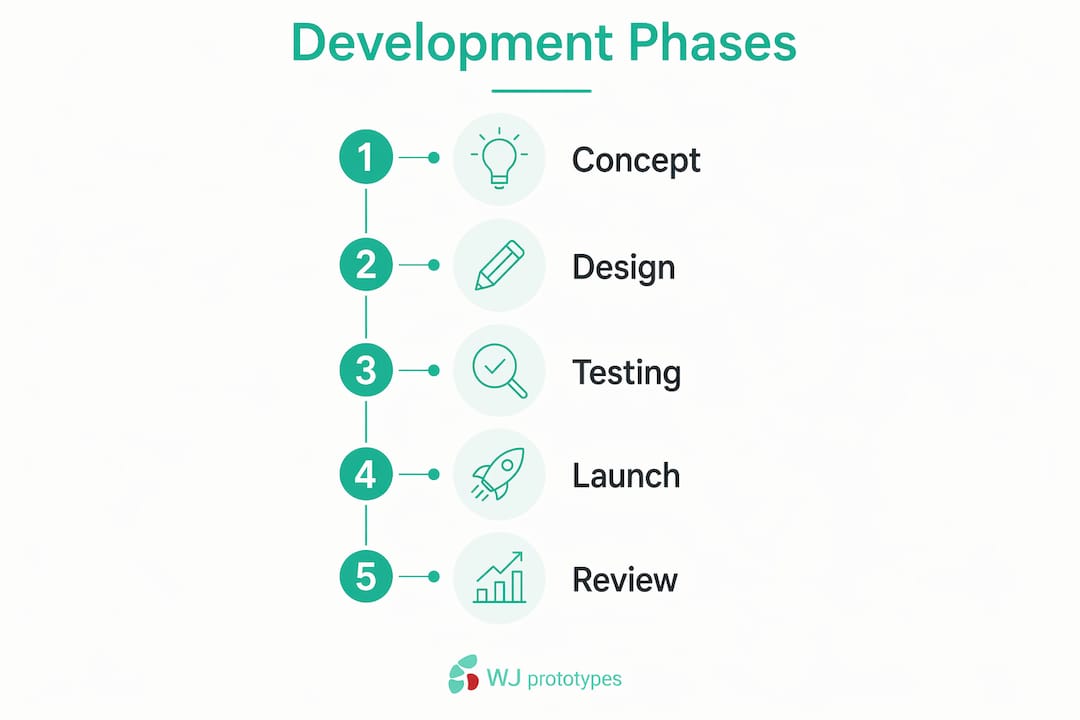
| Phase | Speed benefit |
|---|---|
| Concept and feasibility | Parallel market and technical validation cuts weeks of sequential research |
| Design and prototyping | Early physical or digital prototypes expose flaws before engineering is locked |
| Validation and testing | Automated QA and CI/CD pipelines catch regressions without manual bottlenecks |
| Launch and feedback | Progressive rollout with feature flags reduces risk and accelerates iteration |
AI is not a shortcut. It is a force multiplier for teams that already have a clear process. AI-powered workflows can reduce complex product launch timelines by 40-50%, but only when embedded inside a structured framework rather than used as a standalone tool. That distinction matters because teams that adopt AI without process discipline often create faster chaos, not faster delivery.
The highest-impact applications of AI in product development fall into three categories:
Generative AI also accelerates design iteration. Tools like Midjourney for concept visualization, Figma AI for UI generation, and MATLAB for simulation allow teams to evaluate more options in less time. Generative AI is not a standalone competitive advantage. Embedding it inside a consistent launch framework is what produces repeatable quality gains rather than one-off wins.
Pro Tip: Before rolling out AI tools company-wide, run a 30-day experiment with your two or three fastest engineers. Measure their output against baseline. Real data from your own team is more persuasive than any vendor case study.

Technical tools only deliver speed if the team’s behavior supports them. The most common bottleneck in product development is not slow code. It is slow decisions. Lack of trust and mindset barriers often limit development speed more than technical factors, and fixing them requires deliberate organizational choices.
Here are the practices that compress launch cycles most reliably:
True velocity depends on eliminating wait times between teams rather than on raw technical speed alone. A team that ships clean code slowly because design is always two sprints behind will never hit aggressive timelines, regardless of how good the engineers are.
The fastest way to ship is to build less. This sounds obvious, but most product teams systematically overbuild their first version because they conflate completeness with quality. Launching an MVP focused on a single core problem reduces delay and overspending compared to building a polished, feature-rich product upfront.
The most effective scope reduction strategies include:
| Approach | Build it yourself | Buy or outsource |
|---|---|---|
| Authentication system | 3-4 weeks of engineering time | 1 day with Auth0 or Firebase |
| Physical prototype | In-house tooling, weeks of setup | Days via CNC or SLA at Wjprototypes |
| Payment processing | 6-8 weeks for compliance and integration | 2 days with Stripe |
| QA test suite | Ongoing manual effort | Automated with Testim or Mabl |
The pattern is consistent across software and hardware. Buying proven components and outsourcing non-core manufacturing compresses timelines by weeks, not hours. The teams that ship fastest are not the ones that build everything. They are the ones that know exactly what not to build.
Speeding up product development requires structured NPI frameworks, AI-embedded workflows, disciplined team decision-making, and ruthless scope reduction working together.
| Point | Details |
|---|---|
| Adopt NPI frameworks | Formal processes deliver 30-50% faster time-to-market and 40% fewer post-launch quality issues. |
| Embed AI in your process | AI-powered workflows reduce launch timelines by 40-50% when used inside a structured framework. |
| Enforce 24-hour decisions | Strict decision timeboxes and daily merges compress cycles from months to weeks. |
| Launch an MVP first | Focusing on one core problem reduces overspending and gets real user feedback faster. |
| Buy infrastructure | Outsourcing authentication, payments, and prototyping recovers weeks of development time. |
After working closely with product teams across manufacturing, software, and hardware sectors, the pattern I see most often is this: the technical barriers to shipping faster are almost always solvable in a week. The cultural barriers take months.
Teams that cannot merge daily are not blocked by Git. They are blocked by distrust. Engineers who won’t commit unfinished code to main are afraid of judgment, not confused about the process. That fear is rational in organizations where mistakes are punished rather than learned from. The primary barrier to rapid development is mindset and culture, not technology, and no amount of tooling fixes a culture that punishes speed.
My honest advice: pick two or three of your most capable, most trusted engineers and give them permission to move at full speed on a real project. No approval chains. No committee reviews. Daily merges, feature flags, AI tools, the works. Then measure what they ship in 30 days. That output becomes your new baseline, and it makes the case for change better than any framework presentation ever will.
I would also caution against treating AI as a magic accelerator. The teams I have seen get the most out of tools like GitHub Copilot and Cursor are the ones that already had clean processes and strong code review culture. AI amplifies what is already there. If your process is messy, AI makes it messier, faster. Start with rapid prototyping best practices and process discipline, then layer in AI once the foundation is solid.
— Yu
For product managers and engineers building physical products, prototype speed is often the longest pole in the tent. Wjprototypes offers CNC machining services with fast turnaround times that support rapid iteration on hardware components, from early concept models to functional pre-production parts. Services including vacuum casting and sheet metal fabrication give teams the flexibility to test multiple design variants in parallel without committing to expensive tooling. As an ISO-certified manufacturer with global delivery capacity, Wjprototypes integrates directly into your development cycle, reducing the weeks that physical prototyping typically adds to your timeline. Get an instant quote and keep your launch schedule on track.
Adopting a formal NPI framework combined with parallel cross-functional workflows is the most reliable method. Companies using structured NPI processes achieve 30-50% faster time-to-market compared to ad-hoc approaches.
AI-powered workflows can reduce complex product launch timelines by 40-50%, but only when embedded inside a structured process. Using AI tools without process discipline produces inconsistent results.
An MVP (Minimum Viable Product) is a version of your product that solves one core problem with the minimum features required. Launching an MVP first reduces overspending and gets real user feedback weeks or months earlier than a full-featured launch would.
Feature flags let teams deploy code to production without making it visible to users. This enables daily merging to main without disrupting live users, which removes the coordination overhead of big-bang releases and accelerates delivery cycles.
Lack of trust within teams is the most common barrier. When engineers fear committing unfinished work or making fast decisions, development slows regardless of the tools in use. Building a culture that rewards speed and treats mistakes as learning opportunities is the prerequisite for any technical acceleration strategy.
SERVICES
RESOURCES