



- Room 1807, Unit 9, Building 2, Shangxing Commercial Street, Shangde Road, Shangxing Community, Xinqiao Subdistrict, Bao'an District, Shenzhen City, China
CONTACT US

WhatsApp


Contact Us
Our team is on stand by, waiting toassist you.

Videos
A large collection of educational videos and tutorials.

About Us
Learn about our company, leadership, and mission totransform manufacturing.

Privacy Policy
Applies to all personal information collected through and/or processed in connection.

Aerospace & UAV
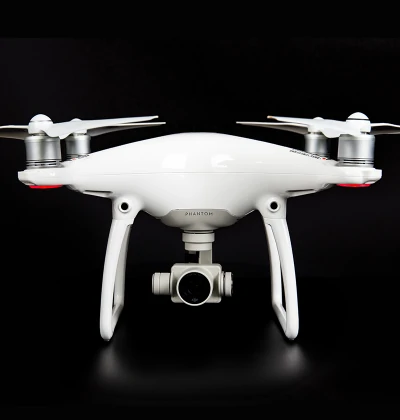
WJ Prototypes is your 3D manufacturing partner from prototype to large scale production.

Consumer Electronics
New Product Introduction Solutions for Consumer Electronics.

Robotics & Automation
Need some assistance bringing your robotic device or parts from the sketch-board to reality?

Medical Devices
The medical industry needs high quality, dependable and safe parts and products.

Automotive
New Product Introduction Solutions for Automotive

Industrial Machinery
The main purpose of industrial prototyping is to take the product from drawings into the real world.


TL;DR:
- Concurrent engineering enables cross-functional teams to work simultaneously on product design, manufacturing, and quality.
- It reduces development time by up to 50% and significantly lowers early defect correction costs.
Concurrent engineering is defined as a product development methodology where cross-functional teams work on design, manufacturing, quality, and marketing activities simultaneously rather than in sequence. The approach originated in aerospace and defense programs in the 1980s, where program managers needed to compress development timelines without sacrificing reliability. Today, concurrent engineering aligns directly with ISO 9001:2015 quality management principles, which require organizations to plan and control product realization processes with integrated input from all relevant functions. The core value is simple: catching a design flaw during concept costs a fraction of what it costs to fix after tooling is complete.
Concurrent engineering, also called simultaneous engineering, replaces the traditional hand-off model with a shared workspace where all disciplines contribute from day one. In a sequential process, design finishes before manufacturing reviews the drawings, which reviews before quality signs off. Each hand-off introduces delay and the risk that downstream teams will find problems the upstream team could have avoided entirely.

The concurrent model front-loads development with bidirectional feedback from manufacturing and quality teams at the earliest design stages. That means a manufacturing engineer flags a tight tolerance on a casting feature during the concept sketch phase, not after the mold is cut. The change costs an hour of conversation instead of weeks of rework.
A critical distinction separates concurrent engineering from simply running tasks in parallel. Not all steps run truly in parallel; the method eliminates artificial sequential dependencies caused by departmental silos while preserving necessary technical task ordering. A structural analysis must still follow a geometry definition. What concurrent engineering removes is the unnecessary wait while the geometry sits in someone’s inbox.
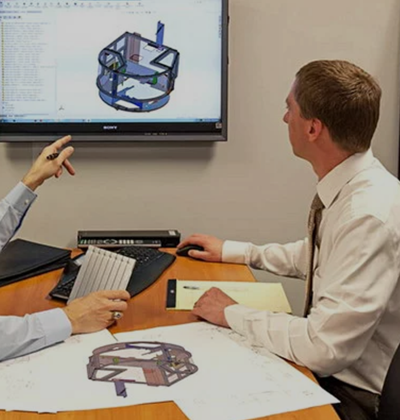
Integrated product teams, or IPTs, are the organizational unit that makes this work. Each IPT includes representatives from design, manufacturing, quality, supply chain, and sometimes marketing. Digital collaboration tools, shared CAD environments, and model-based systems engineering (MBSE) platforms give these teams a single source of truth. AR-based collaboration tools are also emerging in construction and manufacturing sectors as a way to visualize design intent across disciplines in real time.
Pro Tip: Build your digital infrastructure before you restructure your teams. Teams that attempt concurrent workflows without shared data environments generate version control conflicts that erase every speed gain.
The most direct benefit is time. Concurrent engineering adoption reduces product development cycle time by 20%–50% compared to traditional sequential models. That range reflects the maturity of the implementation: organizations with strong IPTs and digital infrastructure land at the top of the range.

Cost savings follow from early defect detection. Fixing defects during conceptual design costs approximately 10 times less than correcting the same problem in final production. That 10:1 ratio is the financial argument that gets executive buy-in, because it frames concurrent engineering not as a process preference but as a risk management decision.
Quality improvements extend beyond the factory floor. Companies applying concurrent engineering report 15%–25% fewer post-launch warranty claims and field service issues. Fewer warranty claims mean lower service costs, stronger brand reputation, and faster iteration on the next product generation.
Cross-functional communication improves as a structural outcome, not a cultural aspiration. When manufacturing and quality engineers attend design reviews from week one, they build shared context that prevents the “over the wall” failures that plague sequential development. Teams that understand each other’s constraints make better trade-off decisions faster. The result is a product that is easier to build, easier to test, and easier to support.
| Benefit | Impact |
|---|---|
| Development cycle time | 20%–50% reduction vs. sequential methods |
| Early defect correction cost | ~10x cheaper than late-stage fixes |
| Post-launch warranty claims | 15%–25% fewer field service issues |
| Cross-functional communication | Fewer late-stage redesigns and hand-off delays |
The transition to concurrent engineering is genuinely difficult. The shift requires fundamental changes in corporate structure, culture, and technology, and most organizations need 12–24 months before the new model runs smoothly. Teams that expect immediate gains often abandon the approach before it delivers.
The most common failure mode is attempting parallelization without proper infrastructure. Running parallel tasks without shared collaboration tools creates version control chaos. Engineers work from different design states, decisions get made twice, and rework accumulates faster than in the sequential model the team was trying to escape.
Cultural resistance is the second major barrier. Engineers who have spent careers in functional silos do not naturally share work in progress. Sharing an incomplete design for early manufacturing review feels uncomfortable. Leadership must actively model the behavior and reward early transparency rather than polished deliverables.
Early project management complexity also increases. Overlapping tasks require explicit dependency mapping to avoid rework. Project managers must distinguish between technical dependencies, where task B genuinely cannot start until task A is complete, and organizational habits, where task B has always waited for task A because that is how the department was structured.
Pro Tip: Adopt concurrent engineering in phases. Start with one product line and one cross-functional team. Prove the model works, document the lessons, then scale. A full organizational rollout without a pilot almost always fails.
Practical adoption starts with team structure. Establish a cross-functional integrated product team for each major program. Assign a dedicated IPT leader with authority to make trade-off decisions across disciplines. Without that authority, the team defaults to escalating every conflict up the functional hierarchy, which recreates the sequential delays the model was designed to eliminate.
Rapid prototyping is the physical complement to concurrent engineering’s organizational model. When a design team can put a functional prototype in the hands of manufacturing and quality engineers within days of a concept review, the feedback loop tightens dramatically. Lean principles and agile methodologies reinforce this: short sprints, fast feedback, and continuous integration of cross-functional input.
Design for manufacturability is the design-side discipline that concurrent engineering depends on. When designers understand manufacturing constraints from the start, they make geometry decisions that are cheaper to produce, easier to inspect, and more reliable in service. Concurrent engineering provides the organizational structure; DFM provides the technical vocabulary that makes cross-functional conversations productive.
Manufacturing lead time also shrinks when supply chain engineers join IPTs early. They can flag long-lead components during concept selection, which prevents the common scenario where a design is frozen around a part that takes 20 weeks to procure.
Concurrent engineering reduces development time by 20%–50% and cuts defect correction costs by a factor of 10 when cross-functional teams collaborate from the first design stage.
| Point | Details |
|---|---|
| Core definition | Concurrent engineering runs design, manufacturing, and quality activities simultaneously, not sequentially. |
| Cost of early fixes | Correcting defects in concept phase costs roughly 10 times less than fixing them in production. |
| Cycle time reduction | Adoption consistently delivers 20%–50% shorter development cycles across engineering sectors. |
| Biggest implementation risk | Running parallel tasks without shared digital infrastructure creates version control failures. |
| Practical starting point | Form one cross-functional IPT, map dependencies, and adopt a shared digital model before scaling. |
The organizations I see struggle most with concurrent engineering are not the ones with bad tools. They are the ones with good tools and bad habits. They buy a PLM platform, set up shared CAD libraries, and then watch their engineers continue to work in isolation because nobody changed the incentive structure.
Concurrent engineering requires that a manufacturing engineer’s early objection to a design feature be treated as a contribution, not an obstacle. That cultural shift is harder than any software implementation. The teams that get it right are the ones where leadership visibly rewards early problem identification, even when it slows down the first sprint.
The long-term competitive advantage is real. Faster time to market, fewer warranty claims, and lower development cost compound over multiple product generations. But the organizations that capture that advantage are the ones that treat concurrent engineering as a permanent operating model, not a project management technique they apply selectively. Technology enables it. Culture sustains it.

Concurrent engineering depends on fast physical feedback during early design stages. Wjprototypes provides rapid prototyping and manufacturing services that fit directly into concurrent development cycles, including SLA, SLS, MJF, DMLS, CNC machining, vacuum casting, injection molding, and die casting. Engineering teams can move from a concept review to a physical part in days, giving manufacturing and quality engineers the tangible input they need to make informed decisions before designs are frozen. Wjprototypes is ISO certified, serves aerospace, automotive, medical, and industrial clients globally, and offers instant quoting to keep pace with agile development schedules.
Concurrent engineering is a product development method where design, manufacturing, and quality teams work at the same time instead of one after another. The goal is to catch problems early, when they are cheapest to fix.
Traditional sequential engineering passes work from one department to the next in a fixed order, which creates delays and late-stage redesigns. Concurrent engineering runs those activities in parallel, with cross-functional teams sharing input from the start.
The primary benefits are a 20%–50% reduction in development cycle time, a 10:1 cost advantage for early defect correction, and 15%–25% fewer post-launch warranty claims compared to sequential development models.
The transition typically takes 12–24 months and requires changes to corporate structure, culture, and digital infrastructure. The most common failure is attempting parallel workflows without shared collaboration tools, which creates version control problems.
Yes. Concurrent engineering aligns naturally with agile’s short feedback cycles and lean’s focus on eliminating waste. Rapid prototyping, DFX principles, and iterative design reviews all reinforce the concurrent model.
— Yu
SERVICES
RESOURCES