



- Room 1807, Unit 9, Building 2, Shangxing Commercial Street, Shangde Road, Shangxing Community, Xinqiao Subdistrict, Bao'an District, Shenzhen City, China
CONTACT US

WhatsApp


Contact Us
Our team is on stand by, waiting toassist you.

Videos
A large collection of educational videos and tutorials.

About Us
Learn about our company, leadership, and mission totransform manufacturing.

Privacy Policy
Applies to all personal information collected through and/or processed in connection.
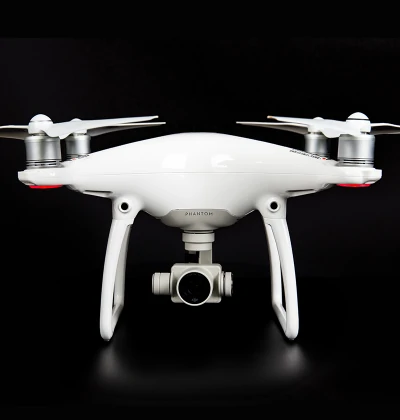

Aerospace & UAV
WJ Prototypes is your 3D manufacturing partner from prototype to large scale production.

Consumer Electronics
New Product Introduction Solutions for Consumer Electronics.

Robotics & Automation
Need some assistance bringing your robotic device or parts from the sketch-board to reality?

Medical Devices
The medical industry needs high quality, dependable and safe parts and products.

Automotive
New Product Introduction Solutions for Automotive

Industrial Machinery
The main purpose of industrial prototyping is to take the product from drawings into the real world.
TL;DR:
Proper evaluation of prototyping needs ensures the right 3D printing process and material selection.
Aerospace uses additive manufacturing for lightweight, certified, and production-ready parts, reducing part count.
Medical applications benefit from rapid iteration for patient-specific models and emergency device components.
Choosing the wrong 3D printing method can cost your team weeks and thousands of dollars. For product development teams in aerospace, automotive, and medical sectors, the stakes are higher than most: a wrong material choice, mismatched tolerance, or incorrect process can delay a product launch or compromise safety. This article walks you through a clear evaluation framework, then shows exactly how leading companies use specific 3D printing applications across industries. You'll get concrete numbers, real case studies, and actionable criteria to match your next prototype to the right process from the start.
| Point | Details |
|---|---|
| Choose based on project needs | Match 3D printing technology to complexity, material strength, and tolerance requirements. |
| Aerospace leads in certified parts | 3D printing enables lighter, more durable, and certified components for demanding environments. |
| Rapid iteration in medical prototyping | Medical teams use 3D printing to quickly create patient-specific and emergency devices. |
| Optimize infill and layer thickness | Tuning infill density and layer thickness improves strength and functional performance. |
| Apply lessons across industries | Automotive, robotics, and other sectors benefit from faster, more efficient prototyping cycles. |
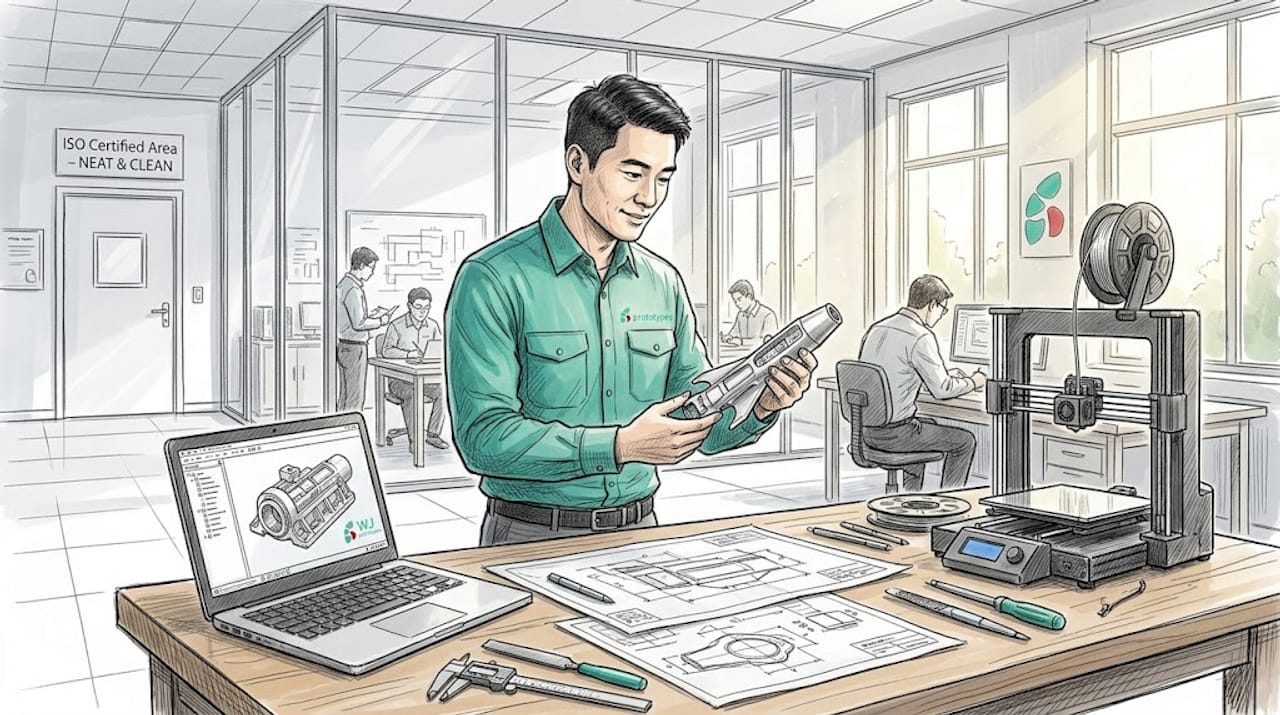
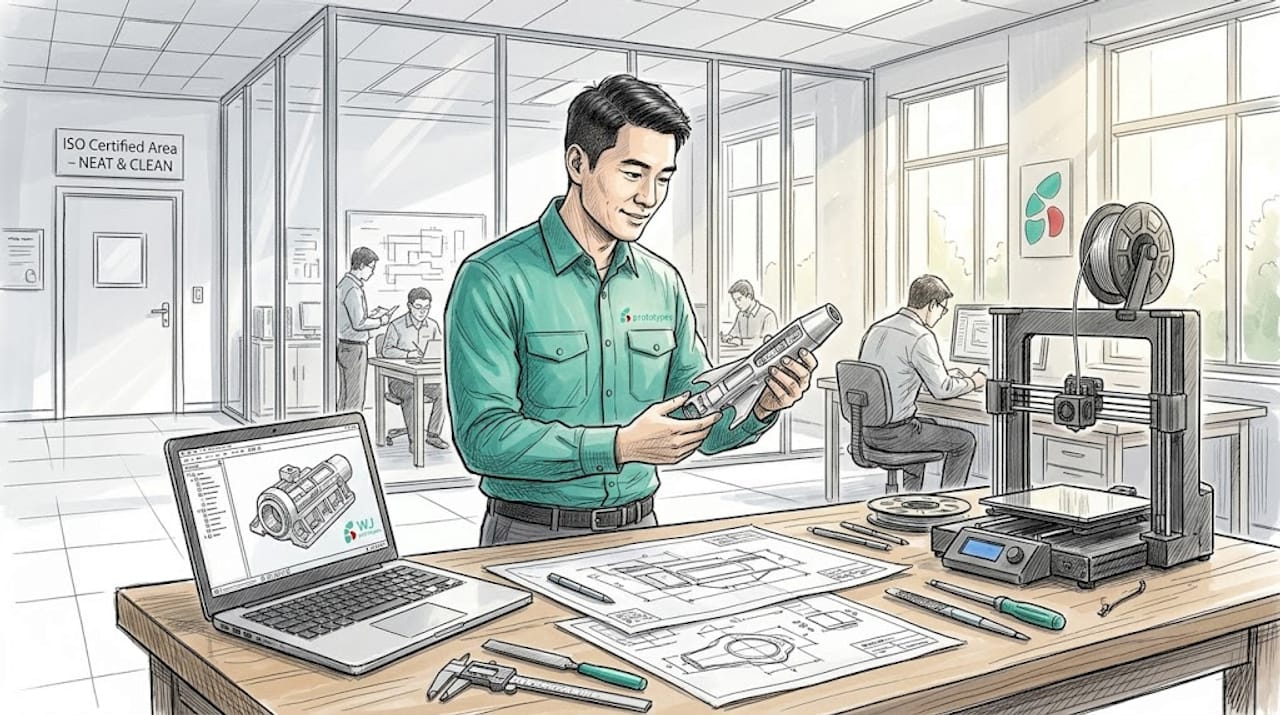
Before picking a technology, your team needs a structured way to assess what the prototype actually needs to do. Jumping straight to a familiar process because "it worked last time" is one of the most common and expensive mistakes in rapid prototyping. Instead, build your evaluation around four core criteria.
Understanding the types of 3D printing technologies available is the starting point for this matching exercise. Each process has a different precision envelope. FDM offers 0.2–0.5mm precision ideal for concept models, while SLA delivers high detail at 0.05–0.15mm accuracy. SLS and MJF enable complex geometries without supports, and SLM produces high-strength metal parts suited for demanding functional testing.
Once you've identified the right technology family, infill density becomes the critical variable for structural prototypes. Studies confirm that infill density is the top factor affecting tensile and compressive strength in printed parts, outweighing even layer thickness in many test conditions. This matters for teams running load tests on early-stage components. Explore how additive manufacturing explained in detail can help frame these decisions for your specific application.
Pro Tip: Match layer thickness to functional expectations, not just print speed. Thicker layers reduce print time but introduce anisotropic weakness, meaning the part may behave differently along the Z-axis versus the X-Y plane. For functional parts, go thinner even if it costs more time.
The aerospace sector has moved well past the proof-of-concept stage with 3D printing. Teams here use additive manufacturing for flight-ready hardware, not just mockups. The results are compelling.
GE Aviation's LEAP engine fuel nozzle is the benchmark example. The nozzle was redesigned as a single 3D printed part, consolidating what had been 20 separate components. The outcome: the part became 25% lighter and 5x more durable than its predecessor, with 100,000 units produced by 2021. That's not a prototype win; that's full-scale production proof.
On the certification front, Vocus and Materialise printed an Inconel coupler as a single piece from what had previously been 23 separate parts. The result was a 10x lifecycle improvement and full EASA certification, which is the European aviation safety authority standard equivalent to FAA scrutiny.
| Aerospace example | Technology | Key outcome |
|---|---|---|
| GE Aviation LEAP fuel nozzle | SLM (metal powder bed) | 25% lighter, 5x more durable, 100K units produced |
| Inconel coupler (Vocus/Materialise) | SLM (Inconel alloy) | 23 parts to 1, 10x lifecycle, EASA certified |
What do these examples mean for your SME product team?
"The most powerful outcome of 3D printing in aerospace isn't weight reduction alone. It's the ability to prototype, certify, and manufacture with the same process, collapsing the traditional gap between development and production."
For teams exploring aerospace manufacturing examples, these benchmarks set a clear performance bar. Your aerospace prototyping strategy should target part consolidation and material qualification from the first iteration.
Healthcare shows a different dimension of 3D printing value: speed and patient-specific customization. When clinical decisions depend on physical models, and when global supply chains break down under emergency conditions, fast iteration capability becomes critical.
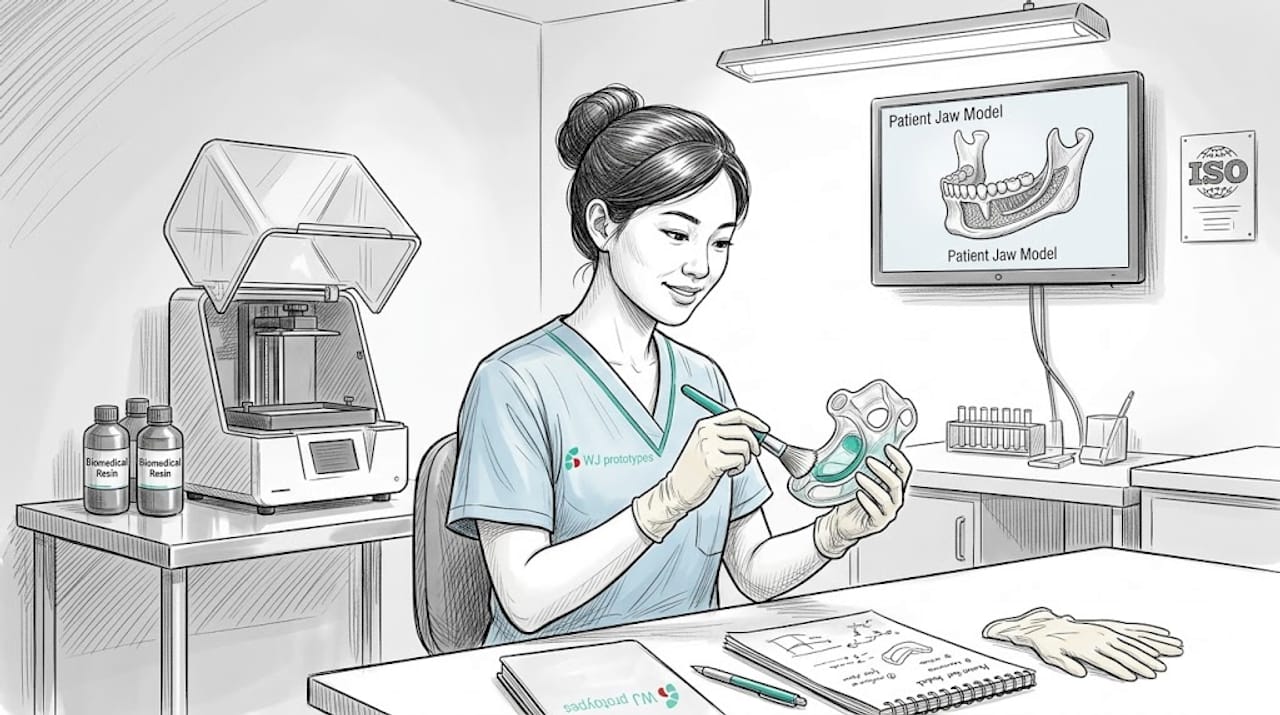
During the COVID-19 crisis, medical teams used additive manufacturing to prototype ventilator splitter components, completing 9 iterations in 20 days. Traditional tooling cycles would have taken months. That speed directly affected patient outcomes.
Here's how 3D printing is being used in clinical and device development contexts:
| Approach | Traditional method | 3D printing method | Time difference |
|---|---|---|---|
| Ventilator component | Weeks per iteration | 9 prototypes in 20 days | 5–10x faster |
| Anatomical surgical model | Not feasible per-patient | 200+ patient-specific units | New capability entirely |
| hCPAP fittings | Tooling required | Direct print, no supports | Days vs. months |
SLA is a strong fit for medical device prototypes that need surface clarity and fine detail, especially for components that interface with biological tissue or must demonstrate precise fit. You can read more about SLA printing advantages to understand where it outperforms other processes for clinical-grade prototypes.
Pro Tip: When prototyping for medical applications, build biocompatibility validation into your material selection process from day one, not as an afterthought. Some resins and polymers that print beautifully will never pass ISO 10993 biocompatibility screening. Knowing this early prevents costly re-designs. Learn more at our medical device prototyping resource.
Automotive teams operate on aggressive development timelines, and 3D printing fits naturally into early-stage design validation and functional testing workflows. The sector also generates lessons applicable to any industry running iterative hardware development.
Here's how automotive and cross-industry teams maximize prototyping output:
FDM, SLA, SLS, MJF, and SLM each enable cost-effective and accurate concept and functional prototypes when matched correctly to test requirements. Infill density is the key variable driving tensile and compressive strength outcomes, which means teams running structural validation tests need to specify infill parameters as carefully as they specify material grade.
For robotics and AI prototyping applications, the same principles apply. Lightweight structural frames, custom end-effector geometries, and sensor housings all benefit from rapid-cycle additive workflows. MJF technology is particularly useful when you need end-use-quality nylon parts without support removal labor.
Pro Tip: Use multi-material prototyping to simulate assembly behavior before committing to production materials. Printing a rigid housing with a flexible gasket or seal integrated into the same prototype run saves an entire design-validation cycle.
Here's what we see consistently across teams that struggle to get value from 3D printing: they prioritize technology selection over criteria definition. Teams spend hours debating SLS versus MJF while skipping the fundamental question of what the prototype needs to prove.
Criteria selection isn't a brief checklist exercise. It's the decision that determines whether your prototype delivers actionable data or just a physical artifact. Ignoring infill density and layer thickness in the print spec is a common error that invalidates structural test results. A part that looks right can behave completely wrong under load if these parameters weren't deliberately set.
The other overlooked factor is post-processing and certification planning. Most teams treat surface finishing and material certification as downstream activities. In reality, they should influence your technology choice from the start. SLM parts for aerospace need specific thermal post-processing to relieve residual stress. Medical-grade prototypes need traceable material documentation.
Fast iteration beats initial material cost every time in early-stage prototyping. The teams that move fastest treat each print cycle as a learning event, not a final answer. Understanding the full range of explained 3D printing technologies means knowing which process delivers the fastest learning loop for your specific stage of development, not just which one produces the best-looking part.
The examples above show what's possible when product teams match the right process to the right application. At WJ Prototypes, we work with aerospace, automotive, and medical teams to move from design file to qualified prototype quickly. Our services span SLA, SLS, MJF, DMLS, CNC machining, and more, with ISO-certified quality control and global delivery. Need flexible, low-volume production runs? Our vacuum casting service delivers production-grade parts at prototype economics. For machined components, explore our CNC machining materials to find the right substrate for functional testing. Get an instant quote and put these lessons to work on your next project.
Explore competitive 3D Printing Services with expert support from WJ Prototypes.
Whether you're comparing suppliers or looking to optimize costs, our team can help you evaluate the best option for your project.
👉 Request A Quote now or email us at info@wjprototypes.com to get started.
FDM, SLA, SLS, MJF, and SLM are the primary methods, each offering different balances of cost, precision, and material strength for prototype applications.
Medical teams completed 9 ventilator splitter prototypes in just 20 days, a pace that traditional manufacturing processes cannot match for iterative development.
Infill density is the top factor affecting tensile and compressive strength in printed parts, outweighing layer thickness in most test conditions.
Yes. SLM-produced parts like the Inconel coupler achieved EASA certification and delivered a 10x lifecycle improvement over the original multi-part assembly.
Aerospace, medical, automotive, and robotics sectors reap major benefits from 3D printing, ranging from performance gains and fast iteration to significant cost savings across development cycles.
7 Key Examples of 3D Printing Technologies Explained
3D Printing and Rapid Prototyping for Robotics and AI - Get A Quote
3D Printing Materials | Get Your Visual Prototypes From China
7 Key Benefits of 3D Printing for Modern Product Development
3D Configurator - Halkast (4cspcy) | VAN ICE
Explore competitive 3D Printing Services with expert support from WJ Prototypes.
Whether you're comparing suppliers or looking to optimize costs, our team can help you evaluate the best option for your project.
👉 Request A Quote now or email us at info@wjprototypes.com to get started.
SERVICES
RESOURCES