



- Room 1807, Unit 9, Building 2, Shangxing Commercial Street, Shangde Road, Shangxing Community, Xinqiao Subdistrict, Bao'an District, Shenzhen City, China
CONTACT US

WhatsApp


Contact Us
Our team is on stand by, waiting toassist you.

Videos
A large collection of educational videos and tutorials.

About Us
Learn about our company, leadership, and mission totransform manufacturing.

Privacy Policy
Applies to all personal information collected through and/or processed in connection.

Aerospace & UAV
WJ Prototypes is your 3D manufacturing partner from prototype to large scale production.

Consumer Electronics
New Product Introduction Solutions for Consumer Electronics.

Robotics & Automation
Need some assistance bringing your robotic device or parts from the sketch-board to reality?

Medical Devices
The medical industry needs high quality, dependable and safe parts and products.

Automotive
New Product Introduction Solutions for Automotive

Industrial Machinery
The main purpose of industrial prototyping is to take the product from drawings into the real world.
TL;DR:
- Chem film provides corrosion resistance and maintains electrical conductivity on aluminum, while anodize offers superior hardness and wear protection.
- Choosing between them depends on the part’s need for conductivity, dimensional stability, and environmental durability.
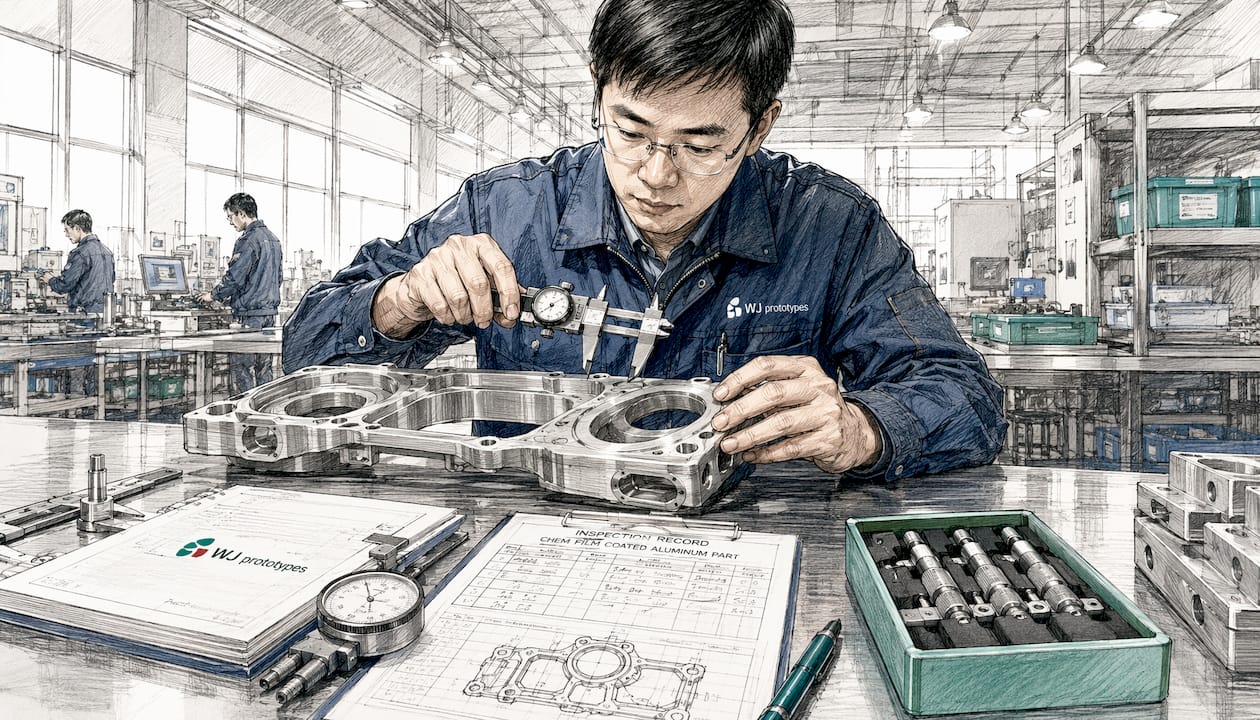
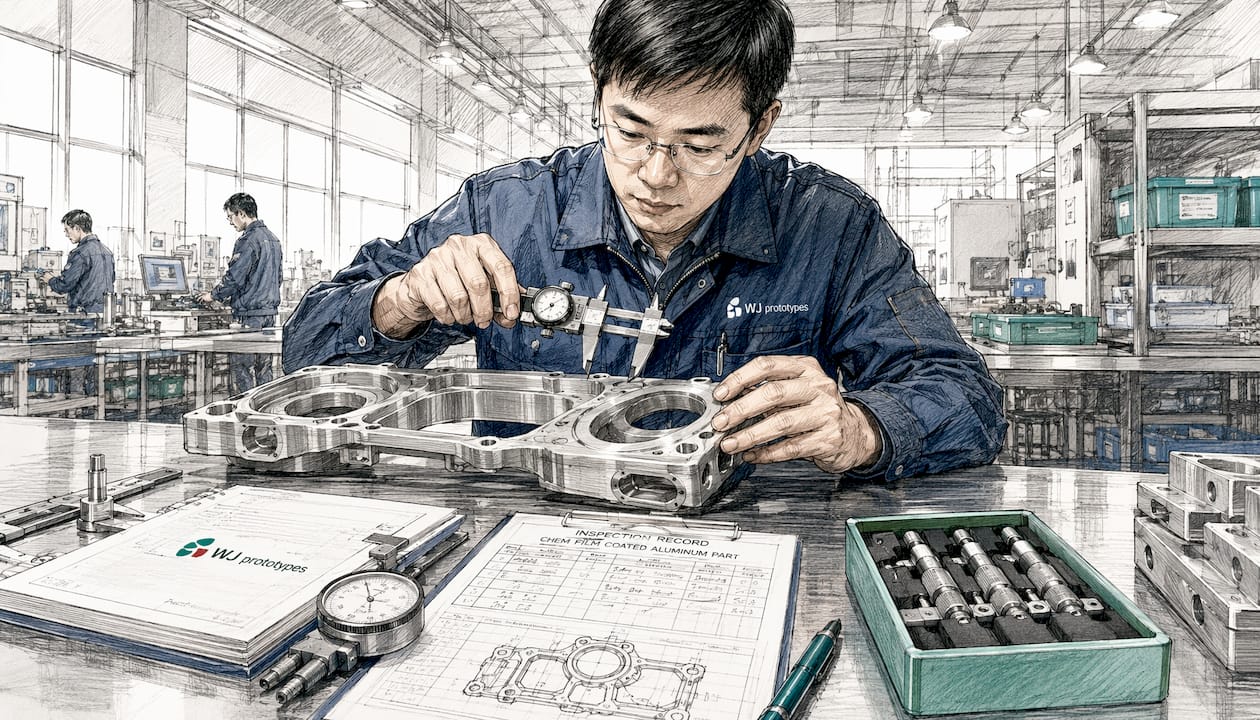
Chem film and anodize are not interchangeable finishes. Chem film, formally known as chromate conversion coating and governed by MIL-DTL-5541, is a purely chemical process that forms a thin corrosion-resistant layer on aluminum without electrical current. Anodizing, specified under MIL-A-8625, is an electrochemical process that grows a thicker aluminum-oxide layer with superior hardness and wear resistance. The right choice depends on your specific requirements for conductivity, dimensional tolerance, corrosion protection, and cost.
Here is a quick-reference breakdown of where each finish stands:
Anodizing converts the aluminum surface itself into aluminum oxide through an electrochemical reaction. The part is submerged in an acid bath, typically sulfuric acid, and electrical current passes through it, causing the surface to oxidize and build up a controlled oxide layer. That layer is integral to the metal, not just a coating sitting on top.
MIL-A-8625 defines six anodizing types. The two you will encounter most often in industrial work are Type II and Type III. Type II thickness runs 5–25 µm, produced in a sulfuric acid bath, and it creates a porous layer that accepts dyes easily. Type III, or hardcoat anodize, reaches 25–100 µm or more, penetrating deeper into the aluminum substrate and delivering the hardest surface available from an anodizing process.

Type I uses chromic acid and was developed specifically for aerospace castings, where sulfuric acid could seep into porosity and damage the part. Type IIB is a thin sulfuric acid variant designed for precision parts where dimensional change is unacceptable. Each type carries distinct tradeoffs in thickness, stress on the base material, and fatigue properties.
One mechanical reality engineers sometimes overlook: anodic coatings can reduce the fatigue strength of aluminum alloys, and the thicker the coating, the greater that reduction. Type III hardcoat of 2 mils or more is also difficult to achieve on high-silicon die castings like 380 or 383 alloy.
Chem film works through a straightforward chemical reaction. The aluminum part is cleaned, etched to remove the natural oxide layer, then submerged in a chromate bath. The solution reacts directly with the aluminum surface, forming a thin, gelatinous film that hardens into a corrosion-resistant layer. No electrical current is involved.

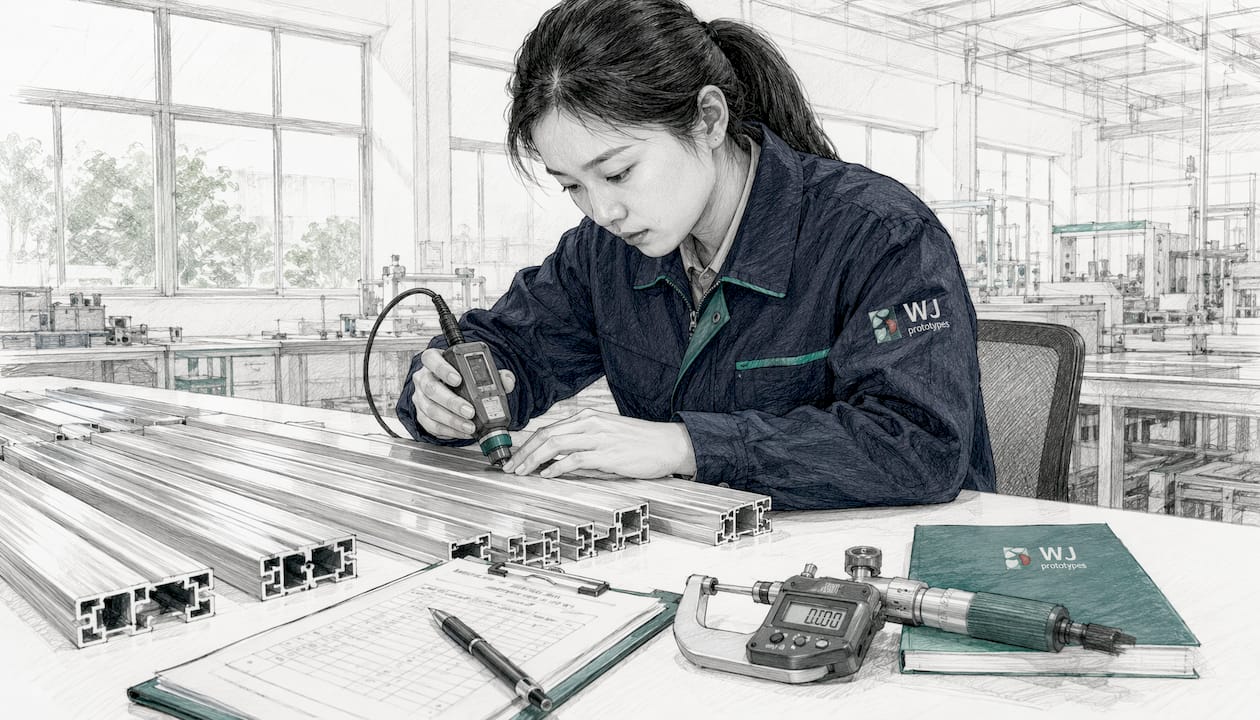
The result is a coating measured in microns, far thinner than even Type II anodize. That thinness is one of chem film’s biggest practical advantages: it adds almost no measurable dimension to the part. The coating also preserves the aluminum’s electrical and thermal conductivity, which makes it the default choice for EMI/RFI shielding housings and grounded electronic enclosures.
MIL-DTL-5541 classifies chem film by Class and Type. Class 1A provides maximum corrosion resistance; Class 3 is thinner and intended specifically for electrical contact applications where low contact resistance is required. Type 1 coatings contain hexavalent chromium; Type 2 uses trivalent chromium as a less toxic alternative. Getting the class and type right in your specification is not optional. A Class 3 coating ordered without that designation may arrive as Class 1A, which is too resistive for your electrical contacts.
Chem film also serves as an excellent primer base for paint and powder coat systems, improving adhesion on aluminum and aluminum alloy surfaces. That dual role, corrosion protection plus paint adhesion, makes it a go-to finish in both military and commercial aerospace programs.
A peer-reviewed study on 6063-T6 aluminum put hard numbers to what engineers already suspected: anodic oxide delivered over 8× better corrosion resistance in sodium chloride solution and 80% lower wear rates under dry sliding compared to chromate conversion coatings. That gap is real, and it matters when you are specifying a finish for a part that sees abrasion or salt spray.
| Dimension | Chem Film | Type II Anodize | Type III Anodize |
|---|---|---|---|
| Process type | Chemical (no current) | Electrochemical | Electrochemical |
| Typical thickness | <1 µm | 5–25 µm | 25–100+ µm |
| Corrosion resistance | Moderate | Good | Excellent |
| Wear resistance | Low | Moderate | High |
| Electrical conductivity | Maintained (Class 1A/3) | Insulating | Insulating |
| Dimensional impact | Negligible | Minor | Significant |
| Color options | Gold or clear | Multiple dyes | Limited (dark tones) |
| Relative cost | Low | Moderate | Higher |
| Technical complexity | Low | Moderate | High |
Chem film advantages:
Chem film disadvantages:
Anodize advantages:
Anodize disadvantages:
The answer usually comes down to two questions: does the part need to conduct electricity, and will it see significant abrasion?
Applications where chem film is the right call:
Applications where anodizing is the right call:
In aerospace electronics enclosures, the split is common: chem film on the enclosure body for grounding, anodize on structural brackets and covers where hardness and color coding matter. That combination is not unusual in a single assembly. For aerospace metal fabrication, understanding which finish goes where is as important as the alloy selection itself.
Material compatibility also plays a role. Chem film works on virtually all aluminum alloys, including high-silicon die castings where Type III anodize struggles. If your part is cast from 380 or 383 alloy, chem film is often the only practical option.
Specifying a finish without citing the governing standard is asking for a nonconformance. Both processes have well-established military and industry specifications that define exactly what you are ordering.
MIL-DTL-5541 (chem film):
MIL-A-8625 (anodizing):
Environmental and regulatory trends:
The metal finishing industry is actively transitioning away from hexavalent chromium processes, and that shift is accelerating in both military and commercial supply chains. Specifying Type 2 now avoids a future redesign.
No, not without stripping the chem film first. Anodizing requires direct contact between the aluminum substrate and the acid bath electrolyte. Chem film, even though it is thin, acts as a chemical barrier that interferes with oxide nucleation and growth. The result is patchy anodize, poor adhesion, and inconsistent coating thickness across the part.
The best practice is straightforward: strip the chem film completely using an alkaline or acid etch process, verify the bare aluminum surface, then proceed with anodizing. Attempting to anodize over an existing conversion coating to save a processing step will produce a part that fails inspection and likely fails in service.
There is one legitimate combined-process scenario worth knowing. Chem film is approved for repairing damaged anodized coatings in the field, where re-anodizing the full part is not practical. A small scratch or mechanical damage on an anodized surface can be touched up with chem film to restore corrosion protection locally. That is a repair application, not a base-coat-then-anodize sequence.
For engineers writing surface treatment specifications, the sequence matters as much as the finish selection. If your drawing calls for both processes on the same part, clarify which areas receive which treatment and in what order.
The most common specification mistake in precision manufacturing is ordering chem film without stating the MIL-DTL-5541 Class and Type. A shop that receives a drawing calling only for “chem film per MIL-DTL-5541” will typically apply Class 1A, Type 1 as the default. If your design needs Class 3 for electrical contacts, or Type 2 for RoHS compliance, that default will fail your requirements without any processing error on the shop’s part.
Dimensional sensitivity is the other frequent decision driver. Type IIB anodize offers a thin, dimensionally stable oxide layer suited for parts with tight tolerances, where even a few microns of added thickness would push a feature out of spec. For parts where Type IIB is not sufficient in hardness but full Type III would alter dimensions too much, chem film often wins by default, not because it is the ideal corrosion solution, but because it is the only finish that leaves the geometry intact.
Anodize brittleness is underappreciated in fatigue-critical designs. The thicker the anodic coating, the greater the reduction in fatigue strength of the underlying aluminum. For dynamically loaded parts in aerospace or industrial machinery, specifying Type III hardcoat without accounting for that fatigue penalty can create a failure mode that did not exist before finishing.
For anodized color options in Type II processes, dye selection also affects wear resistance. Sealed and dyed anodize surfaces are harder to scratch and easier to sterilize than undyed Class 1 surfaces, which matters in medical and food-processing applications.
Pro Tip: When specifying chem film for any part that will be painted, always call out both the MIL-DTL-5541 class and type AND the paint system specification on the same drawing note. Shops that see only the chem film spec may not apply the coating weight or surface prep required for optimal paint adhesion, especially on complex geometries with recesses.
Engineers who have worked through the chem film vs anodize decision know the harder problem is finding a manufacturing partner who can execute both processes correctly on tight-tolerance parts, without adding weeks to the schedule.

Wjprototypes offers CNC machined aluminum parts with chem film and anodize finishing options, including Type II and Type III anodize, applied to aerospace, electronics, and industrial components. Parts are quoted online with full specification support, so you can call out MIL-DTL-5541 Class and Type or MIL-A-8625 Type and Class directly in your order. The CNC machining materials page covers compatible aluminum alloys and available finishes in detail. For sheet metal components requiring chromate or anodize treatment, Wjprototypes also handles sheet metal fabrication with the same finish options. Get an instant quote and specify your surface treatment requirements directly.
Chem film, or chromate conversion coating, is a chemical process that forms a thin corrosion-resistant layer on aluminum without electrical current, governed by MIL-DTL-5541. It preserves electrical conductivity and serves as an effective paint adhesion primer.
Anodizing over chem film is not recommended because the conversion coating interferes with oxide growth, producing poor adhesion and inconsistent thickness. Strip the chem film completely before anodizing for acceptable results.
Chem film maintains electrical conductivity, adds negligible thickness, and costs less to apply, making it the better choice for EMI shielding enclosures, precision-tolerance parts, and paint primer applications where anodize would insulate or alter dimensions.
Yes. Chem film is one of the best paint adhesion primers available for aluminum, and it is widely specified as a base coat before painting or powder coating in both military and commercial programs.
Class 1A provides maximum corrosion resistance for general use; Class 3 is thinner and designed specifically for electrical and electronic contact applications where lower contact resistance is required, per MIL-DTL-5541.
Chem film preserves conductivity and dimensional stability at low cost, while anodize delivers superior corrosion and wear resistance at the expense of conductivity and tighter process control.
| Point | Details |
|---|---|
| Corrosion and wear gap | Anodic oxide showed over 8× better corrosion resistance and 80% lower wear rates than chromate conversion on 6063-T6 aluminum. |
| Conductivity tradeoff | Chem film (Class 1A and Class 3) maintains electrical conductivity; all anodize types are electrically insulating. |
| Dimensional impact | Type IIB anodize and chem film both add negligible thickness, making them the right choices for tight-tolerance precision parts. |
| Specification precision | Always cite MIL-DTL-5541 Class and Type for chem film, and MIL-A-8625 Type and Class for anodize, to avoid receiving the wrong coating. |
| Wjprototypes | Wjprototypes machines and finishes aluminum parts to MIL-DTL-5541 and MIL-A-8625 specifications, with online quoting for both chem film and anodize options. |
SERVICES
RESOURCES