



- Room 1807, Unit 9, Building 2, Shangxing Commercial Street, Shangde Road, Shangxing Community, Xinqiao Subdistrict, Bao'an District, Shenzhen City, China
CONTACT US

WhatsApp


Contact Us
Our team is on stand by, waiting toassist you.

Videos
A large collection of educational videos and tutorials.

About Us
Learn about our company, leadership, and mission totransform manufacturing.

Privacy Policy
Applies to all personal information collected through and/or processed in connection.
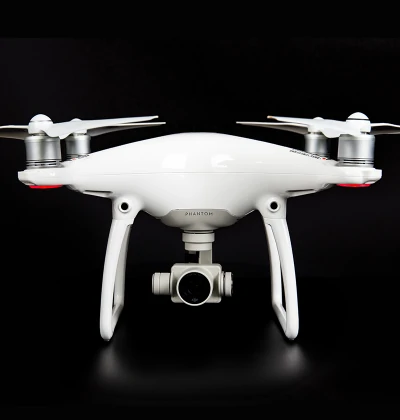

Aerospace & UAV
WJ Prototypes is your 3D manufacturing partner from prototype to large scale production.

Consumer Electronics
New Product Introduction Solutions for Consumer Electronics.

Robotics & Automation
Need some assistance bringing your robotic device or parts from the sketch-board to reality?

Medical Devices
The medical industry needs high quality, dependable and safe parts and products.

Automotive
New Product Introduction Solutions for Automotive

Industrial Machinery
The main purpose of industrial prototyping is to take the product from drawings into the real world.


Class I devices carry the lowest regulatory risk in the FDA’s system, but that status is not a free pass. Most Class I types skip 510(k) submission, yet every one of them still answers to general controls, and a growing share face design control or Quality Management System Regulation (QMSR) obligations. The moment a prototype gains software, an active function, or a new intended use, the exemption you were counting on may disappear. Verify classification before you build, not after.
TL;DR:
- Confirm your device’s exemption status by reviewing the specific regulation in 21 CFR Parts 862 to 892 before advancing past initial prototyping stages.
- Incorporate medical device registration, labeling, complaint processes, and version control from the start to ensure compliance and traceability.
- Change in intended use, addition of software, or automation can invalidate exemption, requiring performance testing and possibly a 510(k) submission.
- Even exempt devices must adhere to general controls such as establishment registration, device listing, labeling, adverse event reporting, and UDI requirements.
- Maintain a minimal but traceable design file including versioned drawings, change rationales, and test records to stay prepared for audits or regulatory inquiries.
Before your first prototype leaves the bench, run through a short set of regulatory checkpoints. Skipping these early costs far more time later, usually right when you’re trying to hand a design off to production.
Pro Tip: Build a one-page exemption justification for each device the moment you confirm its product code. If FDA or an auditor ever asks why you skipped a 510(k), you want an answer already written, not one you’re drafting under pressure.
Your classification regulation is the single most useful document you’ll read this quarter. Each one lives in 21 CFR Parts 862 through 892, and each carries specific language about what your device type is, what it’s exempt from, and where that exemption stops working. The FDA’s own guidance on Class I and class II device exemptions makes clear that exemption is common but never automatic. A majority of Class I device types carry 510(k) exemption in FDA’s own accounting, but some still need a submission.
The exemption language usually sits in a subsection numbered something like xxx.9 within your regulation, and it lists the conditions under which the exemption no longer applies. A few triggers show up again and again:
Once you know whether your device sits inside or outside the exemption, the evidence you need to gather changes accordingly. A straightforward exempt device mostly needs correct labeling, a listing entry, and general controls compliance. A device that trips one of those limitations needs performance data, verification testing, and likely a full 510(k) submission before you go further. Read your specific regulation’s exemption paragraph line by line. Guessing here is how teams end up redoing months of prototype validation.
General controls apply to every medical device sold in the United States, Class I included, and they don’t bend for exemption status. Treating “exempt from 510(k)” as “exempt from everything” is one of the most common and costly misreadings in the industry, according to FDA’s general controls guidance.
Four obligations apply almost universally, and none of them wait for a market launch:
The FDA’s overview on classifying your medical device lays out these baseline obligations alongside the classification database itself, and it’s worth reading both together. General controls are the floor. They apply whether your device needs a 510(k) or not, and no exemption removes them.
21 CFR 820.30 spells out design controls: design inputs, outputs, verification, validation, transfer, and a design history file tying it all together. Most Class I devices are exempt from this section, but “most” is doing real work in that sentence. Devices that are automated with computer software, or that FDA has specifically flagged in the regulation text, lose that exemption regardless of their risk classification.
The Quality Management System Regulation folds ISO 13485:2016 directly into the FDA’s quality framework. That incorporation changes what “minimum documentation” looks like even for exempt devices, because ISO 13485 expects traceable records and controlled processes as a baseline practice, not just a design control checkbox.
Three triggers push a Class I device toward full design control coverage:
Pro Tip: Even when your device is fully exempt, keep a slimmed down design file anyway. It costs a fraction of a full DHF and saves you from scrambling if your device’s use case shifts, or if an investor’s due diligence team asks for one.
A defensible minimum file, even under exemption, should include versioned drawings, your acceptance criteria, a short rationale for any design change, and traceable test records showing the device does what you say it does.
Verification and validation work does not need to be exhaustive to be useful. It needs to be tied directly to intended use, with acceptance criteria set before testing starts, not adjusted afterward to fit whatever result you got.
Documentation like this pays for itself the first time a reviewer, investor, or manufacturing partner asks how you know the device works. Our guide on the role of prototyping in medical devices walks through how testing and documentation stay connected through each design iteration.
Method choice should follow your validation goal, not the other way around. SLA, SLS, and MJF printing are strong for form and fit checks early on, when you’re confirming geometry and ergonomics rather than mechanical performance. CNC machining earns its cost when you need functional parts that behave like the production material, particularly for anything load bearing or subject to wear. Vacuum casting fills the gap for small batches that need production-like finish without committing to hard tooling, and low-volume tooling makes sense once you’re validating a process, not just a shape.
Material choice carries its own documentation burden. Devices with patient contact, even in prototype form, often need ISO 10993 biocompatibility screening data or a supplier material declaration confirming composition. Keep these records:
That last point matters more than most teams expect. A prototype process nobody wrote down is a process you’ll be reverse engineering later, usually under a deadline.
Three formal channels exist for getting FDA input before you commit to a design direction, and each fits a different kind of uncertainty.
Keep briefing packages short and specific. A tight two or three page submission focused on one clear question gets a faster, more useful response than a sprawling document trying to cover every open issue at once. Early contact through a 513(g) or Q-Sub, before you’ve locked design decisions, can save weeks of rework if a feature you assumed was minor turns out to void your exemption.
A professional prototyping company offers SLA, SLS, MJF, DMLS, CNC machining, sheet metal fabrication, vacuum casting, injection molding, and die casting under ISO-oriented quality processes, giving medical device teams a single source for form, fit, and functional prototypes. Production runs can be paired with material certificates, inspection reports, and batch traceability documentation, the same records your regulatory file needs to stay defensible. That documentation discipline can shorten the gap between prototype iteration and production handoff, because the records generated during prototyping can carry forward instead of getting rebuilt later. Our prototype QA guide and medical device services overview walk through specific examples of how that works in practice.
The mistake I see most often is treating “exempt” as a synonym for “no paperwork.” It isn’t. Exemption removes a submission requirement, not your obligation to know what you built and why it works. The second mistake is worse: no version control on prototypes, so nobody can say which build actually passed which test six months later.
Before any prototype moves toward low-volume production, run three checks: confirm the exemption status still holds given the current design, confirm your test records trace to the exact version you’re advancing, and confirm your material and process documentation would survive an outside audit today, not after a scramble.
— Nas
If you’re building a Class I device and need parts that hold up to both functional testing and documentation scrutiny, CNC machining materials built for prototypes give you production-representative mechanical behavior without committing to tooling. Some prototyping companies run instant quote systems, so submitting a clear specification, tolerances, material choice, finish requirements, and expected test use, can get you an accurate quote and a documentation package without back-and-forth delays. Orders can come with material certificates, inspection reports, and batch traceability records, so parts used for verification testing arrive with the paper trail your design file may need. If your next milestone is a functional prototype ready for bench testing or early clinical evaluation, start with a specification and request a quote through CNC machining in China to see turnaround and documentation options for your specific device.
Class I devices are the lowest-risk category in FDA’s three-tier system, generally simple in design with a well-established safety record, such as bandages or handheld surgical instruments. Most qualify for 510(k) exemption, but all remain subject to general controls like registration, listing, and labeling.
Class I covers low-risk devices with general controls only, Class II covers moderate-risk devices usually requiring 510(k) clearance and special controls, and Class III covers high-risk devices, like implants, that typically need premarket approval. Classification depends on the device type and its intended use, found in the FDA classification database.
Most Class I devices are exempt from 510(k) submission, but roughly a quarter of Class I device types still require one because their classification regulation doesn’t carry that exemption. Always check the specific limitations language in your device’s classification regulation before assuming exemption applies.
Class I examples include tongue depressors, elastic bandages, and manual stethoscopes. Class II examples include powered wheelchairs and infusion pumps, while Class III examples include pacemakers and implantable defibrillators.
WJ Prototypes supplies material certificates, inspection reports, and batch traceability records with prototype and low-volume production orders, which supports the documentation trail Class I manufacturers need to keep for audits and design files.
SERVICES
RESOURCES