



- Room 1807, Unit 9, Building 2, Shangxing Commercial Street, Shangde Road, Shangxing Community, Xinqiao Subdistrict, Bao'an District, Shenzhen City, China
CONTACT US

WhatsApp


Contact Us
Our team is on stand by, waiting toassist you.

Videos
A large collection of educational videos and tutorials.

About Us
Learn about our company, leadership, and mission totransform manufacturing.

Privacy Policy
Applies to all personal information collected through and/or processed in connection.


Aerospace & UAV
WJ Prototypes is your 3D manufacturing partner from prototype to large scale production.

Consumer Electronics
New Product Introduction Solutions for Consumer Electronics.

Robotics & Automation
Need some assistance bringing your robotic device or parts from the sketch-board to reality?

Medical Devices
The medical industry needs high quality, dependable and safe parts and products.

Automotive
New Product Introduction Solutions for Automotive

Industrial Machinery
The main purpose of industrial prototyping is to take the product from drawings into the real world.
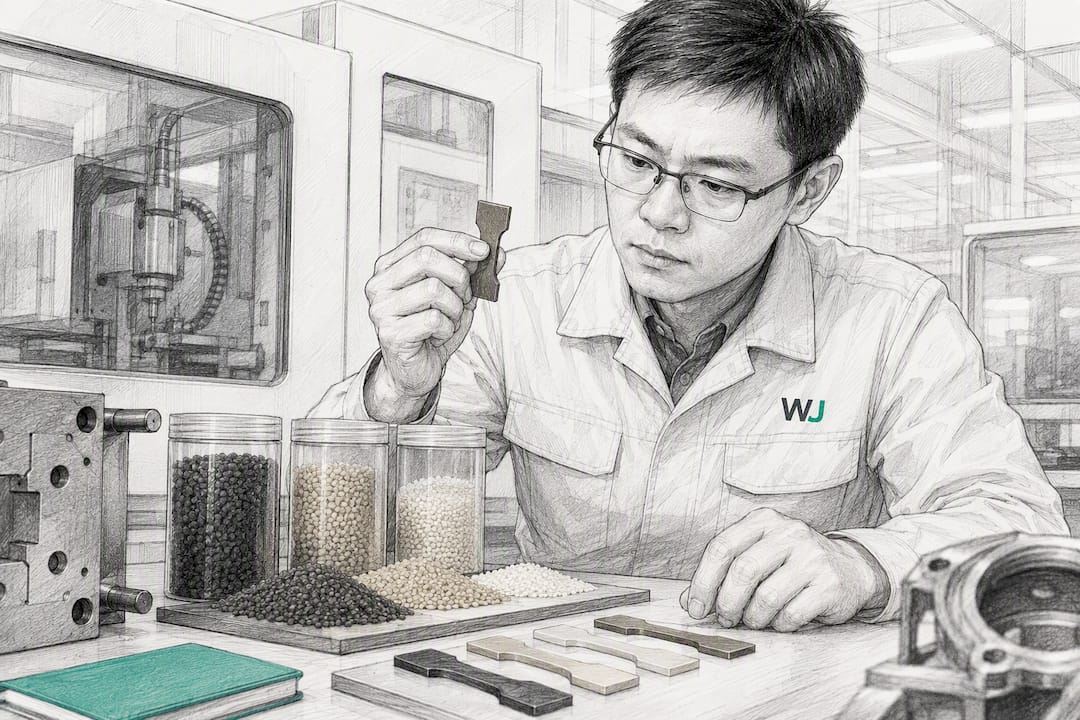
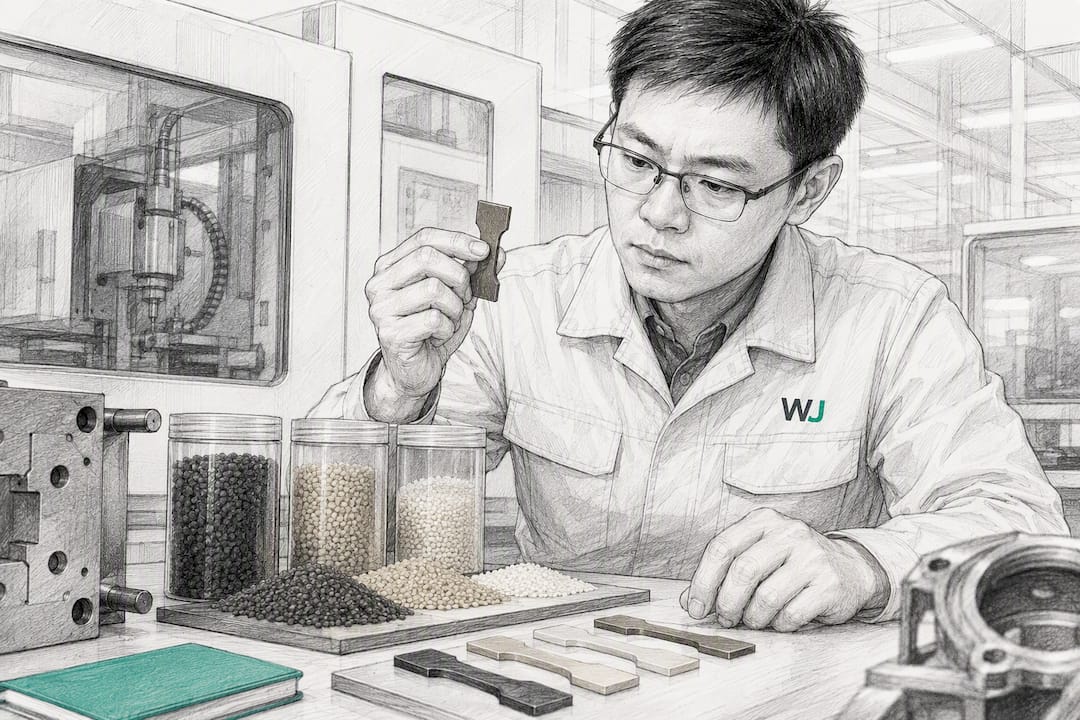
The recommended path is straightforward: pick a high-performance polymer, PPS, PEEK, TPI, or a heat-stabilized polyamide like Ultramid® Endure, matched to your process and part volume, then demand continuous use temperature (CUT) and heat deflection temperature (HDT) data plus a physical sample before tooling starts. Confirm your supplier is ISO certified and offers a DFM review. Some suppliers run high-temp-capable 3D printing, CNC machining, and injection molding for prototyping and low-volume runs.
TL;DR:Material selection should be based on the operating temperature, with PPS suitable for up to 240°C, and PEEK or TPI capable of withstanding 250 to 350°C in continuous use.Injection molding is the most cost-effective and repeatable process for high-volume or tight-tolerance parts, while 3D printing suits complex or low-volume prototypes.Request detailed datasheets including CUT, HDT, and mechanical properties, and validate with physical samples under actual service conditions before tooling.Confirm supplier ISO certification, material traceability, and equipment capability, and insist on comprehensive quotes covering processing parameters and mold durability.QA should include a sequence of prototype testing, destructive batch testing, and formal sign-off, with clear documentation and packaging requirements to ensure reliability.
WJ PrototypesSource Heat Resistant Parts Without ReworkWJ Prototypes combines advanced manufacturing services, experienced engineers, and ISO certified production for prototypes and low-volume parts.Explore manufacturing services
Choosing a material starts with your operating temperature, not your budget. Four polymer families dominate heat-resistant plastics parts manufacturing from China, and each one draws a different line between what it can survive briefly and what it can survive for years.
PPS (polyphenylene sulfide) handles continuous service around 200 to 240°C, with short-term resistance above 260°C. Toray’s TORELINA™ PPS grades confirm that range and report heat deflection temperatures of 260°C or higher for reinforced variants, which is why the resin shows up constantly in engine peripherals and electrical connectors.
PEEK and thermoplastic polyimide (TPI) sit above PPS on both cost and capability. TPI grades post glass transition temperatures of roughly 250 to 350°C, with continuous-use guidance around 240 to 300°C depending on the specific formulation. PEEK tracks closely with TPI in service temperature but machines more predictably, which matters once you get into tight-tolerance parts.
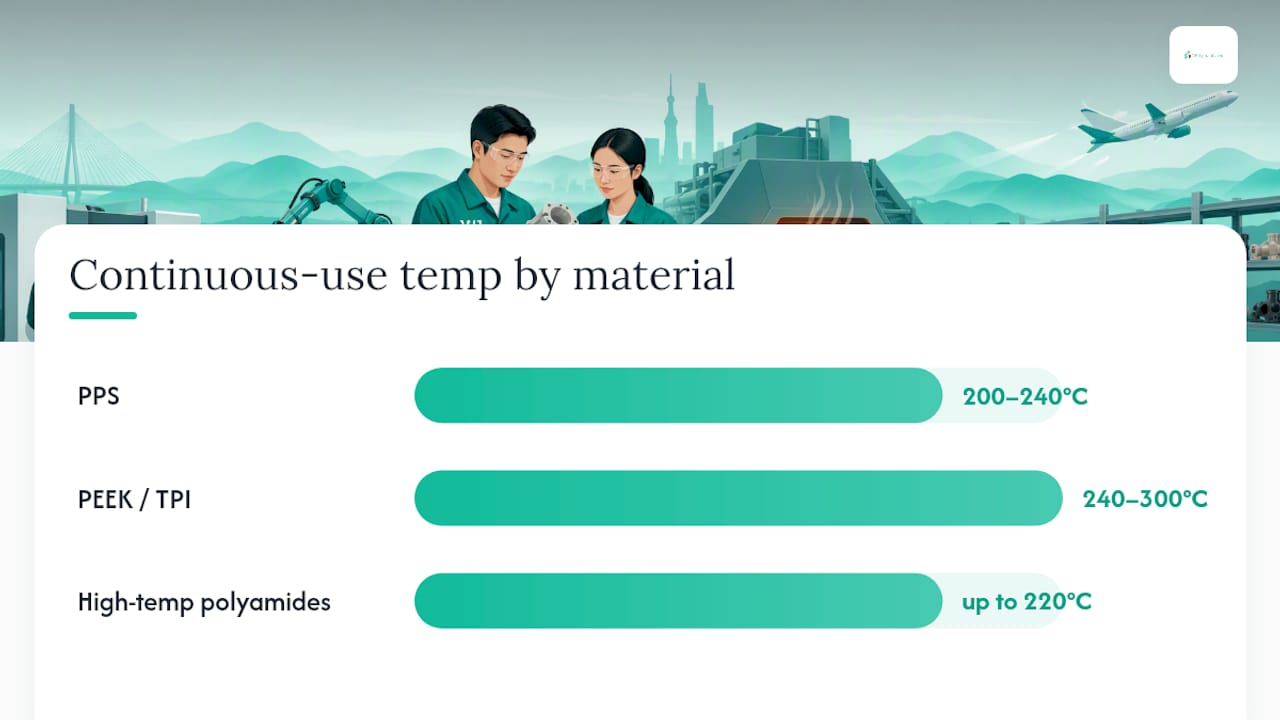
High-temp polyamides like BASF’s Ultramid® Endure fill the gap below PPS. It withstands continuous loading up to about 220°C for 3,000 hours, with short peaks to 240°C, and glass-fiber reinforcement adds stiffness at temperature without the machining headaches TPI brings.
A few trade-offs worth flagging before you specify anything:
Chinese specialty-material distributors, including manufacturers offering PPSU, PEEK, and PEI stock shapes, typically keep these resins on hand along with RoHS and REACH documentation, so availability is rarely the bottleneck. Getting the grade and filler percentage right is.
Material choice only gets you halfway. The process you pick determines whether that CUT rating actually shows up in the finished part.
Skip standard FDM and vacuum casting for anything that sees sustained high heat. Standard FDM filaments soften well below the service temperatures these applications demand, and vacuum casting’s silicone tooling and low-temp resins simply weren’t built for continuous thermal load.
CUT, HDT, and Tg get used interchangeably in casual conversation, and that’s where a lot of field failures start. CUT tells you what a part can handle for years of continuous exposure. HDT measures how a sample deforms under a specific load at a specific temperature over a short test window. Tg marks the point where the polymer’s structure loosens enough to lose mechanical performance. None of those three numbers substitute for the others, and long-term thermal aging data matters more than any single peak rating because continuous exposure degrades strength in ways a short-term test never captures.
Before you approve a supplier’s material choice, request a datasheet that covers:
Then run a sample validation before committing to tooling: build a prototype, pull thermal aging data (some suppliers can reference equivalence testing out to roughly 40,000 hours), test mechanical properties at your service temperature, and check dimensional stability after thermal cycling. Third-party labs can verify anything the supplier’s internal QA doesn’t cover.
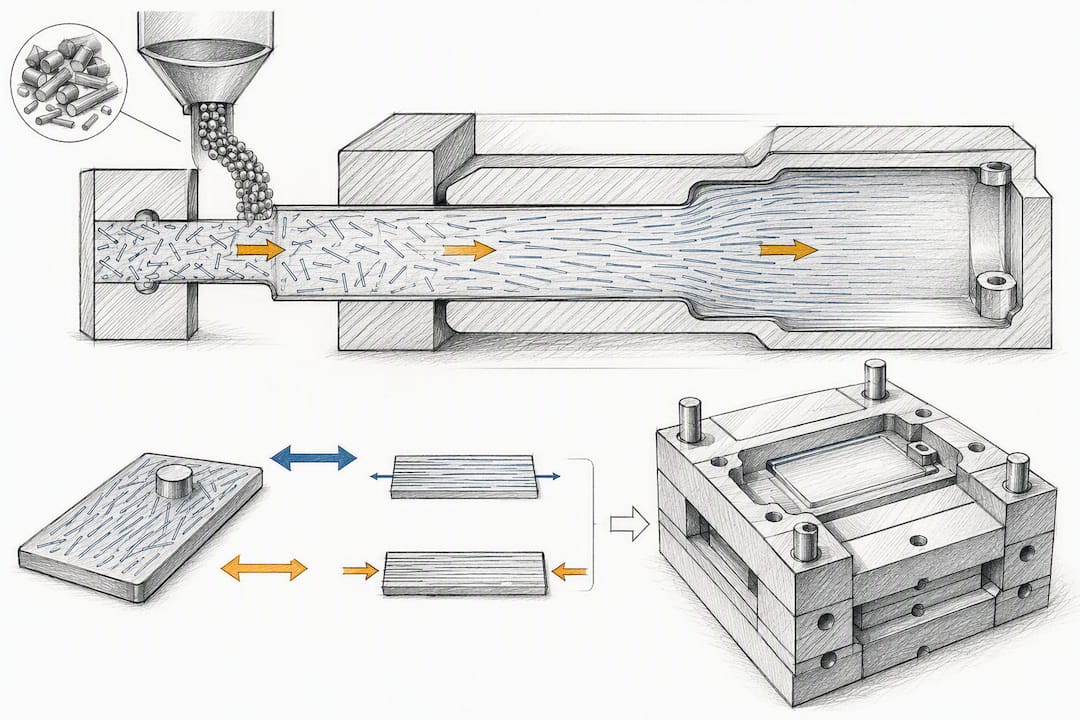
Pro Tip:Ask for mold-flow commentary on any glass-filled grade before you approve the tool design. Glass fiber orientation shifts stiffness and shrinkage unevenly across a part, and catching that on paper is a lot cheaper than catching it after the mold is cut.
Vetting a Chinese manufacturer for heat-resistant plastic parts comes down to five checks: confirm ISO certification, request material traceability documents, review their sample and testing policy, verify they actually run the equipment your material needs (high-temp presses, powder-bed printers, or CNC capacity rated for these resins), and ask how they document QA at each production stage.
When you request quotes, push for more than a per-part price:
Lead times vary by process and resin. Prototype samples in machined PEEK or PPS typically move faster than tooled parts, since injection mold builds for high-temp resins run longer than standard steel tooling due to the harder mold materials these plastics require. Specialty resin lead times can also stretch if your grade isn’t a stock item, so confirm material availability before you lock in a delivery date.
Pro Tip:Bring your engineering team into the quoting conversation early, even for a simple prototype. A supplier that sees your full spec before quoting, not after the first sample fails, catches thermal and geometry conflicts before they cost you a tooling revision.
WJ Prototypes structures its quoting process around this exact workflow: instant online quotes, a DFM review before production, and ISO-certified quality processes that give engineers a documented paper trail for regulated or safety-critical parts.
Sample approval should follow a clear sequence: prototype first, then a small destructive-test batch, then formal sign-off before full production starts. Any design change resets that sequence.
Here’s the short version: shortlist two or three candidate materials by CUT, choose your process by volume and geometry, demand a sample plus real thermal data, run a DFM pass, and require ISO QA with a pre-shipment inspection. If your application involves a regulated industry or a genuinely extreme thermal spec, bring in a specialist manufacturer before you finalize the material, not after the first mold is cut.
— Nas
Many manufacturers sourcing heat-resistant plastic parts from China juggle separate vendors for machining, molding, and printing, dealing with different QA standards, while some suppliers offer multiple manufacturing services under one roof, allowing prototypes and production runs to move through a consistent DFM review and quoting process.
That matters most when you’re validating a material choice under deadline pressure. WJ Prototypes offers CNC machining for tight-tolerance samples in PEEK or PPS, high-temp-capable 3D printing services including MJF and SLS for complex geometries, and injection molding for low-volume production once your material and process are locked in. Every quote includes a DFM review before tooling starts. Submit your part specs through the instant quote system and request the material datasheet and CUT/HDT data for your target grade before you commit to a production run.
Always request the exact grade datasheet from your chosen supplier rather than relying on general material family data.
Continuous use temperature (CUT) reflects what a material tolerates over years of sustained exposure, while heat deflection temperature (HDT) measures short-term deformation under load. Engineers should request both figures since a high HDT with a low CUT can mislead you about real-world durability.
Yes, powder-bed fusion printing works well for PEEK and TPI in low-volume or geometrically complex parts, though it typically costs more per unit than injection molding at higher quantities. WJ Prototypes offers high-temp-capable printing processes alongside CNC and molding for teams comparing process options.
Confirm ISO certification, request material traceability documents and full datasheets, and review their sample and testing policy before committing. A step-by-step vetting approach for injection molding suppliers applies just as well to CNC and additive manufacturing vendors.
Pricing depends on material, process, and volume, so current quotes are available directly through the site’s instant quoting system. Submit your specifications for injection molding or CNC machining to get an itemized cost for your specific part.
SERVICES
RESOURCES